
Who doesn’t love a big swing, a bold new direction, especially when so many video game publishers seem increasingly determined to walk the safest route? While Stranger Than Heaven might look familiar at first glance – particularly if you’re a fan of Like a Dragon developer RGG’s other third-person action games – it differs where it counts. And to my mind, it’s one of the most exciting games the studio has worked on in a while.
Stranger Than Heaven tells the story of Makoto Daito, a man of half American and Japanese lineage, as he attempts to make a home for himself in Japan. It’s a tale spanning numerous decades as the country evolves – decades you’ll experience first-hand as the story unfolds – blending a strong narrative throughline with striking melee combat and touches of silliness too. Its Like a Dragon heritage is clear, but it also feels like so much more.
Three things in particular stood out after a few hours of play: Stranger than Heaven’s brilliant approach to fighting, the setting’s gradual evolution through the years, and the surprisingly musical heart of it all.
Now, the combat, I suspect, will be divisive. Rather than replicating Like a Dragon’s trusty action, Stranger than Heaven assigns your left and right strikes to your controller’s triggers and bumpers. Attacks are hefty and weightier than other RGG games, the shift in set-up making each blow reverberate through the gamepad.
There’s also a strong emphasis on parrying and dodging, encouraging players to spot the direction of an incoming attack and respond with a manual defensive manoeuvre matching that direction. An enemy throwing a haymaker from the right can be deflected with a well-timed right parry, for instance, and a goon slicing at your portside from off screen? Dodging back enables you to weave under the attack.
Stranger than Heaven is also one of the most explicitly violent action games RGG has produced, save perhaps for Like A Dragon’s zombie-themed spin-off Dead Souls or Like a Dragon: Ishin. Here, Daito slits throats, stabs, bludgeons, and otherwise evercerates people in regular combat. There’s also a takedown mechanic that, with the simultaneous press of two triggers, allows you to eliminate enemies on low health using some particularly brutal finishers.
While it took me a few minutes to get used to the control scheme, I quickly grew to adore it. Something about the more purposeful controls, combined with excellent animation work, made the fights feel ferocious and ripped straight from the best action flicks. It’s the sort of combat that makes your body shift left and right alongside your character. At the same time, though, it’s different enough that it requires work to master, particularly the crucial parry timing, and I fear many will run against it like a wall rather than endure the climb to greater heights of enjoyment. The game felt at its best when I was vigorously throwing myself into brawls, and I fear some may feel encouraged to approach fights purely reactively.
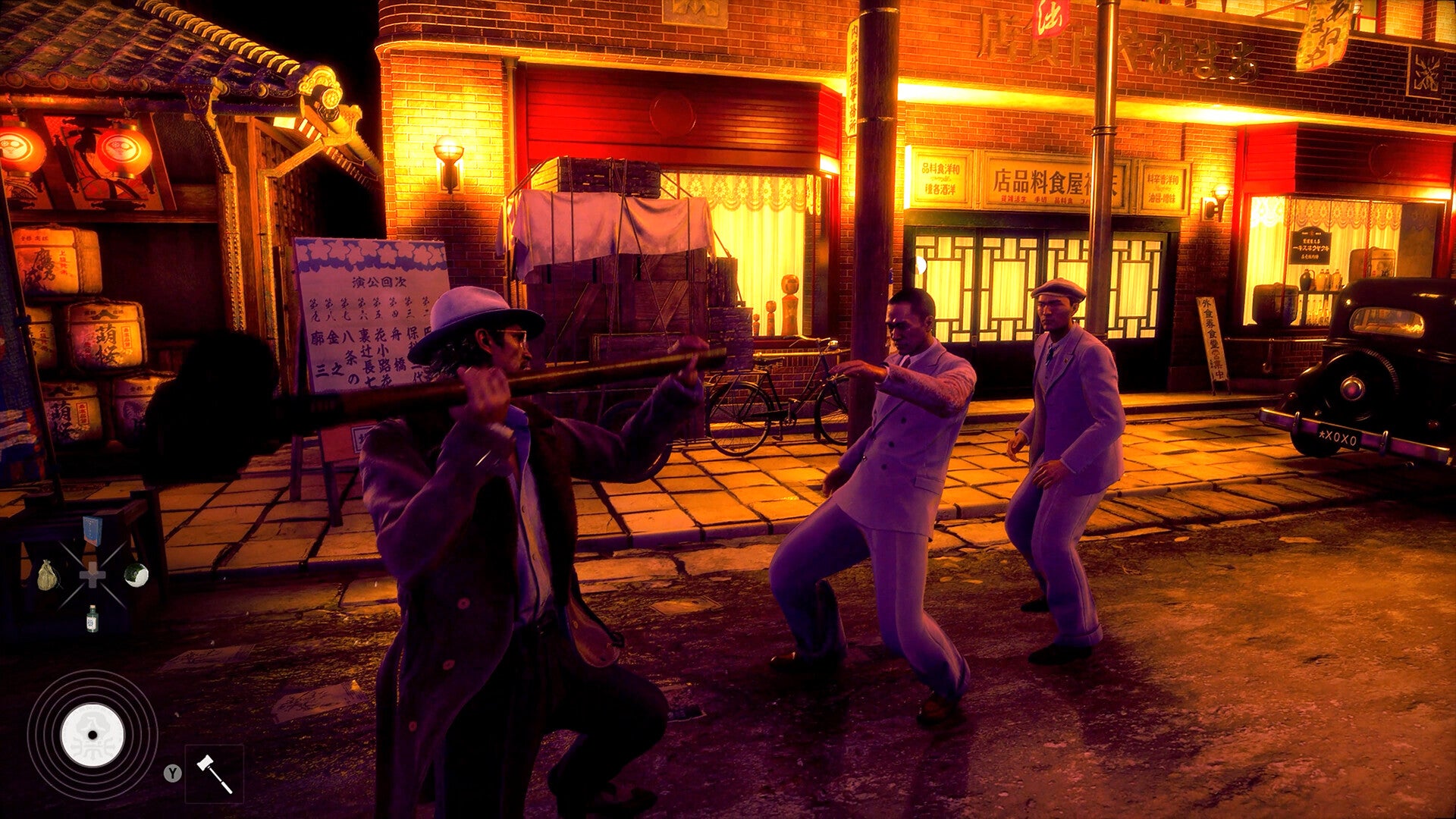
When you throw yourself into a fight, slinging punches and grappling enemies to the ground, the game takes an almost savage turn. Brawls are often dirty, explosive bouts. You get pounded with a heavy punch, dodge the next hit, and tackle them to the ground. Tenderize them with a few punches of your own, then finish ’em off with a grisly slam of their head against the hard ground. When you rise, you’ll see other enemies stumble back in fear. Leap into Stranger than Heaven, and the fights reach bloody-raw peaks that’ll stick in your mind.
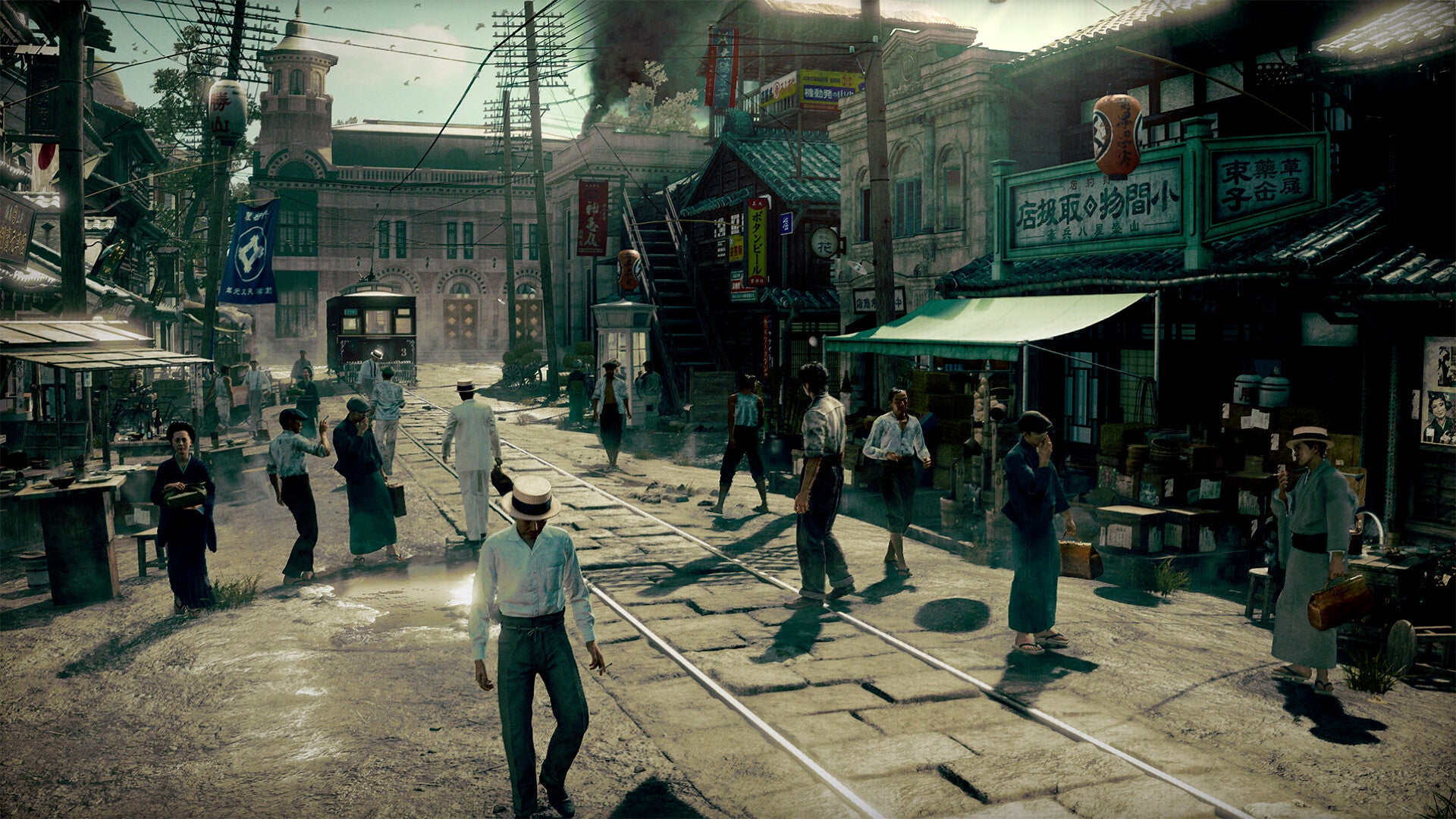
As for Stranger Than Heaven’s setting, it’s truly wonderful, taking you from the smoke-choked skyline of 1915 Kokura, to a bustling 1929 Kure, a buzzing 1943 Minami, and beyond. Hopping between each era in turn (I encountered them in linear fashion, and that appears to be the case in the full game), I was struck by the world-building. RGG has always been great at depicting the modern era, and has successfully recreated the past too, but I was thoroughly impressed by what feels like a particularly soulful depiction of a gradually changing Japan.
As I walk the dark and dreary streets of Kure, people-watching in this burgeoning city, the detail is striking. Kure’s inhabitants sit around drinking and eating, they roam its abodes and alcoves, chatting with others they meet. And the 1930s-adjacent period flourishes – the theatrical posters and the rumble of early automobiles trundling through the streets – all of it is wonderful.
If Kure made me pause, 40s-era Minami knocked me on my arse. The way its entertainment district clashes against old wooden docks creates a brilliant contrast, as rundown houses sit below bougie new buildings, encapsulating the wave of modernisation sweeping Japan. There’s something mesmerising about the world changing as your character does too. In Kokura, at the start of the game, Daito is a struggling, dirty brawler looking to make a home in an often hostile country. By 1943, he’s a reflection of the lively world around him. I left wanting to see more.
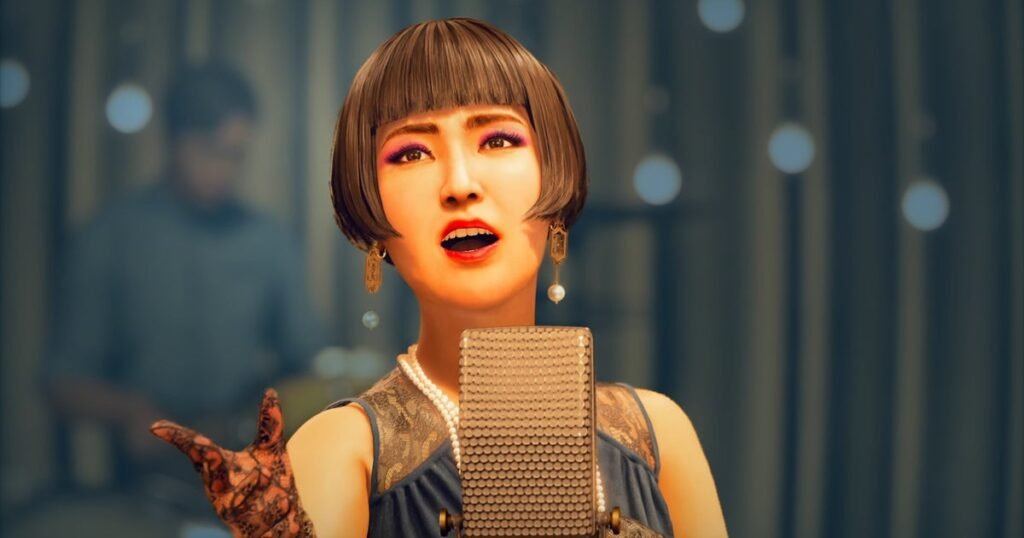
Then, of course, there’s the music. Stranger Than Heaven’s main management minigame sees players running a musical revue, Daito picking songs and stage accompaniments for performances throughout the decades. Only a few days ago, Sega released an Act One story trailer in which he sings a little song for the people of Kokura, and it’s safe to say that music matters in Stranger than Heaven.
I only had time to organise one show during my hands-on, but I was able to pick different singers and musicians, as well as alter each song’s mood. You can compose new variations of unlocked music, switching a lively track to a sombre one for example, which may better suit an upcoming show. How it’ll all come together, I don’t yet know , but given the many wonderful evenings I’ve sunk into karaoke in previous RGG games, I’m down for this more extravagant, elaborate twist. Snoop Dogg, I should add, did not perform a song in-game, though he did teach me how to roll cigarettes and the joys of blending different herbs.
Stranger than Heaven stuck in my teeth like taffy, and I was still tasting its sweetest bits for a while after playing. All this from an appetiser: if the full game manages to maintain the level of quality I saw throughout the entire game then I reckon this younger generation of RGG generation has a bright future ahead of them.


