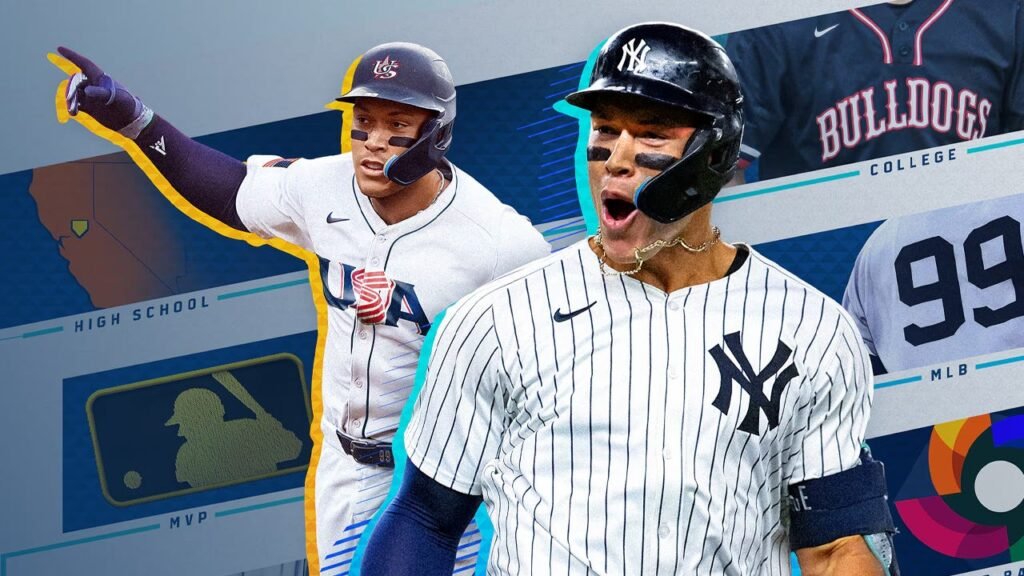

When I reviewed MLB The Show 20, I praised it as the best baseball simulation around while dinging it for playing too safe, recycling visuals, and leaning on marginal improvements instead of taking real swings. Six years later, I’m getting deja vu. Despite giving MLB The Show 21 a standing ovation for finally starting to mix up the formula in its jump to next-gen (at the time) consoles, I’m now sitting here with MLB The Show 26 struggling to articulate what’s meaningfully different from the last few years. The iterative additions are better than usual this year — especially in Franchise mode — but the foundation hasn’t moved an inch, and I can’t help but feel like MLB The Show 26 is little more than another full-priced update for the same live service game we’ve been playing since the 2010s.
To its credit, MLB The Show 26 still plays excl o jellent baseball. The core simulation remains the most convincing recreation of the sport in any video game, and developer San Diego Studio hasn’t regressed the way Madden and NBA 2K have in recent cycles. And if you’ve never touched MLB The Show before, this is the best entry point the series has ever offered: A streamlined first-time setup walks you through every hitting, pitching, and fielding interface before you throw a single ball. But if you have played before — even as far back as The Show 21 — that familiarity has inevitably become the problem. The approachable onboarding is wasted on people like me, those who have been here for years and are still waiting for a reason to feel like they haven’t.
This year’s gamevplay additions don’t do much to close that gap. Bear Down Pitching is the headliner, a system that rewards you for consistently throwing strikes and racking up strikeouts by banking special high-accuracy pitches you can deploy in clutch situations. It ties into your pitcher’s Clutch rating, and in practice it meaningfully tightens your command — pitching as Seattle’s Bryan Woo, I could feel the difference when a Bear Down pitch locked inside the zone with an accuracy I wasn’t getting on standard throws. It’s the most interesting mechanical addition in years, and the one thing I’d point to as a genuine reason the on-field game feels at all sharper. Less impressive is Big Zone Hitting, which simplifies the PCI to broader quadrants of the strike zone. I hit more balls into play than I expected, but it trades the surgical precision that made zone hitting rewarding for something flatter. More contact, fewer moments where I earned anything with my swing.
There’s also a depth-of-field toggle that blurs the b ackground while batting, and PitchComm, which pushes pitch call audio through the DualSense controller speaker when playing on PS5 — a nifty trick that doesn’t actually move the needle. The under-the-hood models now incorporate real-world pitch usage rates, meaning your pitcher’s less-frequently-thrown offerings are harder to locate. That one’s subtle and good. But the list of new mid-match stuff doesn’t stretch much further than that, and two smart tweaks alongside a handful of toggles is not a $70 leap from last year. It’s a patch.
Road to the Show has received the most visible additions, though “visible” is doing some heavy lifting here. The addition of 11 new colleges and the officially licensed NCAA College World Series gives the early career arc more texture than it’s ever had. Smart Sim — which lets your OVR rating drive simulated stats so you can skip games without torpedoing your career — respects your time in a way previous entries didn’t, and getting automatically pulled back in before a big moment is the kind of attention the mode has needed for years.
That said, the college experience is still thin. Rather than playing through multiple seasons, you skip straight to your junior year and are dropped right into the College World Series. It’s a prologue dressed up as a chapter. And while Road to the Show has never been better at keeping you moving forward, the story surrounding that progression is still functionally nonexistent. You’ll see text boxes. You’ll click “Yes, coach.” The animations during conversations are stiff. I said this in my Show 20 review, and I’m saying it again now: there is no narrative here, and at this point I don’t think there ever will be.
Diamond Dynasty launches with a ton of content, as it has in previous years. The World Baseball Classic integration delivers WBC-themed cards across multiple programs, a WBC Conquest map, and a tournament bracket that ties Diamond Dynasty’s card-building directly into the international event, just to scratch the surface. If content volume is your metric, it’s here. But volume has never been Diamond Dynasty’s problem; the grind that makes all that content feel like a treadmill has.
The Deluxe Edition, for its part, undercuts the mode’s competitive balance right out of the gate. Because we were sent the Digital Deluxe version for this review, I started with Aaron Judge, Shohei Ohtani, and other top-tier cards already in my lineup — a signifi cant head start that Standard Edition buyers don’t get. Diamond Dynasty challenges also prevent duplicate players from appearing on both sides, which is fine in theory, but in practice it means whoever has the better roster and hosts the match claims the top cards first. In a cross-play challenge with my friend, she couldn’t field players I was already using, and because the Deluxe Edition had front-loaded my lineup with the best options in the game, that restriction fell entirely on her.
Team Affinity has been restructured to two programs per team for the full year, with every franchise offering a hitter captain and pitcher captain from launch, and the Parallel Mod system — where you choose which attributes to specialize as you level a card — adds genuine roster-building decisions. These are real improvements. They’d be easier to celebrate if the mode’s entry point wasn’t already tilted toward whoever spent more at checkout.
The Franchise mode Trade Hub is the single best addition in MLB The Show 26. Everything trade-related now lives in one centralized interface: Rumors, pending offers, player valuations, and deal pursuit. You can shop players around, set untouchables, track what other GMs are doing, and participate in bidding wars. Running the Mariners, I invested in Bryan Woo and Randy Arozarena as cornerstones and monitored which teams were shopping their assets — and it felt more like an RPG bartering system than the spreadsheet it used to be.
The trade-off is that March to October is gone, replaced by a streamlined experience that doesn’t fully cover the same ground. Franchise still doesn’t offer a manager-only or GM-only option, and there’s no spectate or one-pitch mode for players who want the management without the at-bats. There’s also no way to transfer Road to the Show or Franchise saves from past entries — the same issue I flagged in my The Show 21 review — and any custom stadiums you built in previous games don’t carry over either. The Stadium Creator itself feels basically unchanged from when it debuted in The Show 21, which means the same clunky controls and the same limitations I noted then are still here now. At least the Trade Hub is useful and convenient now. Everything else about Franchise is the same game I’ve been playing since 2020, minus a few things it used to have.
Visually, MLB The Show 26 looks the same as it has for years. Player models, stadiums, and animations are broadly identical to what I played on PS4 Pro when I reviewed The Show 20. Jersey physics are nice, and stadium lighting has seen marginal improvement, but aliasing is still visible, crowd detail lags behind other current-gen sports titles, and there are no PS5 Pro enhancements — a strange omission for a first-party PlayStation game in 2026.
My created character in Road to the Show is technically supposed to be me. He has my bone structure the way a police sketch has a suspect’s bone structure — close enough to be unsettling, but far from close enough to be accurate. The face scanning technology in MLB The Show 26 still looks like it belongs in the PS3 era, and the result on my end was an amorphous blob that wears my jersey number and runs bases for me. Use it at your own discretion.
Cross-play multiplayer between my PS5 and my friend’s Series X worked, but with caveats. Just setting up a casual match required navigating menus that were not as user-friendly as I’d have hoped. Once in, batting on my end had noticeable sync issues: The ball rubber-banded just before the zone, making it hard to read pitch direction. Outfielders occasionally refused to throw back to the plate after a catch. Other players have reported similar “teleporting fastball” problems in online Ranked. Commentary also remains the weakest link — the majority of lines feel recycled from the last few entries — and the b atting cage minigame is somehow worse than it’s ever been.
But hey, at least the deftly-crafted Negro Leagues Storylines mode returns for a fourth season, spotlighting Roy Campanella, Mamie “Peanut” Johnson, John Henry “Pop” Lloyd, and George “Mule” Suttles. The produced video segments remain some of the most meaningful content in any sports game — genuinely worth your time. The gameplay challenges tied to those stories, though, are still bare-minimum scenarios — get a base hit, strike someone out, don’t allow a run — and the mode’s value is almost entirely in the videos, not in the playing. It’s fun to earn those players as cards in Diamond Dynasty, but the history deserves more than that.