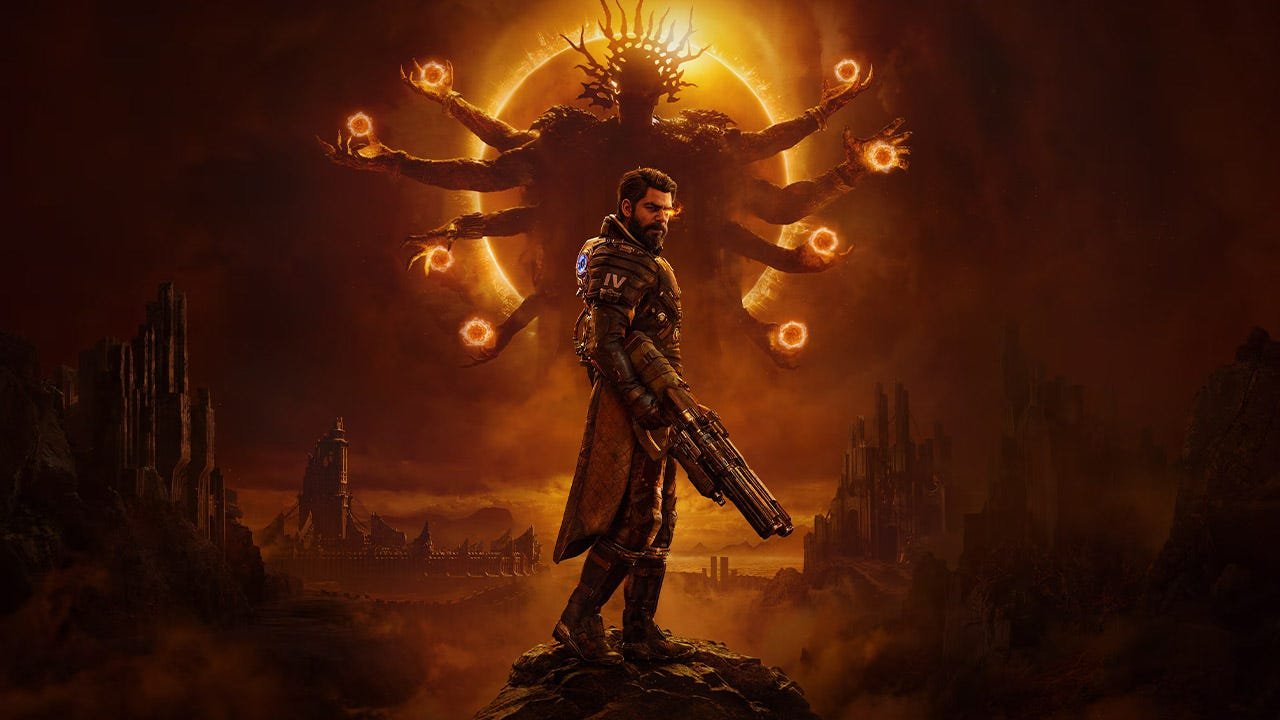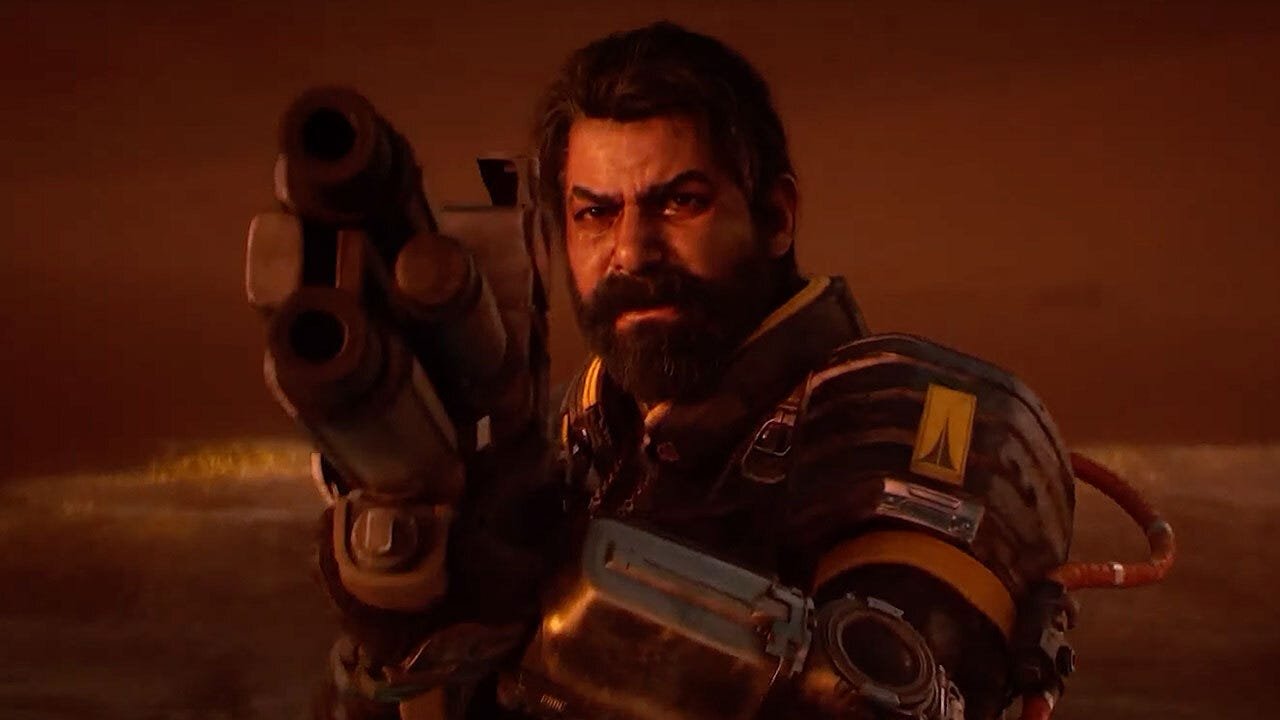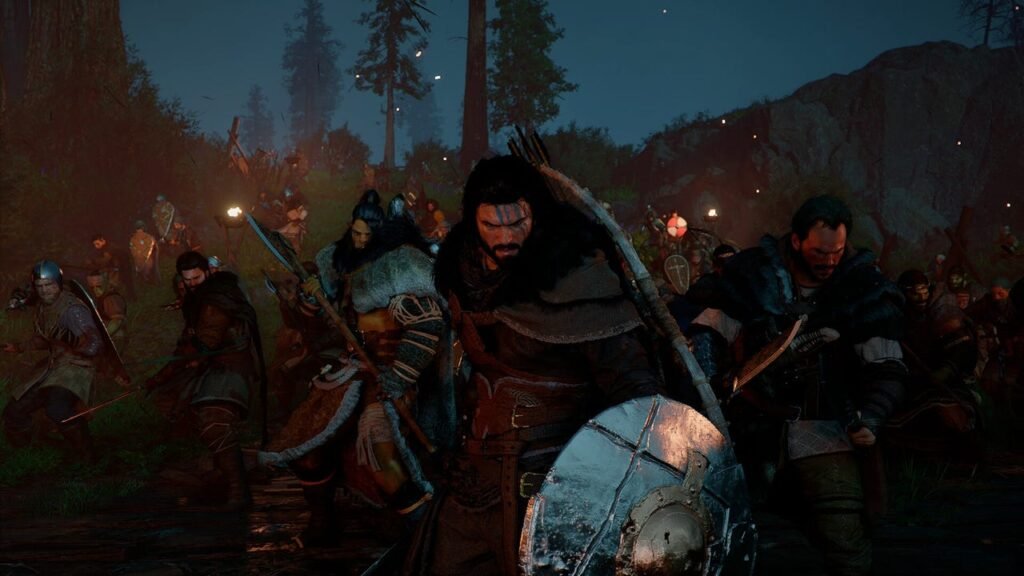
Love it or hate it, there’s no denying that Crimson Desert has suffered something of a rocky launch. Its vast open world, full of opportunity and flexible inventive systems, is impressive, but its awkward controls, punishing difficulty spikes, and baffling approach to inventory management burst the bubble of immense hype that had been built over years, resulting in “mixed” Steam reviews and an equally mixed critical reception. But there’s also no denying developer Pearl Abyss’ dedication to making things right. Its response to player feedback has been extraordinary, delivering some of the most extensive initial patch work that we’ve seen this generation within days of launch. It’s unclear if the development team has had to break their backs to do this, but their work has already paid dividends: user reviews on Steam have shifted into “very positive” territory, and the company’s stock price – which plummeted in the wake of uneven critic scores – has begun to bounce back.
All this in under a week. It’s the sort of thing that suggests that Pearl Abyss didn’t just chuck Crimson Desert into the world unfinished with the intent of using players as beta testers for some kind of stealth early access launch – nobody scrambles this hard unless it’s an emergency. Assuming that’s true, it would also mean that Pearl Abyss didn’t see the glaring issues in Crimson Desert’s design – be that a result of poor internal testing, naive designers, or simply not seeing the wood for the trees. Now it has an army of testers three million strong, many issues can be identified and fixed. But can everything be fixed? Are these initial, successful patches the groundwork for a comeback story akin to Cyberpunk 2077? I’m not so sure, because Crimson Desert suffers from much deeper issues that only extensive genetic modification, not bandages, can fix.
Making a Difference
That’s not to say patches can’t do any heavy lifting. Crimson Desert’s recent patch notes are a long list of small changes that make a significant difference – in fact, they’ve already proven genuinely transformative. The addition of more fast travel points has meaningfully altered how you explore the world. Previously, the land of Pywel felt caught between two visions; locations had to be travelled to manually in real-time, which suggested an approach similar to Dragon’s Dogma or Grand Theft Auto – games in which the journey is a key part of the experience, and any kind of “teleportation” is achieved through in-world methods like hailing a taxi. But there was also a scattering of oddly placed fast travel points, which pointed to something more like Elden Ring, in which warping between discovered locations is part of the world’s fundamental fabric. The newly added fast travel points – particularly the ones in your base camp and Hernand’s castle-crowned city – bring the play space more in line with typical open world convention, allowing you to skip mundane trips to and from repeatedly visited locations.
That new base camp fast travel point links to the next small-but-big change: a storage box. It’s somewhat unbelievable that a game so reliant on grinding crafting materials didn’t have one in the first place, but there’s now a chest at your camp that you can dump all your surplus ore, timber, and butchered animals into, rather than constantly carrying them on your person. Your personal inventory fills up incredibly quickly, even after you’ve significantly expanded it, so being able to warp back to camp, drop stuff off, and then get back to your adventure without a ton of walking involved is a significant upgrade to your “quality of life.”
That storage box also helps with bosses – while the worst offenders have been nerfed, bosses still represent natural difficulty spikes and must be prepared for. Improved inventory management means it’s easier to keep up with the demands of the crafting system. It’s not a burden to grab that ore you just saw because you no longer have to spend five minutes working out what’s worth sacrificing from your unfit-for-purpose backpack. Combine that with the fact that you now don’t need to cook up a thousand bowls of soup to get through Kearush the Slayer and the need to put everything on hold to grind ahead of a boss is reduced.
The total result of all these small tweaks is that Crimson Desert now has more momentum. You get into the good stuff faster. And with a substantial change like that delivered in just a few days, it’s understandable if the idea of Crimson Desert seeing something of a Cyberpunk-style reappraisal within a matter of weeks has crossed your mind. If you already like Crimson Desert’s unique, friction-heavy approach and have been pushing through its flaws, I think there’s a genuine possibility that it could be a contender for your game of the year by the summer if it isn’t already. But if you’re more like me, who is intrigued by Crimson Desert but has struggled to connect with it, then I think the outlook is gloomier. Because there are things patches can’t fix. Things like writing, story, structure, and quest design.

Story Slog
The reason why Cyberpunk 2077 (and other games that launched in a rough state and went on to see big improvements, like No Man’s Sky and Owlcat’s Pathfinder and Warhammer 40k RPGs) were able to turn things around was that their problems could be tackled by building upon already good design fundamentals. From day one, Cyberpunk 2077 had fantastic writing and brilliant quests – its initial issues were predominantly rooted in tech and performance, and the later 2.0 overhaul was focused on RPG progression and character skills rather than the game’s campaign bedrock. Crimson Desert, on the other hand, has pretty poor quest design and campaign structure, only worsened by paper-thin characters and writing that’s either dull or barely coherent.
In that sense, Crimson Desert is more akin to Starfield, which is incidentally getting its own major update in a matter of days. Bethesda boss Todd Howard has already warned not to expect a “2.0” upgrade that will convert skeptics into believers, and that’s at least in part due to the fact it would require a substantial change to both the campaign and game structure to meet those expectations. Bethesda is instead focused on quality of life improvements and extra story content, rather than overhauling the series of uninteresting missions that make up its original campaign, showing just how rare a turnaround of this kind is when it comes to single-player games. Fixing that kind of issue isn’t a case of patches or updates – it demands a Final Fantasy 14-grade redesign, a thing that surely will never happen.
But why is Crimson Desert’s approach to story and questing such a problem? The game’s most ardent fans’ typical rebuttal to this issue is not to claim that these aspects are actually good, but that it doesn’t matter that they’re bad. Games like Elden Ring and The Legend of Zelda: Breath of the Wild also lack compelling stories, they say, and yet they were not criticised for it. Regardless of whether you agree with that (and for the record, I don’t), it’s not so much about the quality of the tale, but the way it’s integrated into the game.
In Elden Ring and the modern Zelda games, story is the framing device that contextualizes your journey through their worlds. Become Elden Lord and uncover the secrets of the Shattering. Rescue Zelda and defeat Ganon. Beyond that, they have limited impact on the way you play – in Elden Ring, you’re only barely following a plot line. But in Crimson Desert, story quests are the fundamental backbone of what you do. It is your guiding path through the game, your main objective to complete. Cutscenes, conversations, and plot-driven quests are all frequent, mandatory parts of the experience, akin to a game like Red Dead Redemption.
These quests drive forward your progress and dictate what you can do when you stray from the beaten path. If you explore the world of your own volition, a great deal of the wonderful locations you discover are nothing more than set dressing until you actually reach the quests that make use of them. And while there is a large number of very cool things you can do independent of the main quest, it never really amounts to a genuine sandbox experience like Valheim, where the entire point is to live a life within this digital world. Everything you do ultimately folds back into the main quest – even if you enjoy the grind of upgrading your weapons and gear, it’s essentially all in aid of defeating the campaign’s toughest challenges.
All this means the campaign is far from optional, and thus the quality of its components is not so much a thorn in Crimson Desert’s side, but a broadsword lodged in its spine. You have to endure truly terrible writing, contextless objectives, repetitive quests, and rote plot points hour after hour after hour. As of writing, you can still only fast-forward through cutscenes rather than skip them completely, but even if that’s patched, it doesn’t push the worst part of the experience to the periphery. You still have to engage with it all to progress your journey through the world – exploration alone is not enough.
No amount of traditional patching is going to make Kliff’s journey interesting. And no traditional update can wrench the campaign out of Crimson Desert. Unlike Cyberpunk 2077, these issues aren’t rooted in performance or glitches, but the core, creative choices set in stone years prior. As such, addressing them would require ripping out and replacing great chunks of the game’s skeleton, rather than patching up with a series of minor surgeries. And so regardless of the many improvements Pearl Abyss is sure to make through extensive fixes, it can’t repair the fundamental structure that has seen many players and professional critics pen conflicted or even negative reviews. Because to unlock Crimson Desert’s more accomplished facets, you simply have to dedicate hours to mediocrity.
If you’re jumping into Crimson Desert’s huge open world, we recommend you take a look at our guide to Things to Do First in Crimson Desert, plus Things Crimson Desert Doesn’t Tell You (we’ve got 28 and counting!). We’ve also got a guide to the Best Early Weapons we recommend picking up, the Best Skills to Get First (including a handy explainer of the skills system), and 34 Essential Tips and Tricks to help you succeed in Pywel.
Matt Purslow is IGN’s Executive Editor of Features.