Emboldened by years of success, Capcom’s risky 360-era shooter dares to tackle sci-fi shooter convention in a proudly experimental gamble.
The human brain is divided into two hemispheres; the left brain and the right brain. To put it unscientifically and very simply, the left hemisphere manages language and logic, and the right hemisphere specialises in spatial awareness and intuition. I have long been an advocate of video games for activating both sides of the brain: engaging creatively with problem-solving and applying logic whilst also using your hands to dexterously and precisely engage with a platform has been proven to encourage brain thickening in the left dorsolateral prefrontal cortex. That is to say: games make you smart.
Pragmata, somehow, manages to take this concept to some sort of illogical conclusion. The core conceit of this game – outside of the weirdly beautiful story about loneliness in space, what it is to be human, and the perils of rampant, irresponsible usage of AI – is that you control a human and a robot, and must engage in action-packed skirmishes whilst shooting, dodging, and solving grid-based puzzles, all at the same time. A ‘hacking grid’ pops up when you aim at an enemy, and from there you must strafe, hit weak spots, jump or dodge attacks, and work out the most efficient way to disable robot foes in a melee of sparks, shells, and sabotage.
It’s a workout for your frontal cortex, an adventure for your adrenal glands, and a party for your fingers all at once. It’s compelling, unusual, and moreish. The action, and what it does to your brain, carries a very mediocre story with ease. It makes Pragmata unique, even if in many ways it feels like a throwback to the Xbox 360-era of third-person shooters. In the first few hours alone, I had flashbacks to Watch Dogs, Vanquish, Lost Planet, Gears of War, and Dead Rising. Quite how Pragmata manages to feel so derivative and so original at the same time might end up being one of the greatest mysteries of this weird console generation.
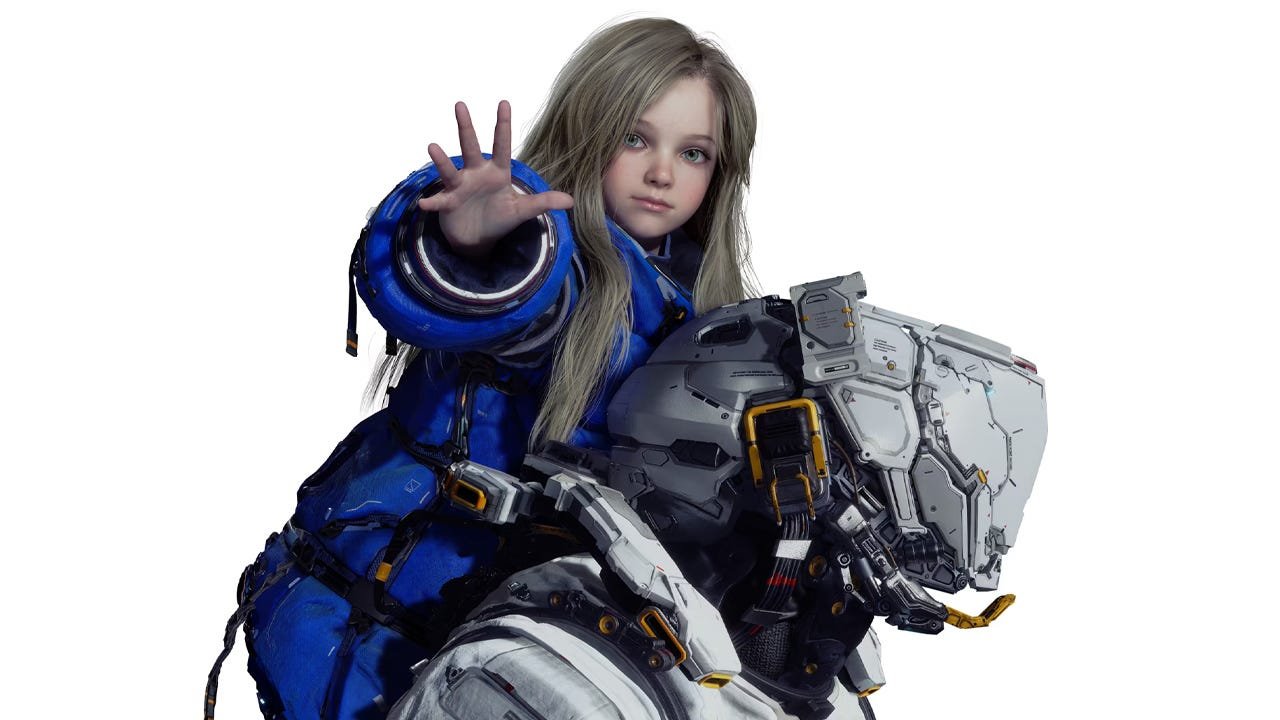
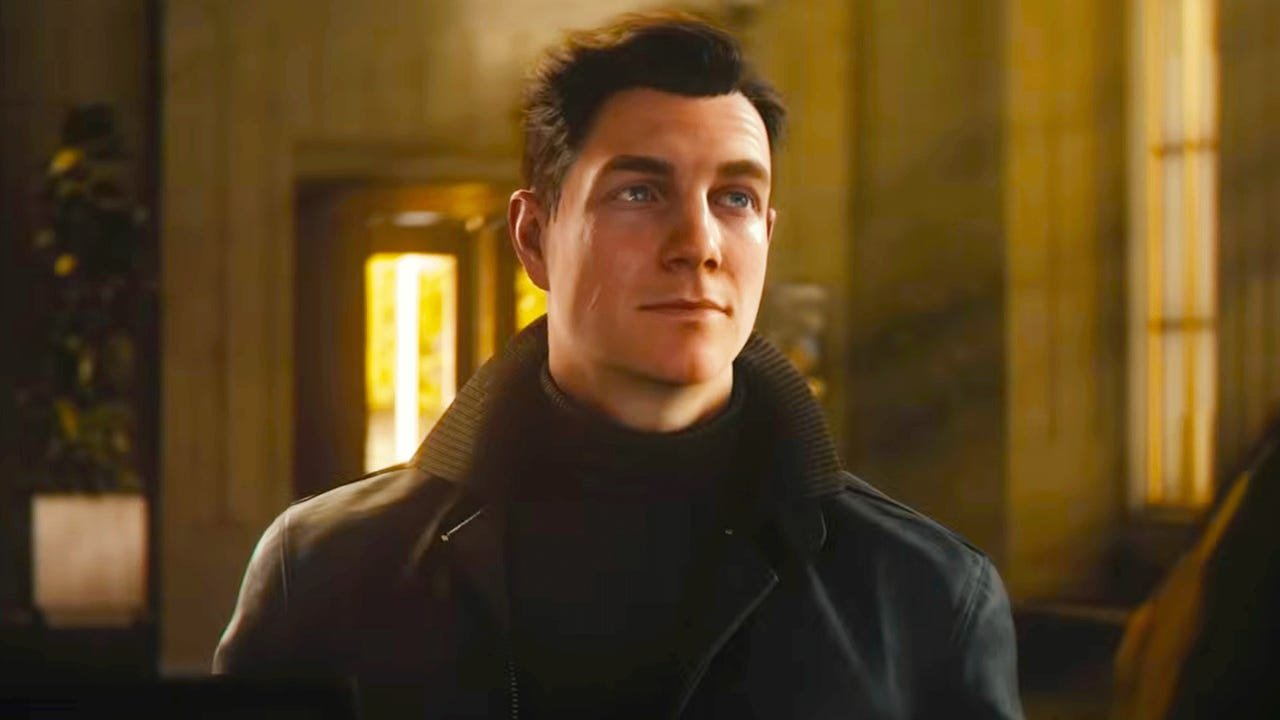
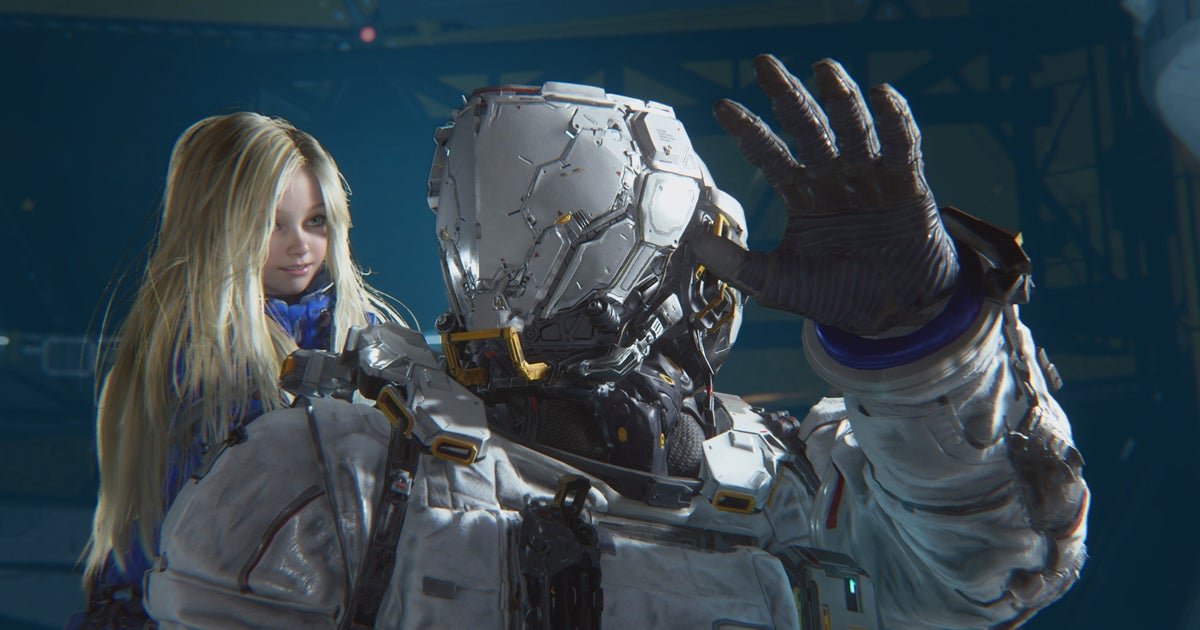
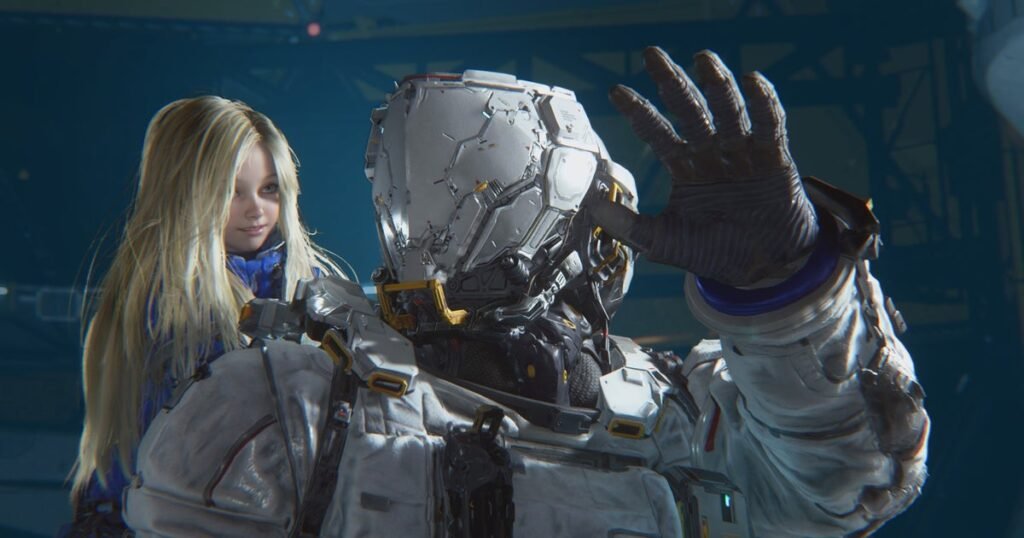
A lot of Pragmata is stomping around a completely alienated space station as gruff everyman Hugh Williams. The tale begins when Hugh, instead of the human welcoming party he was expecting, is introduced to an android in the form of a small girl, which he names Diana (a name shared by the Roman goddess of the moon, as it happens). A lot of Pragmata’s heart is folded into the way these two interact: how they talk, how they collaborate, how they grow. In cutscenes, it always feels like the writers wanted to make Hugh feel spiky and unfriendly; a hedgehog curled up with its spikes keeping others away from its tender heart. But in Diana and Hugh’s company, there is so much warmth and tenderness and character.

Their warmth is felt most keenly in The Shelter: a hub space you return to between exploring wings of the space station that slowly fills up with signs of life. Whilst much of Pragmata is designed to look mass manufactured (pretty much everything here is 3D-printed by a rogue AI), your Shelter home quickly becomes awash with the untidy signs of life that anyone with a kid will recognise. Collectible skateboards, basketballs, and toys litter the area. Hints about what life on Earth looks like in this weird future start to populate the fringes of your living space, and Hugh and Diana chitchat about their respective backstories. They never give too much up, but little narrative hooks are there to prickle against your skin if you’re listening hard enough.
The Shelter represents a home for you both, and the enthusiasm of the childish Diana to get back there and play with her new toys soon rubs off on you as a player, because at regular intervals, Hugh gets some new toys too: better guns, fancier hacking tools, more utility. Like many Capcom action games – here’s looking at you, Devil May Cry – the early hours feel restrictive and a bit boring compared to what comes later. When you start to unlock ‘bullet time’-like dodges, powerful mods that synergise more effectively with your play style, and expand your arsenal enough to feel like you’ve got an answer to every problem, Pragmata really starts firing. It just takes about 10 hours for you to get there.
But that’s fine, because the core conceit that the whole game revolves around is this interplay between Hugh and Diana. Their dialogue is excellent, the cute and wholesome animations they share are excellent, and the expression you have as a player to utilise them as a dynamic, dangerous duo in combat is – you guessed it – excellent. The game asks a lot from you by the latter half, and I honestly found myself holding my breath for long encounters as I desperately tried to hack, dodge, shoot, and jump my way through some of the harder boss encounters. Even when the game starts recycling boss enemies (classic!), you sort-of roll your eyes and say ‘fine‘ because it was fun taking it down the first time.

Pragmata could so easily have been uninspired, feckless shooting at throbbing orange weak points, but it’s not. It frontlines combat in a smart, intuitive way that plays with expectations and genre norms, whilst also playing up any expectations you may have about what a ‘third-person action game in space’ feels like. As you dance around obstacles, well-telegraphed attacks, and buzzing pinwheels from humanoid robot monsters, you also engage that left-brain logic that prompts you to needle away at a puzzle grid. I am constantly surprised, and delighted, to be doing these two things at once. You need to hack to win fights; it is not a bolted-on extra that you can engage with if you want. It’s Capcom’s confidence in its years-long winning streak given tangible form in a game that dares you to like it or leave it. It’s Capcom at its experimental, weird best.
Without that unctuous, delicious, and proudly bizarre combat system thrumming away in the middle of all this, Pragmata would be a pretty and forgettable game. But, in a melee of quicktime button presses, reflexive stick nudges, and desperate trigger squeezes, it manages to keep you hooked and happy for its entire 30-ish hour runtime (if you’re going after more or less everything there is to see). The story is the stuff of B-movie, straight-to-video legend (and that’s fine), and playing on a PS5 Pro, I am once again floored by the technical wizardry that goes into the RE Engine. Diana often looks creepy and slightly uncanny, but I can’t help but think that’s intentional. The devs, wisely, made the decision to keep Hugh visored-up most of the time so you can’t see his face. In terms of projecting yourself onto him as a beige everyman, it does the job.
I don’t think Pragmata is going to win any prizes for making you suddenly understand rocket science or write a laureate-winning screenplay about the nature of humanity, but the way it gets your grey matter working is special. I feel smarter for having played Pragmata, and I don’t think I’m going to see another game like it for a very long time.
A copy of Pragmata was provided for this review by Capcom.