Velan’s conservative but accomplished remake goes all-in on spectacle to much success, even if the script could do with some wit.
I recently finished reading Keza MacDonald’s excellent Super Nintendo, a largely celebratory book about the company that “helped the world have fun”, which nevertheless sounds a note of understandable caution at its conclusion. The author is concerned – and it’s a concern I share – that Nintendo has been playing things too safe of late, that its release slate (with the odd exception) has become alarmingly conservative. It’s time, surely, for the next Splatoon, and by that I don’t mean Raiders. As hardware goes, Switch 2 is no big swing, and so far its software has generally followed suit; Super Nintendo rightly laments the loss of the “freewheeling creativity” of the Iwata era in particular. “Nintendo knows well the power of nostalgia,” MacDonald writes. “But unless it continues to create new ideas alongside honouring its legacy, Nintendo won’t be able to keep its cherished position in popular culture.”
The relevance of this passage seemed glaring at the announcement of Star Fox, yet another version of a game Nintendo seemingly can’t stop remaking. Likewise, Super Nintendo’s reminder of the late, great Satoru Iwata’s warning of the perils of maintaining the status quo – not to mention his rejection during the Wii and DS era of the perceived wisdom that “advanced graphics” were the best way forward. This, Iwata insisted, “used to be the golden principle that led to success, but it is no longer working.”
Which is to say that I approached Star Fox with a healthy degree of scepticism, and came away thinking: hooray for advanced graphics.
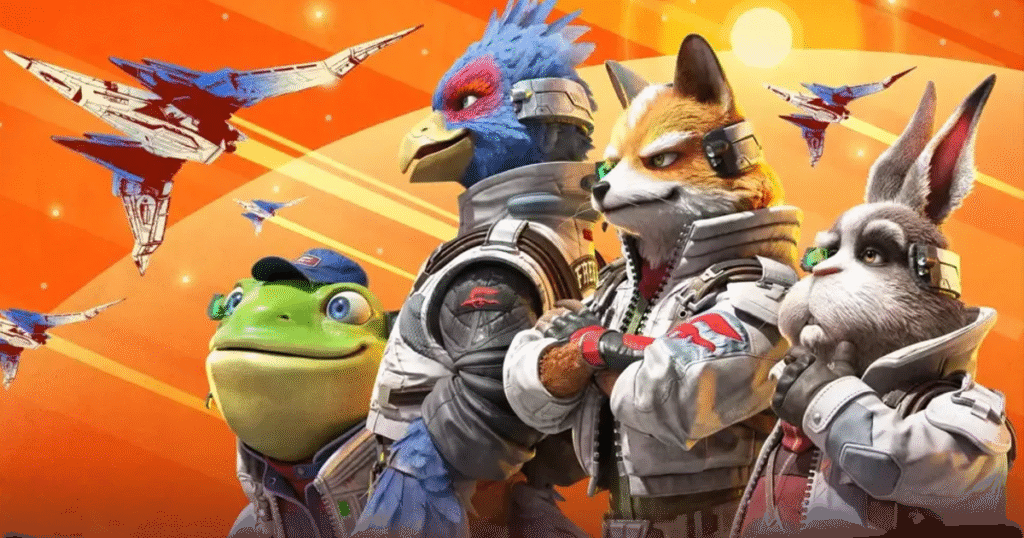
The reasons it works as well as it does are twofold. For a kick-off, it’s built on the bones of a game that didn’t have much wrong with it. Velan Studios, a team founded by Vicarious Visions alumni, themselves no stranger to Nintendo ports, has recognised this and sensibly taken on board that age-old maxim: if it ain’t broke, don’t fox it. As you’ve probably done several times over by now, you captain the titular crew through the Lylat system to take down the villainous Andross, shooting down waves of enemies in space or planetside, darting, diving and barrel-rolling out of the way of missiles and asteroids and sundry other robotic and organic threats. It’s still a brisk and breezy and appealingly old-fashioned story, chopped up into bite-sized and hugely replayable stages, with multiple routes to the climactic face-off depending on whether you succeed or fail in completing certain objectives. It’s still thrilling to weave through those stone arches and follow Falco through the waterfall, or to halt the bomb countdown on Fichina with seconds to spare. It’s still funny how quickly you can take down giant end-of-level bosses with either fully upgraded lasers or by lobbing your full stockpile of bombs at them.

The other big reason this Star Fox works: it’s been made by a developer that fully understands the genre it is working in, and leans hard into its strengths. Velan gets that the on-rails shooter is an opportunity to wholeheartedly embrace cinematic spectacle. It knows that when the camera is locked in place – or, as in the game’s sporadic shifts to All-Range Mode for the odd dogfight or boss battle, restricted to a fairly compact space – you can really go to town on what’s happening around the player. And boy does Velan ever seize that opportunity with both hands. Conscious as I am that memory is the most unreliable of narrators, I don’t recall feeling quite so exhilarated by some of these stages. Katina’s mothership is more imposing than ever, spitting out fighters by the dozen. Sector X’s derelict base feels enormous as you pick your way through its ruins. Take the warp route on Meteos and your destination is positively kaleidoscopic, a proper feast for the eyes. It’s not too much of a stretch to suggest this is close to the game its creators envisaged in their minds, before realising what the N64’s specs limited them to. Heck, the Cornerian fleet actually looks like a vast space armada this time, as opposed to stacks of grey cardboard boxes stuck together.
Granted, such faithfulness to the original is something of a double-edged sword: if revisiting, say, Corneria cements it in your mind as one of the great tutorial stages (I’d argue it’s up there with World 1-1 as both a snappy runthrough of a game’s essential mechanics and an exemplary piece of worldbuilding) then the mid-level twists inevitably lack the surprise factor they once did. And the weaker levels remain underwhelming – even as the creatures looming out of Aquas’s murky depths are more startling to behold than ever before, the stage itself remains a sluggish disappointment. (Though the roiling toxic waters of Zoness that follow, with surfacing serpents inviting you to swoop beneath their arching torsos, almost make the detour worth it.) Otherwise, only one stage suffers compared to previous editions: it might be down to the difference in screen real estate, but to my mind Solar’s fiery, flaring surface felt more dangerous on 3DS.

Beyond expanding the scale and scope of encounters beyond pretty much any game of its kind – with the possible exception of Treasure’s sensational Sin & Punishment: Successor of the Skies, that unsung Wii-era classic – it’s pretty much as you were in the playable segments. As such, muscle memory will doubtless lead to smoother progress for some: those who played (and replayed) the original or its 3DS incarnation will know when to exactly when to dive and soar for the stat-boosting rings or the laser and bomb pickups that bolster your offensive capabilities – and in turn the various challenge mode objectives will fall all the quicker. In my fiftieth year, I have to admit finding Expert Mode a shade beyond my capabilities, but plenty will relish the opportunity to test themselves against the exacting medal targets and objectives here. A quick note on the game’s first-person mode: while I’m sure it will have its defenders (Star Fox Zero advocates likely among them) and the twitchy mouse controls make for more efficient aiming once you’ve acclimatised, it’s also concerningly easy to tilt a little too far and inadvertently switch back to third-person mode.
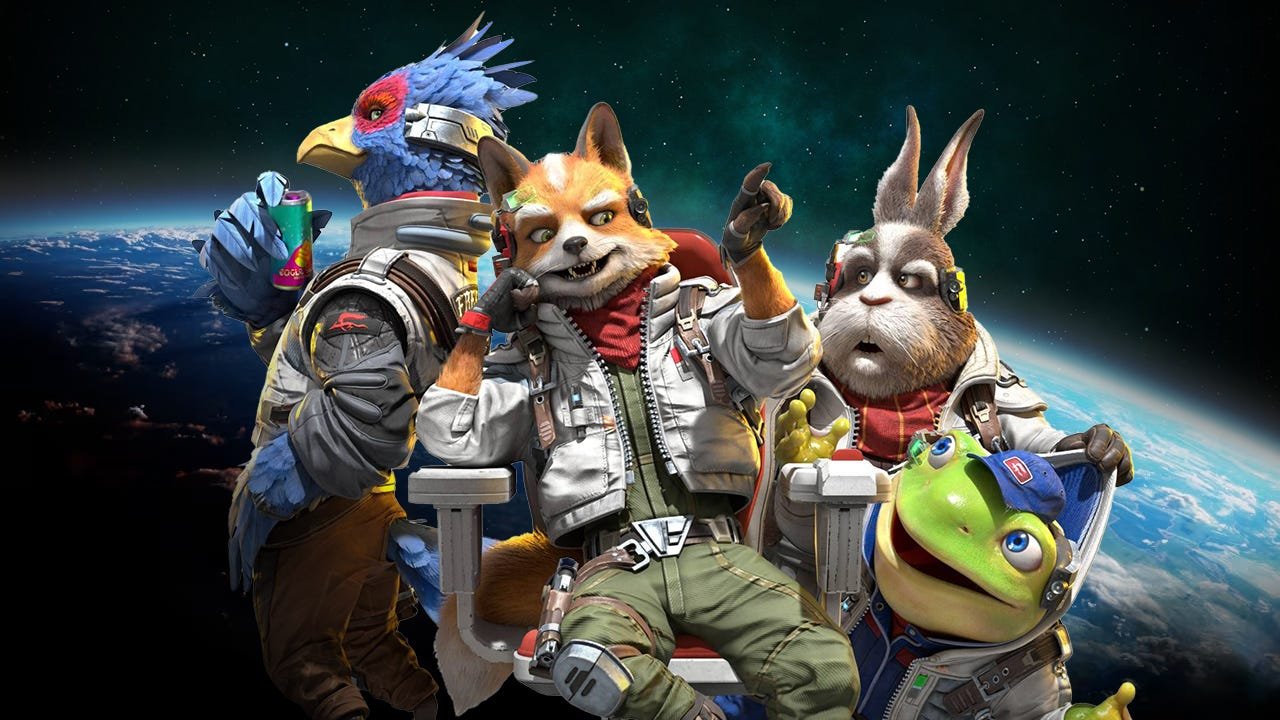
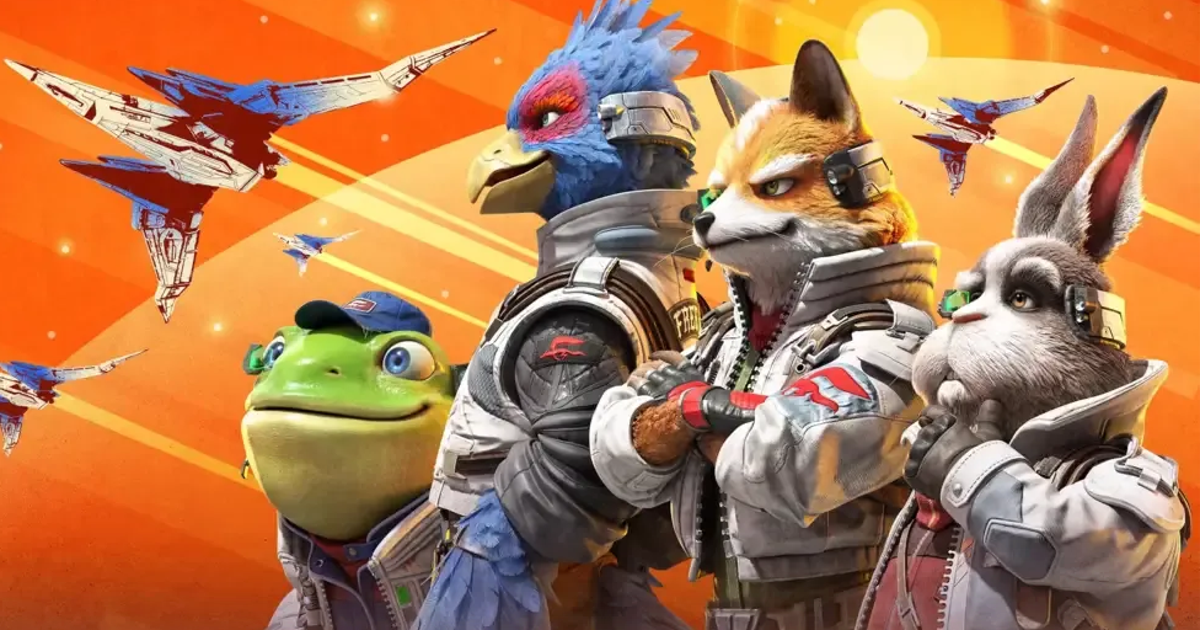
Outside the stages themselves, I’m glad Fox and co haven’t been as aggressively yassified as in The Super Mario Galaxy Movie – they’re not heroes but rough-cut mercenaries, after all. The expanded interstitials, handsomely realised as they may be, are honestly a bit dull: the script is largely devoid of wit (which at least is in keeping with Nintendo’s recent filmic output) which is something to work on for next time. The best I can say for them is that they establish stakes and threat and the dilemma of Fox’s choice of destination reasonably efficiently, but don’t go expecting any major character development. The sternly pragmatic Peppy continues to represent the case against nominative determinism, while the newly shiny Slippy is as endearingly enthusiastic (and crap at flying) as he ever was. And Falco’s still basically a dick – there’s just more of him here, which only made me extra-determined to wind him up by taking out his targets.

Beyond the solo mode (which I’ve found so entertaining in quick bursts that it’s kept me from writing this review on more than one occasion) are four-on-four bot and online battles. The three stages here are appreciably distinct, but beyond the fleeting appeal of playing as Star Wolf’s misfit crew – and, if you’ve got a USB camera, giving yourself a furry makeover – there’s not quite enough here to hold your attention. Or not mine, at any rate. It reminded me of the kind of adequate but obviously tacked-on multiplayer offering that characterised the Xbox 360/PS3 era: the sort of thing that might well attract a small, dedicated following but will surely be struggling for players within a matter of months.
Instead, it’s the campaign and its various challenges to which you’re most likely to return, and to which Velan has wisely invested the bulk of its energies. As deft in its execution as it is cautious in its conception, Star Fox represents something close to the acme of its subgenre. A triumph of nostalgia over innovation, then – though you’d hope this has earned its maker the right to work on a sequel, one that should offer a little more of the latter.
A copy of Star Fox was provided for this review by Nintendo.