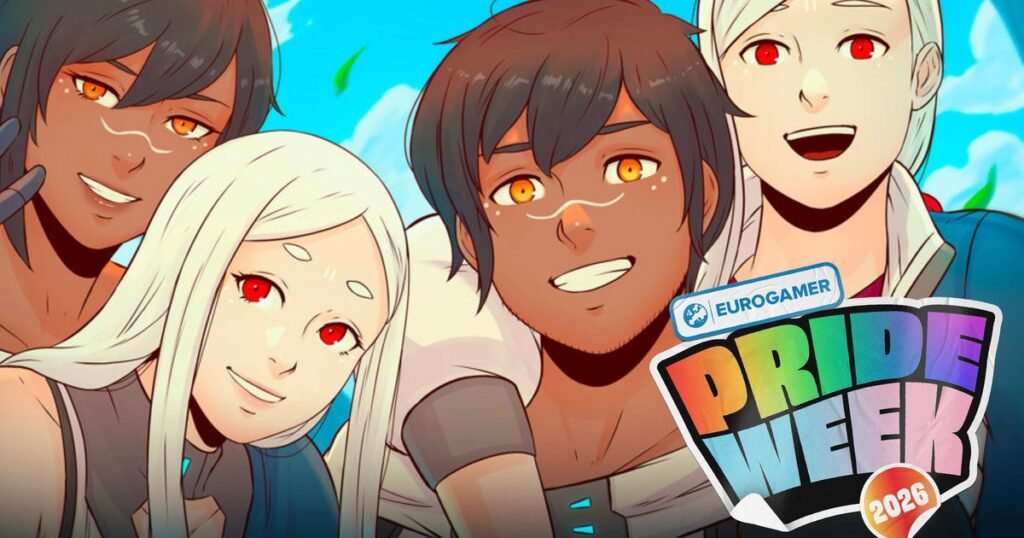
Hello! Eurogamer’s week of features celebrating the intersection of queer culture and gaming continues today as Kaan Serin explores how the acclaimed Haven found new meaning when it introduced the option to gender swap its leads two years after launch. To catch up on everything you might have missed this year and in Pride Weeks past, you can visit our Pride Week hub.
There’s a scene in The Game Bakers’ 2020 RPG adventure Haven where our central couple, Kay and Yu, begin repairing their spaceship/mobile home after it’s tragically battered in an earthquake on an alien planet. As they replace its left wing, its right wing, then the engine hood and beyond, the couple start to wonder: at what point is their Nest not their Nest? If all the ship’s various appendages and knobs and metal plates get swapped out, is it still the same Nest assembled in a factory someplace, sometime ago? It’s the sci-fi Ship of Theseus.
Two years after Haven’s release, The Game Bakers inadvertently flipped that same question back onto its two protagonists with the Couples Update, letting players gender swap either one. Suddenly, Kay and Yu – straight in the original telling – could be a lesbian couple (with the original Yu now paired with a female version of Kay), a gay couple (featuring Kay and an alt-version of Yu), or remain as they always were. In other words, it turned its straight game gay.
So back to the sci-fi Ship of Theseus. The Couples Update doesn’t alter what happens in Haven or how you play it – mechanical and narrative changes are nearly non-existent – but in swapping out a few pieces, can it alter what Haven means? Has the old become something new? Yes, I think; replacing the protagonists’ genders transforms how the game is understood. It’s not brute-forcing queerness into an otherwise heteronormative game, rather the added representation is forcing us to reinterpret the game itself. On paper, nothing material really changes when doing a queer playthrough. Most of the dialogue is unaltered outside of pronoun tweaks here and there. The story and combat remain exactly the same. The only things different are the character models, voice acting, and in-game menu illustrations.
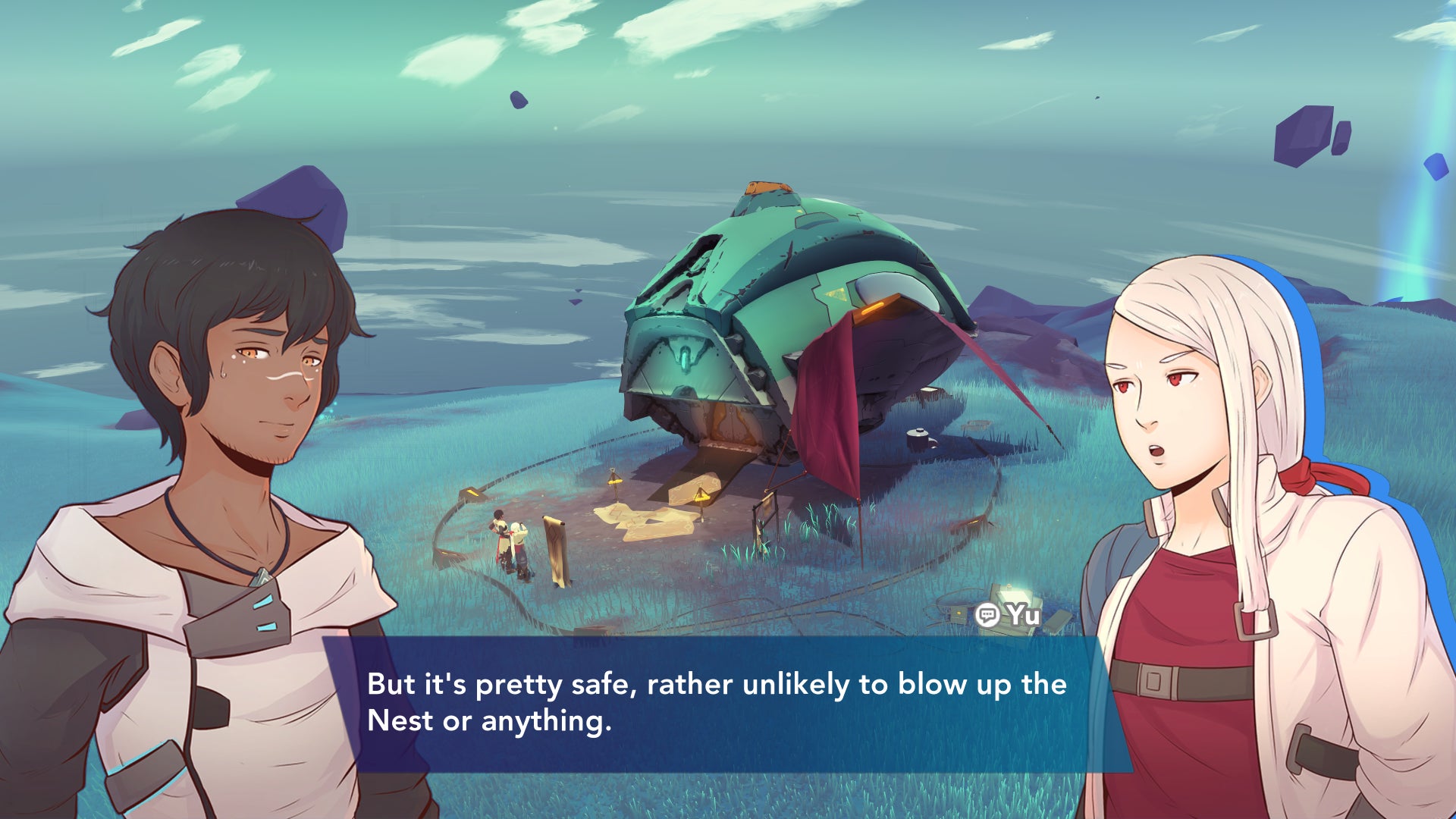
But while much of Haven remains intact, the game fits into a queer reading like a fish in water because even before the Couples Update, it was already concerned with problems that shape LGBTQIA+ lives every day, even if they weren’t explicitly framed through a queer lens. There’s the policing of love, the pressure to conform, the fighting of alien mushroom-growing lizards… wait, no, that’s a game-exclusive problem. Haven, in all its permutations, is a game about a couple on the run from an authoritarian society that forces its population into arranged marriages with whoever it chooses. To stay together, to escape the Matchmaker’s decree, Kay and Yu must abandon their entire lives and everyone else they’ve ever met or ever will.
A regime that fights to stop people from loving who they choose, potentially even erasing their memories, obviously invites queer interpretations by itself. Many in the LGBTQIA+ community still experience a similar oppression (and it’s notable it’s being enforced by one of the character’s parents here, too), so inserting an actual queer couple into the mix only highlights the already queer-coded narrative on screen.
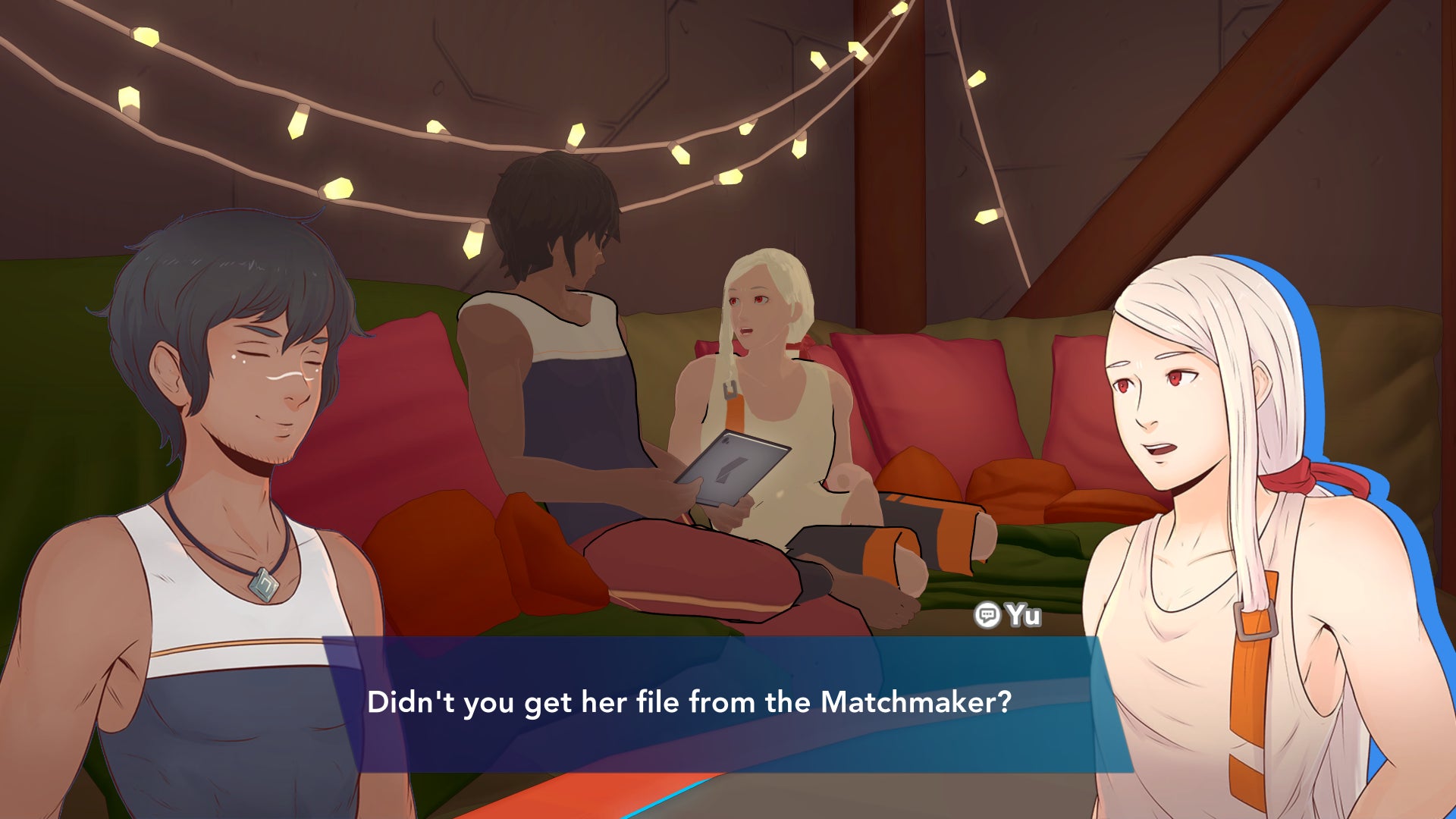
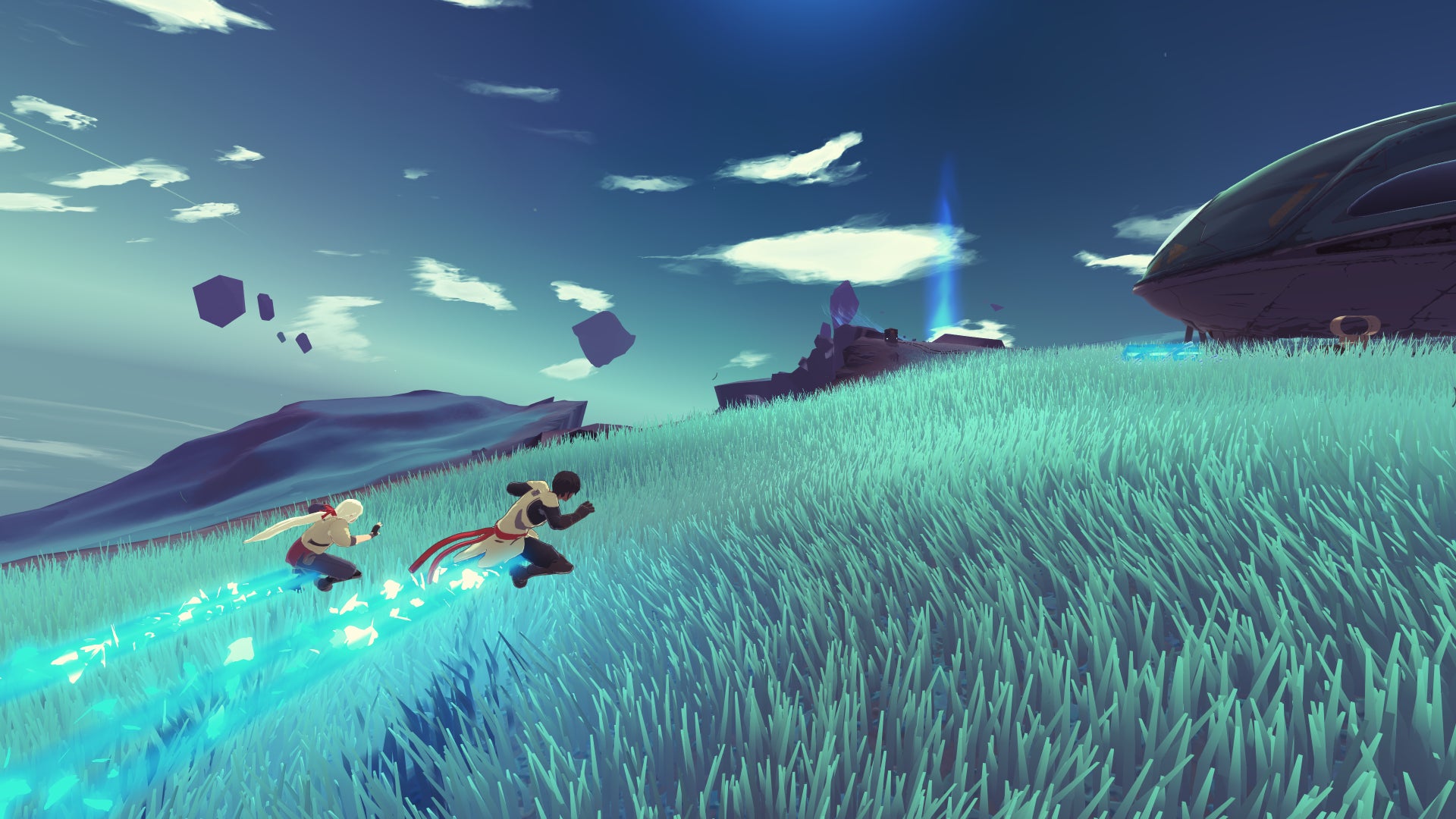
In that sense, Haven very elegantly queers itself without much additional work. Kay and Yu are two people who potentially face death for the crime of simply being together, and every in-game day they spend exploring the archipelago of floating islets that serves as Haven’s setting – skinny dipping in fountains, cooking using alien produce, holding hands outside, and playing made-up choose-your-own-adventure games – is a dangerous act of resistance.
During my very gay second playthrough of Haven, my male Kay was destined to be shovelled into a blind, life-long soulmateage with a woman, while a lesbian run flips the roles with a female Yu being the one forced into a heterosexual relationship. In the game’s ‘bad’ ending, gay Kay is ripped from Yu so he can unhappily spend his life with someone of the opposite sex. Some memory alteration is also implied, a practice the characters say was originally invented to remove short traumatic moments in someone’s life during therapy before it was eventually weaponised by the regime against our couple. Without having to lift so much as a finger, a queer run of Haven arguably draws connections to real-world conversion therapy.
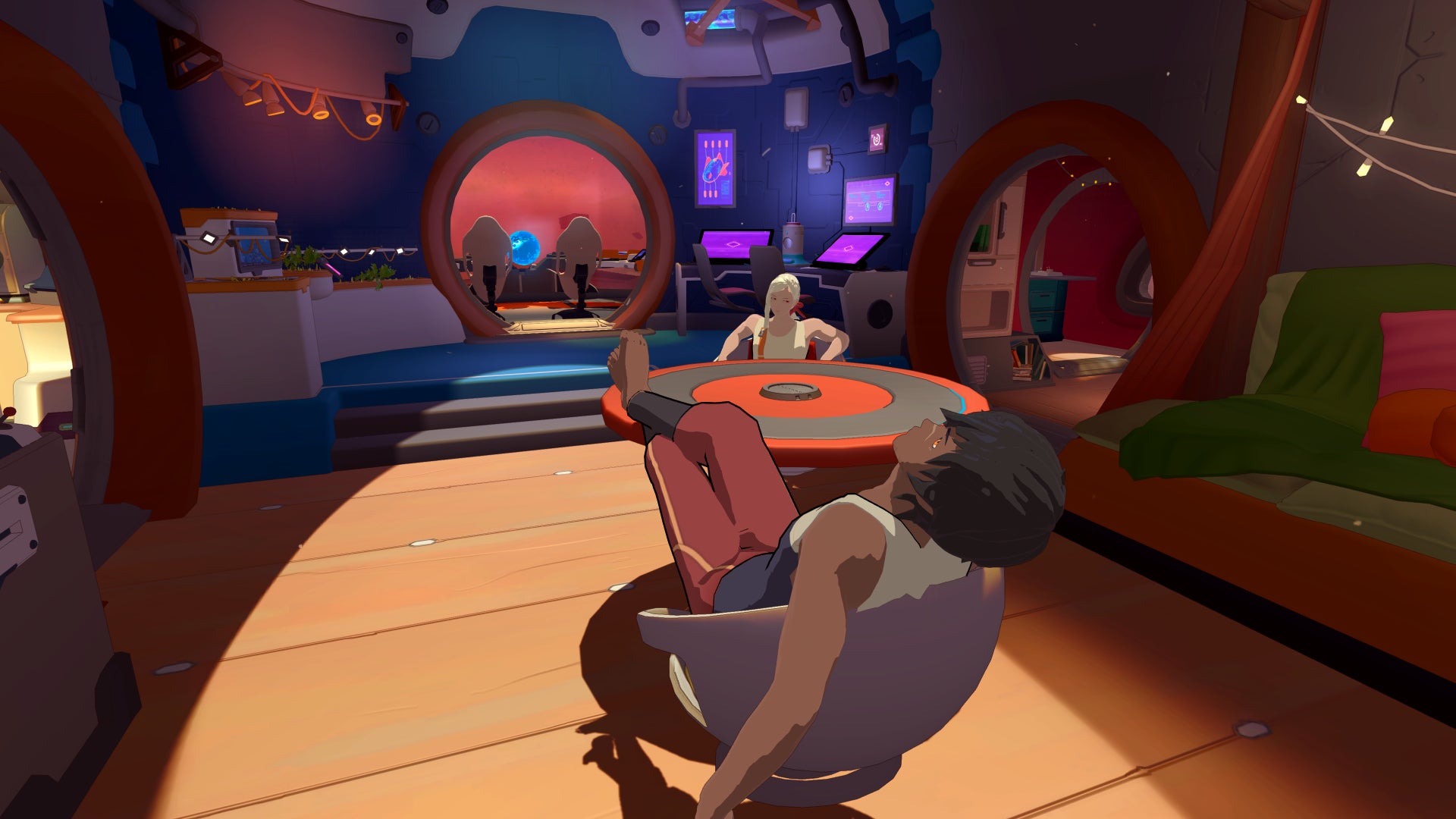
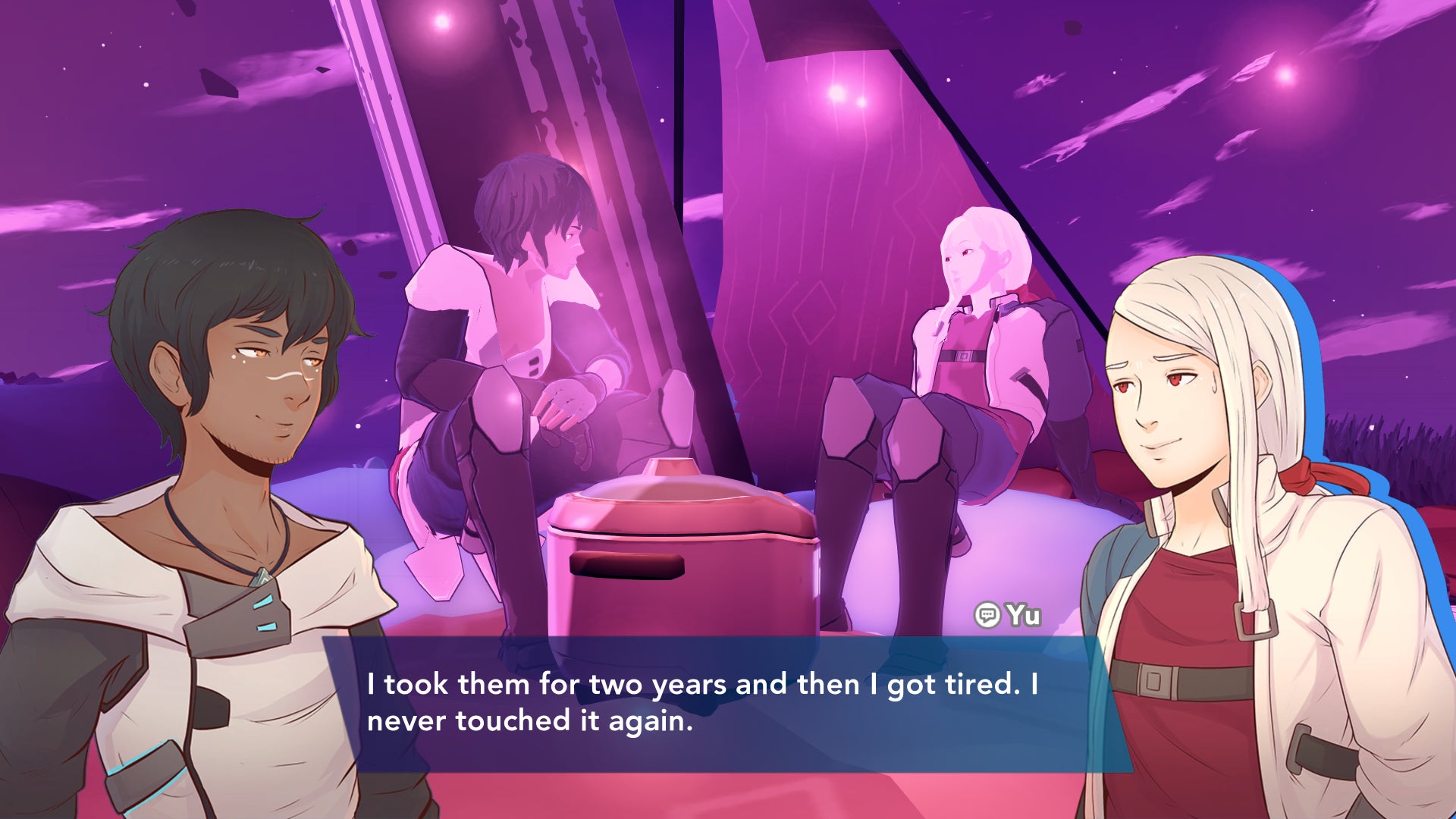
And while the game doesn’t outright explore the subject, I imagine polyamorous and asexual folks probably don’t fare very well in a system where an algorithm seemingly chucks them into the arms of a potentially unwilling mate forever.
Admittedly, slapping queer theory onto an originally hetero-led game does have its limits and can feel like trying to push a square block into a triangular hole. Because, imagine this, it’s suggested Haven’s authoritarian sci-fi state isn’t totally gay-averse. My Yu mentions he has “mothers”, for one, and a knock-on effect of the Couples Update means he’s canonically betrothed to another man. The regime’s enigmatic Matchmaker isn’t strictly homophobic, then, but it seemingly doesn’t take into consideration one’s sexuality while leashing two strangers together. The world Haven sets up leaves big questions when looked at as a game specifically about queer experiences – and those questions don’t always have comfortable answers – but it still invites some fascinating readings.
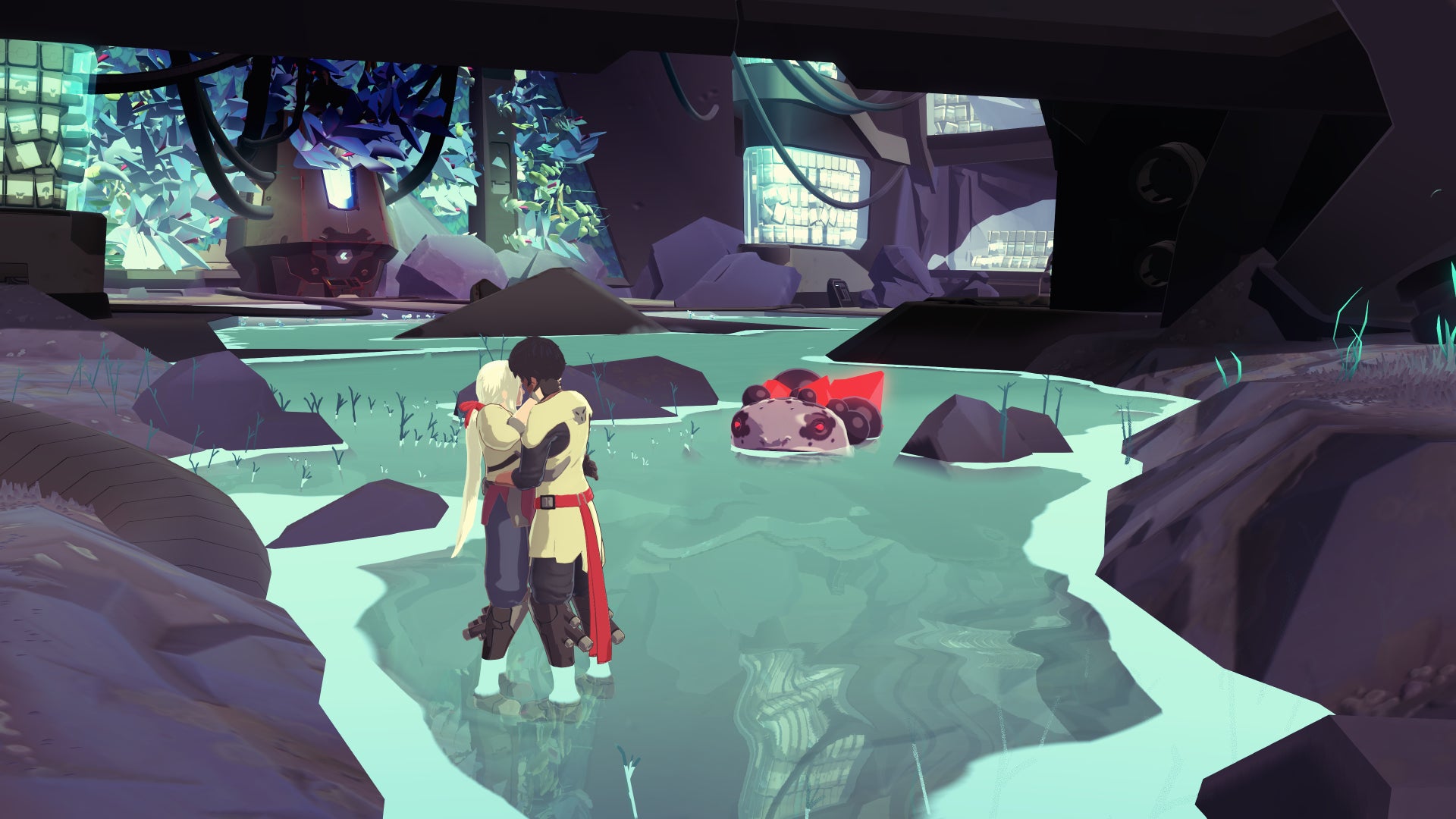
Which brings us back to the sci-fi Ship of Theseus once more. At what point are Kay and Yu not Kay and Yu anymore? Does swapping their pronouns, their voices, their builds and their implied genitalia fundamentally change what these characters stand for? What about Haven? Does the game itself take on a different form with queer characters in the spotlight? Is it more explicitly about one thing or another simply by virtue of having queer protagonists? Haven remains the same on a fundamental level, I think, but adopts an even sadder meaning by connecting the dots between its fictional oppressive systems and our real-world ones.
Not every game can open itself up to queer re-evaluation years after the fact like this (I’m not totally convinced Portal would suddenly take on a different meaning if Chell and GLaDOS started smooching, for instance, but Master Chief’s fight against a zealous religious army in Halo might if he was a little fruitier). But the Couples Update works miraculously well in retroactively queering Haven because those queer-coded ideas already existed and easily bubble up to the surface when looking at it through a different character’s slightly gayer lens. It might not be a game originally built with foregrounded queer characters, but its themes of forbidden love and oppressive societies enter it into the canon of great gaymes pretty seamlessly.