“We’re not here to talk about the past”, says VP & GM of Battlefield Studios Europe Rebecka Coutaz, on the occasion of Criterion’s 30th anniversary. Behind her on the wall is the studio’s new logo, which reads “Criterion: a Battlefield Studio”. The message is pretty clear, then.
For the past decade, the Guildford-based studio that made its name in the racing space has been a collaborative partner on EA’s Battlefield series, first lending its expertise to 2016’s Battlefield 1 and later to Battlefields 5, 2042, and 6. When I ask whether the Burnout and Need For Speed developer’s newly established scope might include projects other than Battlefield, Coutaz is clear: “we are solely focused on Battlefield.”
It seems an odd way to mark the occasion of the studio’s third decade of operation, especially considering the press were invited to celebrate. There are references to the studio’s history throughout the day – shots of cars zooming by in a sort of ‘greatest hits’ montage video which opens the day; a stop-off on the studio tour to race in a NFS arcade machine; passing mention of prior titles that made the studio’s name. But most of this anniversary event is spent highlighting the processes and ethos by which a fantastically talented group of audio, animation, and technical developers now collaborates on Battlefield 6.

EA may not be talking about the studio’s past on this milestone anniversary, but it’s a past worth remembering. Criterion Games’ history began in Guildford, England in January 1996 when it was formed by Alex Ward and Fiona Sperry as a subdivision of Criterion Software. Owned by parent company Canon, Criterion’s purpose wasn’t just to release games but to build the tools and technologies that let people make them. In 1993 it had released the earliest version of Renderware, a 3D API and graphics engine, and with the formation of this new games studio, the idea was to release software that showed what Renderware could do.
There’s a clear sense of that in Criterion’s earliest releases. 1996’s Scorched Planet, a Descent-like vehicular shooter taking place across impressive rolling landscapes, and 1997’s Speedboat Attack and Sub Culture, both aquatic vehicular titles, put the quality of their 3D visuals in the spotlight more than any other element. There was a zippiness and flow to them which felt groundbreaking and reminiscent of the buttery-smooth arcade machines of the time.
1998’s motorcycle racing release Redline Racer and 1999’s Trickstyle once again had the visuals and the sensation of speed to turn heads, if not the depth to coax critics away from the likes of WipEout or F-Zero X. What they did have, if you looked out for it, was a distinct sense of humour.
Redline Racer contained an easter egg bike called Sub Culture, referencing the studio’s previous game, and a rideable friendly dinosaur called Barnaby, among other leftfield modes of transportation. Trickstyle, meanwhile, had a ‘TRAVOLTA’ cheat code which unlocked special moves. Irreverent touches like these would become a hallmark of the studio.
“ We are unashamedly British,” says senior producer Danny Isaac, who began with Criterion on 2019’s Need For Speed Heat and whose list of credits at EA runs back to 1994. “As a studio, we’ve got to have fun building it. We’ve got to have our own identity and I’ve always loved that British sense of humor, that dry humor that comes through in what we do. Even when we have tough days, people still keep their sense of humor as we go through it.”
While Criterion’s early output demonstrates a company finding its feet, the Renderware engine was fast becoming a vital piece of the wider games industry. Licensed over 200 times to titles developed beyond Criterion’s walls, it was used by a broad range of games from Rayman 2 to Dave Mirra Freestyle BMX. Rockstar would use it to build Grand Theft Auto 3 in 2001, Vice City in 2002 and San Andreas in 2004.
When EA acquired Criterion in 2004, there was even discussion as to whether FIFA should migrate to Renderware, Isaac tells me.
By the time of that acquisition, Criterion had firmly established itself as a major player in racing game development thanks to a trio of masterful, explosive, bodywork-shattering arcade racing titles: the Burnout games. Burnout used Renderware to make racing feel not just fast, but dangerous. Impactful. In its own way, subversive. Running contrary to Gran Turismo’s stately simulation and Need For Speed’s consequence-free point-to-points, Criterion’s 2001 release dared you to drive as close to oncoming vehicles and obstacles as possible in order to build up your boost meter.
It’s a concept that prevails today, in games from Forza Horizon 6 to Need For Speed Unbound, Criterion’s most recent (and likely final) racing release. It’s become such a fundamental part of the genre’s fabric that even explaining it feels a bit silly, like describing the way your controller’s trigger controls a car’s throttle.
Crashes in Burnout are spectacular. They wreck your unlicensed car in a hail of shattered glass and mangled bodywork, and then you’re sent back on your way with a figurative pat on the bottom to go and make more mischief.
Studio cofounder and game director Alex Ward said the 1976 French short film C’était un rendez-vous and 1998’s Ronin inspired Burnout’s unique personality. The 2.3 million players who bashed their way through it may or may not have noticed those references, but they certainly found the end product agreeable. Burnout changed Criterion. This was no longer a Renderware studio, but a genuine rival to Need For Speed’s place on the arcade racing throne.
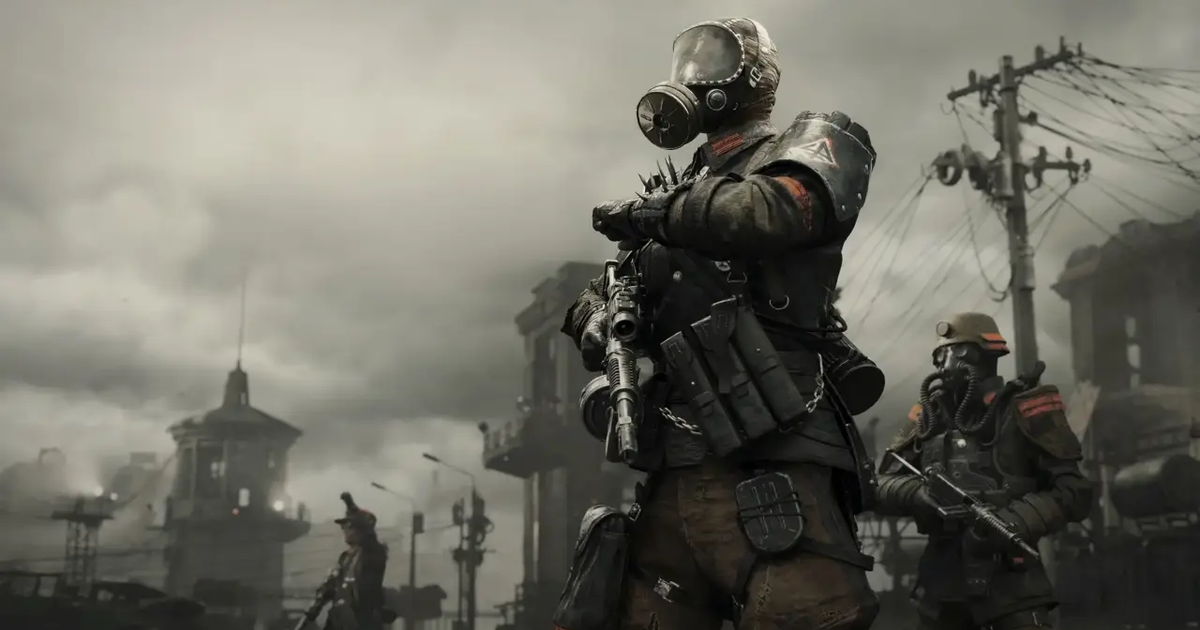
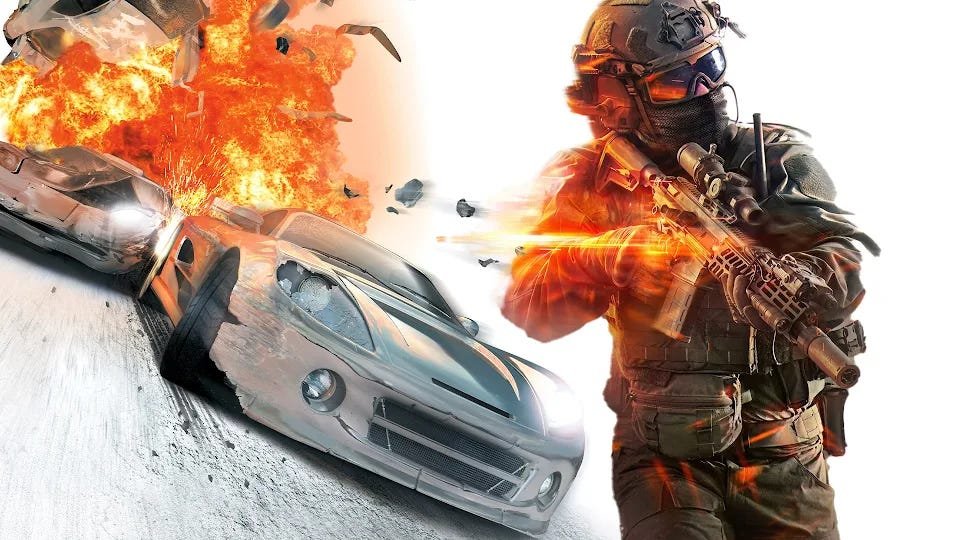
In the midst of Criterion’s run of Burnout releases came 2006’s Black, a raucous FPS which endeavored to “do for shooters what Burnout did for racing games”, said Alex Ward at the time. It took a similarly cinematic approach to the corridor gunfight as the studio had taken towards highways full of traffic. Shattered glass and bullet casings spewing forth at all times, the screen shaking as if struggling to contain all the action. Great sound design.
Black and Burnout embody the principles that Courtaz sees as fundamental to the studio’s identity in 2026. “ The intensity, the cinematic view, the instant reward moment that our players love on Battlefield, those are really the strengths of Criterion… and it goes all the way back to Black.
“Yes, it used to be cars and less guns. But it’s the overall player experience that we are sharing with the same intensity.”
It’s true that a throughline is evident from those PS2 releases to present, in the sound design, the heightened, John Woo movie gameplay sequencing and technical proficiency required to make such a lot of elements sing in harmony. Whether “intensity” is a sufficiently sharply drawn identity in modern triple-A development, particularly of a studio with this much racing heritage, is a different matter.
What came next for the Guildford studio, as the Burnout franchise rolled on, was the arrival of Need For Speed at its doors. EA’s other racing series had been riding high for a decade, nailed on for a Christmas number one chart position like a reality competition winner’s debut single. But after so many annual releases, the blueprint was starting to look worn out by 2010.
Criterion took a scalpel to the series and trimmed away the parts that no longer served it. The straight-to-DVD undercover cop dramas, endearing though they were, were out. In their place was a bare minimum of narrative setup which shifted the focus entirely back on the racing.
Criterion deployed what it had learned over the last decade and used it to rework the battle between racers and the police, something that had been a mainstay in NFS for years but hadn’t always been lavished with much mechanical depth. 2010’s Hot Pursuit was a marked improvement in that regard which married adrenaline-pumping, high-speed chases with genuinely tactical vehicular combat. Its EMPs, jammers and spike strips gave you much more to think about than the best line through the next corner.
The momentum kept rolling with 2012’s Need For Speed: Most Wanted, dragging the franchise away from the live action plotlines, underfloor neons and crunk soundtracks that were beginning to age like raw milk and into more streamlined, playful, mechanically rich territory.
From 2013, Criterion’s projects became more collaborative. Its next NFS releases were joint efforts with Ghost Games, and by 2016 it was racking up ‘additional work’ credits on the Star Wars Battlefront and Battlefield franchises.
That winding path leads, via two more wonderful NFS releases in 2019 and 2022, to Criterion’s current role as – read along with the logo – a Battlefield studio.
It takes a lot of people to make games with the depth and scale of Battlefield. Increasingly, over the last two decades, that’s meant multiple studios working on projects together. And in the adapt-or-die market conditions of the post-lockdown games industry, Criterion has proven itself extremely accomplished at collaboration as well as bombastic racing games.
“ The creative vision is really the heart,” Coutaz tells me. “It has to be very clear to the teams, no matter if they are based in LA, Montreal, Manchester, Guildford, what kind of game we’re making.” In her role as vice president and general manager of Battlefield Studios Europe, Coutaz is “ a governor of the identity of each studio.
“ Each studio will make their best job, and they will thrive when I can allow them to apply their identity to the part of the game that they are working on.”
Ping off a headshot in Battlefield 6 or fire an artillery round into soft earth and you can see – and hear – how good Criterion’s developers are at sound design today, as they always were. Squint hard enough and you can see how Battlefield 6’s explosions and falling rumble trace back to Black’s Matrix-like gunfights and Burnout’s glorious collisions.
The question is the extent to which the studio is free to decide where to deploy its unique expertise, identity, humour, and legacy and whether its defined identity as part of Battlefield Studios truly utilises its heritage. Whether the individuals that make up Criterion, a studio with 30 years of racing game heritage, are happy to work on a sole shooter franchise for the foreseeable future.
That’s the part of the story that I couldn’t quite join up during Criterion’s birthday celebrations. Not how the studio came to become a key collaborator in Battlefield, but how that collaboration has apparently narrowed its scope so much that racing games aren’t considered part of Criterion’s prerogative.
Phil Iwaniuk is a veteran hardware smasher and game botherer who has written for the likes of PC Format, Official PlayStation Magazine, PCGamesN, The Guardian, Eurogamer, Rock, Paper, Shotgun, and IGN. He won an award once, but he doesn’t like to go on about it.