
As was feared after rumors of massive layoffs at Xbox started circulating shortly after this year’s Xbox Showcase, the axe has finally fallen at Team Green. While it is the latest in a series of devastating impact waves that have been hitting Xbox ever since its record $69 billion acquisition of Activision-Blizzard-King became official, it is at least a relief to know that the four studios whose fates seemed in doubt – Double Fine, Compulsion, Undead Labs, and Ninja Theory – will all live to fight another day as either independent studios or under new corporate ownership (a fifth, Arkane, remains in flux as Microsoft must navigate French labor laws).
But business will clearly be handled differently at Xbox moving forward. New Xbox CEO Asha Sharma is reportedly seeking to speed up development on Xbox’s tentpole franchises: Halo, Fallout, and The Elder Scrolls. I imagine that Forza Horizon, Fable, and Gears of War are also on that list, but obviously those three are all shipping later this year or, in Forza’s case, just shipped in May.
In her memo announcing the “reset” at Xbox, Sharma plainly said, “We have also learned that we are not the best home for every type of studio.” Meanwhile, Bethesda boss Jill Braff told her teams that “to best position Bethesda for future growth, we are shifting from a planning model primarily centered on what’s next for each independent studio to one that focuses on our strongest franchises and determining the content roadmap that best serves our players and Bethesda as a whole.”
But how might all of that actually look in practice? What would it take for Xbox to divert its resources into its biggest franchises, best utilizing the studios it’s keeping alive? As someone who’s been covering Xbox for almost all of its existence, I’ve got some ideas. I reserve the right to be wrong, certainly, but here’s what I’d imagine is a realistic blueprint for what the next chapter of Xbox development might look like.
A Universe of Halo
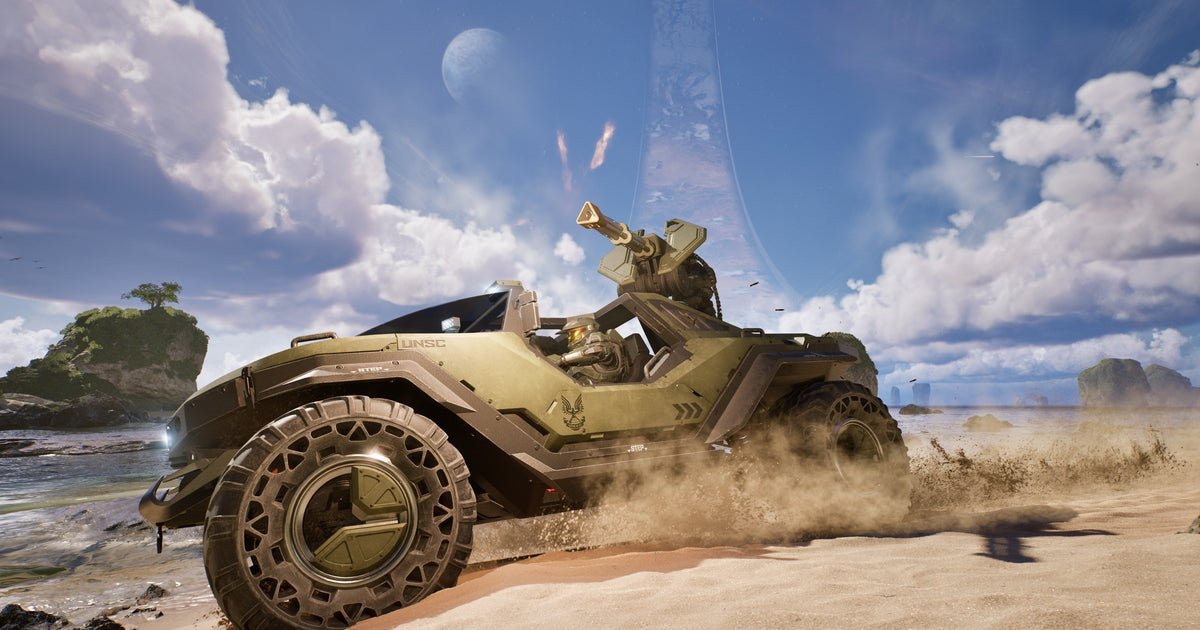
Halo has been a mess since long before this “reset” was even considered. Halo 5’s lackluster single-player campaign couldn’t live up to its brilliant marketing campaign, Halo Infinite famously missed the Series X’s launch and needed to be pulled from the depths of Development Hell by OG Halo veteran Joseph Staten – and then he didn’t stick around – and more recently, the studio changed leadership and its technology base, chucking its proprietary Slipspace game engine in the dumpster for Unreal Engine 5. The newly rechristened Halo Studios is about to ship Halo: Campaign Evolved, the studio’s first UE5 experiment that marks both its 25th anniversary and its first – and quite possibly last – appearance on a PlayStation console. And while it’s packing a trio of new prequel missions, it’s missing multiplayer entirely, which probably isn’t going to give it much staying power.
So as Halo Studios effectively reboots itself in terms of leadership and tech, how on Earth can Xbox fast-track a Halo game? The answer perhaps lies outside of Halo Studios, in the suburbs of Dallas, Texas: id Software. Or at least, so I thought until Xbox had other ideas. id was unfortunately affected quite heavily by the layoffs, with reportedly more than half the studio being given their walking papers. Which, I’ll be honest, I could write a whole separate rant about, because it is indefensibly studpid. Setting aside id’s legacy, all it’s actually done over the past decade is ship three top-shelf first-person shooters, reviving the iconic Doom IP in the process, and it shipped them all on relatively tight schedules.
So if id is no longer in a position to develop something as big as a Halo game, I’d give Halo to the equally brilliant MachineGames and let them reboot it entirely, just as they did for Wolfenstein. Let’s be honest: Halo’s story has gotten convoluted. Infinite ended on a cliffhanger. Master Chief voice actor Steve Downes is 76 years old. By the time the next Halo is ready to roll, he’ll likely be pushing 80. It now seems like the only sensible course of action is to just acknowledge the awesome run that Halo’s longrunning canon had and reboot the damn thing. It’s time.
Meanwhile, the team at MachineGames has proven that it can develop top-shelf action games on a reasonable schedule. The studio’s brilliant reboot of Wolfenstein dropped in 2014, and the sequel hit just three years later. The standalone expansion called Youngblood released in 2019, and then five years later we got one of the best games of this entire generation: Indiana Jones and the Great Circle. How long do you think it’s going to take Halo Studios to get its act together and get the next major Halo game out the door? After we waited six years between Halo 5 and Halo Infinite and it’s already been five years since Infinite, I’d bet a huge sum of money on MachineGames being able to get a major Halo game done before Halo Studios can.
Of course, Halo can’t be taken away from Halo Studios, and nor would I ever suggest that. Any kind of shakeup should play to the strengths of the studio, and while MachineGames’s work on modern Wolfenstein has proven its single-player strengths, multiplayer has never been its focus. That can never be the case for Master Chief, and so Halo Studios could lead on the reboot’s multiplayer. Halo 5 and Infinite (its live-service support woes aside) proved that the studio is capable of making an awesome Halo multiplayer game.
But what about the years and games beyond that reboot? The answer may lie in yet another unusual place: Games Workshop. The British tabletop company handles Warhammer 40K video games through a myriad of partnerships with talented external developers, allowing for many great games across a number of different genres that arrive on a regular basis: whether it’s Dawn of War, Boltgun, Space Marine, or any number of other games in other genres, there is seemingly always another promising and unique Warhammer experience right around the corner. Same with Disney and Star Wars – Disney is now working with Saber on a KOTOR remake, former KOTOR director Casey Hudson and his team on a KOTOR spiritual successor (Fate of the Old Republic), Quantic Dream on a narrative adventure (Star Wars Eclipse), a group of ex-XCOM developers on a tactics game (Zero Company), a team of ex-Burnout developers on an arcade racing game (Galactic Racer), and Amy Hennig on an untitled third-person Star Wars action-adventure. That’s the kind of future Halo could have. It’s a universe so rich with deep lore and characters that it’s criminal we’ve had exactly zero new and original Halo games in the last five years and counting. Halo should be on our hard drives constantly. Instead, it’s an afterthought when you think about big gaming franchises today.
More Fallout, More Elder Scrolls
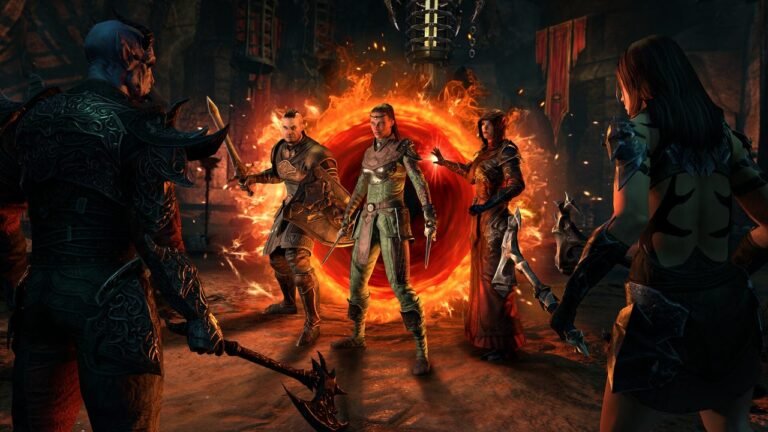
It’s no secret that The Elder Scrolls and Fallout are both massive franchises with the potential to sell millions, but it’s been more than a decade since either series saw a mainline, single-player release. Todd Howard, the game director on both Fallout and The Elder Scrolls, is in full production on The Elder Scrolls 6 now, and he’s told me directly that he intends to direct Fallout 5 himself. The problem with that, given that Bethesda Game Studios has historically only been in full production on one game at a time, is that it means Fallout 5 probably won’t ship until the mid-2030’s.
It’s clear that something needs to be done about that, and Xbox already has the necessary talent, resources and template to do so in-house. Take a look at Call of Duty, which has long been able to create annual offerings by having multiple studios, spearheaded by Infinity Ward and Treyarch, all working on different games at the same time on three-ish year development cycles. A similar “development circle” of RPG studios could be created for Fallout and The Elder Scrolls. The members of that circle? Bethesda Game Studios, of course, along with decorated RPG developers Obsidian Entertainment (who’ve done this dance before when making the still-beloved Fallout: New Vegas) and inXile Entertainment (whose founder, Brian Fargo, helmed Fallout’s precursor, Wasteland, and produced the original two Fallout games).
Three-year development cycles are, of course, unrealistic for RPGs the size of Fallout and The Elder Scrolls, but six-year cycles seem more achievable. And if Bethesda switches to Unreal Engine, which Obsidian and inXile are both currently using, or Obsidian and inXile switch to Bethesda’s Creation Engine, it would mean that all teams would be working off of a shared – and constantly evolving – tech pipeline. Regardless of where the tech lands, the result could be a big new Fallout or Elder Scrolls game releasing every other year, which sure beats the 11 years (and counting) it’s been since Fallout 4 and the
And in fact, it seems Xbox might be doing exactly this – or at least, the first step of it. Bloomberg reports that Obsidian’s Avowed 2 has been canceled and that Fallout: New Vegas game director Josh Sawyer will set his own unannounced project aside to focus on a new Fallout game.
Xbox’s future is more uncertain than ever, I don’t think there’s any doubt about that. If Microsoft moves ahead with Project Helix, it’s zagging while Sony zigs, aiming more at the Steam Machine and the growing PC game market than the traditional console space it’s been losing ground in for the past two generations. One thing seems certain, though: new IPs and smaller projects are going to be fewer and farther between for the foreseeable future. And that’s not ideal if you ask me. But if we do get lots more Halo in many different shapes and sizes, and we get Fallout and Elder Scrolls games more than once each in our adult lifetimes, that would be a sliver of good news, at least. Let’s see where Xbox goes from here.
Ryan McCaffrey is IGN’s executive editor of previews and host of both IGN’s weekly Xbox show, Podcast Unlocked, as well as our semi-retired interview show, IGN Unfiltered. He’s a North Jersey guy, so it’s “Taylor ham,” not “pork roll.” Debate it with him on Twitter at @DMC_Ryan.