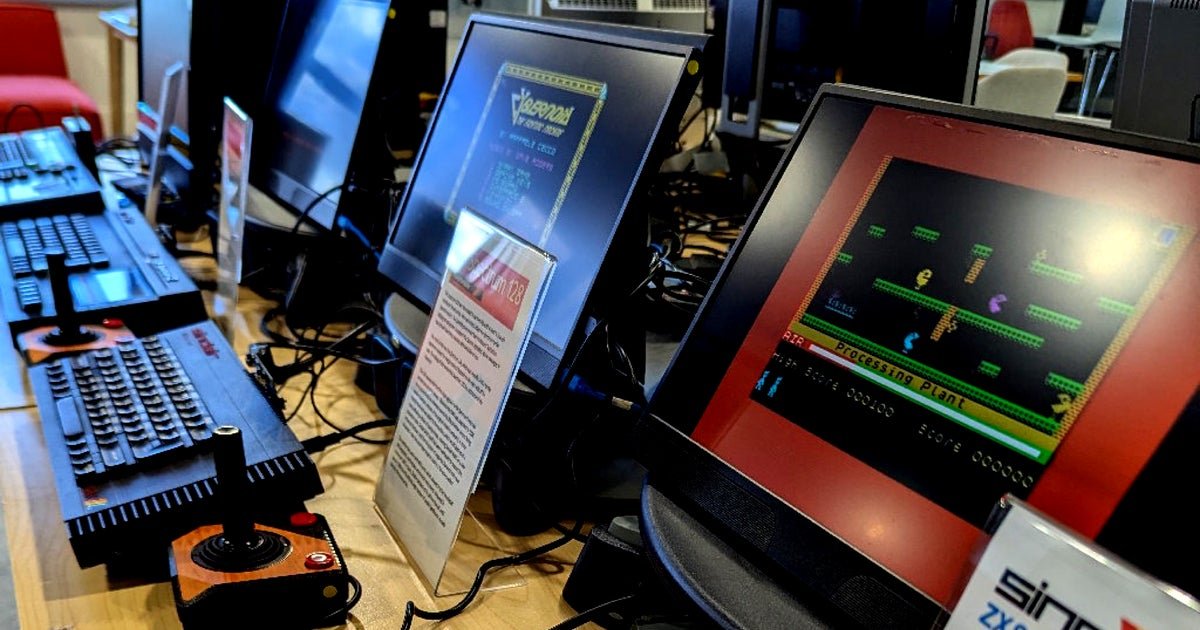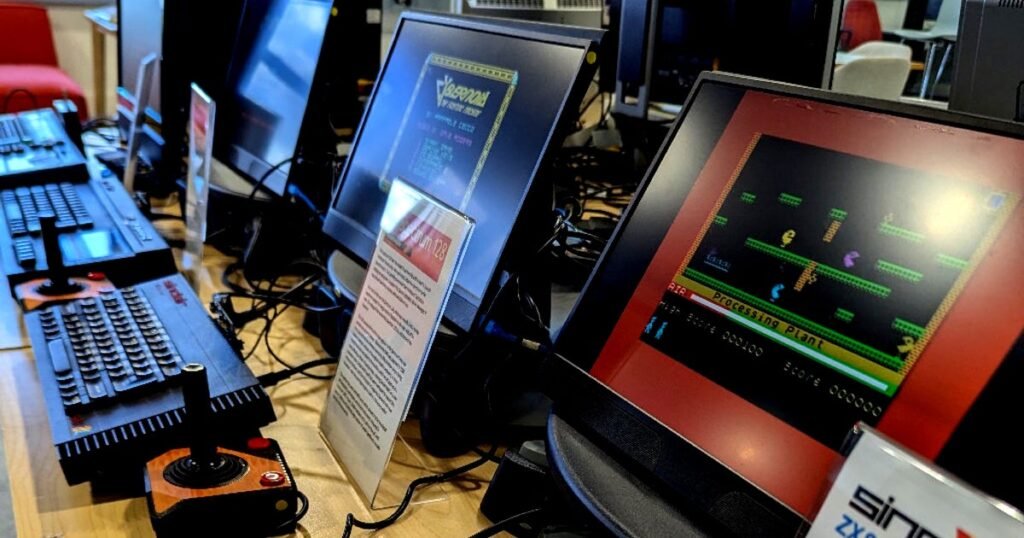
Wander the winding track to London’s Kingston University over the next week and you’ll find a little pocket of gaming history awaiting there. The Archive of Retro Computing (ARC) is free to explore and features over 65 retro personal computers and gaming consoles, some familiar and others considerably less so. It’s an exhibit stretching from the mid-70s and the advent of video game cartridges to significantly more modern gaming consoles, charting the history of personal computing across an incredibly rich three decades.
Paul Neve, the man behind ARC, is the course leader for undergraduate computer science at London’s Kingston University. And when I videochat with him ahead of this year’s showcase, he’s against a corkboard backdrop festooned with nostalgic magazine ads. “The heart of a system that grows with you!”, exclaims one spread for the ZX81; “Why do girls like Atari Computer Camps?”, ponders another.
We are, it turns out, of a roughly similar age; children of what Neve calls the “glory days” of computing. His own journey begins with the Atari 2600, and he would later graduate to the 8-bit era of personal computers – the Sinclair Spectrums and Commodore 64s – charting a path through the likes of ZX81, the Spectrum 128, the Spectrum +2, the Atari ST, and eventually toward more recent consoles like the PlayStation 1 and original Xbox. “I suppose growing up in that era,” he tells me, “it’s why I do what I do”.
As we reminisce, he pinpoints the Spectrum as his “first true love”, and he vividly recalls having “a face like a smacked backside” after taking his Christmas and birthday savings to WH Smiths in his youth, only to discover he was £17.29 short of the £49.99 asking price – at which point his dad took pity on him. As for his favourite game, that’ll be designer Matthew Smith’s legendary platformer Manic Miner, even all these years on (“Maybe I’m just a dinosaur, but I find it very difficult to put in the investment of time for modern titles”, he says). Yet despite Neve’s obvious passion for the computer industry’s pioneering years, it turns out the Archive of Retro Computing is a relatively new collection.
“A couple of years ago,” he tells me, “one of my colleagues had a contract with a house clearance company … and this eccentric engineer had basically been buying everything from 1970 onwards. So it really was like the motherload. The house clearance company wanted to auction it all off. But the chap there said to my colleague, ‘Is there anyone who knows about this stuff? We really think it should be exhibited before it actually gets sold off.'” And this, of course, is where Neve joins the story.
That initial collection was exhibited in 2004, and the showcase proved enormously successful. “After that one, I got the bug as it were and then I proceeded to effectively emulate the eccentric engineer by then pretty much buying everything,” Neve says. “If you like, it’s my midlife crisis, because any computer or console that my childhood self [would have liked], I basically went and acquired.”
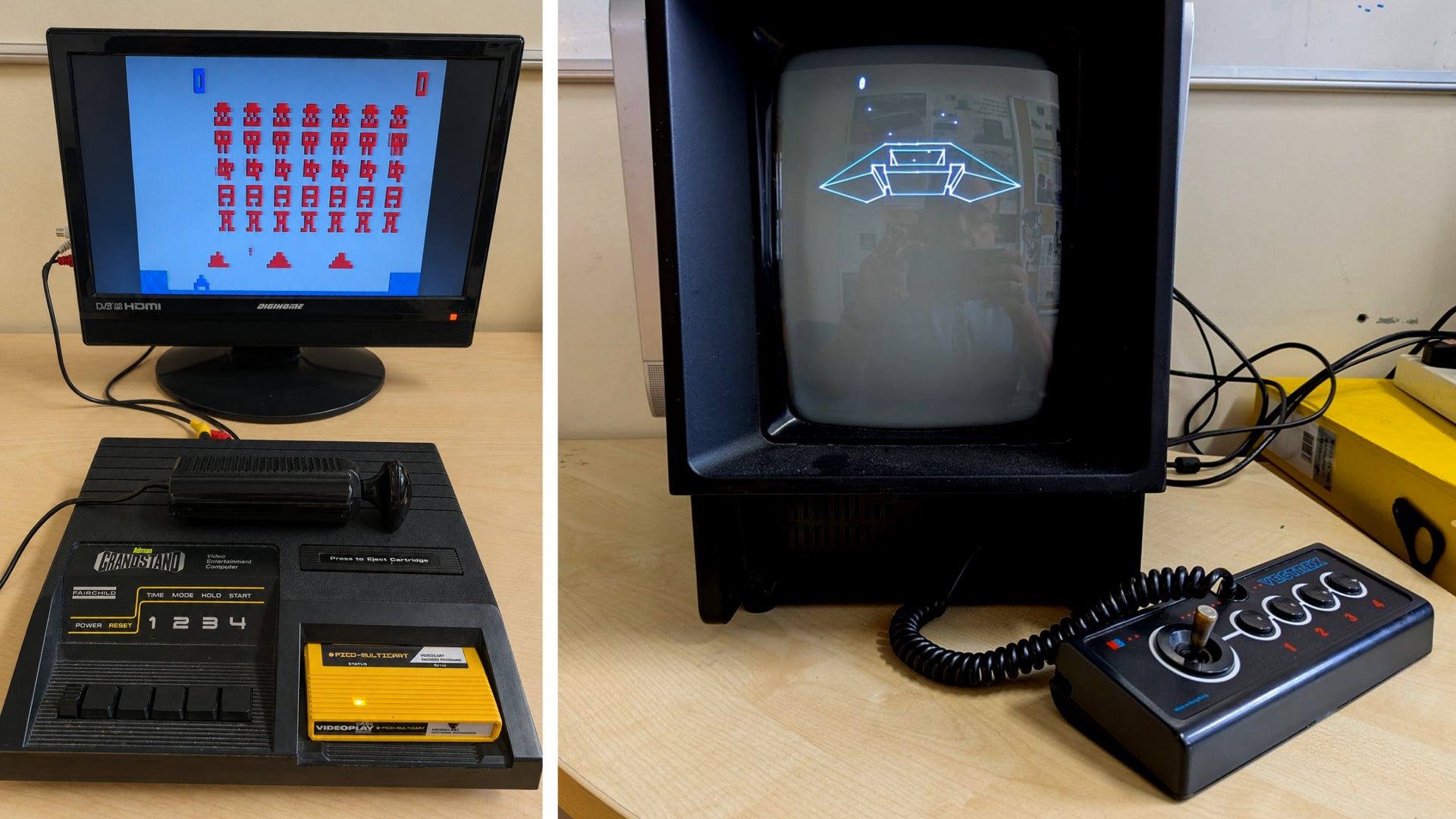
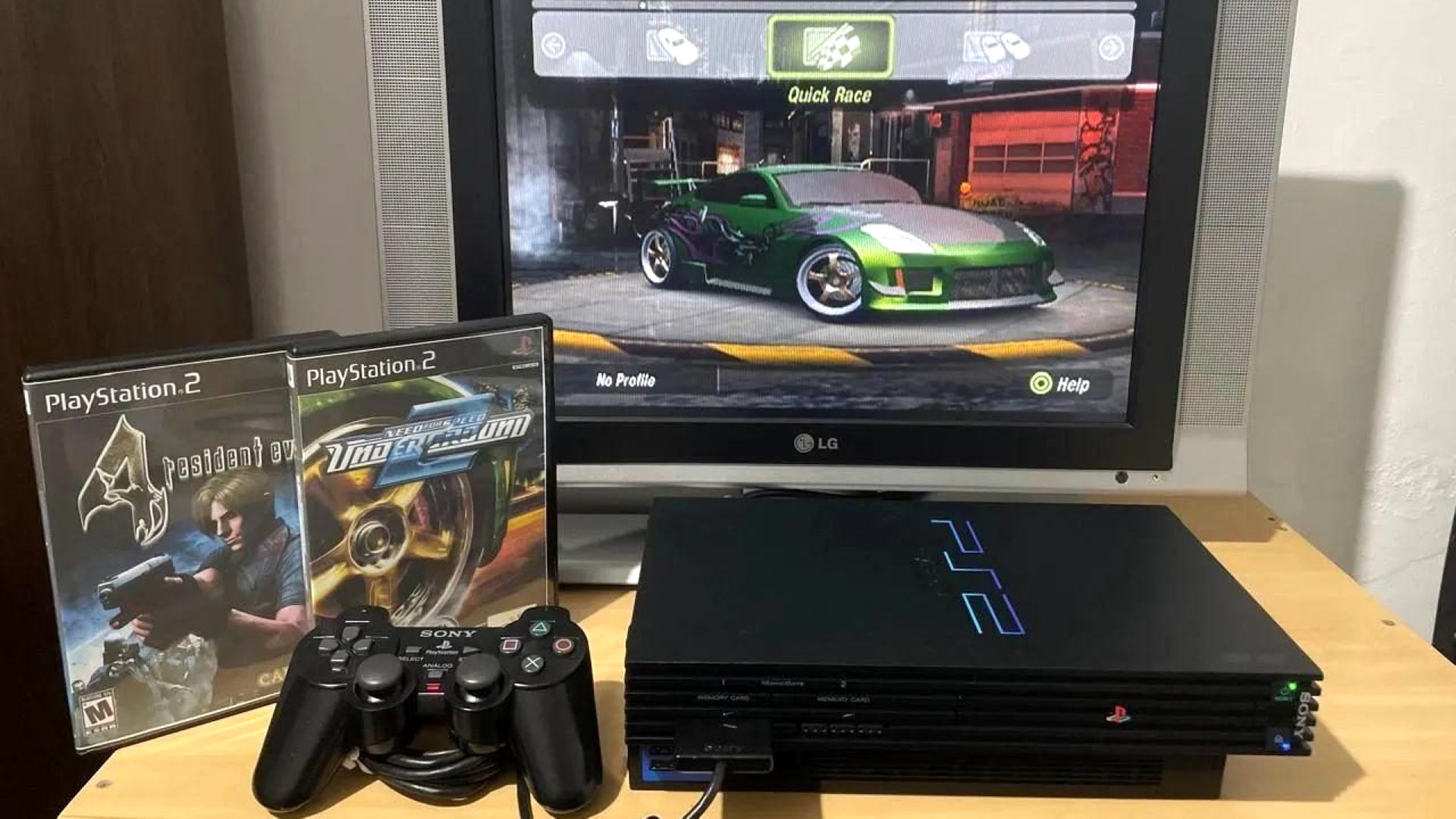
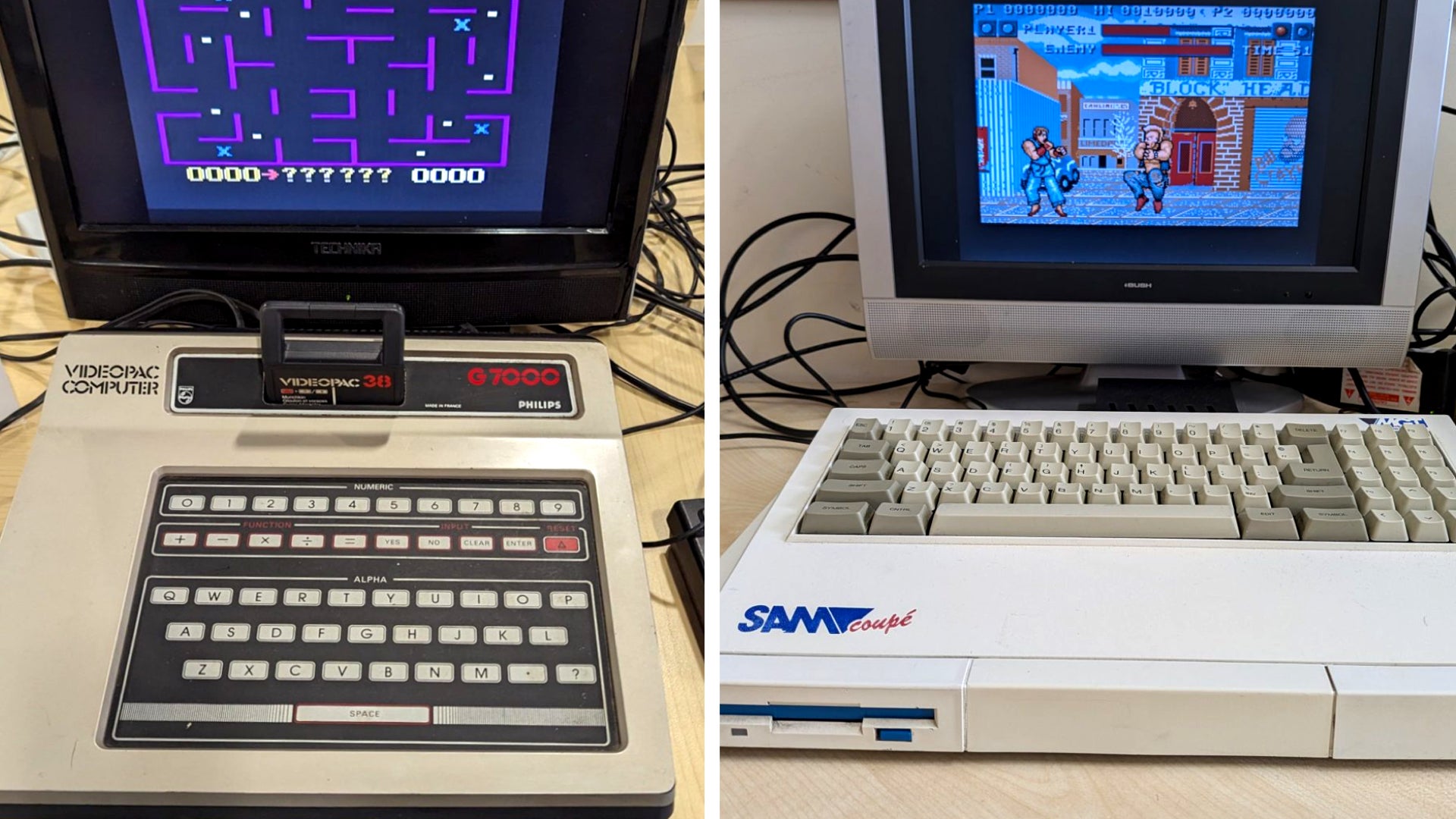
Today, Neve’s collection totals somewhere between 70 and 80 machines, ranging from the early generation of 3D consoles – the PS1, PS2, first Xbox, and Dreamcast (all newly added) – to home computer classics like the Commodore and Spectrum, and a number of “unicorns”. There’s the Fairchild Channel F, for instance, one of the first home consoles to use a microprocessor and one of the first to use removable cartridges, known as Videocarts. Then there’s Smith Engineering’s vector-based Vectrex, first released in 1982. “That’s an absolute classic”, he enthuses. “I love that one so much I went and bought one for home.” He’s even managed to acquire a Sam Coupé (“effectively the Son of Spectrum”, as Neve puts it); a short-lived machine developed in Swansea by Miles Gordon Technology that was also one of my own brief obsessions until I learned what a SNES was.
The success of now-ARC’s first showing in 2004 “opened the door at the university”, Neve explains, and the institution is being “incredibly supportive” now, providing a space not just to store his collection but to exhibit it too: “They get the benefit of it bringing people into the university and so we use it at open days as well.” Kingston University’s Town House is hosting ARC’s third annual showcase event this week, and for Neve, the first hope is that visitors – it’s open to the general public – have fun. But more than that, he’d also love them to walk away with some knowledge they didn’t have before. “We can learn so much from these machines of the past,” he says, “and that informed the very first exhibition we ever ran.
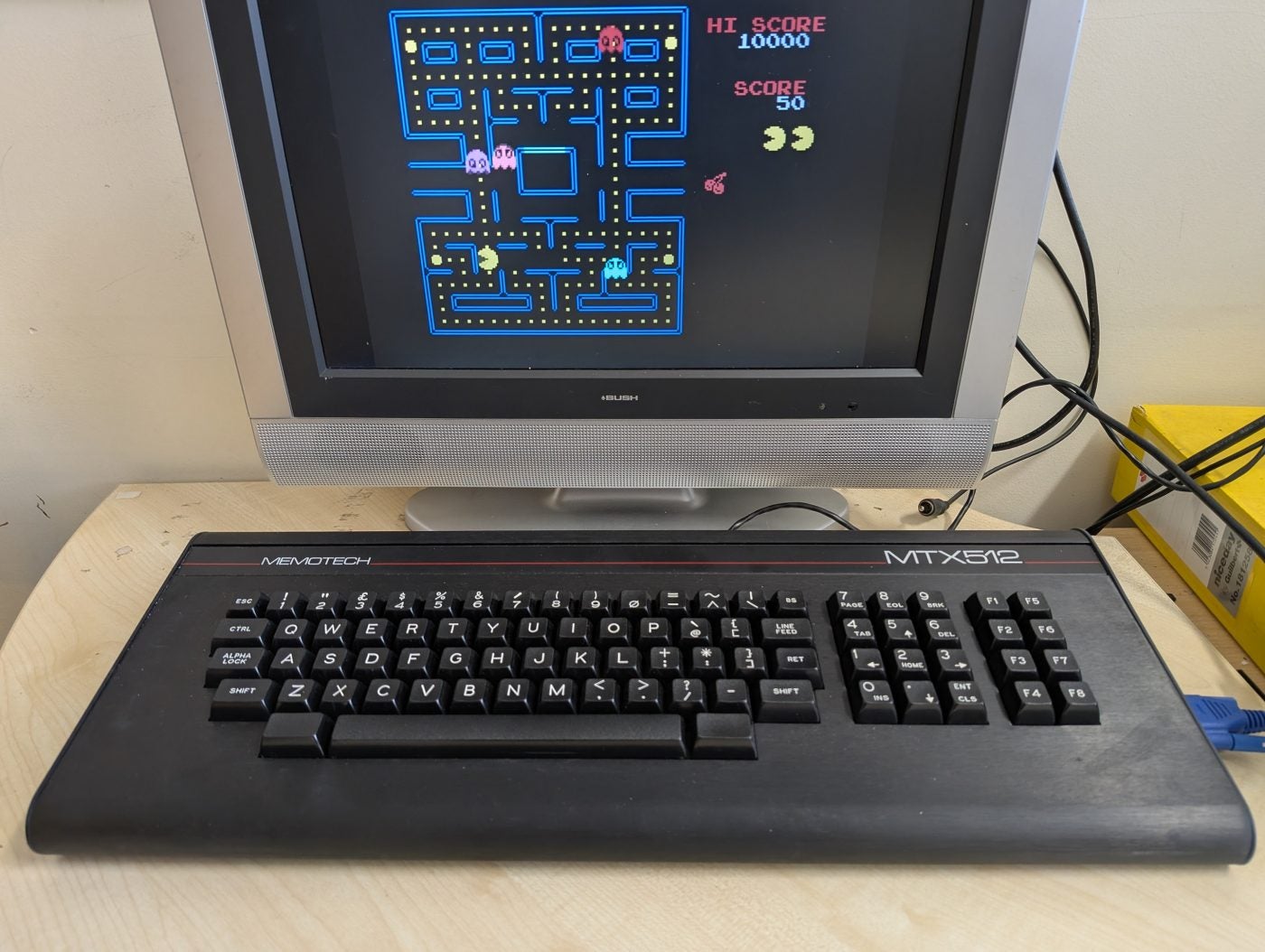
“When I organise the exhibition, there is a narrative,” he explains. “There’s obviously the consoles. But in terms of the computers, you’ve got ‘The Battle of Britain’ that tells the Sinclair and Acorn story. You’ve got ‘Thank you for your service’. That’s the American story; the Commodore, the Apple, the Texas Instruments, the Atari story. And then there’s ‘They could have been a contender’, and I think these are my favourite ones … brilliant machines where some small company, some engineer, had a vision and a dream and released something that was technically superior to your Spectrums etc. and then they just got squashed by the big boys. There’s the Memotech MTX, a gorgeous-looking big old long, sleek black thing … There was a whole raft of also-rans, your Dragon 32s, but below those were these fireflies, released on the market for about six months then the company went bust.”
But ARC isn’t just about preserving the history of the machines themselves; it tells the stories of the individuals behind them too. “Clive Sinclair. Chris Curry [who] worked with Clive Sinclair,” Neve continues. “He was at Sinclair Research until they had a falling out and Chris Curry went off to found Acorn. And that entire personal rivalry, what we know about that one-upmanship between those two, it pretty much motivated the entire British computer industry in the 80s.” And there’s the story of Jerry Lawson, the co-designer of the game cartridge thanks to his work on the Fairchild Channel F, and also one of Silicon Valley’s first Black computer engineers.
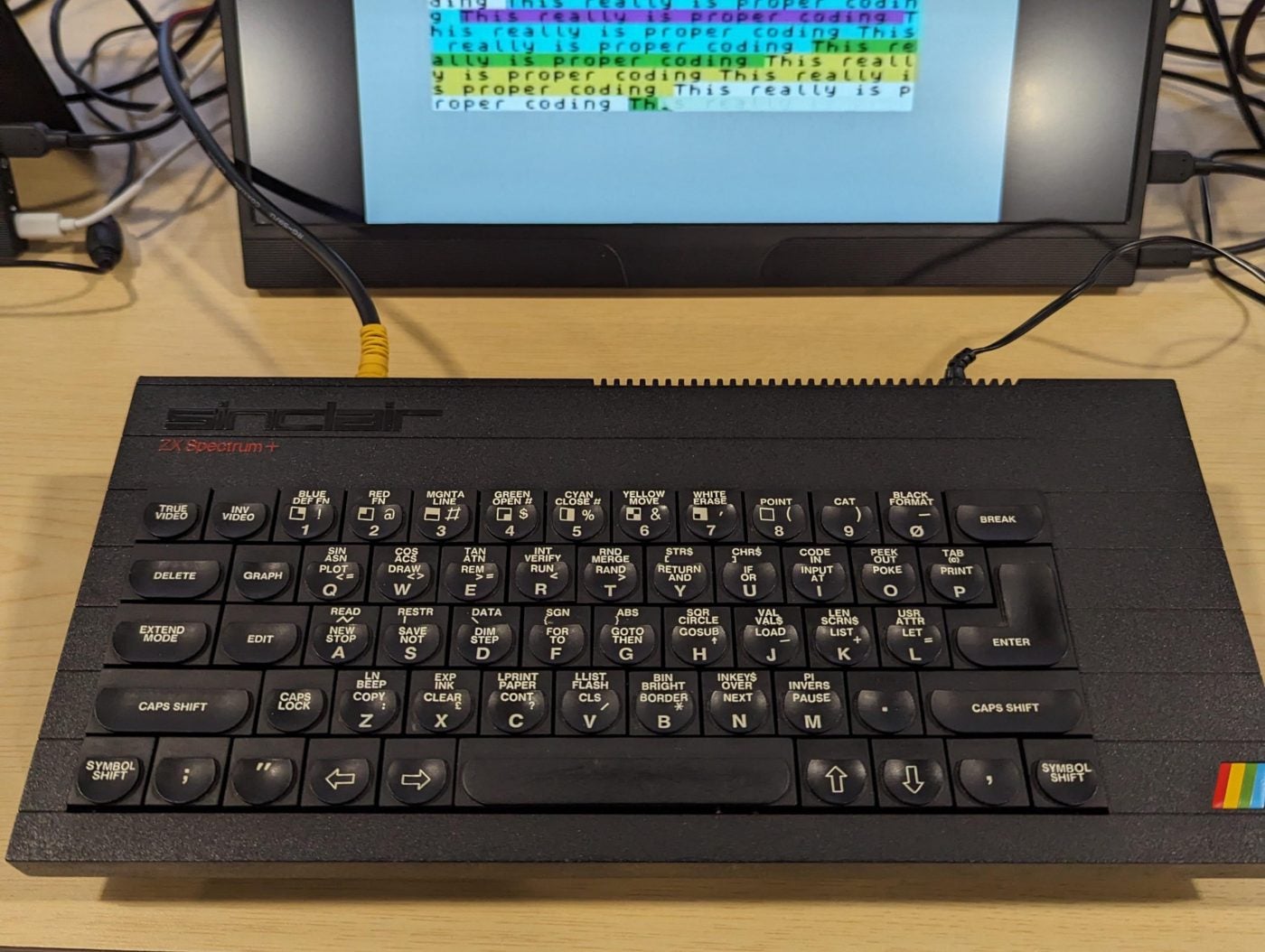
“Preserving stories like that, the stories of the individuals, we can learn [so much] as computing professionals, games developers, even designers in general – some of our user experience design lecturers quite enjoy the physical design of the machines and bring their students in to explore their iterations from generation to generation. The Sinclair machines are great at that: the ZX’s rubber keys to the Spectrum Plus; the designer of those, Rick Dickinson, is brilliant.”
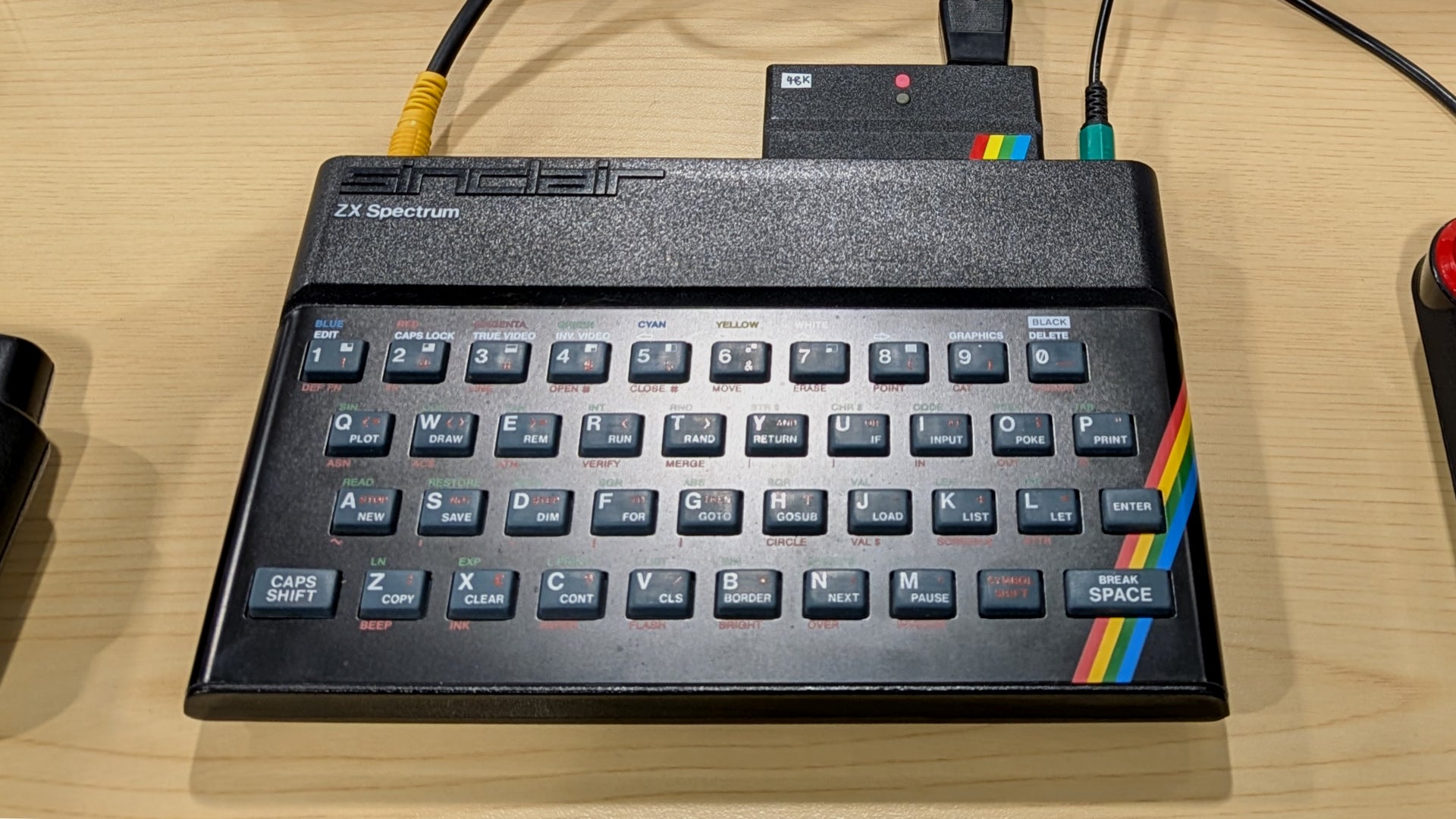
Neve has found the collection useful in his own teaching too. “Increasingly I’ve come to realise that … in terms of the pedagogy of programming, we’ve fallen into a very scripted way of working,” he explains. “In my day, [there was] what pedagogic theory calls bricolage, the idea where you just tinker and experiment.
“A few years ago, a student said to me, ‘I don’t think this assessment was fair … we had to write a tic-tac-toe game in Java [and] you never told us how to write a tic-tac-toe game in Java.’ But that’s why it’s called an assessment. Increasingly, there’s this expectation there’s going to be step-by-step instructions – step one, type ‘public class tic-tac-toe’, step two, type ‘static void main string args’, Step 474, close curly brackets – then, ‘Congratulations, you have just written a game!’ No, you haven’t. The bloke who wrote the tutorial wrote it. You just were his pen.
“And so what the retro machines do for that sort of thing is they get [students] back to basics; literally back to BASIC. It presents them with, effectively, a flashing cursor and invites them to experiment without the distractions of Instagram and YouTube and all the things we use computers as: media consumption devices, entertainment devices … This just puts them in programming and they’ve got nothing else to do. And as they tinker and they start seeing things happen, it encourages them to want to do more … They experiment and learn by doing, rather than getting the impression they’re learning by following step-by-step instructions.”
All this talk of retro computer programming suddenly takes me back to the hours – days – of my youth spent diligently copying code from Your Sinclair and Input magazine in the hope of getting a rudimentary game running at the end of it all. And it’s a thought Neve picks up, drawing comparisons with the online tutorials of today.
“YouTube videos effectively have [viewers] typing out the code and that’s not the same as what we used to do. We used to type in listings from magazines [and] you make mistakes. You have to debug it. You have to try and figure it out. You’ll mistype something and if it runs and does something weird, you’re going, ‘Why is that doing that weird thing?’ And you’re looking at what you’ve typed and you’re looking at what you should have typed … and that teaches you.”
It might be a bit of a tangent, but for Neve, it’s all part of the magic of a collection like ARC: “There’s a huge amount to be learned, and not just for us tech heads. Lessons to be learned from a business perspective, interesting stories, fun to be had. All of which disappears without things like ARC to preserve them.”
It is, of course, a pertinent time to be discussing preservation: grassroots consumer campaigns like Stop Killing Games are fighting to save online games from disappearing; Sony (spurred on by a discless GTA 6) has announced plans to ditch physical media, and soaring hardware component prices threaten to hasten us toward a cloud-based gaming future. So I wonder, if games become ephemeral and consoles and computers are intangible, how much more can ARC grow? What kind of history can the modern medium hope to accumulate?
“Potentially very little”, Neve replies, “because it can be reinvented at the drop of a hat. You’ll have enthusiasts, hackers … I’m sure people will find a way, but once we go into full-blown streaming and all you’re getting is an image, there’s nothing to capture … They’ll still release games [but] the history becomes discontinuous.
“I was reading an article the other day about how if there was an asteroid that suddenly wiped out human civilisation, a subsequent successor civilisation is going to go, ‘What happened after the 80s? We’ve got no idea’ – because we stop writing things down, we stop putting things on physical media; the same is going to happen with games.”
But future aside, Neve’s current work continues, and there are big things planned for the Archive of Retro Computing, which is set to become a permanent exhibit at Kingston University from September. The current intention, Neve explains, is to run regular events for students and more intimate events for the public throughout the year between ARC’s big annual showcases, including gaming events focusing on the individual franchises, retro coding events, and more.
But even with a permanent home, not everything can be displayed at the same time. “We’ve got what we’re going to call residents,” Neve continues. “They’re your Mega Drives, PlayStations, even the older ones like the Ataris that everyone coming to a retro show is going to want to see. But then on the edges, we’ve got room to rotate things so we can get the rarities, the obscure ones out.
“If we’re doing retro coding events, we can populate the fringes with Spectrums and BBCs: things that are good to do retro coding on; the more obscure games consoles that we wouldn’t regularly exhibit, we can get those out. There’s a whole gamut of computing history, gaming history, console history. So many stories to tell within that. So, we’re looking forward to it. I think it’ll be a lot of fun.” And it might, suggests Neve, even encourage guests to become “miniature preservationists” too.
It’s an optimistic thought as we face an increasingly transient gaming future, but perhaps that’s the real power of collections like ARC: not only that they help us remember, but that they remind us why it’s important to remember too.
This year’s ARC Annual Showcase Event runs from 5th August, until Tuesday 11th August at London’s Kingston University Town House, KT1 2EE. Doors open at 10am to 6pm on weekdays, and 11am to 4pm on the weekend. Entry is free and booking isn’t required.