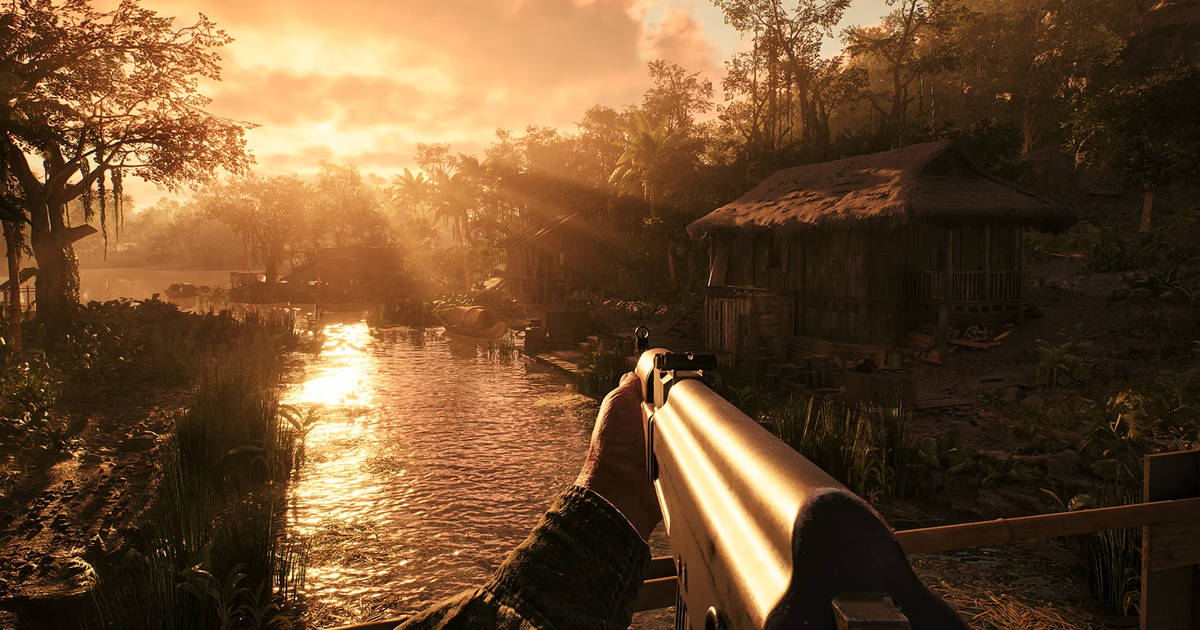
The lavish jungles, rigid command structure, and emphasis on communication make Hell Let Loose: Vietnam a fascinating war simulator when it works. But its many variables can all too easily devolve into a miserable snipe-fest.
The most surprising thing about Hell Let Loose: Vietnam is how much DNA it shares with Big Walk. They both frequently involve traversing large expanses of terrain. They both have excellent maps. Most of all, they’re both fundamentally games about communication. Each utilises modern voice chat to its fullest extent, requiring players to clearly express and articulate themselves to succeed.
The difference is in how they encourage chatty players. Big Walk gently coaxes players out of their shells through the medium of ingenious puzzles and good vibes. Hell Let Loose: Vietnam forces you to chat with your random squadmates because if you don’t you’re going to get bombed to shit. Where Big Walk is all carrot, Hell Let Loose: Vietnam is all stick, and it will not hesitate to thwack you with it if you don’t play by the rules.
Grappling with Hell Let Loose: Vietnam can be an intimidating experience. But while its teaching style is much harsher, it does yield rewards. When Hell Let Loose: Vietnam comes together—with dozens of players working in tandem to overcome the enemy—the resulting show is utterly captivating. Unfortunately, it doesn’t come together quite often enough to justify the pain of getting to that point.
If you’ve played the original Hell Let Loose, Vietnam basically takes that game’s structure and transports it from the hedgerows of 1940s Normandy to the jungles of southeast Asia. 100 players split down the middle step into the roles of US Army squaddies or troops from the North Vietnamese Army, before duking it out for supremacy over lavish maps using combined-arms warfare.
Unlike Battlefield, one of the most obvious games you could compare it to, Hell Let Loose prioritises authenticity over spectacle (though there is still plenty of spectacle to be had). Often, you’re fighting the enemy at such a distance that you’ll have to squint to see them, while sprinting around the map on your own will get you killed quicker than roller-skating on the M1.
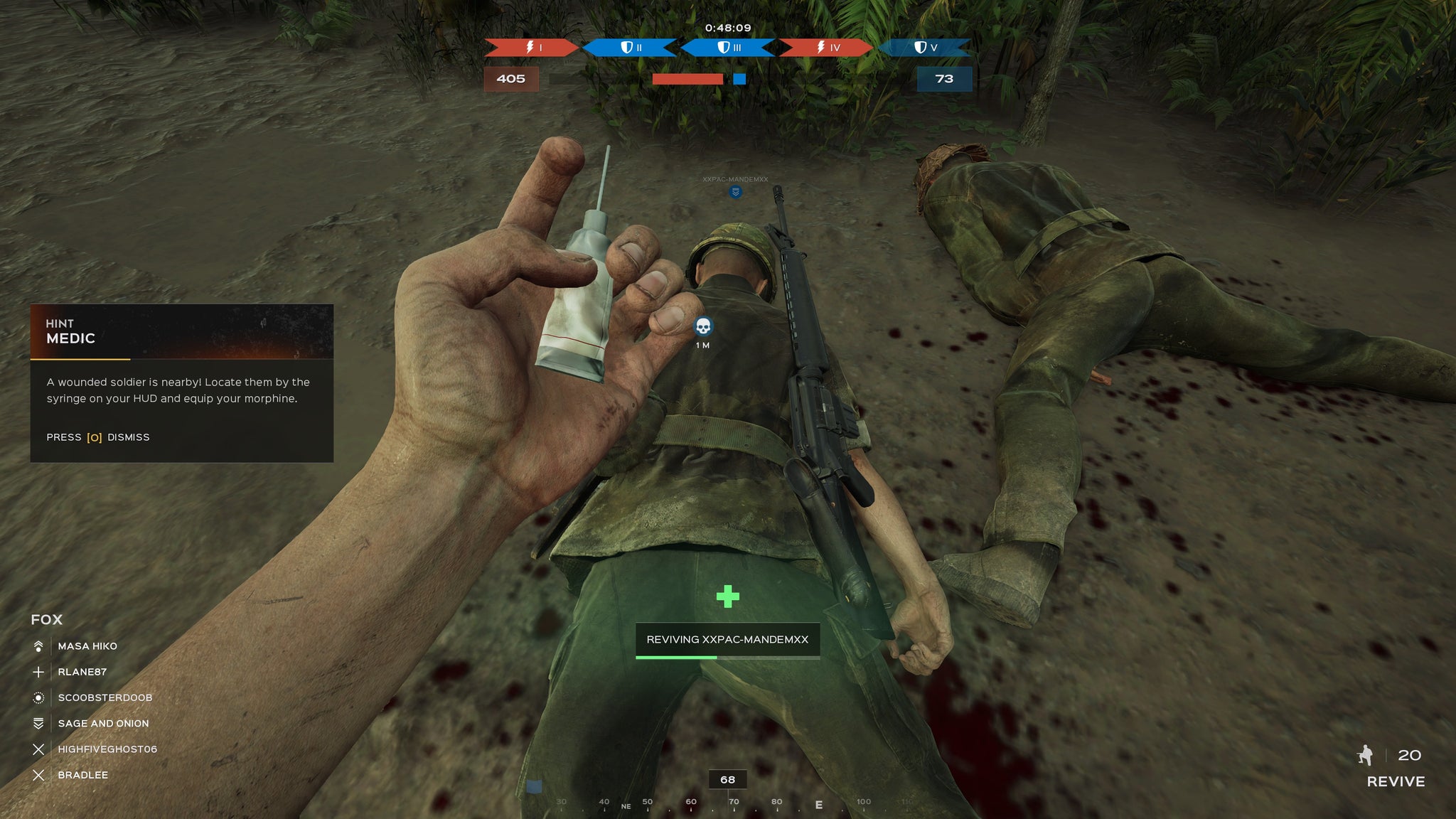
Hence, teamwork is strongly encouraged. Alongside Battlefield-style player roles like medics, grenadiers, etc., Hell Let Loose also employs a rigid command hierarchy. Groups of six players are overseen by squad leaders who can place spawn points to get that squad back into the fight quickly, while each army is directed by a Commander who can call in supplies, airstrikes, and so forth.
In the original Hell Let Loose, the Allied and Axis armies played pretty much identically. But Vietnam attempts to fold in some faction asymmetry, reflecting its historical inspirations. The US Army, for example, gets to use helicopters while the NVA don’t. But the NVA can build a network of underground tunnels which it can use to fast-travel around the map.
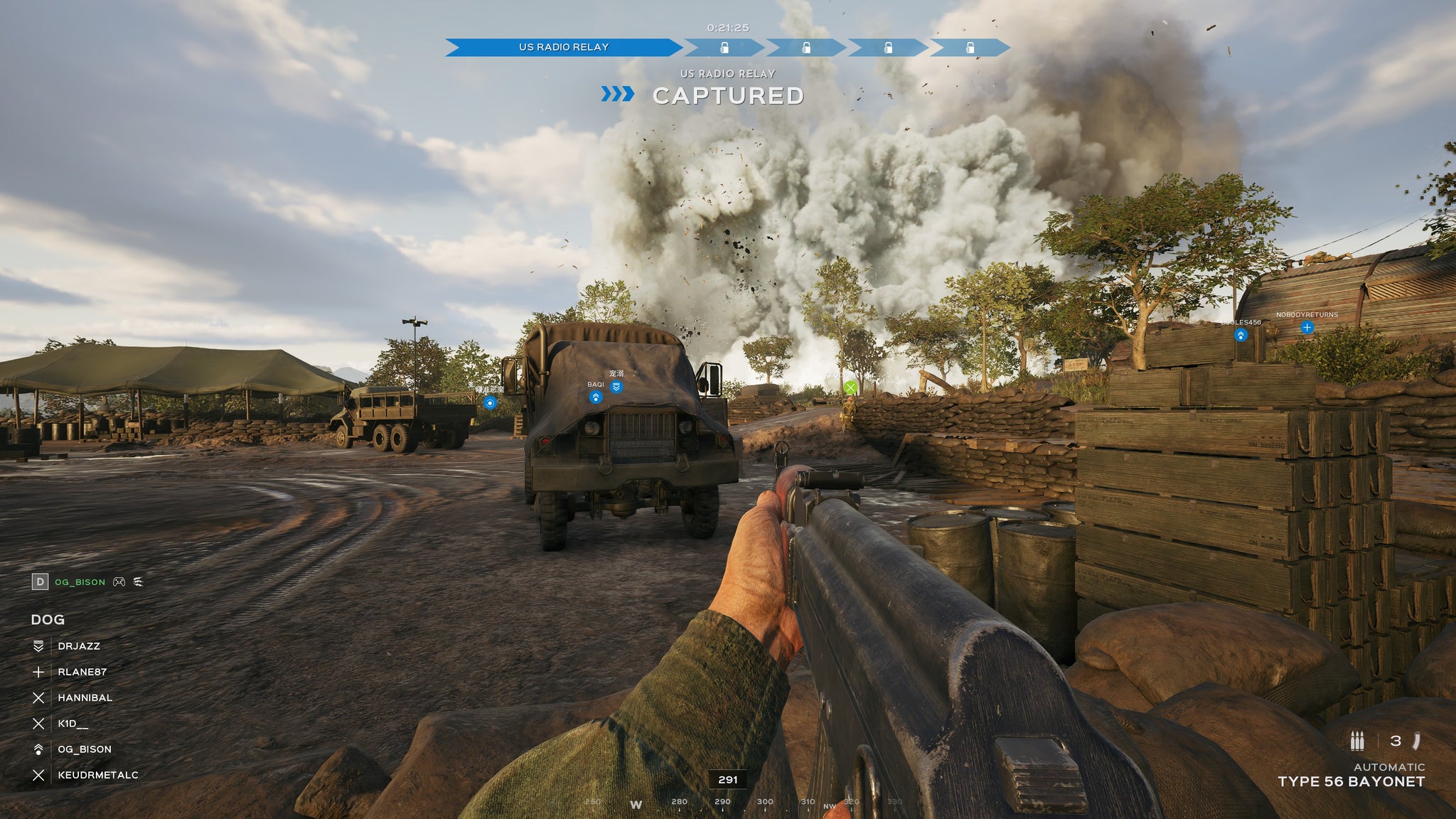
While there’s certainly some specific tactics each army can employ as a well organised team, these asymmetric elements don’t make a vast amount of difference to your moment-to-moment experience. What does make a difference over the original Hell Let Loose is the jungle itself.
Most maps are covered in whole or in part with dense vegetation, and this can make it extremely challenging to spot enemies. You’ll often find yourself crawling through long grass trying to identify nearby enemy positions by the sound of their weapons, and even when fully alert, there will be occasions where you’ll almost tread on enemies before seeing them. Further compounding the tension is that Hell Let Loose doesn’t explicitly register kills. Unless you’re close enough to hear your foe squeal and see them collapse, you might not know for certain whether they’re actually dead, which has cost me on more than one occasion.
I should also stress that the map design is excellent. Expression Games squeezes an impressive amount of variety from the environments considering they’re mostly comprised of trees, rice paddies, and the occasional village. Highlights include Thanh Hóa Bridge, with the titular railway bridge spanning a river that bisects the centre of the map. The mixture of long sightlines on either riverbank and CQB combat on the bridge itself creates some fascinating combat scenarios. I’m also fond of Huế Outskirts, a mountainous area with several industrial zones where elevation plays a prominent role in combat.
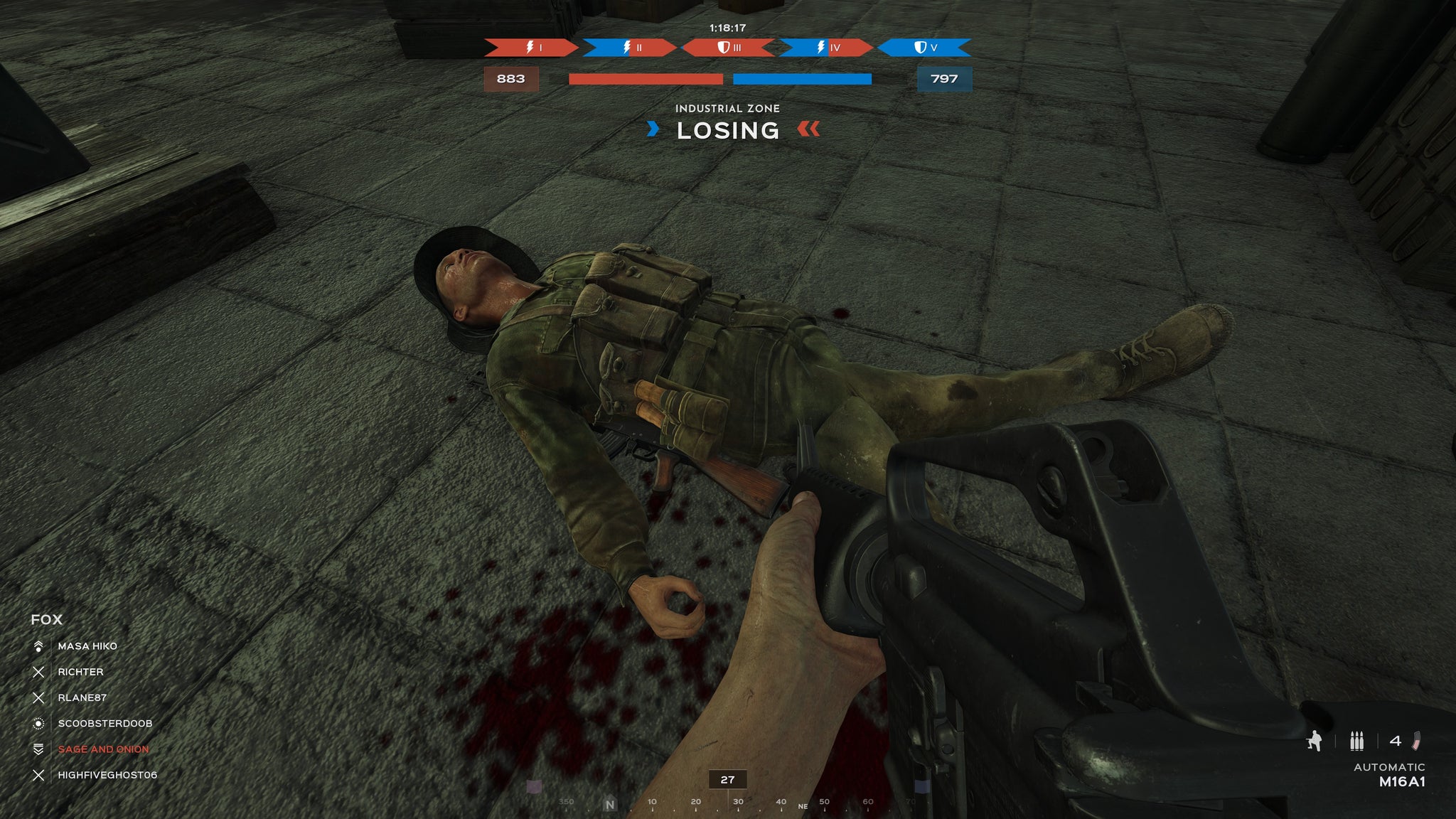
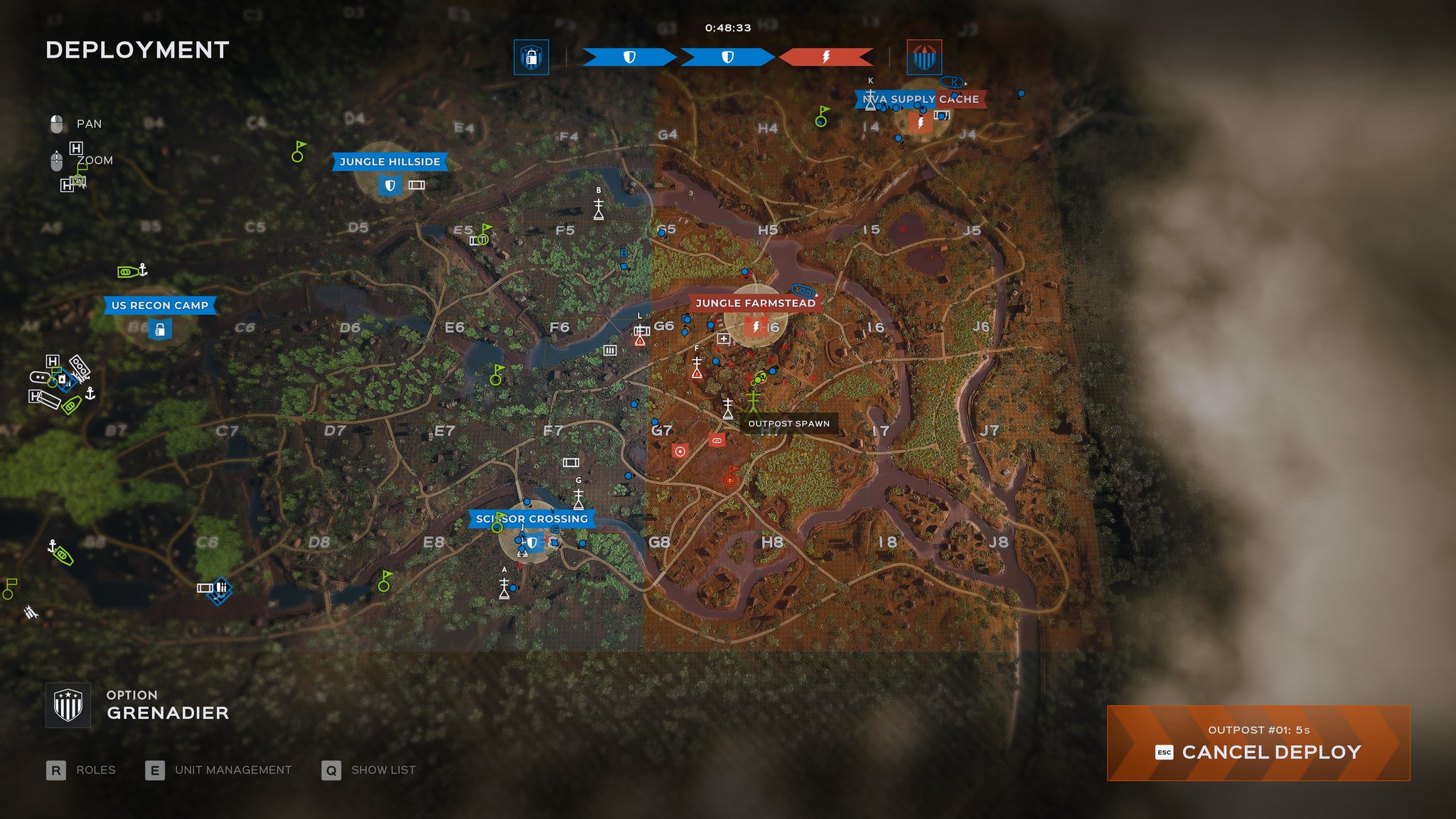
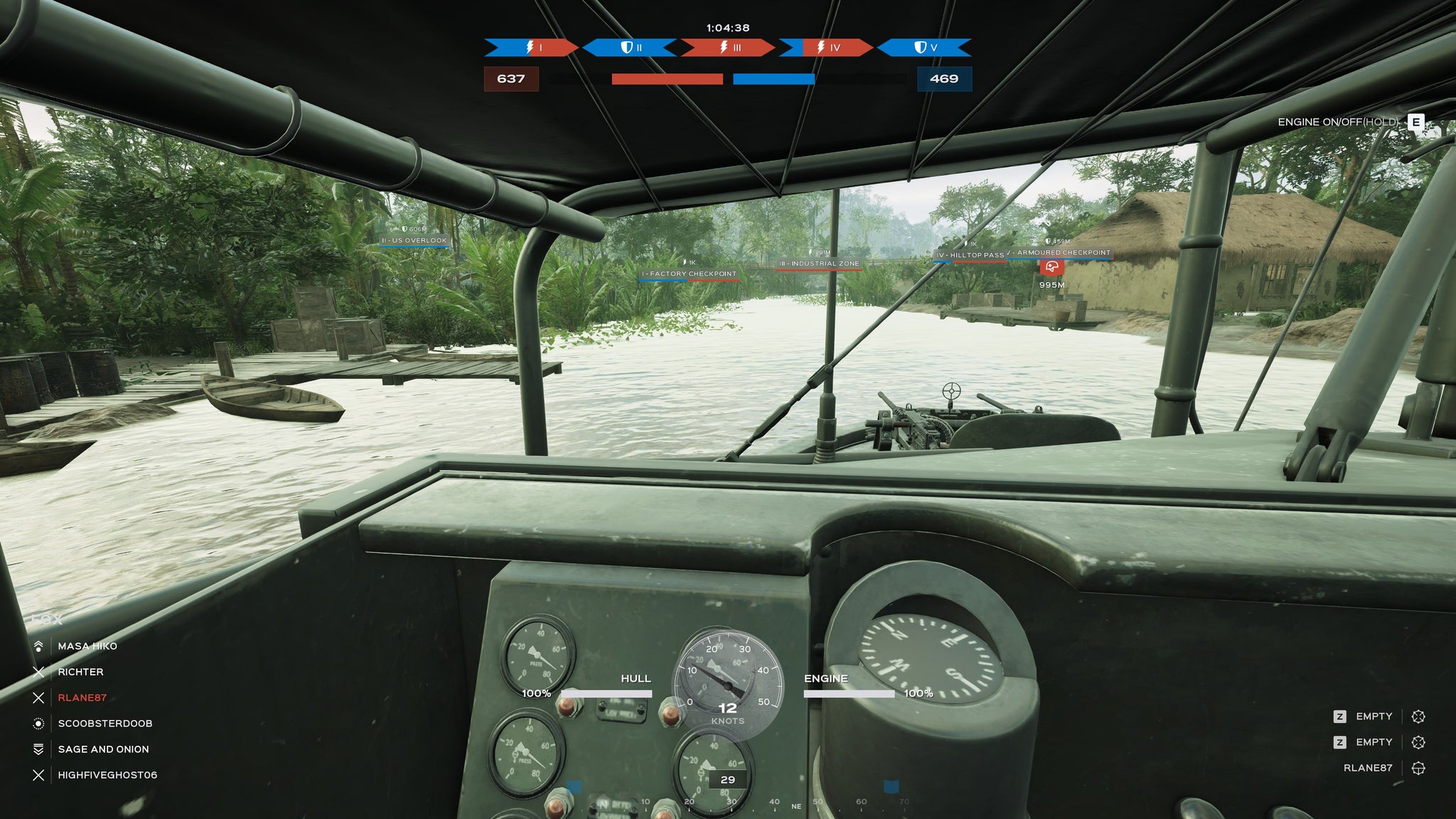
Importantly, these maps are also large, all of them significantly bigger than Battlefield 6‘s comparatively hemmed-in environments. Not only does this mean that infantry transport vehicles are actually useful, but it also gives Commanders room to breathe strategically. This is especially the case on modes like Conquest and Domination, where teams need to hold multiple areas on the map at a time to succeed. But even on more linear modes like Offensive—Vietnam’s equivalent of Battlefield’s Rush—there’s no rule against the attacking team setting up spawn points behind enemy lines and using them to stage an assault from the rear.
This is why communication is so important in Hell Let Loose: Vietnam, as players need to talk to each other about where enemies are and what they’re doing at all times. And when players are communicating well, Hell Let Loose: Vietnam can be fantastic. In one Offensive match where I played as a Medic, we held off the US forces at the first hardpoint, in large part due to great communication from our squad leader. Positioned on the left flank, he accurately called out enemy assaults from different angles, directed grenadiers to destroy enemy armour, and correctly predicted a last-ditch assault from behind. It was inspiring stuff.
When players don’t communicate, Hell Let Loose: Vietnam is generally less fun. It’s still immersive and atmospheric, with napalm strikes erupting across treelines, helicopters whuk-whuk-whuk-ing above you, rockets chasing them through the sky, trailing white smoke. Likewise, it can be a great anecdote generator, like my debut ride in a helicopter ending in said chopper exploding immediately upon landing and killing everyone inside — a more fitting introduction to the game than any pre-rendered cutscene.
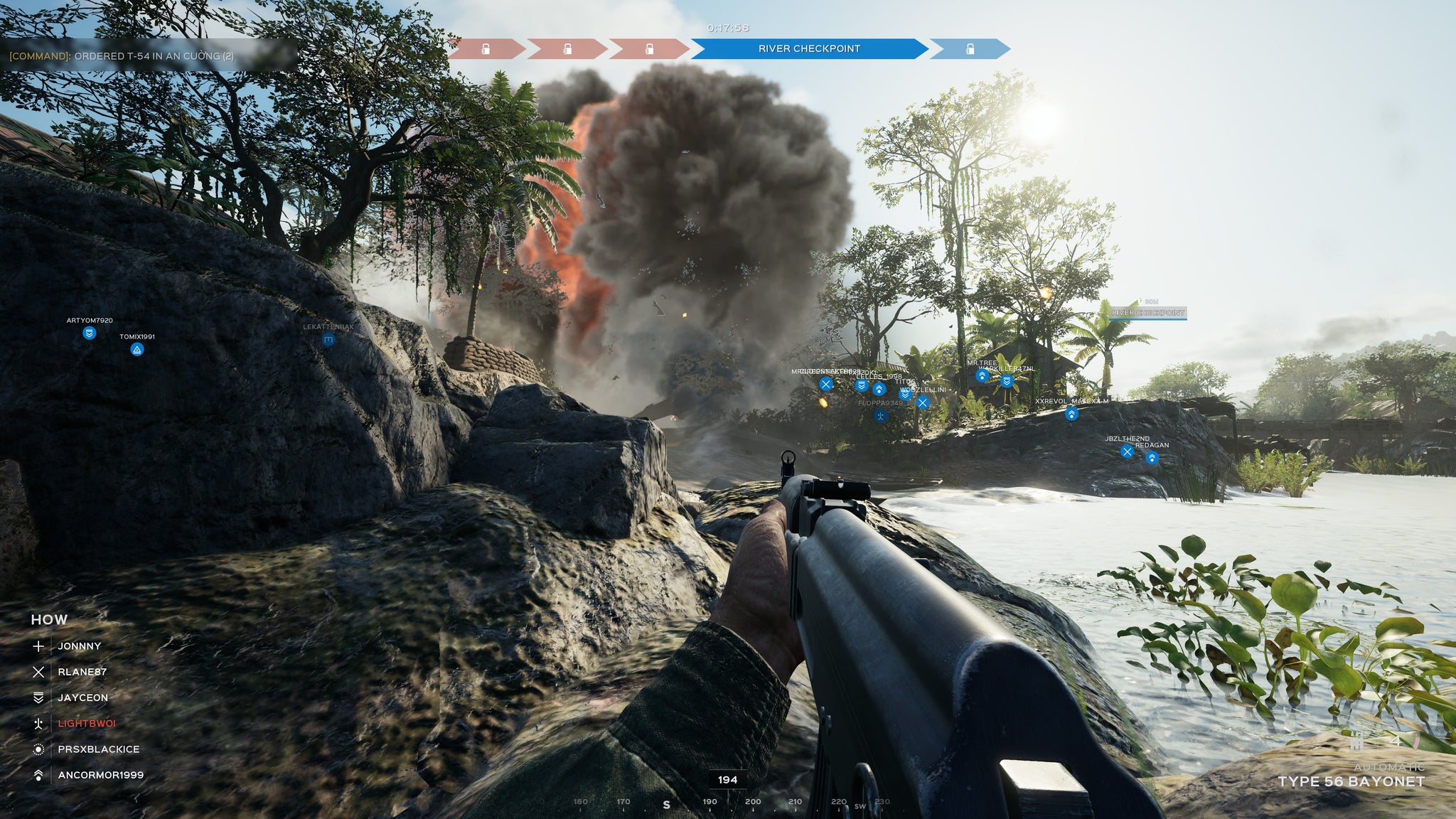
But without good team coordination, Hell Let Loose can devolve into a miserable snipe-fest. The game wisely limits actual snipers to a handful per team. But part of the problem is that everyone is kind-of a sniper, anyway. The most basic rifles are effective at medium-to-long range, even on full auto. At its worst, Hell Let Loose: Vietnam becomes a mire of spawn-killing and being repeatedly, instantly headshot without the slightest notion of where it came from. The jungle can mitigate this somewhat, but it can also be a hindrance, as LOD phasing (where level-of-detail is higher for one person than a distant other) may mean you’re more visible than you realise at distance.
I also think that, as a pure shooter, Hell Let Loose: Vietnam is a step or two behind the competition. Movement is quite clumsy and sluggish. And when you’re actually close enough to properly see the person you’re shooting at, that interaction is oddly intangible. I appreciate Expression’s refusal to use hit markers, which is the sauce-in-a-jar approach to making shooting satisfying. But you do need to find another way to provide audio/visual feedback on kills.
Finally, emphasis on vocal communication also means you’re inevitably exposed to the more unpleasant corners of the Internet. I can’t say whether Hell Let Loose: Vietnam’s community is more or less toxic than any other online FPS community. I’ve encountered both angels and demons on my tour of duty, and mercifully you can mute and block individuals who are acting unpleasantly or, as in one instance, watching Formula 1 at what must have been a deafening volume. Did you know the Vietnam War featured live commentary by Martin Brundle? I didn’t!
At the same time, if your game mandates engagement with other players as part of its design, you need to work harder to foster a tolerant, welcoming community. Because unlike twenty years ago when these large-scale multiplayer games started appearing, I have a backlog the size of York Minster, and there are countless multiplayer games I can play where I don’t have to listen to people spout N-words or R-words or do racist impressions of Vietnamese people. I can just leave!
Ultimately, Hell Let Loose: Vietnam encapsulates the best and worst of online multiplayer gaming. When it all clicks, I think it’s capable of providing more interesting battlefields than Battlefield. But it’s also less consistently entertaining than the likes of Battlefield, and you have to work much harder and tolerate a lot of nonsense to reap its rewards.
A copy of Hell Let Loose: Vietnam was provided for this review by Team17.