How do you solve a problem like Persona 4? It’s a thorny question, and one that’s been the subject of a lot of internet debate since Persona 4 Revival – a remake of the 2008 original – was revealed. To cut a long story short, a lot of people see Persona 4 as problematic. One of the main cast, Yosuke, is a conservative, judgemental, ‘teenage pervert’ stereotype. While he does have an arc that sees him soften somewhat, he’s also just a bit of an asshole. Elsewhere in the game, there are allusions to gay and trans storylines some feel are inelegantly handled – where the characters in question can be seen to suppress their true selves for the sake of ‘falling in line’ with what society expects.
I think there’s more nuance to these storylines than the more rabid subreddit discussions would have you believe, and that some of the game’s core crew do actually internalise their more complex traits and process their shame as the game progresses – but I will concede these issues are handled in an often cack-handed way. Throw in some clumsy comments from the series director about how restoring one homosexual romance would require that the main character be able to romance “all the guys”, too, and you can see why there’s a lot of indignation about the handling of Persona 4’s more sensitive topics.
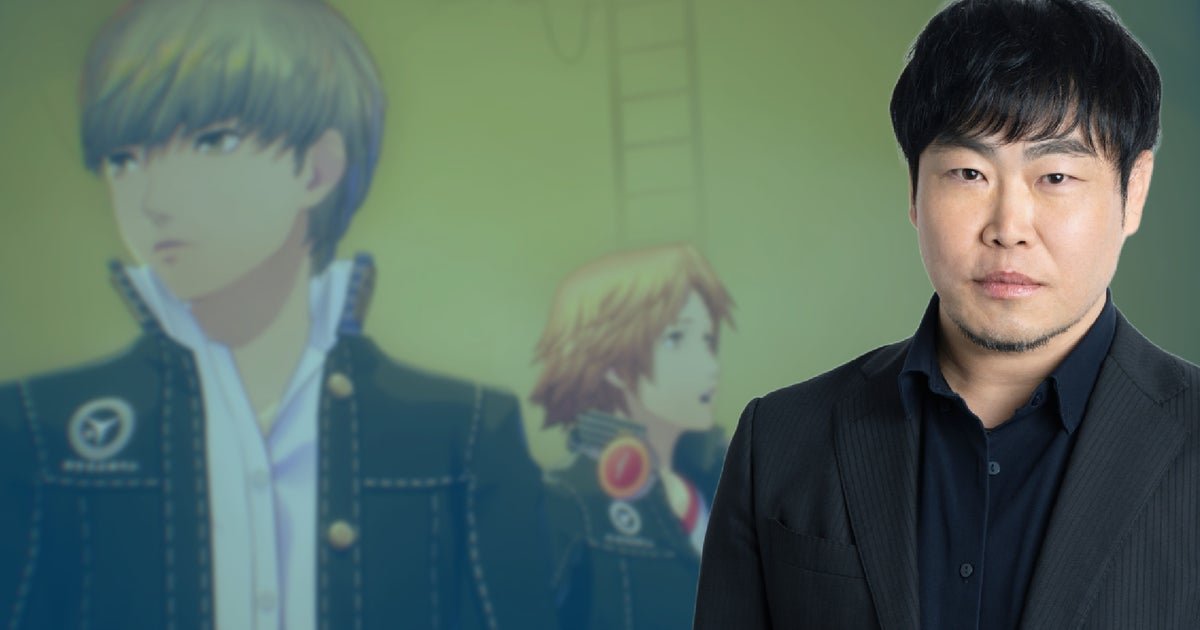
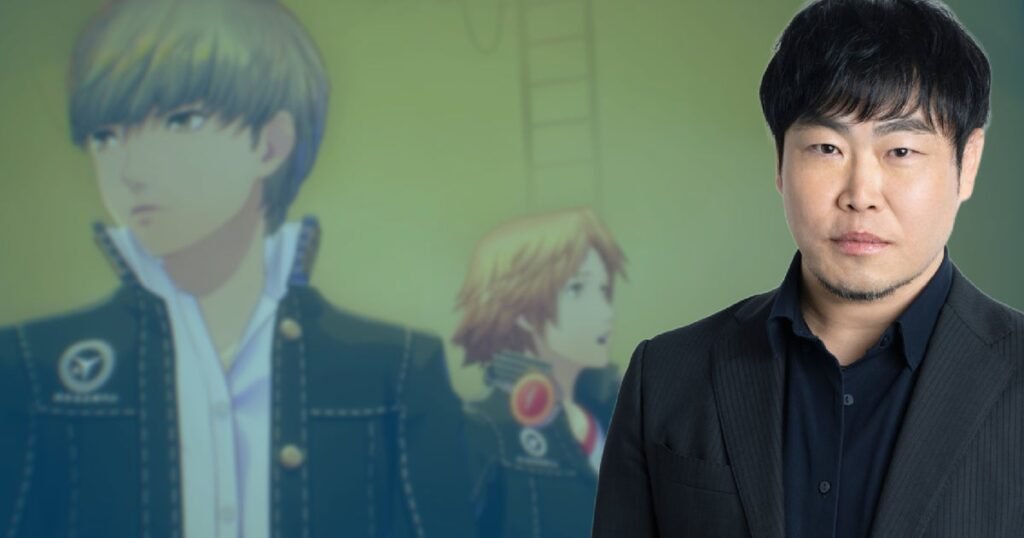
At Gamescom, I had the chance to sit down with series director Kazuhisa Wada to talk about this, and ask about how Atlus is approaching the original text for the remake. Half the fanbase doesn’t want the developer to interfere with the 2008 release at all, whilst the other half wants Atlus to take a good hard look at what it’s done in the past and, simply, do better. To Wada, it seems, a lot of the solution lies in localisation.
“When it comes down to it, we didn’t really change the core of any character,” he tells me, via interpreter. “The characters are still who they are, saying what they’re saying. One thing that we did realise, though, was that when we originally wrote the game, some of the lines weren’t very clear, lacked information, or the way that we phrased them wasn’t very effective at portraying the character in the way that we wanted to portray. So we did go and revisit that, and we tweaked little bits and bobs to make sure it’s clear what the character’s intention was. In terms of Yosuke specifically, everything he’s saying is the same, but we just made a couple parts a little bit more gentle.” Will this be enough to placate Western audiences and address some of the more problematic elements of the script? It remains to be seen.
From this line of conversation, we go on to talk about the localisation process and how it’s changed at Atlus over the years. It used to be that Atlus games would release in Japan first, before pivoting to work on localised versions of its games to launch into the global market: Persona 5, for instance, debuted in Japan in September 2016, but did not release globally until April 2017. However, with the worldwide – and mainstream – success of Persona 5, Atlus modified its approach and began doing simultaneous global releases. Metaphor Refantazio, Persona 3 Reload and Shin Megami Tensei 5: Vengeance have all benefited from this new way of working. Notably, Persona 3 Reload would go on to be Atlus’ fastest-selling game, ever.

“With Persona 3 Reload, it was our first time doing a simultaneous release – and from that game, we learned a lot about the overall process,” says Wada. “So this time, when we were creating the game from the beginning, we put a lot of effort into ensuring we could get the best-quality localisations as quickly as we could. Once we had a scenario finished or completed a part of a script – as soon as we could – we’d pass it to the localisation teams, let them work their magic, and make it so that everyone was on the same page and working in unison. We made sure to have them in the room when you’re having discussions very early so that we could very quickly and very effectively work closely with them.” Wada hopes the resulting script is something that is more holistic, and better reflects the developer’s intent, even in languages it is not originally produced in.
Additionally, he notes the characters have become more mature since the release of the original Persona 4 thanks to titles like Persona 4: Dancing All Night and the two fighting games Persona 4 Arena and Persona 4 Arena Ultimax. While these games occur after the events of Persona 4, Wada says the extra work done on developing the characters post-game helped provide more depth and substance for their appearance in Revival.
“In a lot of ways, there has been something more we could explore with every character. Since Persona 4 came out, there have been a number of spin-off games that have been released, where we developed the characters and their personalities. So when we were making Revival, we took aspects of that and helped it to inform our characters and add detail and depth. For the team, it was Yosuke and Kanji that they really wanted to explore and go more in-depth with.”
“In going back to Persona 4,” adds art director Akane Kabayashi, “I realised that Chie is forced to wear a lot of different hats and do a lot of different things. You can see that Chie and Yukiko are like ‘double heroines’, but Chie is given a lot more stuff to do than Yukiko is, and it made me really respect that aspect of her.”
I’m intrigued to see how Wada and Atlus manage to toe the line between faithful remake and updated revision when it comes to Revival. The team’s past remake, Persona 3 Reload, corrected a lot of the mistakes present in both the original game and the Portable remake – but it still made some of those classic cack-handed moves in its marketing and production. I’m worried Persona 4 Revival is cursed to suffer the same fate, but I’m hoping that the final release of the game makes good on at least some of the improvements Wada seems keen to implement.