The barrage of abusive comments that Capcom’s Monster Hunter Wilds has been receiving from Japanese-speaking fans recently caught the attention not just of Japan’s gaming media, but of The Sankei Shimbun, a major mainstream newspaper. However, Monster Hunter Wilds is just the tip of the iceberg. Threatening comments, especially those targeting individual developers and company employees, have become an increasing problem for the Japanese game industry, with many major companies drawing up specific policies against harassment from customers over the last few years.
In the Sankei article, Hideki Yasuda, an experienced games industry analyst at Toyo Securities weighed in on the topic. He noted that while there have always been dissatisfied players making abusive comments, companies have focused advertising on the creators themselves in recent years, turning individuals into targets. It goes without saying that the prominence of social media today and the (misguided) belief that what you say on the internet is anonymous also play a role in this rise in aggressive comments.

However, game companies have moved to remind people that threatening an individual online can have very real legal consequences. On July 4, Capcom made an official announcement on “Our company’s measures against customer harassment (slander, defamation etc.),” which establishes guidelines for dealing with threats from customers. Posted on its Japanese site, Capcom’s announcement said that while it values customers’ opinions, requests, and comments on games’ and services’ shortcomings, it had confirmed various incidents of threats and personal attacks against its employees, sometimes specific individuals.
Capcom pointed out that such actions pose a risk to “the safe working environment and the mental and physical health of all employees involved, potentially causing inconvenience and issues for other customers as well.” In its policy, Capcom stated that it may refuse to offer support or services to customers whose actions “exceed the scope of socially acceptable norms,” and might also take further measures, including legal and criminal proceedings, against malicious offenders.
So far, this specific customer harassment policy from Capcom has only been issued in Japanese; the game company’s global sites and social media made no such announcement. This suggests that this policy is directly targeted at slanderous and threatening comments made in Japanese, with the timing suggesting it was made in response to Monster Hunter Wilds-related harassment. Capcom also recently cancelled a lecture about performance adjustments by Monster Hunter Wilds’ devs, due to be held on July 24 at Japan’s annual CEDEC (Computer Entertainment Developers’ Conference), likely due to concerns about these threats against the game’s creators (source: ITMedia).
At the time of writing, Monster Hunter Wilds’ Steam review rating is “Mixed,” with recent reviews being “Overwhelmingly Negative.” This is mainly due to issues with how the game runs (or doesn’t, in some cases), especially on PC. Reviewers, regardless of what language they are writing in, report similar problems with worsening performance, crashing on start-up and other difficulties running the high-spec game. Regarding the actual game, self-proclaimed series fans have been critical of its easier difficulty compared to past titles, the streamlining of mechanics, and (current) lack of endgame content.
While there are plenty of constructive criticisms of Monster Hunter Wilds written in Japanese that point out flaws, issues, and make suggestions for what Capcom needs to address, threats against the developers themselves, from what seems to be a vocal minority, seem to be more common in Japan.
Why is this? Compared to overseas, Monster Hunter is a highly popular and well-established franchise in Japan. Consequently, there are many passionate fans of the series, and hype was particularly high in the run-up to the launch of the next-gen entry. As a consequence of this, the people behind Monster Hunter, like long-time series producer Ryozo Tsujimoto, are well-known to fans. For example, Tsujimoto appeared in promo videos for Monster Hunter Wilds prior to its release, and it may be that some viewers take such visual interviews about an upcoming game’s features as personal promises about the final game (as evidenced by aggressive comments calling on devs to “bow down” in apology). It seems that in Monster Hunter Wilds’ case, a combination of social media, unfulfilled expectations, and familiarity with the game’s devs has created a perfect storm in which parts of the Japanese fandom have felt angry and disappointed enough to threaten the creators themselves.
Such personalized threats have become an issue for other big Japanese game devs too. As highlighted by The Sankei Shimbun, many game companies in Japan have implemented similar policies against harassment from customers over the past two years (including Bandai Namco, Square Enix and Sega), reminding people that they will take legal and criminal action to protect their employees where necessary.
In July last year, Sega took legal action against an individual who had made excessive insults towards their employees on social media. It reached a settlement in which the perpetrator paid compensation, vowed to delete all the offending comments and to not engage in such behavior in the future.
Such threats have also had publicly visible impacts on game companies’ activities. Capcom is not the only company whose events have been impacted. Previously, Nintendo had to postpone two in-person esports events and cancel Nintendo Live 2024 Tokyo due to repeated death and bomb threats submitted through Nintendo Japan’s online inquiry form (a 27-year-old man was later arrested). As the Kyoto Animation arson attack showed, companies can’t afford to ignore the possibility that some individuals may act on their online threats and actually injure or kill people.
Although online abuse of game companies and employees is a global problem, it seems that game companies in Japan are currently experiencing increased harassment of their employees in Japanese. It will be interesting to see if these customer harassment policies, plus the involvement of lawyers and police in more extreme cases, have any impact on reducing such behaviors.
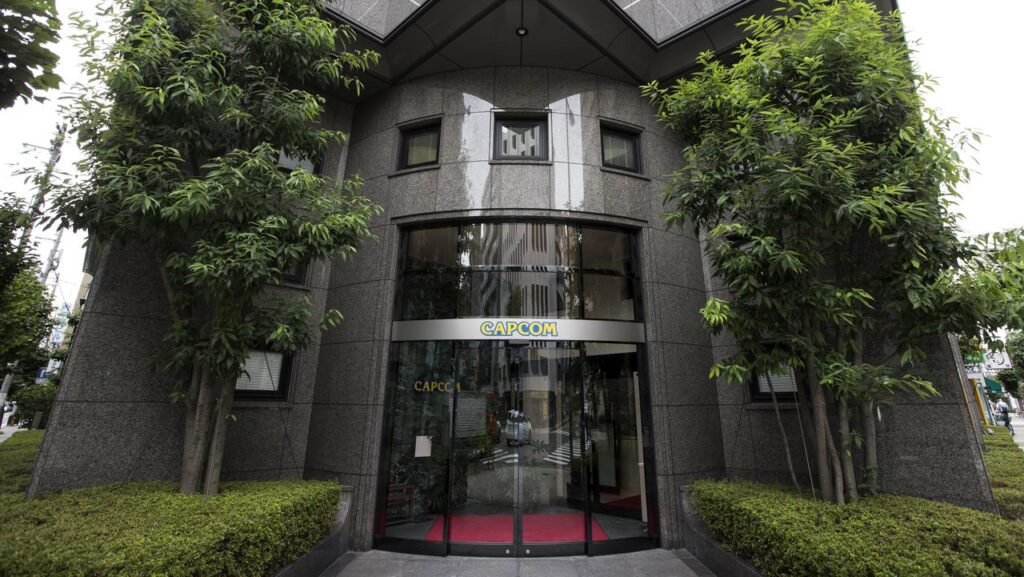
Tomohiro Ohsumi/Bloomberg via Getty Images.
Verity Townsend is a Japan-based freelance writer who previously served as editor, contributor and translator for the game news site Automaton West. She has also written about Japanese culture and movies for various publications.