“I’m interested in your view,” he begins, with that recognisably deep voice of his – and so it is that our conversation starts like a maths problem. Try this: consider that a voice recording has been heard at the beginning of many video game trailers for 16 years, and that some of those trailers have been watched millions of times. That’s a vague set of variables but, ballpark, how many times do you think that recording has then been heard? Billions of times? “I was thinking of contacting the Guinness Book of Records and saying, ‘Are these the most heard recordings in history?'” my interviewee says.
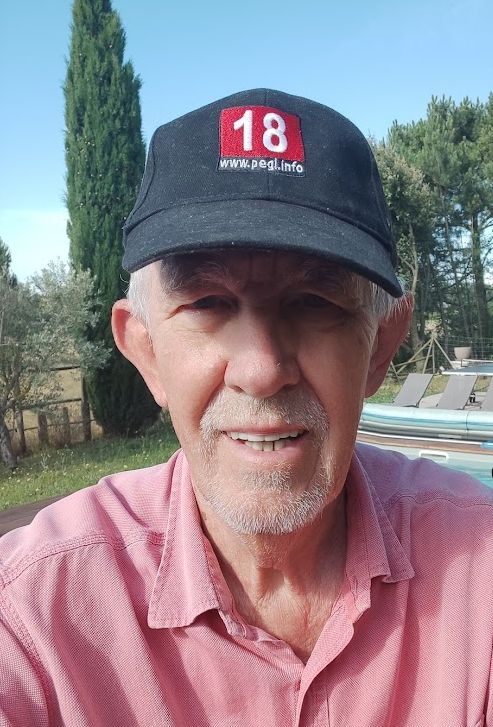
Few people knew who Richard Wells was until in early 2024, when he suddenly appeared on TikTok. There he was, an older man with cropped white hair and a tidy white beard, a welcoming expression and a smile. He seemed entirely unremarkable. But when he opened his mouth to speak, familiarity fired within.
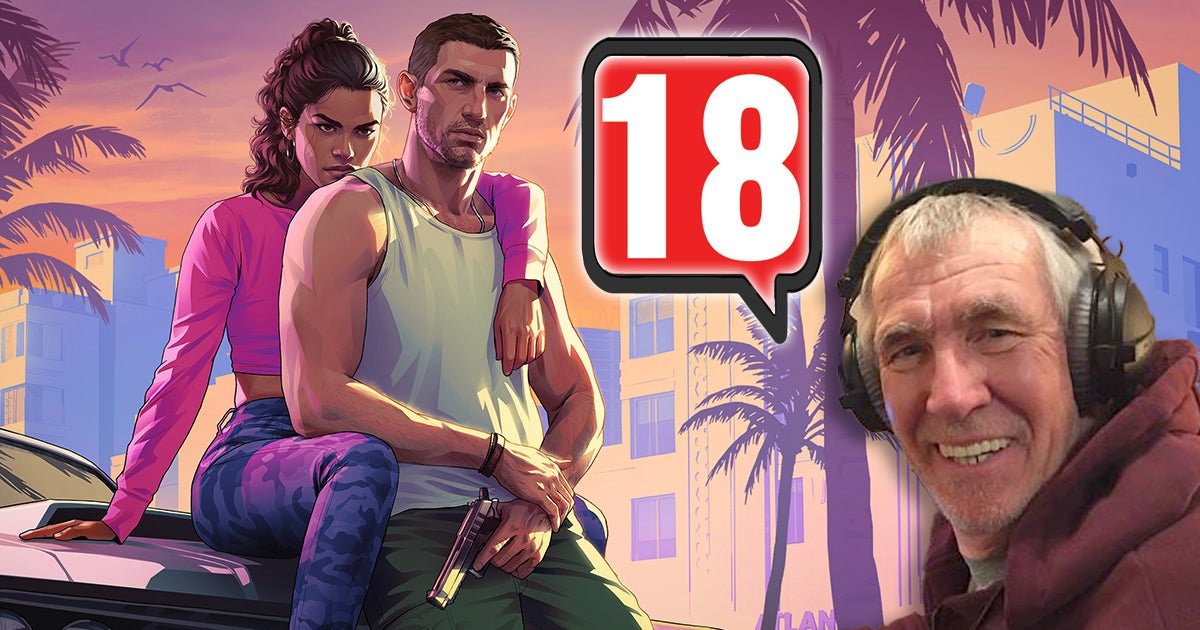
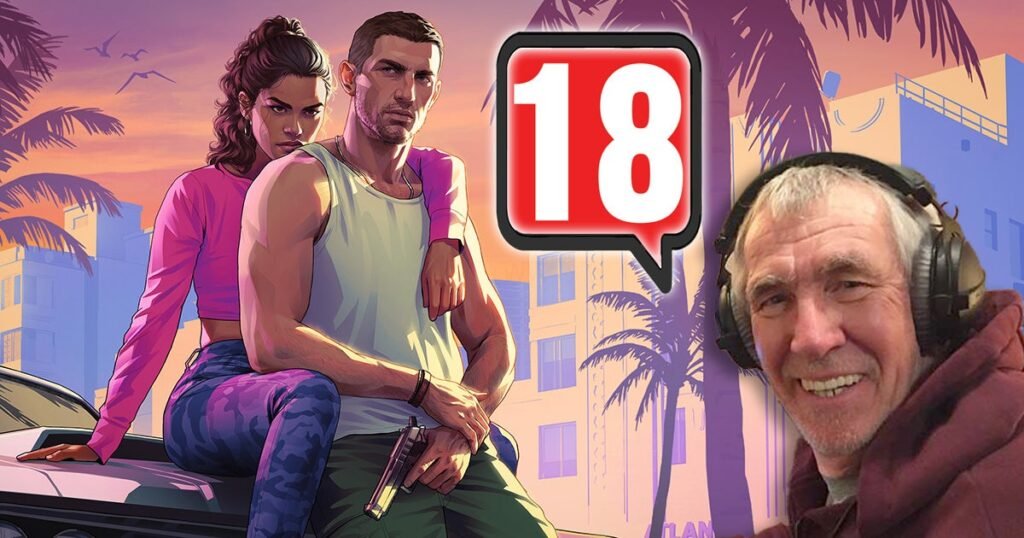
That voice… We know that voice. A large chunk of people playing games in Europe know that voice, and maybe people even further afield than that. It’s a resonant, well articulated and authoritative voice, the kind of voice you don’t argue with. A good fit for the recording it belongs to: a verbal barrier of sorts. You’ve almost certainly heard it before. “PEGI 18.”
Wells introduced himself to TikTok as the voice of PEGI – complete with a “PEGI 18” vocal demonstration and a grin (a slightly paradoxical pairing) – and as the synapses of recognition crackled around the social network, the reach of the video widened. And widened. And widened. Eventually, a river of nostalgia broke its banks and deluges of interactions flooded in. “Hearing ‘PEGI 18’ at age 12 was a right of passage,” one commenter dubiously declared, earning 156,900 likes – evidently, people could relate. “NOT PEGI18 OMGGGGG !!! UR VOICE IS INCREDIBLE 🥳,” erupted another. Nearly 19,000 people would leave a comment in total and the video would receive more than 20.4m views.
Wells hadn’t expected anything of the sort. He’d only meant to see if anyone would recognise his work. He’d recorded the video on a whim. But the result was a cacophonous “yes”, a huge, uproarious affirmation that his “PEGI X” recordings really meant something in people’s lives. And as he tried to steady himself amidst this torrent of recognition, a second thought bolted to the front of his mind. If these recordings were so well known, why was he only paid €200 for them?
I’m surprised when Wells shares his background with me in our video call, because it’s not what I’m expecting. He is exactly what I’m expecting, however, because he’s exactly as he appears in his TikTok videos. He’s affable, animated, talkative, and with that enviably rich voice. He speaks to me from a house in the south of France that he owns; his wife and he spend time there when not living in Brussels. And I’m expecting him to reveal a long theatrical background and a list of TV and film credits – the notches of a life spent acting – but he doesn’t, because it wasn’t until later in life he became an actor at all.
Originally, Wells was in advertising. Somehow a talent for languages – “I’ve got big ears and quite a good ear for accents and things,” he says while flapping his ears with his fingers – led him to it. He worked for big advertising firms J Walter Thompson and Leo Burnett, and his work took him all around the world, from London to Brussels and then much further east to Singapore, Hong Kong and Bangkok. And it was while he was in Bangkok, 15 years after this advertising adventure began, that he had a change of heart. He’d become a manager and he didn’t want to be a manager any more. “I thought, ‘I’ve got to do something else.'”
“Back in the day, I’d be doing 200-250 jobs a year and making a really good living, enjoying myself” -Richard Wells
Acting resurfaced as a desire. It was something that had always been in there. There had been times he’d voiced adverts he’d written because he couldn’t find anyone else to do it. “I found that I was not bad at it,” he says. “And I thought, ‘I wonder if I could have a career in voiceover?'” He makes it sound so simple! But it was a different time. This was the mid-80s and Wells was in his mid-30s, and he had a bit of money to provide a stable foundation. The only hesitation he seemed to have was in where to go to pursue this dream. “Should I go to Sydney? Should I go to LA? London?” he questioned himself. A more unlikely choice won out: Brussels. And why? Because it houses so many multi-national corporations. The European Parliament, the European Commission, NATO, et cetera. And they all needed English voiceovers for their newfangled Video Home System (VHS) videos they were rushing to record. “That’s not a bad place to be,” he thought to himself, and he was right.
Wells found a rich vein of work that he’s continued mining to this day. “Back in the day, I’d be doing 200-250 jobs a year and making a really good living, enjoying myself,” he says. He’d drive all over Belgium to studios to record, and sometimes down into France and The Netherlands. “It was great,” he says. “I’m still doing it, still based in Brussels. I’ve been doing it full time since 1986.” There was a bit of TV and film work to break up the corporate recordings and later e-learning course recordings, though nothing we would know him for, he decides after a long pause. “That’s a real indictment, isn’t it?” He laughs.
It was while on one of these routine corporate jobs in 2009, he was asked a seemingly innocuous question. Wells had finished a job when some extra work was suddenly emailed through. “Oh, can you just do this?” The studio operator asked. It was only a few lines, it wouldn’t take long, and it’d be an extra €200 in his proverbial pocket for the day. It’d only take a minute. “Let’s be generous and say a minute,” he says. Why not? “I had to [say], ‘This game is rated PEGI 7; this game is rated PEGI 12…'” he tells me. He had no idea what it meant – “I’m not a gamer, obviously,” he says as if it should have been apparent – so he recorded the lines and left. “And I never heard any more about it.”
Time passed – 15 years passed – and Wells continued on. But in the background, something was changing. There was a growing sense that this recording he’d done had become widely well known. Platforms like YouTube had experienced meteoric success in the intervening years. Video media had become much more common on increasingly video-centric social platforms, especially TikTok. What exactly the turning point was for Wells to consider approaching TikTok himself, I don’t know because he doesn’t specify, but in 2024 he found himself installing the app to test a hunch.
“What are you doing? Don’t be silly,” his wife said when she saw him recording the video – the video we now see on TikTok. “I just want to see if anybody…” he replied as he uploaded it. “It shows you how useless I was that I actually put the same video on twice,” he says, laughing. “That’s just me being a Boomer.” Duplicated or not, the video got there, and, “Well, you know the rest,” he says. “It was just wow.”
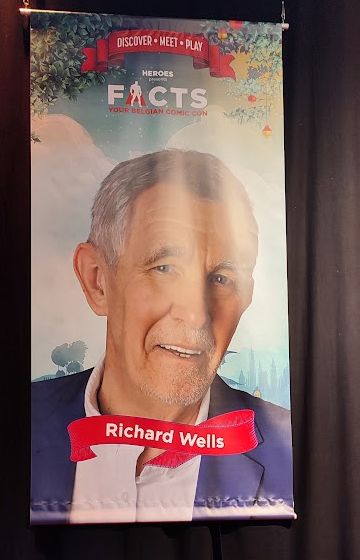
The thing is, Wells wasn’t used to direct recognition like this. He was the faceless voice of business videos or e-learning courses. He’d had a prosperous career but never been recognisable or famed for what he’d done. But the response on TikTok was resounding. He was even asked to appear at a comic convention in Ghent called Facts, where people asked for his autograph and photograph. “I was blown away by this thing,” he says. “It felt great.” And though it was rewarding enough to see something he had done igniting fond memories in people, there was another thought forming inside him. It’s that same thought we began with: was €200 fair recompense?
“I looked up the invoice and I’d invoiced recording for a TV ad,” Wells says, “which is what we thought it was at the time. And then I thought, hang on, hundreds and hundreds and hundreds of millions of exposures; normally, one would sign some kind of a deal.” But he hadn’t. And he wasn’t able to monetise his hugely successful video on TikTok because the TikTok Creator Rewards Program isn’t available in Belgium where he lives. His only option was to either swallow this desire or to go back to the source of the recording itself, PEGI.
We picked up the story of how much Wells was paid in early 2024 – “The voice actor behind ‘PEGI 18’ says he was paid just €200,” we wrote – and that summer I pressed the matter with the Games Rating Authority, which is the company that administers PEGI age-ratings in the UK. But I was told it was a matter for PEGI, and upon hearing that, I considered the door closed, because in all my years at Eurogamer, I don’t recall ever being offered an interview with PEGI. But recently that changed. I spoke to director general Dirk Bosmans about historic upcoming changes to the PEGI age-rating classifications, and during our conversation, I asked him about Wells. I was surprised by what came back.
“We were totally unaware of this. But also there was no insidious plan to get away with a freebie” -Dirk Bosmans, PEGI
“We didn’t deal with Richard directly,” Bosmans began. “We worked with a voice agency, so we didn’t know what they were paid, what the deal was with them, but obviously it was literally 20 seconds of work.” Actually, it’s a minute if we’re being generous. “And this was done in 2009,” he continued. “We didn’t know that YouTube [would take off like it did]. In a couple of years you could see that the voiceover was everywhere. We really did not anticipate that, I swear to god. We were thinking cinema ads and that sort of thing. So we did make an arrangement like ‘okay how can we license this?’, so we sorted that with Richard because the point wasn’t to underpay anyone.”
I pause for a second. Bosmans had just said a new arrangement with Richard Wells had been reached – or at least that’s what it sounded like. “Yeah,” Bosmans clarified. “We looked into how does this work, multi-year licensing. If he hadn’t reached out… We were totally unaware of this. But also there was no insidious plan to get away with a freebie.” He seemed sincere when he said this, by the way. “I hope we can keep his voice alive for a very long time.”
It was this exchange that led me to Wells because I wanted to verify what Bosmans had said, and the confirmation came quickly back in an email. “What you heard from Dirk is quite true,” Wells wrote to me. “We had a little negotiation and a sum was agreed as a buyout. A very modest sum I must admit but it was a gesture on their part.” But he elaborates more in our video call. “I think [Bosmans] plucked a figure out of thin air,” he says. “I said, ‘Well I’d like a bit more than that,’ but we’re not talking a large amount by any means. I’m not actually going to tell you how much it was. It wasn’t significant. It was just a gesture, shall we say.”
This buyout means PEGI now totally owns the usage rights to Wells’ recording, which is the recording done in 2009, by the way – it’s never been re-recorded – and it does so for the next 50 years. In return, Wells got a bit more money. Not perhaps the windfall he once imagined when his video hit the TikTok algorithm jackpot, but it’s closure of a sort nonetheless. And as for TikTok: Wells backed away because he doesn’t believe people want to hear anything else from him. “What else can I tell people?” he asks me. “They’ll just think it’s some old Boomer going on. Scroll on.”
But what about voicing video games, I ask him? They’ve been an emerging force since he began doing voice over. Would he consider voicing one of them? “I have done one,” he answers, though he stops short of telling me what it was. Wells’ page on voice acting directory platform Bodalgo mentions a game called S Word of Prophecy and gives examples of his voice work in it, though I’ve never heard of the game and can’t find any more information on it. But he does audition for games, he says. “There’s a guy in the States who keeps sending me auditions for wizards.” And as he tells me this, he breaks into a convincing impression of Ian McKellan’s Gandalf in The Lord of the Rings films. “I do all these fantastic auditions and I never get the role,” he says. “I do lots of characters and imitations of voices and things, but nobody’s asked me.” There’s a slight pause before he asks, with a smile: “Maybe you could contact people and say this guy’s really good?
“Listen,” he says by way of closing. “I’ve done very well in a 40-year career doing voice work. I’ve loved doing it. I still love doing it – I’m doing a job this afternoon. If you can do 40 years doing what you love and get good money for it and still be doing it at my age…” He trails off but the sentiment is clear: Wells is happy, fulfilled, content.
But perhaps there is one thing left to squeeze from this. “Having given it some thought,” he says, returning to where this piece began, “I reckon the PEGI recordings – PEGI 18 in particular – are the most heard single recordings in history. I can’t think of any others which have been and continue to be heard millions of times a day all over the world.” Can I think of any, he asks me? I think for a second but I can’t, which seems to prove his point. “It’s a little bit vainglorious on my part, I suppose,” he adds, “but I thought, ‘Well why not have a Guinness World Record out of it as well?'”