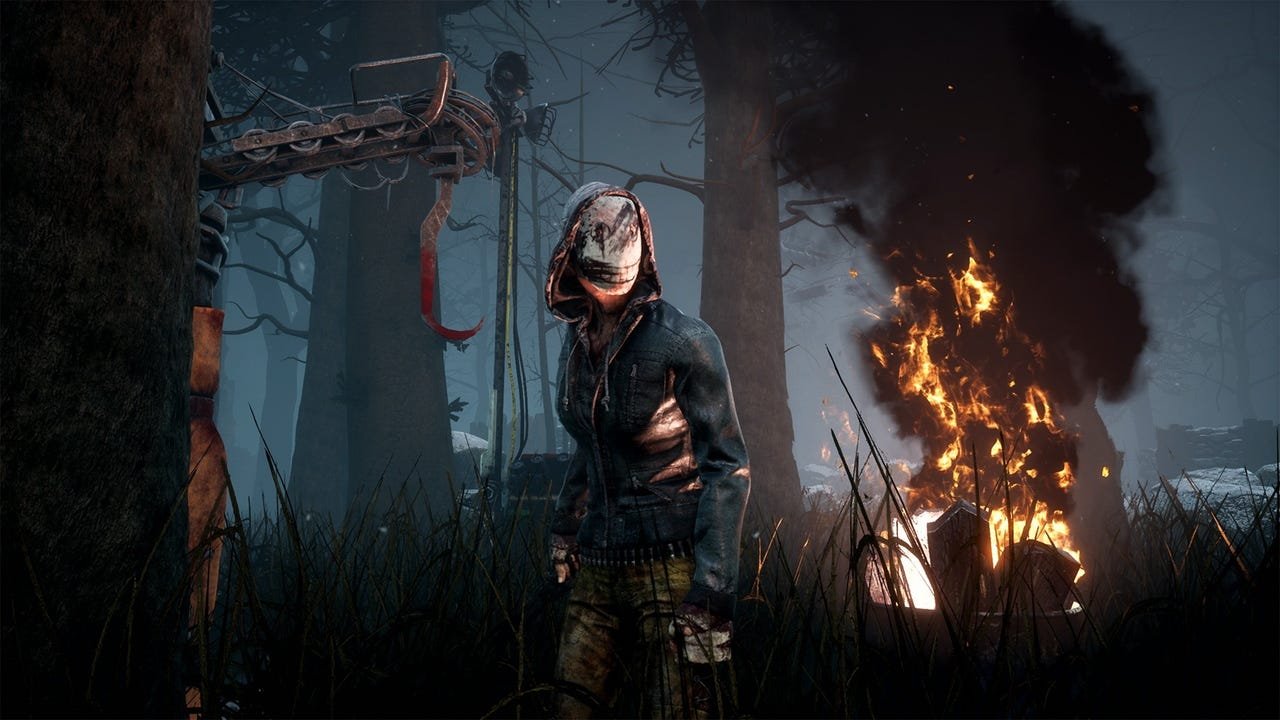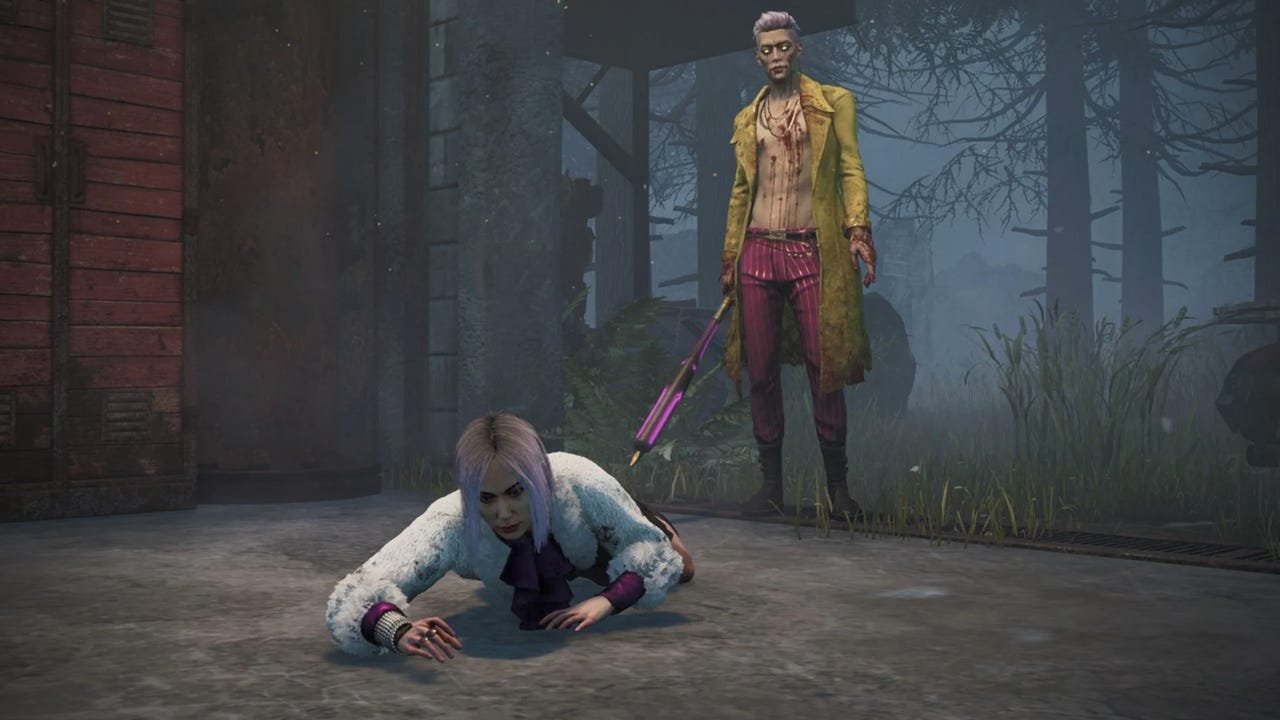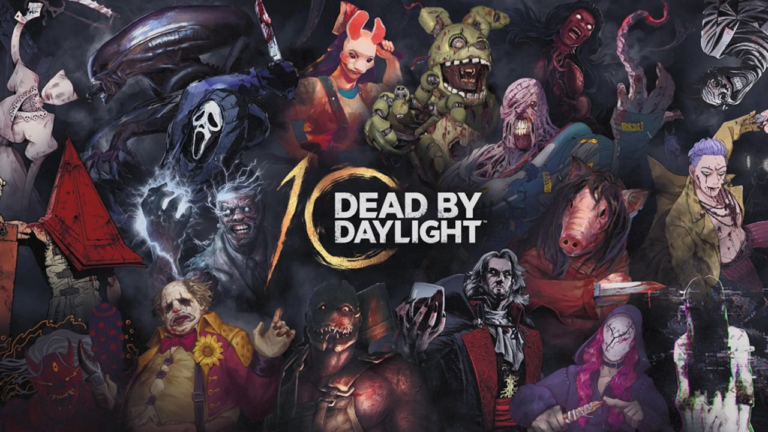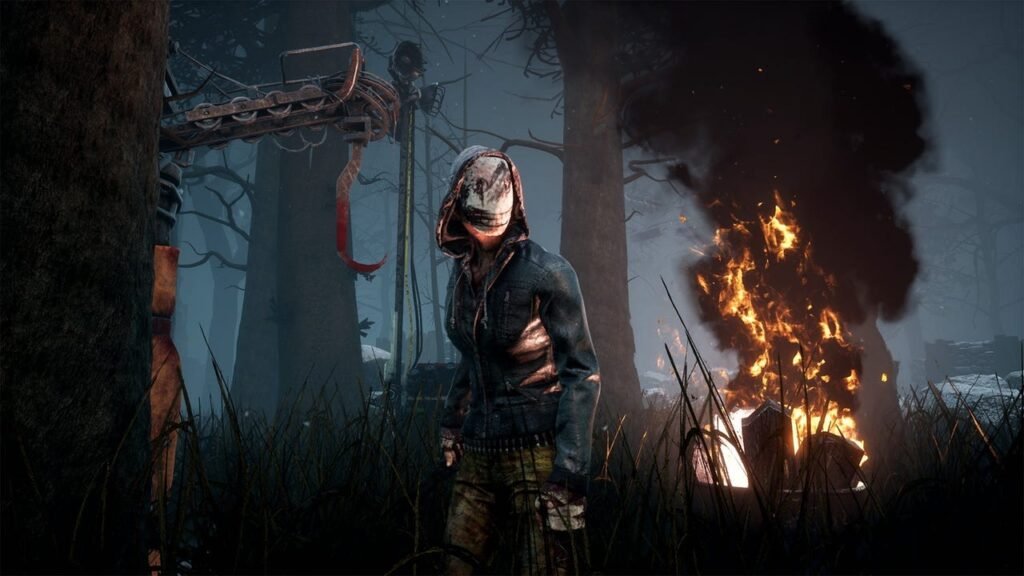

Dead by Daylight turns 10 this year.
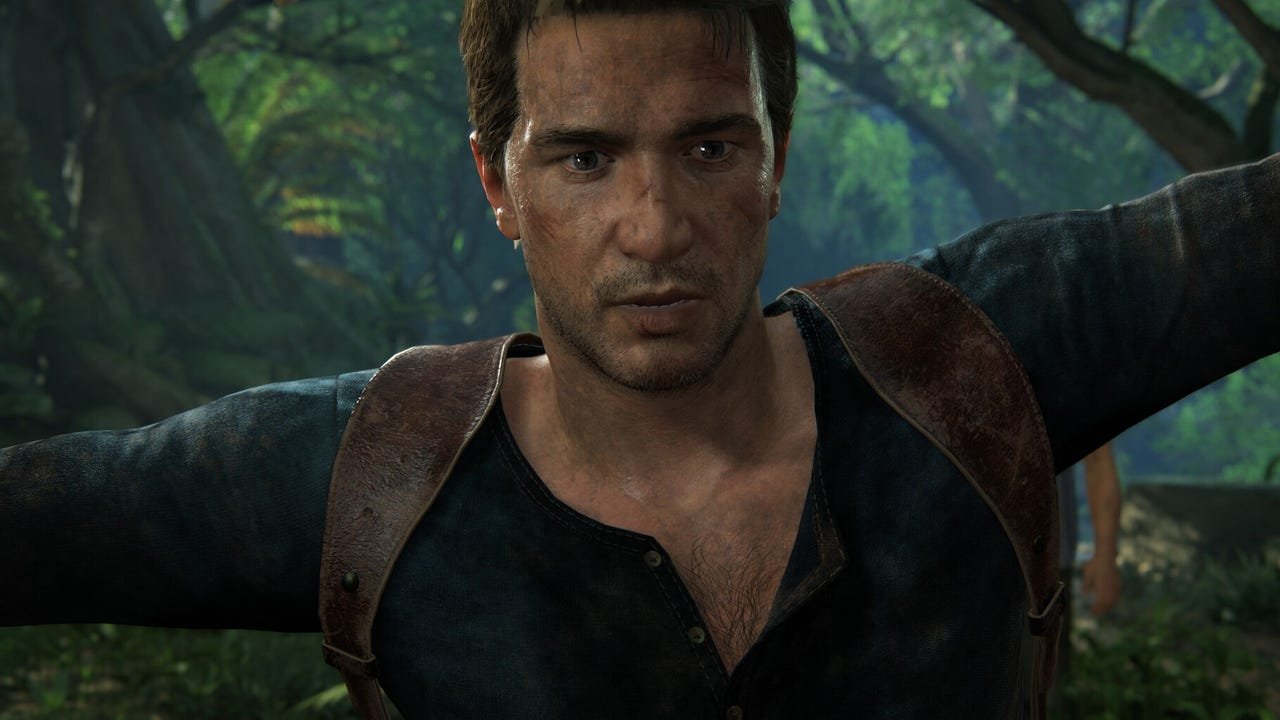
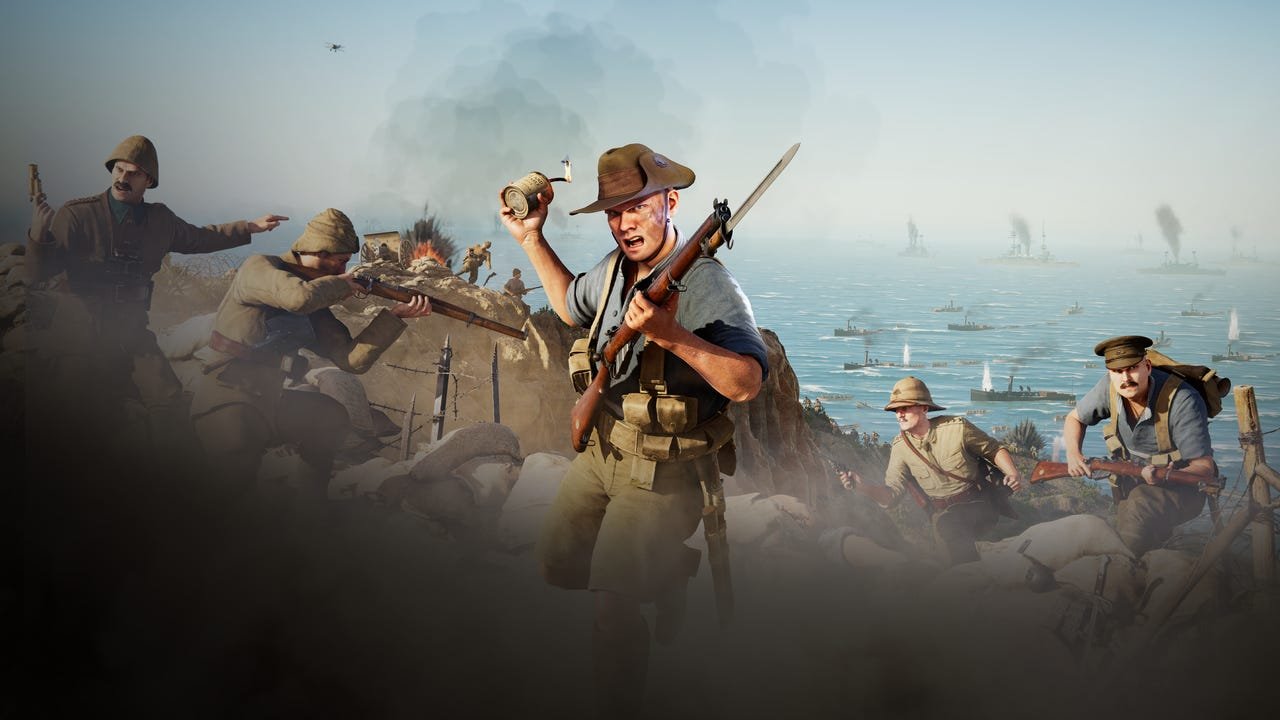
Originally released in June 2016, the asymmetric horror game has had one hell of a — but not a hellish — decade. After what was initially a bit of a janky experience at launch, the support of millions of players over a decade has allowed Behaviour Interactive to transform DBD into a well-oiled generator. It’s gotten dozens of crossovers over the years that have added Killers and Survivors and cosmetics to the game from popular properties such as The Last of Us, Stranger Things, Halloween, A Nightmare on Elm Street, Silent Hill, Resident Evil, Hellraiser, Alien, Chucky, Tomb Raider, Castlevania, Five Nights at Freddy’s, The Walking Dead… I could go on and on. It’s also seen multiple spin-offs, including a dating sim, an interactive choice-based story game, a board game, a comic series, and an upcoming film adaptation.
Yeah, I’d say it’s both surviving, and killing it.
At the Game Developers Conference last month, I sat down with Behaviour’s head of partnerships Mathieu Cote, and creative director Dave Richard to talk to them about the milestone. We covered topics such as an upcoming matchmaking rework, how to make a successful live service game, why there won’t be a sequel, and what spinoff they still really want to do but haven’t yet.
If you want to read shortened versions of all those bits of the interview, you can click on the links above to fast track yourself. But if you want the whole conversation, I’ve included it here, lightly edited for lengthy and clarity.
Happy 10th birthday, Dead by Daylight!
Mathieu Cote: I’m Mathieu Cote, head of partnerships at Behaviour.
Dave Richard: And I’m Dave Richard, I’m the creative director.
Cote: Senior creative director.
Richard: No, I don’t say that. I don’t care. It’s just a term. It doesn’t matter. Yeah, Behaviour on Dead by Daylight, and I’m the one on your right.
I don’t think the person who’s going to read this is going to know.
Cote: He’s the one with the beard.
The beard. In the audio-only, written interview. Okay [laughs]. So Dead by Daylight is 10 years old this year.
Cote: That’s insane. It’s a little crazy.
Are you guys going to celebrate? What’s the plan?
Cote: Oh, yeah. Big party in Montreal. For the first time, we’re going to actually invite people to come and celebrate with us in our hometown in Montreal.
Like fans?
Cote: Yeah. Tickets will be on sale soon. We’ve already announced it. [This interview took place March 11. Tickets went on sale March 19.] It’s June 14 in Montreal. It’s going to be a gigantic party. And not only are we going to be putting together a big physical event, a big party for our fans, but there’s going to be a broadcast as we do every year for our anniversary. And that’s where we will be repeatedly dropping the mic with big surprises. Well, I’ve been told I’m not allowed to drop mics, but yeah.
Safe to assume you’ll also be doing things in-game?
Cote: I mean, we haven’t slowed down on that. If anything, we’ve increased the cadence and every time we’ve shoved in more collaborations, and collections, and new types of content, and limited time events, and whatnot. We are not—
Richard: By “shoving,” he means working really hard with respect.
Cote: Yes. Respectfully shoving stuff in. And we’re certainly not slowing down on that. We’re not stopping. So this year is going to be, again, filled with these kinds of things. But on top of that, there’s a comic book, there’s maybe news about the movie. There’s a lot of other things that we want to show people what Dead by Daylight is about. New ways to enjoy it.
Why do you think this game has managed to stick around? I mean, you guys are kind of the envy of everybody. Everybody right now wants a live service game that’s going to stick around for more than five minutes, but 10 years! What do you think is special about Dead by Daylight?
Cote: It’s really good.
Richard: Many, many, many things. Yeah, it’s a good game, for sure, in its space. It would never have worked 10 years ago, or now, if it wasn’t good. Today, being good is not enough. We were at the right time with the right game, with the right people internally, with the right people in our community. All of this came together. So we were extremely lucky that it happened like that.
Cote: Perfect storm.
Richard: Yeah, perfect storm, really. A tornado. A sharknado.
Cote: Yeah, we’re missing a killer Dead by Daylight sharknado. We don’t have that yet.
Richard: That’s not a mic drop.
You guys scaled as well, I think.
Cote: Very much so.
You guys were very small 10 years ago, is that right?
Cote: Yeah, about 30 people. The company was about 275 people. And today, probably between 400 and 500 people work on Dead by Daylight, and Behaviour as a whole is now 1,300 people. We scaled up vigorously.
Richard: So that’s it. So even if DBD is flagship and our first original game of that size and that success, the company at that point when we released was 20 years old. So, we do have experience and people that are ready to support that scale. That’s also part of the success. It’s not like in the studio that’s like, “Oh, my God, we have a success. What do we do?” We knew mostly what to do at that point.
Cote: And we had the luxury at the time also of being able to work on a game, while not worrying about where the next paycheck was going to come from, because it was a small team of 30 people out of 275, and the rest of us were working on projects for other people like we do every day.
Do you feel that the landscape of live service games has changed significantly since you guys launched? Do you feel that you have to do different things to be competitive?
Richard: Yeah, got to keep moving, and reinventing ourselves, and listening to our community. We are in a niche, in a space of our own. That’s part of the strategic choices that we made a long time ago, but also, again, part of that perfect storm. People now in the industry, players, are attached to a single game they always go back to. So, already having people in there is amazing. But we always need to continue to scale up and find new ways to get these people in, and keep them engaged. So it’s all part of that, reinventing ourselves, but also offering new modes, offering new characters, new types of gameplay, lots [and] lots of things to give.
Cote: One thing that’s very important, because you asked the question, “How do you create such a successful live game?” The tricky bit about it is that we didn’t create a live game. We created a game, and then through the years, because people kept coming back to it, people kept interacting with it, we added more and more and more and we turned it, we gave it live game features. But that wasn’t it when we launched, and that wasn’t the objective. We weren’t creating an eternal loop for people to be in and just sort of the hamster wheel, right? That was not the point.
We knew we wanted an infinite moment generator, like a game you could play and replay and replay, and still have fun, and still not exactly be sure what you were up against. But like I was saying, for instance, the in-game store didn’t exist until year three. And the battle pass, or Rift Pass, didn’t exist until year four. And so if it wasn’t already a live game, we wouldn’t have turned it into a live game. So, that’s not a recipe you—
Richard: —can repeat.
Cote: You could, but you have to start by not making a live game. It’s sort of counterintuitive.
Richard: Today in the industry, all of these features we’ve talked about need to be in day one. It’s expected. So, it costs a lot. And if you need to cut features from the game to support a store, everybody loses.
Cote: The offering we had on day one for Dead by Daylight was far from what we had today. It was a clunky affair with lots of weird bugs and things. But the core—
Richard: With respect.
Cote: Yeah, yeah. But the core experience was there. The promise was there, and people could see what the idea behind it was, and they could dream the dream with us as we were playing it. And then we built more things as we were going along. But it was a really rough thing. And you’re talking about the choices you have to make when you cut things to put in a battle pass, or an in-game store before you launch, which is difficult.
I remember we cut tutorials completely to put in an extra killer, because we thought three would be the bare minimum for it to feel not repetitive. And so we didn’t have a tutorial. We’re like, “Okay, well shoot a video on my phone, and just edit it like that and put it on YouTube, and you just go there to learn how to play. That’s fine.” Those were the choices we made.
Would there ever come a time when you wipe the slate clean and start over? Is there ever a sequel, or a remake? What has to happen in order for you to feel that that’s necessary?
Richard: At this point, nothing. But in the first year, it happened a few times. It happens…
Cote: We did a big graphic update in 2018.
Richard: There’s always a point where we say, “Okay, we could do a sequel now,” and it would be far easier actually to do a sequel with a blank slate than try to fix these issues that we have, for example. But it never makes sense for the fans. Never ever. They’ve invested time and money on DBD, and—
Cote: That’s the game they want to play.
Richard: So, we can continue to put [in] the effort so that they can have fun and still have value for the money.
Yeah. It’s a scary prospect. Like Ubisoft with Rainbow Six, and Overwatch have been grappling with this.
Cote: And some people have been able to do that. Some have not. I think Payday is a good example. With Payday 2 and Payday 3, people still play Payday 2 and they’re supporting both, and now it’s two different games. It’s a tricky one, but it can be done. It’s also very possible to take your game and bring it kicking and screaming into the next decade, and that’s more what we want to do. We’re not going to do a DBD 2, that’s for sure. They’re not going to have to buy a DBD 2 and restart from scratch. But we understand that the game is 10 years old, and that’s a long time in video game years. And we want people that start today, tomorrow, next year, to feel like they’re playing a game that is current. It’s not a nostalgia token, it’s a real game that you can play today that makes sense.
We talked just a few seconds ago about how much you guys have grown to the studio in terms of people. Has the size of behavior impacted the way you guys work and the way you guys develop on Dead by Daylight specifically?
Cote: Of course, of course. A team of 30 people is not the same as a team of 500, right? We used to be able to meet every day the whole team together, and play together, and then have a little chat every morning about what we were going to do today. That doesn’t scale at all. That’s impossible. But the things we’re able to do today with 500 people, we could not even have dreamed of it back then. So, there’s a trade-off.
Richard: Yeah. Adaptation, for sure, and scaling up, where at some point there’s too many things to do, so that you need to let go of some things, of course. You need to find people you trust to be able to get to that quality, and vibe, and branding that we’ve always done when we’re small, but we surround ourselves with good people, and with pros. We also have new departments as part of this scale, like community, and branding, and marketing, and PI, which is getting all of our data, and is doing the scientific study of what’s happening. All of this is helping us tremendously. That’s part of the scale, too. It’s a more specialized job.
If I recall correctly, you guys had to delay a chapter last year to respond to fan feedback. Am I remembering that right?
Cote: Well, not exactly to respond—
Richard: A little bit of that.
Cote: Yeah, there’s a little bit of that, but there’s a series of reasons and pressures that led to us delaying the chapter by two months, I think. In the end, it turned out to be a really good thing, because the delivery was much more solid.
There’s always a fear on our side, I think on everybody — and it’s probably also very present for content creators right now — if you don’t do something every day, if you don’t make a lot of noise, if you don’t post a new video, or release a new chapter every day, then you’re going to vanish from people’s minds, right? You’re going to stop existing because you don’t do a thing. It’s a very present fear for us too, right? If we don’t continue to bring in new people, and do new things, and improve, and raise the bar every day, then we’re going to vanish into forgetfulness.
This proved that that’s not the case, but that was one thing. It’s one point of data. So it’s possible to take our time and to delay things, and people will scream, and shout, and then they will accept it, and they will appreciate what we have. But in the moment, it is very scary.
Well, the reason why I asked that was to that point. A lot of games will say, “Okay, we’re delaying this in response to feedback,” or, “We’re delaying this for polishing,” or whatever it is. People don’t like to talk about what you’re actually doing with that time, and what it actually means to have that extra time. So, I was curious how you felt that went, and what you were able to accomplish in that space.
Richard: It’s great. In the 10 years, and all the lifetime of Behaviour, we’re a company that ships all the time on budget, right? This is part of how we function. Delaying is not part of our DNA. The thing that players don’t see is the things that we cut. We have a dream when we build a chapter, of course, and we cut a lot so that it fits into one. But when they don’t see, they don’t mind, right? And sometimes life happens.
We’re also humans. And working with a collaborator that has a little bit more feedback, or a chapter is a little bit more complicated than we thought it was, or somebody’s sick, or somebody’s missing, whatever happens — sometimes it can affect the minimum quality that we need to have. So delaying, in that case, has many reasons it could happen, but that was a great thing to get to that point.
If you give us more room, we’ll take more room. We could take a year to build a chapter. It would be amazing. But for other reasons, that doesn’t make sense. Because if we delay two months, that means that we’re putting pressure on another chapter, because they’re scheduled like that.
I think around that same time, some of the conversations you were having, there was talk about reworking matchmaking. Is that still in the cards?
Richard: Yeah.
Cote: It is a constant.
Richard: We’re changing it in a very significant way. People that have been with us for a long time, for 10 years, will recognize some of the past matchmaking that we have, the best parts of it, and the parts that are functioning now are still going to be there. It’s going to be a re-imagination of how the game is played that is more aligned with our values as a game, where it’s a game about scenarios, it’s a game about, of course, being matched in a way that it feels balanced, but it’s not about winning. It’s about these experiences. And we want to allow every player to have the choice to play the game as they want, and to evolve in that style of play, rather than encouraging one that is really competitive.
From where you’re sitting, what is the biggest issue with matchmaking as it is now?
Richard: It is that matchmaking that clearly identifies a very specific kind of play. And it’s not necessarily bad, as a lot of players are having fun being in chases. They are fun. And killing as fast as possible, getting the generators repaired as fast as possible, and getting out and surviving. But it is really binary, and DBD has never been meant to be binary. It’s about, if you are an altruistic player, as a survivor, and you save your old team and they escaped, and then you die, you’re still a champion and you should be rewarded for this, which is something right now that matchmaking doesn’t do.
Cote: But it’s such a complex game to judge. I mean, even the scoring at the end of the game has always purposely been fake, right? Because that’s not the point. Even the categories you’re being judged on are not clearly labeled or explained, like Deviousness, this and that. It’s an impression. It’s much more in the feeling and the vibe.
That was a question we had when we were developing. Like, are we making a super clear-cut competitive sport, or are we making a mood, feeling game? Because we could have made it very, very clear-cut like some other games that are super competitive. It’s, like, a hockey game or whatever, pick a sport, where the rules are very strict, they’re very clear, and the setup is very, very inflexible, so that you know the conditions and you can then use your skill to have the best result. And that was never the point.
The point was to be thrown into chaos, make the best of it, live some really interesting moments and have things surprise you, things that had never happened before. But to have that, it means you have to have a world of possibilities that could happen so that some of them would [happen]. And that is not conducive to extremely calibrated, competitive game play. So that’s sort of the call we made. And now, matchmaking needs to reflect that in some way. It’s difficult.
I imagine if you guys start having a very specific meta that everybody is trying to pursue, that’s maybe where something’s gone wrong.
Cote: It’s inevitable. And Dave is very careful in the way he talks about it, but there is no wrong way to play the game. That’s the other thing — it’s just a different way. And it might not be the most common, or the most portrayed, and the super intense competitive people, they’re the top of that little… it’s not even the bell curve, it’s been just a spike, right? They’re super important, but they’re not necessarily representative of the vast majority of how people play. That’s the important thing to keep in mind.
Do you have a sense of when we’ll be hearing more about what this update’s going to entail? To matchmaking, specifically.
Richard: I don’t know when we’re announcing everything about it.
This year?
Cote: I think so. Very likely.
Richard: It’s in some of our top things we’re working on.
Okay. So, you guys have done so many collaborations over the years. It’s like your bread and butter at this point. Are there still any white whales for you? Is there anything that you really, really want to do that you haven’t been able to do?
Cote: Yeah, and you probably know who they are.
Do I?
Cote: I mean, if you make a list of the top 10 horror IPs out there, there’s a couple that stand out like a sore thumb that are missing in our game. So, yeah.
Is it a hangup on other people’s part, or are you trying?
Cote: How do I answer this delicately? Anybody who most people would consider a legend of horror has a standing invitation to Dead by Daylight. We’ve made it very clear, we’ve been very public about it. We’ve talked to many people. We do have quite a few contacts in these spheres nowadays, and we’ve made it very clear that if they want to, they can. And it hasn’t happened yet for one reason or another.
Is there anything outside of horror that you want to do?
Richard: What do you want to see?
Well, I’m asking because you see like Fortnite and everybody else is just getting increasingly silly with it. And that’s their bag, they’re not horror games.
Richard: I wouldn’t want to be in their shoes. Honestly, sometimes I’m like, “Where are they going to go next? They’ve done everything, it seems.”
Cote: But the thing is the integration, especially Fortnite. I can talk about Fortnite because they’re gigantic, they don’t care anyway. But a lot of the partners I talk to also talk to them, because obviously if you have a few IPs…
I’m thinking of a conversation that I was having with Disney. They own everything, many things. We’ve done Alien with them, and it was super fun, and we were talking about that and the difference between how we portray different properties and how Fortnite does. Fortnite is just a bucket of skins, right? We were talking about, let’s say, having the Xenomorph in Fortnite with Nikes on and the rainbow wig. And that’s fine for them. We would never do that because what we do is not just take a skin and put it in. We build a narrative, we have those characters folded in the way you fold a soufflé, right? It needs to come in and become part of the whole, and be a representation of the fantasy of finally being able to be, I don’t know, Freddie Krueger. Be that character; not just wear the skin, but be that character.
Richard: It takes time and effort, and sometimes even we cannot work on a collaboration because our schedule is full, and the moment is passed. It takes all sort of star alignment to make something work.
What about spin-offs? You guys have done dozens of various kinds of spin-offs over the years. Similarly, is there any sort of white whale or any type of media that you have not gotten to do yet you’d really love to do?
Cote: Well, we’ve been working on a movie with Blumhouse and Atomic Monster for a little while now. I’ve never made movies, so I don’t know if this is normal, these timelines and how things are progressing. But it’s clearly something that I would absolutely love, being able to go to the movie theater and sit down and watch a Dead by Daylight movie.
Above and beyond that, I think we’ve had the opportunity to do a few really cool things. Hooked on You is still something that I’m incredibly proud of. It’s so much fun. We have a comic book run that’s really cool, a new one that’s coming out. There’s going to be more and more of these things, because it’s super interesting. Even just as a huge nerd to see talented people who are very good at the medium you don’t know, show you what you’ve inspired them to do, and that’s pretty cool.
Richard: I want a DBD Souls game. That’s all I want. I want, like, Elden Ring in the world of DBD. That would be cool.
Is there any thought from you guys to a dedicated Switch 2 release?
Richard: Oh, that we can’t talk about. Sorry.
That’s fair enough. What about revisiting a mobile version in the future?
Richard: That is also something we can’t talk about.
Earlier this morning, Xbox was down the hall talking about Project Helix here. Is there any advantage that new and upcoming tech of any kind could afford you guys on Dead by Daylight? It’s a 10-year-old game. What sorts of things would you be looking for out of new tech?
Richard: Obviously, a new SKU, a new console, let’s say, a new piece of hardware that we can move on to must support Unreal, or there’s a way to import it in some ways. It’s super interesting if it allows us to get to a crowd that we couldn’t get to before. So one thing that’s interesting that we’ve talked about is the graphical rework and stuff like that’s evolving over time. And one question that we always have to ask ourselves is, when we update up to a limit, and we can have better graphics, better effects, whatever it is…
Cote: Who do we leave behind?
Richard: Who do we leave behind? And is that something we’re willing to do? Can these people update and follow us? It depends on the area of the world as well, right? Some people can’t easily, especially today with AI taking all of our graphics cards away, it’s so expensive to buy these new machines. So, it’s interesting, but it’s more of a challenge than it’s interesting for us at this time.
Cote: Yeah. It’s not the funnest one.
What does Day by Daylight look like 10 more years from now?
Richard: Well, in 10 years it’s going really well, and we celebrate our 20th anniversary, and we say, “20 more!” “40 more!” We used to say seven more, before we were seven. Always seven, seven more, so now we have to say more. We say 10 more. But I really believe I’m proud of what we’ve built, and I believe in this universe we’ve built, and I think we’re barely scratched the surface of who could be interesting in that universe.
We talked about all of the other side projects. There’s not just the core game, right? There’s been mobile for a little while, there is a specific market, but then there’s other experiences, Elden Ring, Souls, DBD that we could do, or whatever it is, that can bring some people into our stories. I think that’s how we scale up in time. We have 70 million people that play currently, and I mean, we want a billion eventually. Bare minimum.
Cote: The progression of how even we see the game internally has changed. I think five years ago I started talking about the Museum of Horror, right? And we were putting all those legends in there. Then a couple of years [later], it turned into the Hall of Fame of Horror, which is slightly different, but it’s more open, it’s bigger. Then last year, I was talking to someone who called it the New York of Horror. And I thought that was a really interesting way of looking at it because it’s not even that sacred. It’s just rich, and different, and weird, and scary.
There’s a lot of people, and everybody’s got their own version of it, which is also something that’s become very dear to me in terms of the Dead by Daylight community. [We] talk about the Dead by Daylight community a lot of the time. There is no such thing as the Dead by Daylight community, but there are about a million different communities. It’s like you and the hundred people that you interact with about Dead by Daylight, and the maybe hundred people that you watch and check. All of these are separate.
Depending on where you are in the world, depending on the language you speak, depending on who your friends are, depending on your leanings and all of this, means that your community is these couple of hundreds, maybe thousands of people that you interact with, that you share Dead by Daylight with. Then there’s another group, and another group, and then another group. That means everybody’s got a slightly different version of what Dead by Daylight is or what it means to them, and that’s beautiful. But it’s very difficult for us to say, “The community wants this.” Well, some communities want this. But the fact that there’s so many people, and it’s so rich and vibrant, it’s just good.
Rebekah Valentine is a senior reporter for IGN. Got a story tip? Send it to rvalentine@ign.com.