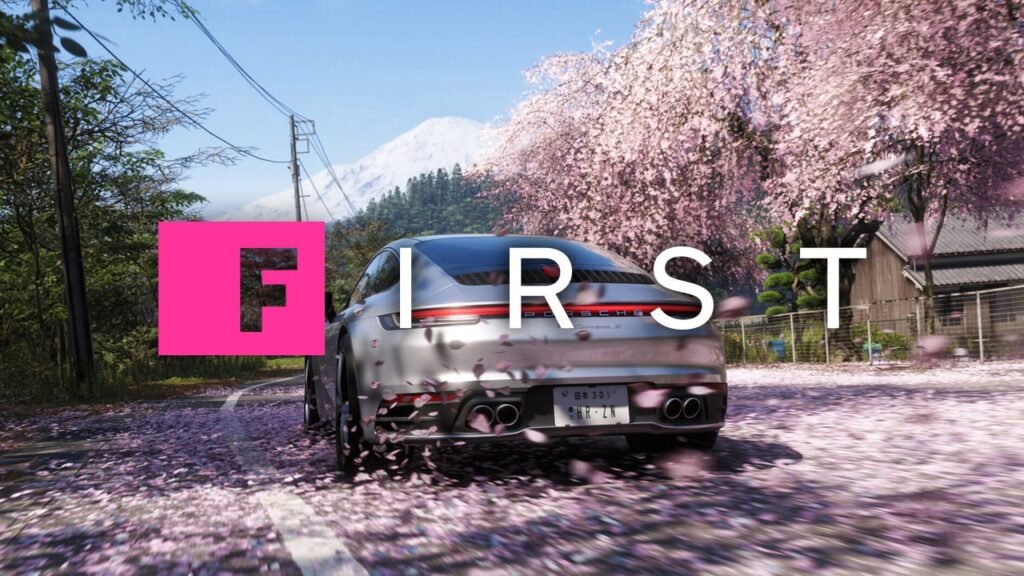
Introducing seasons in Forza Horizon 4 was a huge shift for the series. Bringing Britain to life four times over, in four distinct seasons, was obviously a significant undertaking. However, what it injected into the game was a reward for returning week after week. That proved extremely valuable. Each week, things would be a little different, and it kept Forza Horizon 4 fascinatingly fresh.
It was a particular novelty for myself, to virtually visit a world with such distinct variety. Where I live in Australia, it’s either hot and sunny, or it’s cool and sunny – and unless they’re on fire, gum trees are green 365 days a year. That is, it would’ve been a lot easier for Playground Games to have debuted seasons in Forza Horizon 3, but noticing the differences might’ve been a major problem.
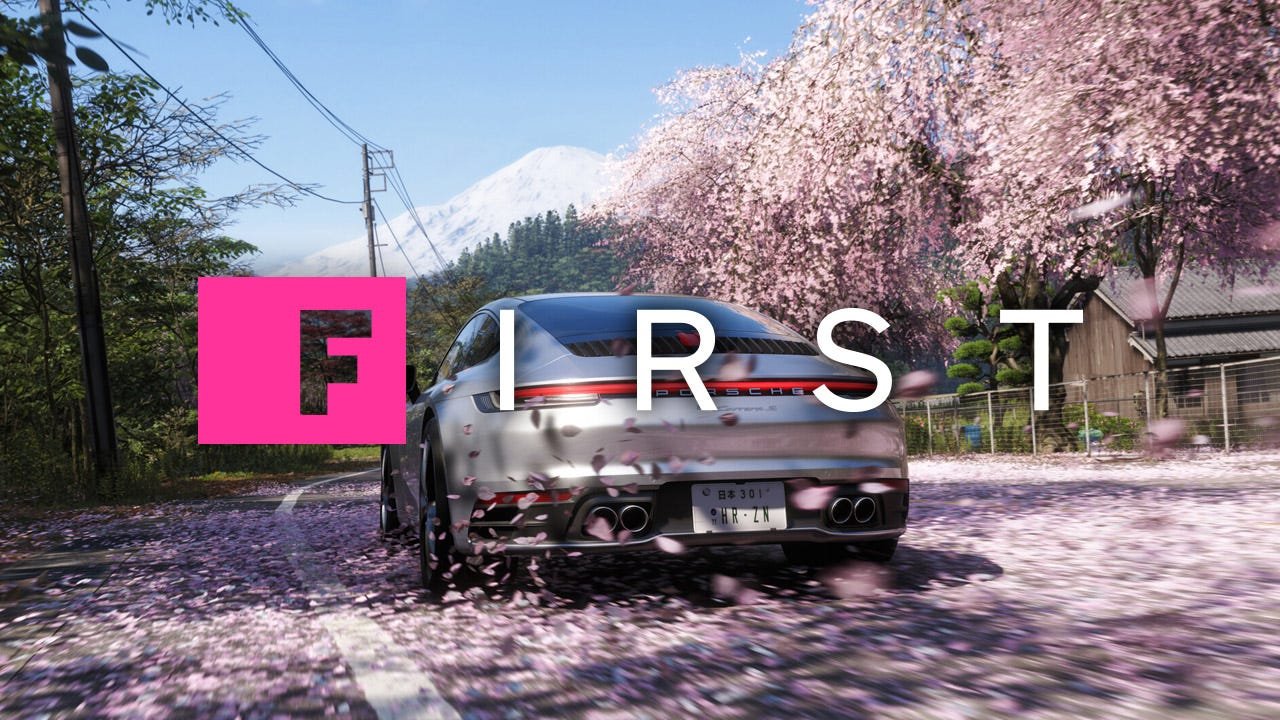
To an extent, Forza Horizon 5’s Mexican seasonal changes are a little less overt than those in Britain, and seasons in that game are typically more defined by the changing weather that accompanies them. Forza Horizon 6, however, is a return to dramatic seasonal shifts that have significant effects on the surrounding landscape – from frigid, snowy winters to postcard-perfect springs.
“Obviously, a lot of people have an idea what Japan is in their minds, and a lot of that is seasonality,” says art director Don Arceta. “And that was one of the big things we saw when we were doing our research and in pre-production, and we really wanted to capture that.
“As you mentioned, the changes between seasons are so striking, we just wanted to make sure that we captured that authentically. And with that, the seasons are overtly different and quite distinct from past games.”
“I think an interesting thing, as well, is it represented both an opportunity and a challenge,” adds production director Mike Bennett. “So yeah, it was an opportunity to, from a visual perspective, do something with much more obvious visual contrast. So between seasons you can really feel something that’s very different from where you were the week prior.
“But also it’s a challenge because, when we think back to the lessons that we learned from the previous games, there were components of Horizon 4 that people were maybe less fond of when it came to certain seasons. And a great example of that would be winter.”
Bennett notes that, in Forza Horizon 4, winter wasn’t just an immediately recognisable visual change compared to other seasons – it also represented a profound change in car handling characteristics compared to other seasons.
“We made the decision to have the roads covered in snow and ice, and that was somewhat based on the fun that we’d enjoyed with Blizzard Mountain on Horizon 3,” says Bennett. “And I think that was pretty fun at first but, I think as we found with time, players eventually started to grow a little bit tired of all the roads being covered in snow all the time.
“So we wanted to learn from that and think, ‘Okay, how can we approach what is authentically Japanese – which is a predominantly snow-covered visual in winter in our version of Japan – yet also not penalise players that predominantly want to drive on asphalt?’ So I think we came up with a really great compromise there, where we leveraged what we saw within the reference, which is, ‘Hey, the Japanese are actually pretty good at keeping the roads clear.’ So, our asphalt roads, generally those are clear from snow. But, if you start to venture off road onto the gravel roads, the dirt roads, we keep a bit more snow on those.
“So if you’re someone that’s seeking that more rough and ready off-road feel, you’re going to get that more authentic snow experience in winter. And then the really cool thing that we’ve got is, because we have our new Alpine region, we’ve got snow year round up there. You go there any season and you’re experiencing Blizzard Mountain again, and that’s really cool. So, up there, all the roads are covered in snow; you can throw on some snow tyres, have a lot of fun, get in the offroaders. If that’s the experience you’re looking for, you can find it there, whatever the season. Yet, if you’re someone who doesn’t really want to spend a lot of time on snow roads in winter, you’re not going to have to go through that experience.”
Bennett explains that it wasn’t that there was necessarily a drop-off in players every four weeks, but the team was simply picking up on some general weariness with slippery winters.
“I’m not sure whether the data really showed that, but it was definitely a sentiment that we saw when we were working with our community team and looking at our forums,” he says. “There was a fatigue.
“Some people loved winter. And, interestingly, it was kind of a surprise when we moved onto Horizon 5 that we actually saw this counter-sentiment, where people were saying, ‘Hey, kind of miss the snow; where’s the snow?’ And yeah, it was there, but it was confined to the top of the volcano because again, we were sort of grounded within the truth of the location that we built that time around. So yeah, I think the opportunity with Japan is it allowed us to hopefully address both cohorts of players, and satisfy both of them there.”
According to Playground, Japan’s seasons are filled with tiny details players may not immediately notice. It’ll be hard to miss the changing palette of susuki grass, or Japan’s iconic blossom trees in bloom – but many of Forza Horizon 6’s details are much more subtle. Yes, Playground Games is adding bugs to Forza Horizon 6 – just not the type that break games.
“So fireflies, obviously you can only experience them in our summer season, and only in a handful of areas in the map,” says Arceta. “So that’s something that you’ll come across.
“Other seasonal touches we have, we have these amazing koi carp fish that are dotted about ponds in front of temples and shrines. And in certain seasons you can see them and observe them, which is one of those nice touches. You can never hit them, but you can drive near them and then they scurry away, which is really nice.”
Cars will also now produce visible exhaust in cold conditions, as water vapour riding the hot exhaust gases hits the crisp air and condenses.
“One thing we really wanted to capture was we wanted to treat this car as a living, breathing machine,” explains Arceta. “And one of those touches was water vapour when it gets really cold.
“I remember growing up in Canada myself that you see that exhaust just pouring out all that water vapour, and we wanted to capture that, just sell that the car is alive. And we represent that obviously in our winter season and in the Alpine region as well throughout every season, but also in the colder hours of autumn and spring.”
Another important element of Forza Horizon 6’s Japanese seasons is the human component of those seasons, and Playground has made sure to integrate a variety of Japanese matsuri – traditional Japanese celebrations and festivals – into the backdrop of the game.
“That was an area that we really felt we got a lot of value out of our cultural consultant to really help us understand what was going on there,” says Bennett. “So there’s some really cool details.”
“There’s so many local festivals in Japan,” adds Arceta. “We couldn’t do all of them, but we chose ones that are very iconic, to not only the Japanese, but the rest of the world.
“So, yeah, in spring you’ll see koinobori carp celebrating Children’s Day. In autumn, you’ll see lantern festivals where lanterns are let up into the air and across rivers. In our summer we have our kite festival, so you’ll see people having kites up in the air. And then one of the little touches in there is we wanted to keep it driver, car-related. So we have certain symbols on there that relate back to car culture and the Forza Horizon world.”

Rank these open-world racing and driving games
Rank these open-world racing and driving games
With the evolving world approach the team used to great effect in Forza Horizon 5, there’s also an opportunity for Playground to look at doing more with this in the future.
“Yeah, potentially, for sure,” says Bennett. “I mean, we’ve carried forward that technology to the next game. I think we feel that was one of the best investments that we made on Horizon 5.
“And we’ve gone to some lengths to ensure that we’re able to do a bit more with that this time around, as well. Moving forward from the Xbox One generation of consoles has freed our hands a little bit there to give us some more potential. So yeah, we’ve learned how to celebrate key moments through the year based on the previous game, and I think we’ll definitely look forward to exploring those opportunities through the live program on Horizon 6 as well.”
Of course, the changes aren’t just visual. They also have major effects on the racing itself, although Playground always aims to never have a best or worst season to complete certain events within.
“When we were out in the farmlands, for example, the rice paddies are probably one of the areas that you see really big seasonal change,” says Bennett. “So, in the winter, they’re frozen over, they’re hard. In the autumn and summer seasons they’re saturated, they’re full of water.
“So if you’re in an offroader and you’re cruising through that biome, it’s going to feel very different. And consequently, if you do off-road or cross country events while you’re driving through that area, it’s going to feel very different in the car as well. So there’s a level of depth that comes with that as well. You might find, in the dryer months, a more traditional, slightly more road-focused vehicle might be more optimal there. But when these things are really saturated with water, you want something with big travel, big wheels that you can wade through that water and have some fun.
“It definitely factors into the considerations that the team make. Ideally, we want to build our events where there’s as much versatility and usage within them. So, ideally, they feel different, but they don’t necessarily penalise you based on the season in which you’re playing them. We want you to be able to go back and feel like you can experience something fresh. We don’t want people to feel like, ‘Hey, I shouldn’t go and do that event in that season because it’s not going to be as fun.’ It should just feel different. That’s the general ethos of them.”
The Playground team has found itself invigorated by returning to an environment with such drastic cosmetic changes from season to season. Arceta is especially fond of autumn right now, but Bennett is finding it more difficult to choose.
“Japan has, in real-life, 72 micro seasons and, with those micro seasons, foliage changing, there’s wildlife changes, and us breaking that down into the four main ones was real exciting,” says Arceta. “Just capturing the most beautiful version of that season in the location. It’s such striking differences between each season. I know our environment team were super excited to just jump on and build this version of Japan that we have.
“I waffle between two. So spring, obviously, you get the iconic cherry blossoms, but I think autumn. Autumn is my favourite season just because of the amount of colour and contrast of color that you get in that season. It also features a unique weather type that’s new to this game called unkai, which is our sea of clouds. So I think autumn is growing to become my favourite season for this game.”
“I think I kind of waver around on any given day, based on my mood,” smiles Bennett. “If I had to pick one, I’m always drawn towards summer. I think, particularly at this time of year when it’s kind of cold outside, being able to jump into the game and see all those lush greens – that kind of Ghibli-esque visual – it’s just a really nice environment to spend time just cruising around and exploring the game world.
“But yeah, it is tricky. Like, Don spoke about autumn there. I think one of the really nice things is the vibrancy of the colour palette in autumn on Horizon 6. I think we’ve really pushed that compared to Horizon 4. So it’s a more colourful, maybe a more pleasant visual, relative to that. But yeah, they’ve all got something unique to offer. Even when it comes to the small details, like the snow, our environment team has really gone and amped that up. There’s small granules of snow, little snowbanks, so there’s more detail there relative to what we’ve been able to do on the previous games as well. Tough to choose, for sure.”
While the workload is high, and it quadruples the amount of times the team needs to sit down and review and test the game in action, the team maintains the result is worth the effort.
“Yeah, it’s a huge amount of work, and I think it’d be safe to say a large proportion of that work falls on Don and our visual teams,” says Bennett. “It’s the game world, making sure that that visual is cohesive; trying to make sure that people don’t have an obvious favourite, where the world looks its best.
“You want all of them to be singing and have their own unique moments that you’re looking forward to, so that when you jump in the game week to week, ‘Oh, I’m going to go and check out the snowy offroad areas again, or I want to go and capture some glimpses of those unkai clouds.’
“To put it in really simple terms, if you went back to Horizon 3 – where we just had one, really strong visual palette with no seasonality – we would sit down, we would review the game and we would look at it. What we now have to do is sit down, review the game, and look at it four times.
“So, it’s not just a case of, ‘Hey, go and author that tree and make it look like the best version of that tree.’ It’s, ‘Make sure that we have researched how that tree changes through the seasons and we accurately represent that.’ And then when we come to tuning the performance of the game, we have to optimise our content differently. If you take the leaves off of a tree, the performance cost of rendering that tree is different to how it was when it was fully in leaf.
“So even from a rendering optimisation perspective, there’s a ton of extra work that has to go into making sure that the game works. So it’s not just the visuals, it’s not just the authoring side – it’s the performance side. We get unique bugs that pop up in one season that we don’t see in others. So there is a lot of additional legwork that has to be done to go into that.
“But it’s such a great vehicle to leverage to bring players back to the game week on week, because they know it’s going to feel fresh and we can plug in our seasonal events to that. It’s a lot of work, but I think we see a lot of value in it. And equally, as Don said, with every location we go to, we find fun new things to do for it.”
There’s still content to come from IGN on Forza Horizon 6 throughout the rest of March, including a look at the game’s new customisation options, plus a look at the new Rush events.
Luke is a Senior Editor on the IGN reviews team. You can track him down on Bluesky @mrlukereilly to ask him things about stuff.