Auteurs rarely redo their own work, and when they do, it’s usually to take advantage of bigger budgets and newer tech. Michael Mann upgraded his TV movie LA Takedown into the star-studded Heat, while Ozu and Hitchcock remade their silent films as talkies.
Resident Evil director Shinji Mikami had no intention of demolishing his iconic Spencer Mansion and rebuilding it from the foundation. When it came to his 2002 remake of the 1996 survival horror classic, Mikami initially had no greater ambition than updating his career-making game’s graphics, using the power of the GameCube to create a timeless showcase that still looks tremendous today.
New aesthetics cast the Spencer Mansion in a very different light. The original Resident Evil is bright and sterile. Rooms were clean, floors barely textured, and clutter kept to a minimum for the SGI workstations that spent days rendering it all. It felt empty in an eerie Overlook Hotel way – like everyone who lived and worked there was suddenly raptured, leaving only their herb stashes, personal correspondence, and piles of handgun ammunition as evidence of their existence.

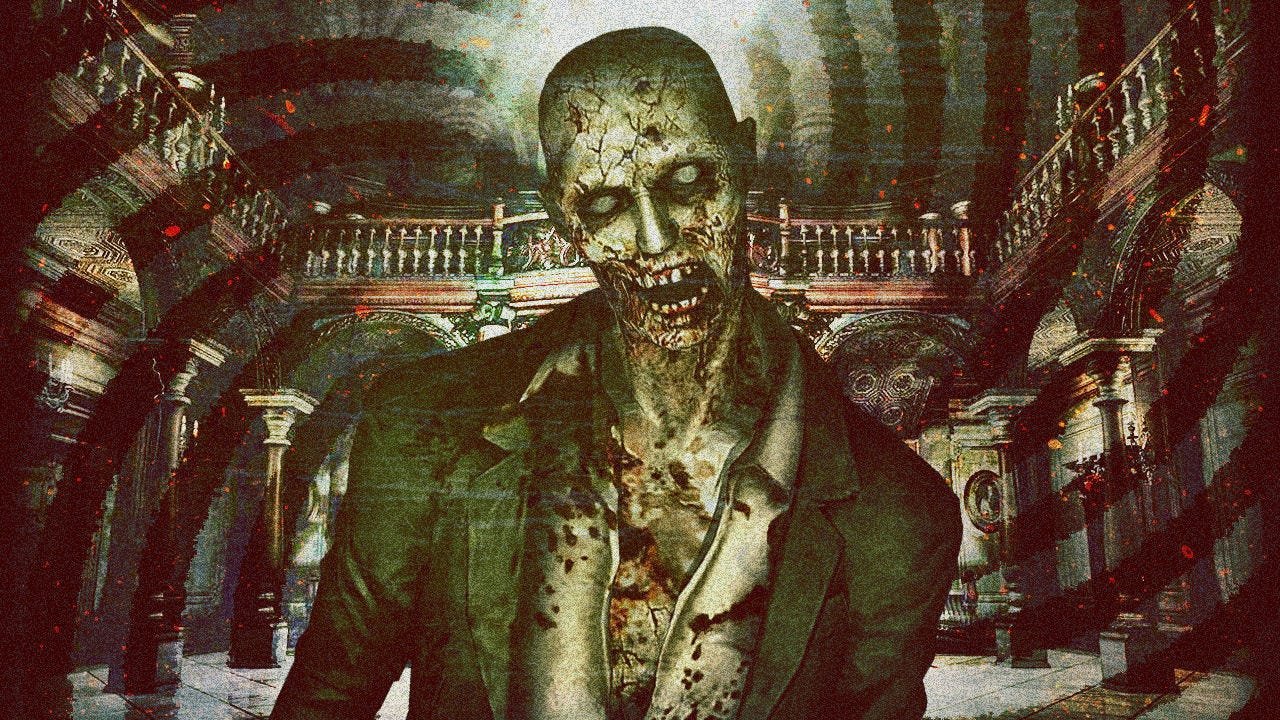
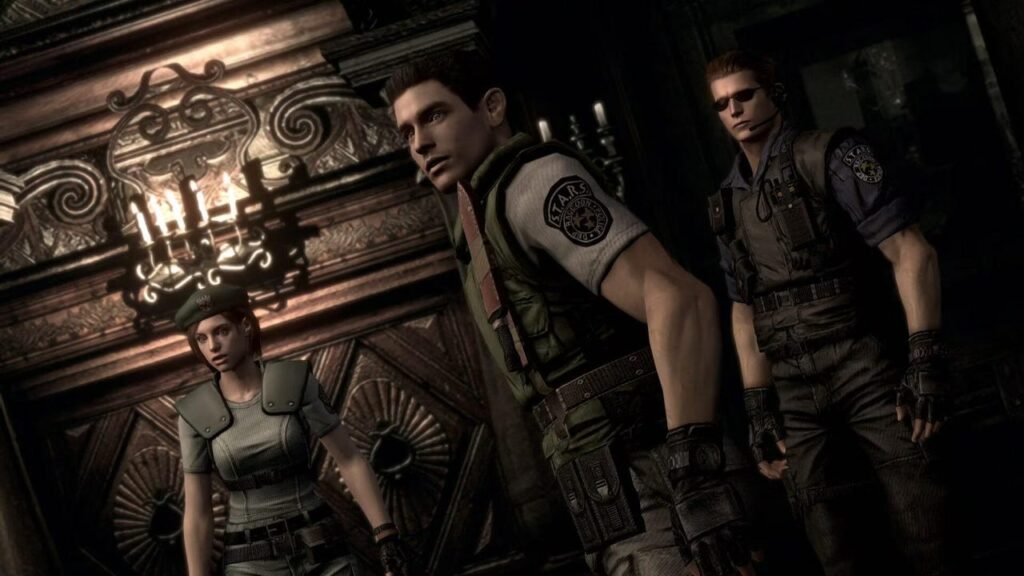
Mikami’s REmake drowns the mansion in darkness and decay. Pre-rendered backgrounds are now stunning tableaus with flickering candlelight and real-time shadows, magnificent environments frozen forever in 480p amber that decades of upscaling still can’t quite recapture.
Exploring Spencer Mansion hits different in the remake. Lightning flashes illuminate rooms and shadows swallow corridors whole. The mansion is grimier and aged, living up to Mikami’s drive for “real feeling.” It’s beautiful and terrifying in a trad horror way, but the newfound verisimilitude sacrifices the lo-fi liminality of the original. Less Backrooms, more House on Haunted Hill. It’s up to you to decide which you like better, but the wetter, more oppressive aesthetic is a good complement for the more substantial changes that Mikami and his team eventually went on to make.
Late in development, after the team had spent months rebuilding Spencer Mansion, Mikami changed his mind. It wasn’t enough for the game to look nicer. It had to taste different, like a bitter beer to snap jaded survival horror heads out of their comfort zones. At first, he toyed with making all enemies invisible by default, but he mercifully abandoned that idea and landed on something that was somehow more sadistic.
Recurring Nightmares
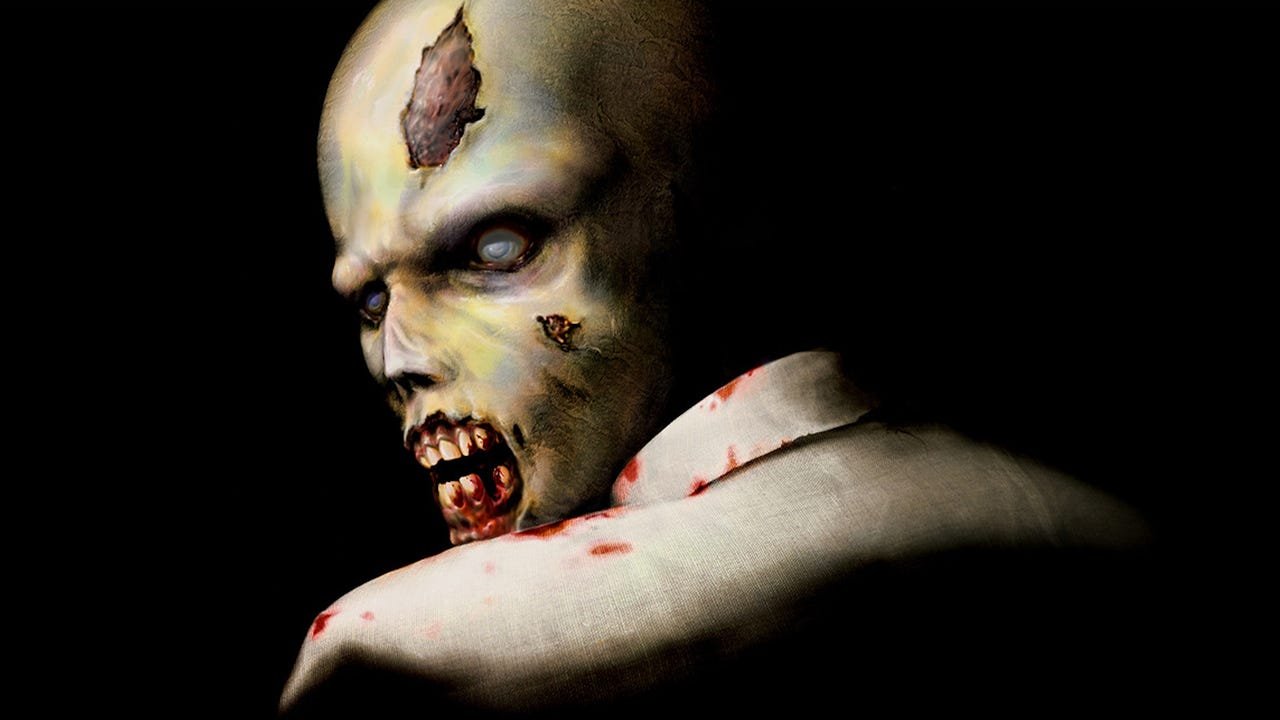
Nearly every zombie killed in the Resident Evil remake will come back to life, again, in a faster, stronger, more hardy form called Crimson Heads. As long as a zombie dies with their skull or limbs intact, they’ll be resurrected on a randomly determined time table. You can prevent it from happening, but it’s going to cost you.
The mechanic completely reformats your approach to Spencer Mansion. Backtracking becomes a minefield of your own making as rooms you cleared hours ago spring back to life with glowing-eyed berserkers. Even the very first zombie from your Tea Room meet cute comes back, adding a diabolical twist to a space you thought was safe. It’s a trick that lingers long in the memory, and one so chillingly powerful that it’s been resurrected for this year’s Resident Evil Requiem, where grotesque “Blister Heads” turn the dead into recurring nightmares.
If you do take down one of the Spencer Mansion’s zombies, you can only stop their resurrection by burning the body with kerosene. You can only carry two uses at a time, and while it’s hidden all around the mansion, there’s not nearly enough of it to torch every corpse in the joint. It’s a massive inventory tax and especially brutal for those playing as Chris Redfield and struggling with his limited inventory slots, though he does get a lighter by default and head-popping flash grenades to compensate.
You’ll be dodging and sprinting past far more enemies than you ever did in the original game, your mental map transforming into a resource allocation puzzle. Which hallways are worth purging with your limited fuel? Which routes can you afford to leave infested? Veteran players learn which areas they’ll never revisit, but doors no longer offer the same peace of mind. The original Resident Evil discouraged killing, but the remake punishes you severely for it.
Killer Curveball
Structural changes run just as deep. While only two rooms are missing from the original game, many more have been completely reimagined, and pretty much everything has been moved around. Shuffled item locations might not seem like a big deal – someone out there has beaten this game faster than you ever will with every item randomized – but the route itself is fundamentally changed.
The original way to the mansion’s secret underground laboratory, Resident Evil’s big final act, required finding four crests, which the remake swaps for death masks. Capcom, never ones to let a good crest go to waste, cheekily repurposed the classics as a method to unlock the Magnum instead.
The path to Disc 2 takes you through a graveyard, a forest, catacombs, and a giant torchlit altar, forcing you into terrifying encounters against Lisa Trevor, long-lost daughter of George Trevor, the architect of the Spencer Mansion. She’s endured 28 years of Umbrella experiments in the labs beneath the mansion, her bloodstream is the bedrock for every virus in the franchise, and she’s utterly unkillable.
Fighting her is fruitless, the best you can do is dodge and run, putting everything you learned about evasion and retreat to the test. It’s pure problem-solving under lethal pressure, the mansion’s core design distilled into a trial you must survive before you’re worthy of its true secrets.

By 2002, we’d been simmering in survival horror’s stew for six years, killing dozens of zombies and B.O.W.s by the boatload. Mikami knew we had gotten comfortable. He had taught us too well, so instead of a streamlined tribute to his past glory he tormented and tested us with curveball after killer curveball.
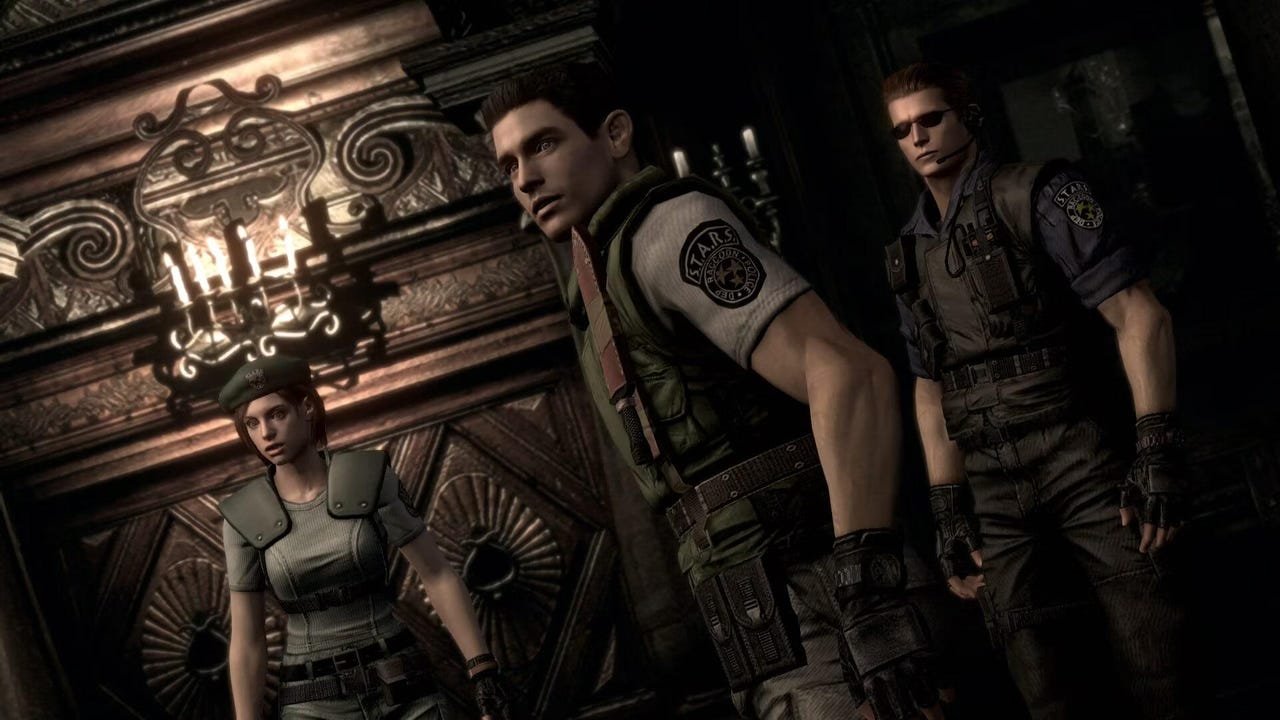
REmake’s cruelest trick is the way it weaponizes our familiarity. The dogs that famously crash through the hallway window save their powder for our second trip through, after we’ve exhaled in relief, assured we must have recalled that classic jumpscare wrong. Get too comfortable with the door to the corridor that leads to the back entrance and its handle breaks off in our hand, forcing us to take the long way around the highly trafficked East staircase until Barry or Wesker decides to fix it later on. A jewel puzzle that once rewarded the best handgun in the game now drops a pile of snakes on your head. It was no longer the mansion we once trusted, but that’s okay, because we weren’t the same kind of players anymore.
Resident Evil’s REmake took every lesson learned from a generation of tank controls and pre-rendered backgrounds and molded the Spencer estate into a fiendish master class, the swansong to a golden age of survival horror and a brutal triumph of reinvention.
What makes Spencer Mansion truly special is that it served two distinct purposes in two very different eras and nailed it both times. In 1996 it was a survival horror boot camp that drilled concepts of caution and fragility into a generation of gamers raised on Doom and Mortal Kombat, a lesson in a new language of fear. Six years later, the same mansion became a grueling obstacle course, an elite challenge for students who’d graduated with honors. It deconstructed our carefully cultivated expertise just as a new era of 3D horror was about to start us from scratch.
Therein lies the genius of Spencer Mansion, a holy space that reinvented itself as drastically as the genre it defined, teaching us new lessons even when we thought we knew everything there was to know.