Diablo 4 has aired like a blood-red wine. In a situation eerily reminiscent of Overwatch (2), Blizzard is finding its feet with Diablo 4 three years after launch, precisely in time for a head-turning new expansion, Lord of Hatred, to arrive.
The expansion arrives 28th April and, most notably, brings two playable classes to the game – the paladin and warlock – as well as a sunny new region to explore, a new storyline helmed by Mephisto, and new systems like War Plans that will change how we interact with the game. But that’s not all. Alongside the expansion, Blizzard is overhauling skill trees in the game, significantly widening the options on offer.
I visited Blizzard recently to find out more about some of these Lord of Hatred-related changes and to play the new warlock class, which unlike the paladin, can’t be publicly tested yet. Here are the most notable things I learned.
The warlock is ridiculous, in a good way
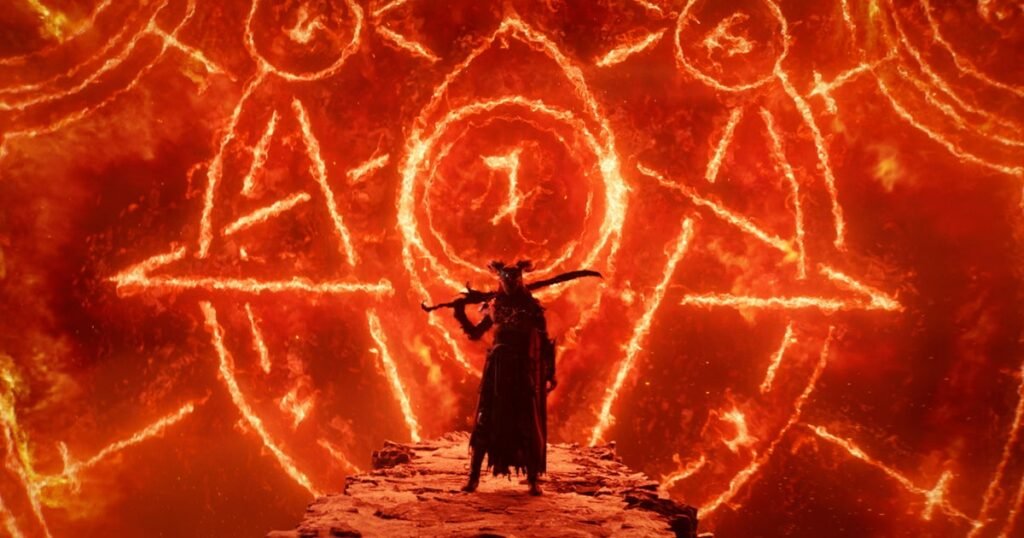
There’s nothing subtle about the warlock. Whichever of the four major specialisations you favour, they are capable of entirely filling your screen with demon-related magic, be it shadowy, fiery or fleshy. The Spiritborn class added in previous expansion Vessel of Hatred pushed the class spectacle one step further, and the warlock takes it further still. It makes Diablo 4’s launch classes seem visually restrained by comparison.
The Legion spec is based on summoning pinky-red demons from Hell and throwing them at your enemies – literally, in some cases. You are swarmed by a motley crew consisting of: small imp-like demons; a large slithering Gorgon-like demon whose body opens into a fleshy maw; handfuls of crawling demons that you fling like squidgy toys at your foes; entire walls of mashed together demons; a formidable rampaging beast of a demon; and – the pièce de résistance – a demon of boss-like stature that roars up from the ground and swings an enormous sword around, dominating an area. There can be anywhere up to a dozen or more creatures around you; it is not so much a group as a small army.
This all-new class is at home in Diablo and goes bigger than any class before
Fleshy pink gives way to fiery oranges and reds for the Ritualist and Vanguard specs, both about fire, but also both notably different. The Ritualist revolves around lobbing fiery globules and erupting an area in fire, sometimes – in the case of one ability – in a circle that genuinely fills the screen. Ritualists also have the enticing ability to chain enemies in place, stopping them from getting at you. The Vanguard, meanwhile, literally screams fire, either through demonic heads that float around you or are placed on the ground, or when transforming into a demon yourself, belching fire everywhere. You can even summon a fiery hellhound for company.
Fire gives way to shadow in the Mastermind specialisation, where outlines of demons are called on in swirling mists to devour enemies or dominate them. There’s a stealth element here via Shadowform (priests from World of Warcraft say hello!) as well, and a suggestion you can mind control enemies, though in my 15 minutes with the Mastermind spec, I didn’t experience this.
Needless to say, you can mix abilities from the various warlock specs to build the warlock you want, but there’s a shard system you’ll want to take into account. This has you choose one of four shards that relates to a spec and enhances it.
While I didn’t have much time to appreciate the nuances of the warlock, it made a face-smacking first impression nonetheless. This all-new class is at home in Diablo and goes bigger than any class before.
The skill tree overhaul is considerable
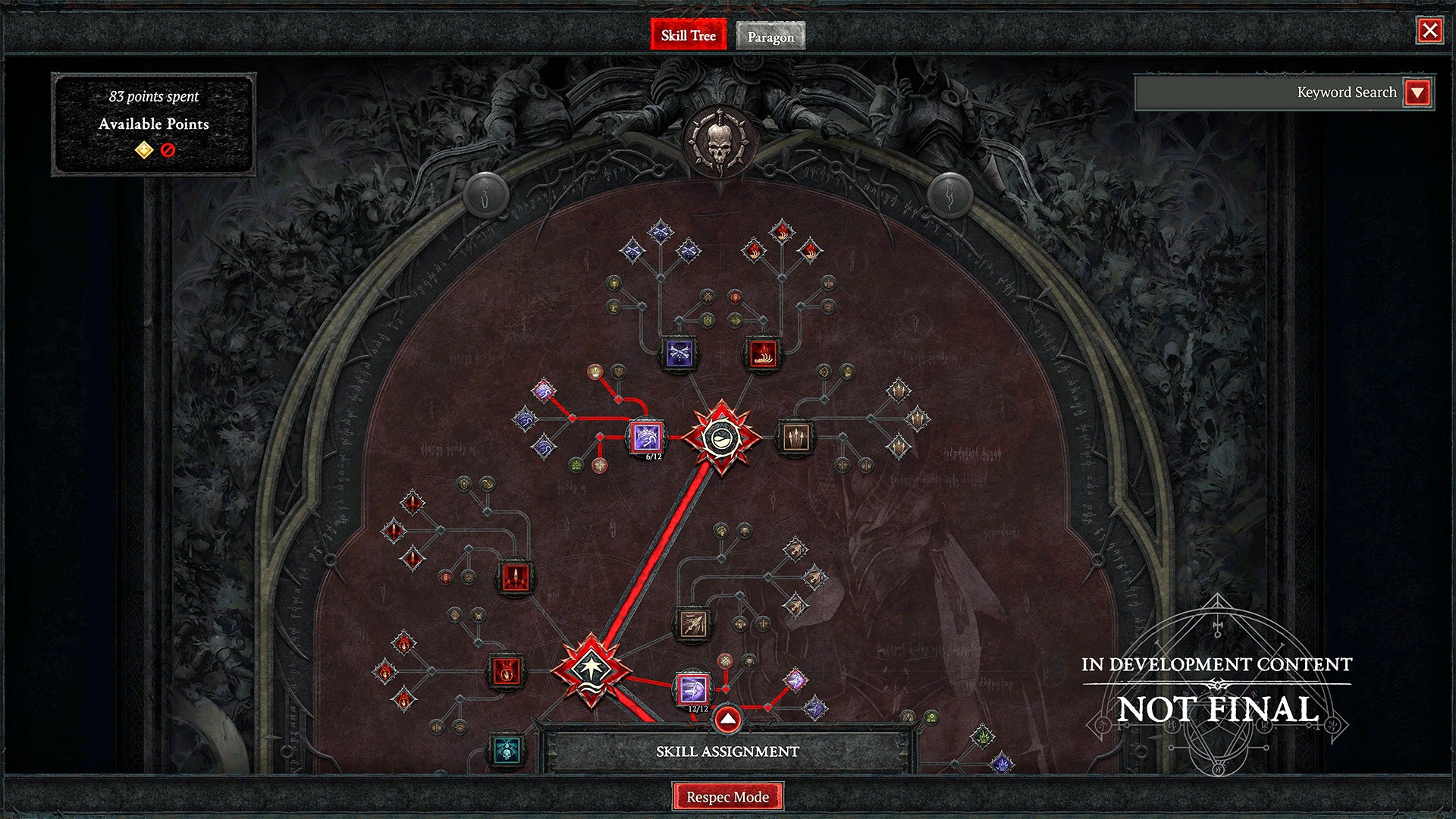
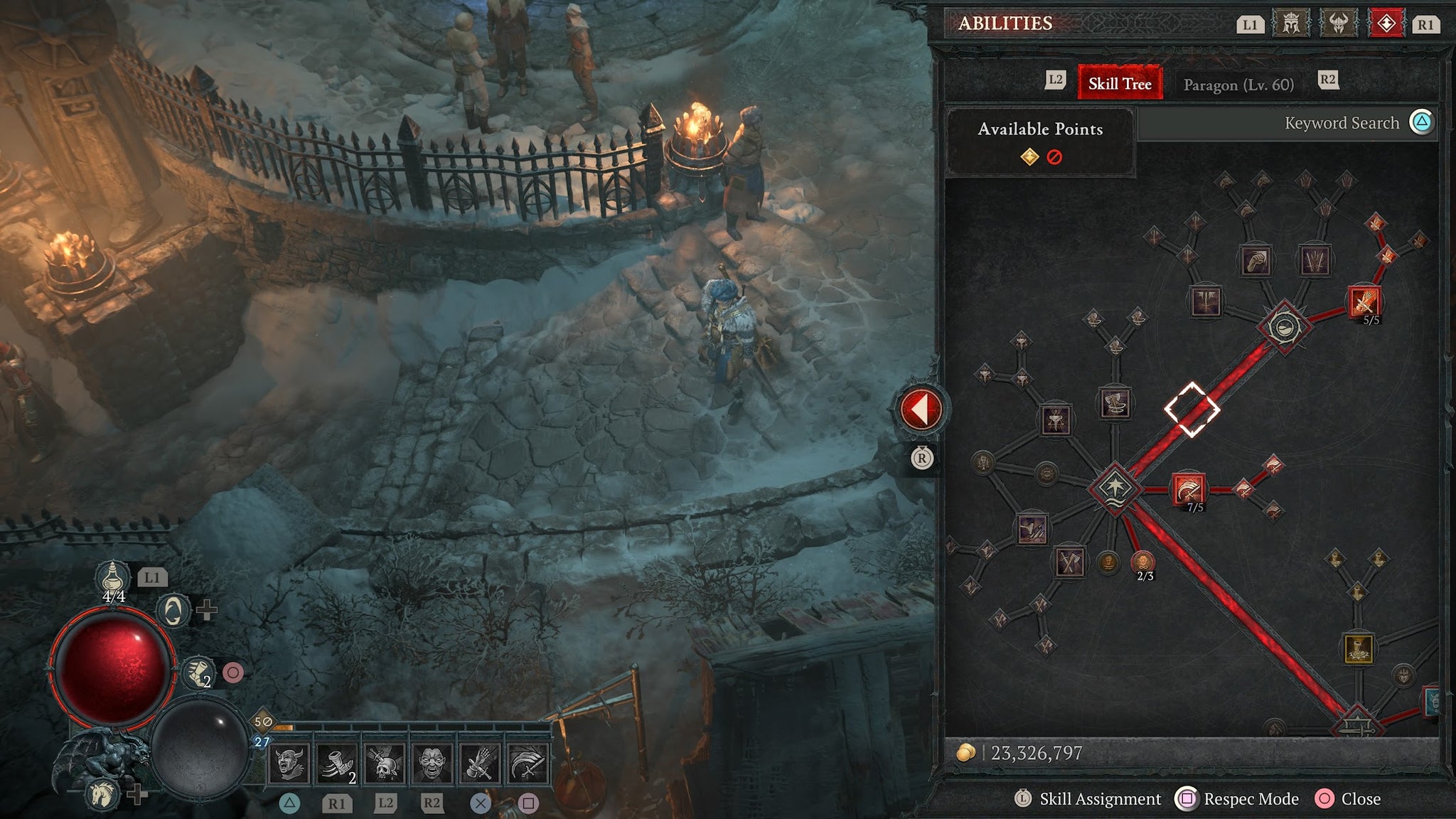
Blizzard is addressing the long-bemoaned lack of skill-tree choice – it called it a “skill twig” in a Diablo Spotlight video – by overhauling the skill tree. There are now considerably more options to choose from and they’re based around actively changing abilities rather than passively enhancing them. The oft-used example is being able to change a sorcerer’s fiery hydra damage type to cold, for example, opening up options for a cold-themed build. It’s about pushing whatever class fantasy you have to further extremes.
Each class gets 40 reworked skill choices and “over 80 additional options”, the Diablo Spotlight video said. And note: you don’t need to buy the Lord of Hatred expansion to get these as this update will be offered to everyone. But if you do buy Lord of Hatred, you’ll get an additional 20 choices, in part enabled by the expansion-raised level cap of 70 (from 60).
“The top-line goal is we want way more build variety. We want a much deeper, much broader set of builds in the game” -Colin Finer
Yet, it wasn’t until I loaded the existing Diablo 4 game this morning that I really appreciated how much the skill tree has changed. Whereas in the existing game you choose an ability, spend up to five points improving it, then choose one of three enhancements, in the new skill tree you choose an ability, spend up to 12 points to enhance it (this number might change), select one of three more active modifications for it, then choose from four other options as well. There’s more stuff and there’s more depth. And that’s for every ability – even ultimates.
“The top-line goal,” said Colin Finer, associate game director, to our group of press, “is we want way more build variety. We want a much deeper, much broader set of builds in the game.” It’s an approach you can already feel in the Paladin class which is available to test now if you’ve preordered the expansion (but if you haven’t, there’s a free-trial weekend coming from 11th-18th March).
Passive abilities that used to be dotted around the skill tree have been “cut off”, Finer said, and are now mostly found in the Paragon tree, the additional tree you unlock after reaching maximum level. This Paragon tree hasn’t really changed, beyond a bit of reshuffling, but is earmarked for change in the future.
“Don’t get me into trouble on this,” Finer said, “it’s me musing on things I think we could really improve, but I think Paragon is probably something we think a lot about, especially now that we’re changing the skill tree for Lord of Hatred – we’re more tuning it to be a little bit more healthy and create more interesting choices across the builds. But Paragon I think is ripe for it.”
On a related note, keywords in the game, like Overpower, are changing. They’ll become stackable damage-buffs that classes can use in different ways. A pyromancy sorcerer might consume the stacks to increase the size and damage, as well as the cooldown and mana cost, of their abilities, making them more of the big-spell wielding destruction bringer that spec lends itself to. Globalising keywords helps create a “shared language” that also works more coherently when crafting items, Finer said.
There’s been a bit of a stealth-push towards party play, too. “We’re sort of experimenting with the Paladin on this idea that you can create a class that’s fully supportive of other players,” Finer said. “That represents a shift in terms of allowing more combinatorics across party play because we want to create a situation where players can feel good about just being the support role to their friends and not having to do tons of damage – including tanking.”
You’ll feel this with things like cold skills applying a chill effect that increases damage from all sources now, not just cold sources, so you can set your friends up regardless of their damage types.
There’s more player power now
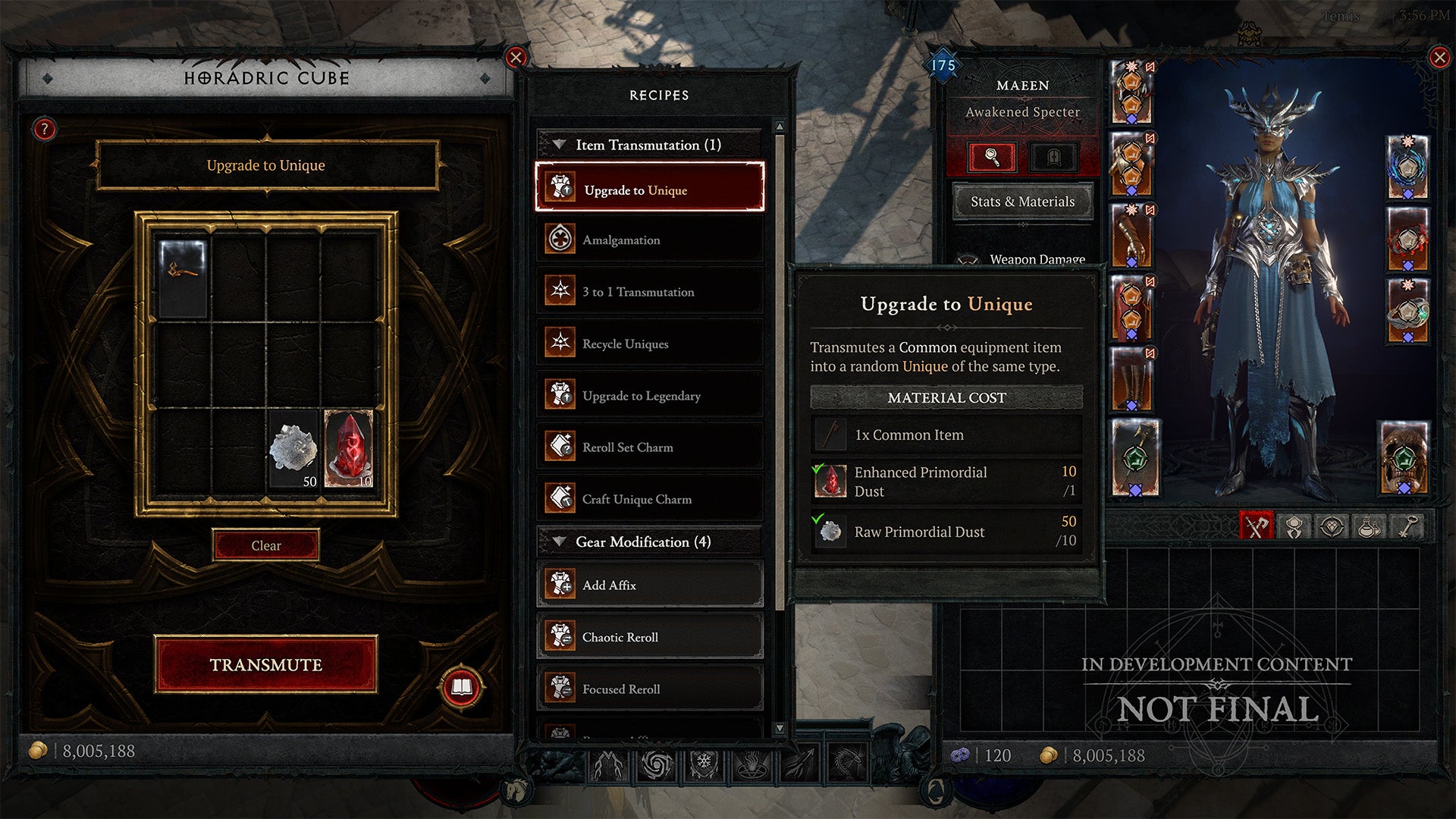
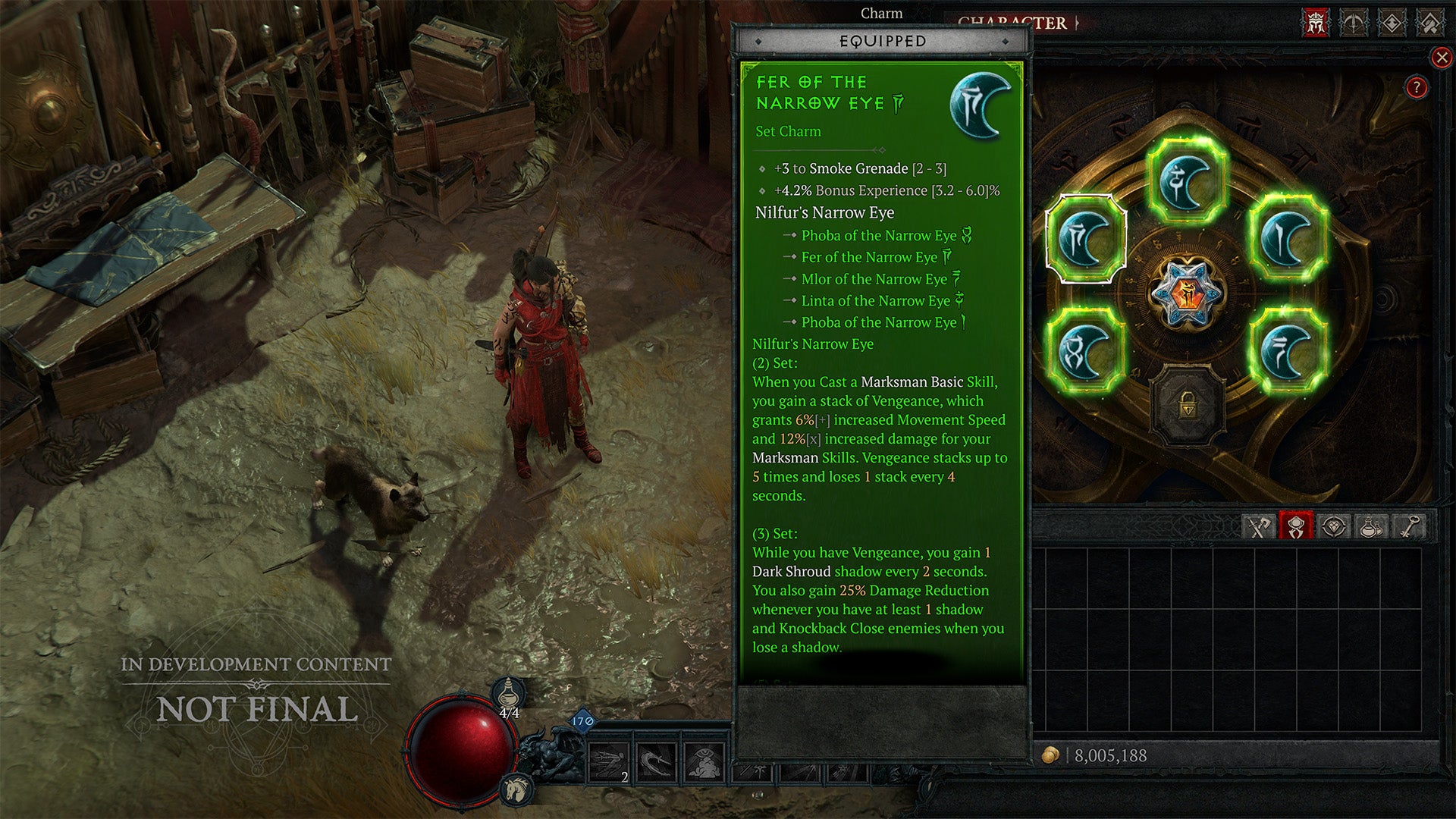
The overhauled skill tree isn’t the only way of getting more power in Lord of Hatred. The expansion will also reintroduce item sets, in this case sets of charms that are housed in talismans. This effectively means you’ll have a whole extra cluster of magical items to carry and benefit from in your inventory, and in the case of charm sets, set-bonuses to go with it.
“The Barbarian has a set that’s all about being huge, like the Hulk” -Colin Finer
For example: “The Barbarian has a set that’s all about being huge, like the Hulk,” said Finer, “and having a ton of Fury. When you’re past 100 Fury, you become bigger and all your skills should be bigger and you attack slower and you deal more damage. We are trying to really hone in the fantasy within the sets so you have a really clear playstyle you can chase after.”
Then there’s the Horadric Cube, which allows you to combine items with ingredients to increase their power and rarity. You can conceivably take a lower-rarity item and upgrade it all the way to legendary this way, which in turn gives lower-rarity items more purpose – something Blizzard has wanted to do for “a long time”, Finer said.
Mix it altogether – the new skill system, talismans, and the Cube – and “you will be able to push your character further than you’ve ever been able to”, game designer Aislyn Hall said.
War Plans are like Adventure Mode 3.0
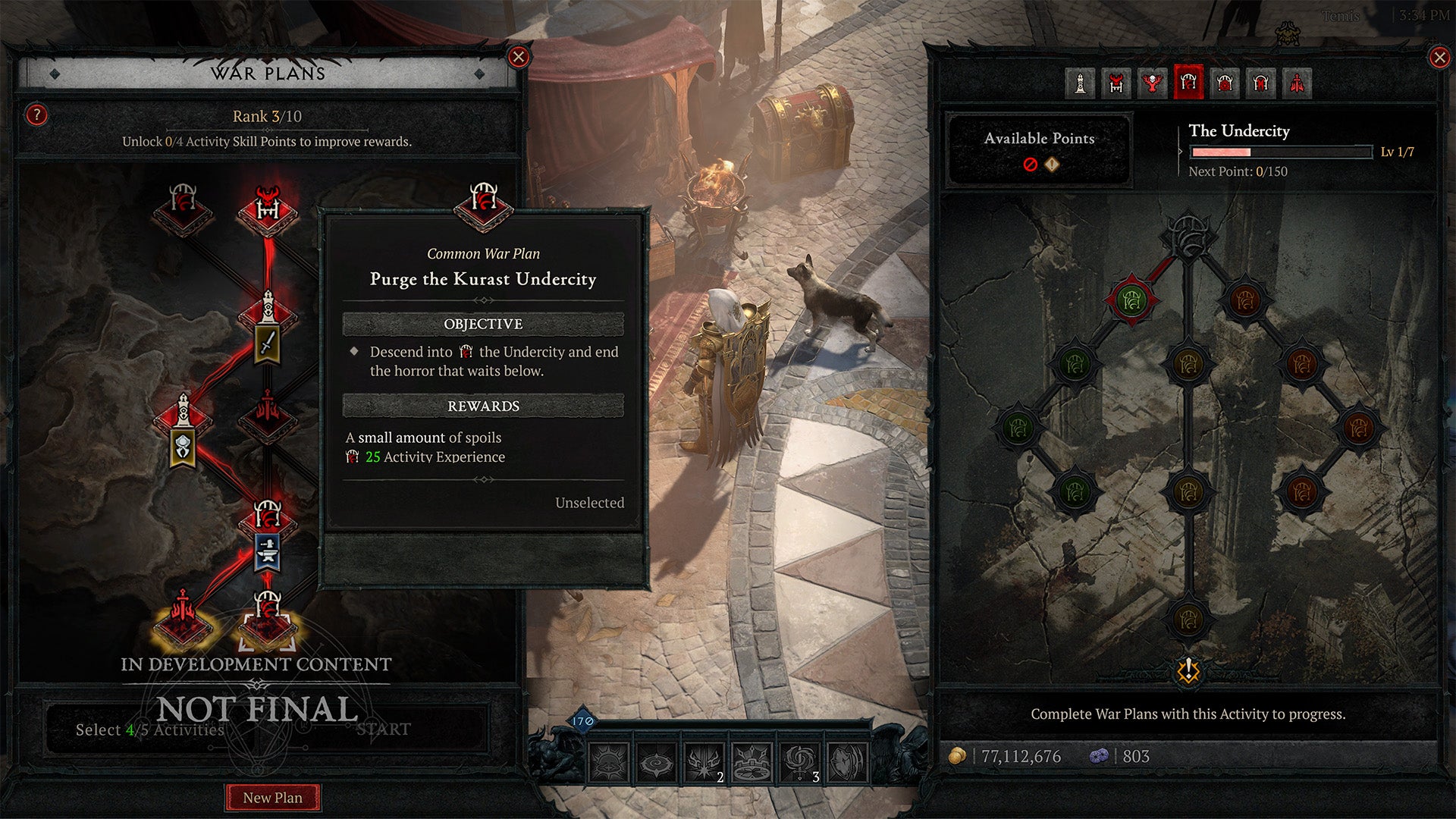
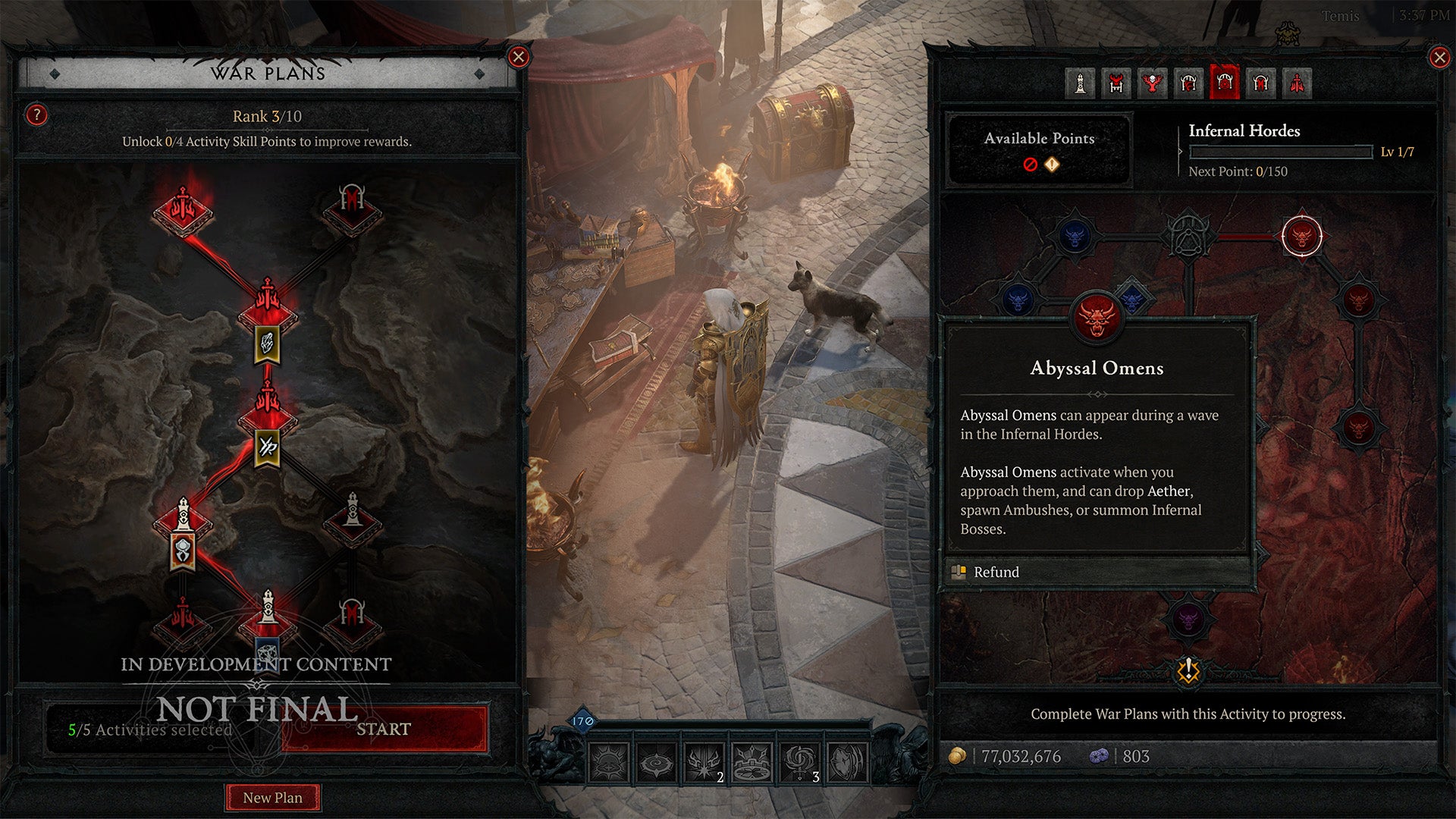
War Plans weren’t available to try when I visited Blizzard, which is a shame, because they are clearly central to Diablo 4’s endgame aspirations, both in Lord of Hatred and beyond. They are a way for you to string together different Diablo 4 pursuits and create a sort of playlist of them, then customise and modify that playlist for extra rewards. War Plans answer the question of “what do I do now?” once you’re done with the campaign.
War Plans look like a map in a Roguelike game, whereby several activities are linked together to create a route of sorts. You specify what the activities will be, or let the War Plan board auto-generate them, then it will generate rewards based on doing them and off you go. In other words, it’s a system that sits on top of what’s already there, joining the disparate dots. Its undersung feature? The ability to teleport you to wherever in the world your activity needs you to go.
Where War Plans get more interesting is in their modification options they present. There’s a kind of meta-levelling system attached to them allowing you to upgrade the challenges you’re presented with, changing monster types, loot drops, risk-reward ratios, and so on. As you get more powerful so should your War Plans get more challenging – that’s the idea.
War Plans are the game’s way of structuring your playtime, and incentivising it, once the purpose of a main quest subsides.
Fishing’s a thing
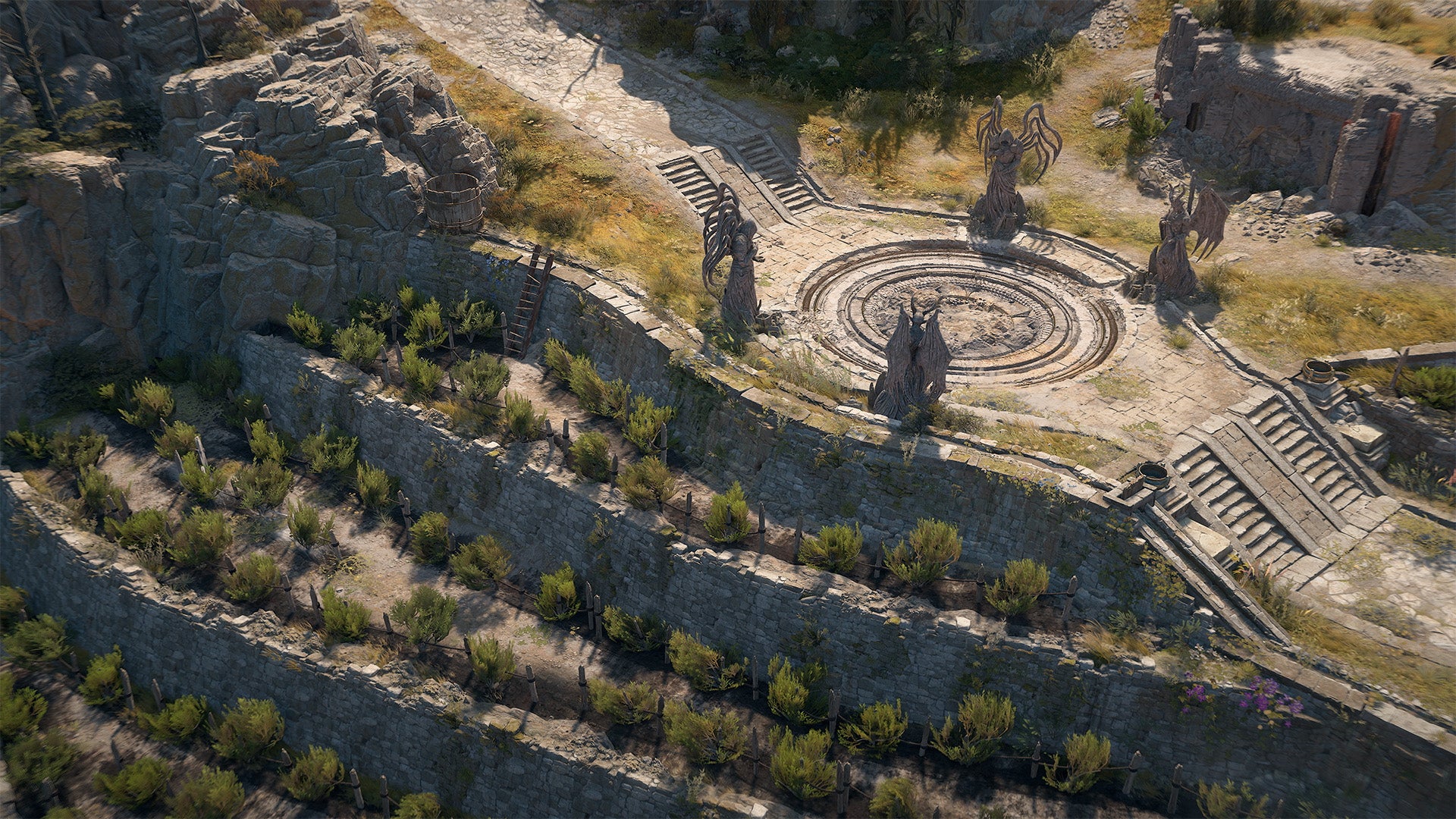
Skovos is a much needed blast of sunshine.
It seems minor but fishing is a major pastime in Blizzard’s other game World of Warcraft, and it’s coming to Diablo 4 alongside Lord of Hatred. It’s not limited to the new area of Skovos, though: you can fish all over the world of Sanctuary, and it’s intended as a way for you to chill out.
“It’s a great excuse to sightsee because there’s all these awesome places in the world and you typically only experience them through carving your way through millions of demons” -Aislyn Hall
As Aislyn Hall explained: “Anything we make in Diablo, we really want to make sure that if there’s some kind of reward, I’m viewing it with the potential for absurdity to occur, and I don’t think fishing will necessarily be an exception to that. But ultimately fishing is primarily about collection. It’s not going to be a primary source of mythic items or anything.
“You’ll go and do it if you just need a break but you want to immerse yourself in the world of Sanctuary, effectively. It’s a great excuse to sightsee because there’s all these awesome places in the world and you typically only experience them through carving your way through millions of demons. But this lets you stop and smell the roses a little bit more.”
Colin Finer added: “When we launched Diablo 4, quite some time ago actually, it felt like a lot of players really enjoyed the open world and exploring it and finding those Alters of Lilith. Fishing’s really an excuse to revisit some of these old areas in the game we had, where we had water or lava or what have you, and that’s a place where you can start to collect things from the old world. We think it really gives you a cool reason to go back, look at some of these cool places in a new light, with a new lens if you will.”
A test of the annual expansion plan
It’s been a longer-than-expected wait for Lord of Hatred – a year-and-a-half rather than the promised year since Vessel of Hatred. But there was a sense that Vessel of Hatred didn’t quite revitalise Diablo 4 in the way Blizzard had maybe hoped. More is riding on Lord of Hatred to both finish the Mephisto storyline dangled since Diablo 4 began – and through Vessel of Hatred – and to reestablish the game amidst competition from rivals like Path of Exile 2.
It was a shame not to be able to play the expansion proper when I visited Blizzard, but to be limited to playing the warlock class in a Vessel of Hatred area, because I would have liked to have seen the new Mediterranean-inspired region of Skovos or some of the new storyline. It baffles me why this wasn’t available only a few months before release. Nevertheless, it’s done little to dampen my enthusiasm for what’s coming, both in the expansion and out of it. Lord of Hatred will make for an ideal time and place to reconnect with Diablo 4, and perhaps for the game to reintroduce itself. As with Overwatch, I believe we’re about to have a 2.0 moment.