Every part of Let it Die: Inferno is bizarre. Visually striking, narratively eccentric, ambitious within the genre it’s inhabiting. It may not be the best extraction game I’ve played this year – by quite a margin I’m afraid – but it’s certainly one of the most interesting. It has genuine artistic merit, with a big fat caveat.
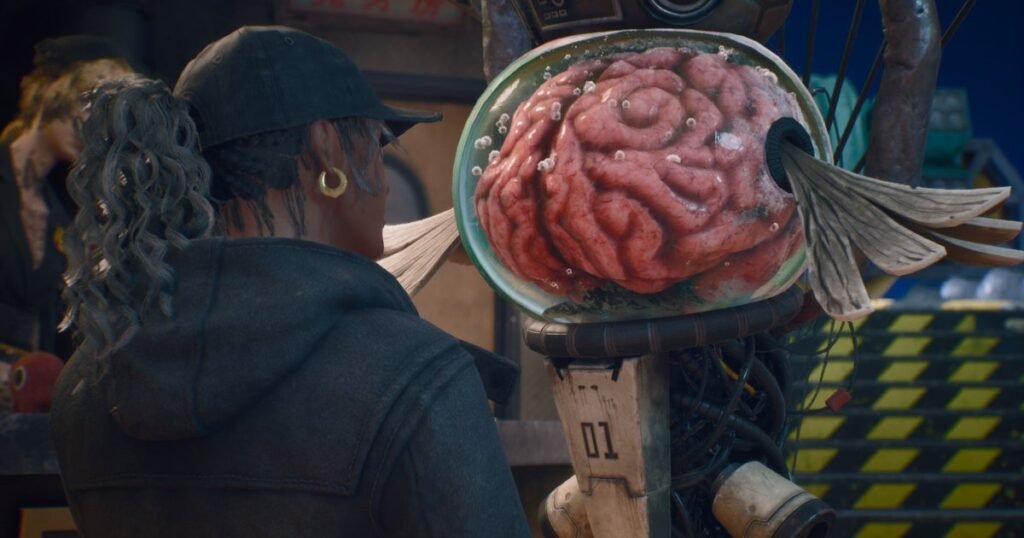
Let it Die: Inferno starts off strong. You have died, been implanted into a new body, and signed up for a lifetime of servitude. Waking to a brain-powered robot called Mom and a weeping lady laden with tattoos, you are quickly put to work. You board a capsule, are loaded into a makeshift cannon, and shot into the gates of Hell. What on Earth is going on?
You must forgive the onslaught of story tidbits here, they come just as fast in-game as they do in writing. Down in the Hellgate are monsters galore, treasure aplenty. This includes the Eye of the Reaper, an object so crammed full of SPLithium (think sci-fi energy source) that it could change the course of the world. It’s your job to head down there and grab it, meat-puppet that you are.
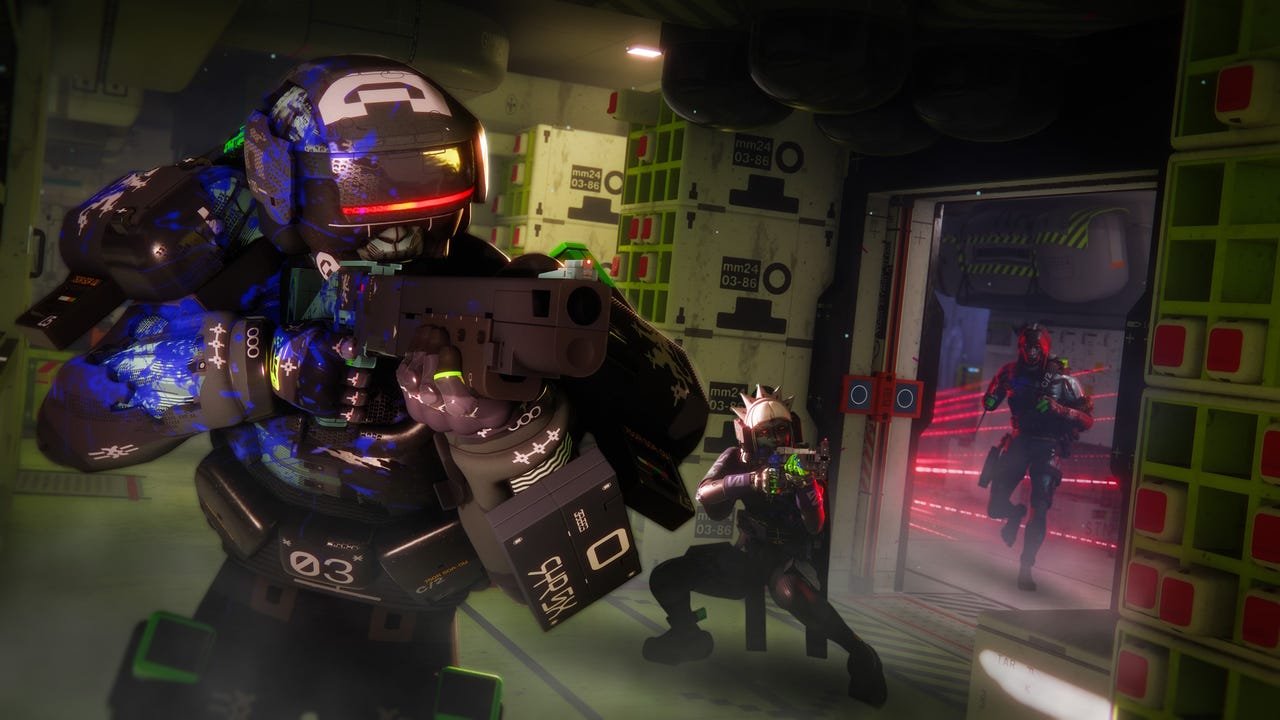
I give you this brief introduction into the story of Let it Die: Inferno because it’s one of the game’s more charming quirks. Much like prior entries in the series, the developers are madcap in their approach to worldbuilding and character design. In a genre full of somewhat bland modern military aesthetics and realistic gun porn, going in a vastly different direction is a major perk in and of itself.
Your base, as it were, is a floating scrap-yard sci-fi hub packed with a gaggle of diverse characters. A throughline of occult magic and a sprinkling of modern apparel creates a setting that isn’t really replicated elsewhere. You pull up in a tracksuit to a possessed Nutcracker in a popcorn machine, who’ll proceed to build you a giant hammer (of course he does). There’s also a handsome guy who’s mostly naked, and you can lounge around on a couch while managing your inventory. Sign me up.
Things sadly dip a little bit when you leave your aerial abode and get to actually playing Let it Die: Inferno. Combat itself, for instance, doesn’t feel amazing. Things are stiff in places, you plod around rather than traverse the map with much fluidity. Combat feels punchy at times sure, but more often lengthy animations steal the thunder from action-packed moments as you slap immobile melee attacks against foes with the grace of lard plopping on tiled floors. leaving the whole experience feeling as though it could do with a spurt of grease to smooth things out. Still, that is true of the two prior Let it Die games, so at this point it’s perhaps merely an inherent foible of the series. There are moments of pleasure here despite this feeling. Regular blows build up a weapon-specific super metre, for instance, which can be cashed out for explosive Deathblows that are a visual-audio fireworks show I still get a kick out of.
You can get a ladies’ portrait as a shield, which didn’t feel especially strong at first. However, after some battling about I charged up its Deathblow and unleashed a squirming mass of tentacles that did intense damage to those in front of me. Fighting may feel a bit stiff, but god if it isn’t fun.

The things you’re fighting – giant bugs disguised as plastic playground dolphins, and stumbling piles of boxes with knife-like arms – are pleasing to the eye, somehow. There are scuttling Craburgers that can be killed and scarfed down – a personal favourite. It’s hard to look away from the game’s grosser corners. I credit this largely to Let it Die: Inferno’s ample use of a joyful colour palette. You may be in hell, but this is not some chasm of muted tones, this is a carnival of bright purples, glowing blues, and aggressive oranges. Let it Die: Inferno is both offputting and puzzlingly joyful. At times H.R Giger with a party hat on.
I must also pay homage to some evolutions on extraction shooter norms here. There is only one map, separated by gates you can only access after collecting a required milestone of SPLithium, and there’s a time limit to how long you can spend in one section of course. But this structure encourages you to push ahead as far as you can, for better loot and harder challenges. You can always extract, but a run that’s going especially well can blossom into something truly exciting.
I do also love the body swap system. A leitmotif from previous games, each time you die you’re inserted into a fresh meaty shell. Different bodies in Let it Die: Inferno are attached to different classes, but if you keep a body alive over consecutive runs you’ll be granted permanent boosts to that body. These can be as powerful as the ability to scale new parts of the environment during runs – a real game-changer. And these, alongside most of your equipped gear, are lost on death. Being a scrub and dying stupidly in Let it Die: Inferno can be a soul-searing experience. This is a good thing, by the way. Suffering is honey on the tongue to the extraction game enjoyer.
Time for the downsides. Let it Die: Inferno is a nightmare of microtransactions. You are presented with five body types at the start of the game: two of them are locked behind the Death Metal premium currency. You are given only five gear crafting slots for free, with additional slots unlockable with premium currency. Heals and other consumable items can prove tricky to find during a dive into the Hellgate – but don’t worry! You can buy them for, you guessed it, premium currency.

Every Let it Die game has had rancid microtransactions present in some form, so this tragically should not come as a surprise. But I must say, seeing 40 percent of playable bodies locked behind 1,200 Death Metal is a punch to the gut. Especially in a PvP game, and one you’ve got to pay for. Given you can encounter other players on your runs, how fun do you reckon it would feel to lose your body and loot to some bozo who dropped cash on a host of healing items and equipment? Not great, I suspect.
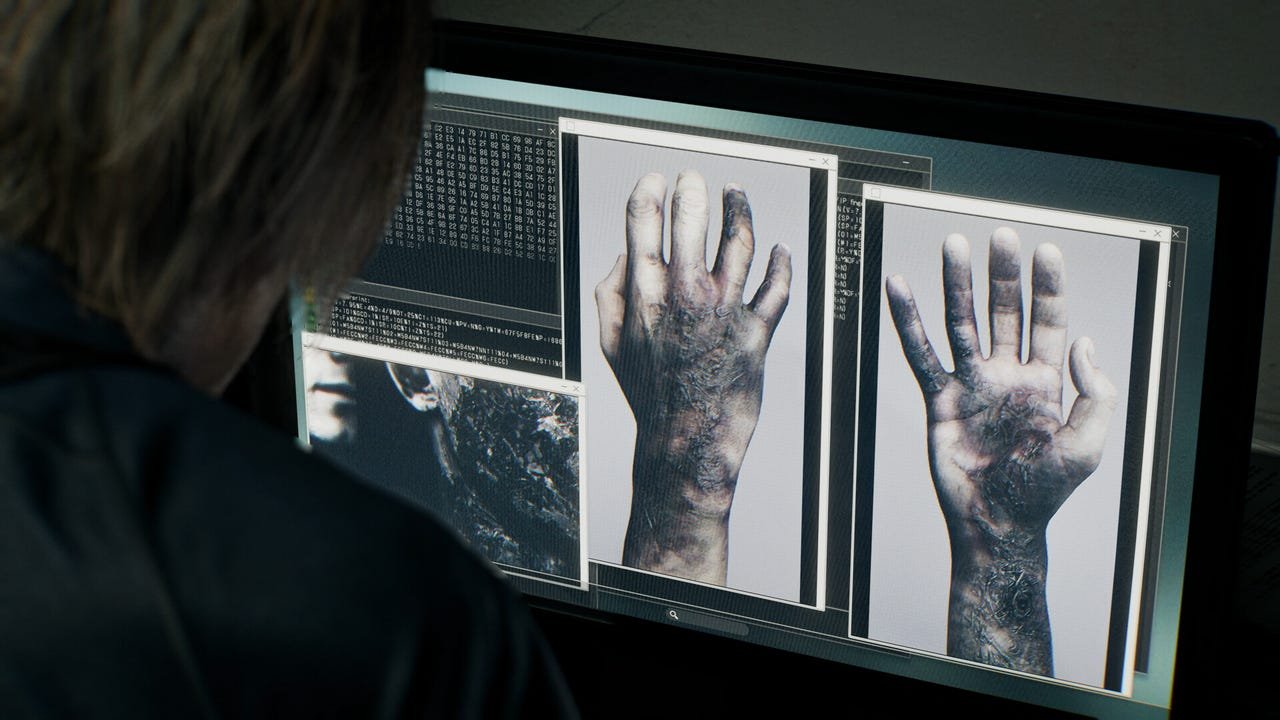
Also, there’s the AI issue. As of writing, the developers at Supertrick have released a statement explaining the use of generative AI in Let it Die: Inferno after receiving backlash. In it, they show all the cases in which it was used, as reference for background art or for voicing some characters. Maybe this is a good enough justification for others, but it still rubs me the wrong way. In a series so beloved for its inventive presentation and artistic merit, why degrade the game in such a way?
There are a pair of puppets called Moz and Gez, who are present in the tutorial and speak to you in garbled Japanese. In the statement made by Supertrick, they justify the use of AI voices by stating: “these characters are mysterious life forms, so AI-generated voices were used again to fit the characters.”

What are you talking about? Given the track record the team has with finding inventive and often hilarious ways to convey mystery and otherworldliness (shout out to the real human mouths on Let it Die bosses) this does little but water down the appeal. I would rather these limited cases of AI use be absent altogether – they add nothing of value here.
Let it Die: Inferno is such a strange case for me personally. On some days I felt it was a middling experience I had little desire to engage in. Other days I felt drawn into its world, ensnared by its fresh ideas and wacky presentation. There is gold buried in these hills, but like prior Let it Die games you’ve got to wade past some pitfalls to see it. I will likely continue to play Let it Die: Inferno out of curiosity, if nothing else, though I doubt my mixed feelings will become any less conflicted.