I’ve got an issue with people saying ‘turn-based games are back, baby’. For those with the eyes to see, they never went away. Yes, Metaphor Refantazio and Clair Obscur: Expedition 33 might have reminded the masses that tactical min/maxing is video game catnip, and that there are so many brain-scratching things you can do with the formula, but the past few generations has been rife with gems in the genre: Dungeon Encounters, the Shin Megami Tensei series, Sea of Stars, Chained Echoes, and Eiyuden Chronicle: Hundred Heroes immediately spring to mind, but there are dozens more, too.
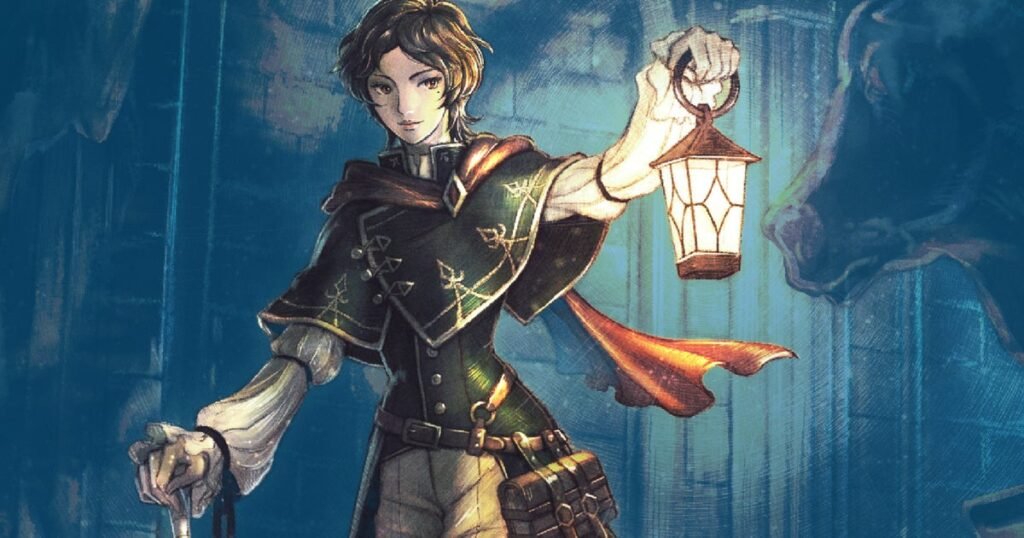
So Octopath Traveler 0 has come at a tough time. To stand tall amongst the wealth of RPGs we’ve had over the past five years alone would be a mammoth task, let alone coming after the first two games in the Octopath series, which are juggernauts in their own right. To make things even harder for the third attempt at the series, Octopath Traveler 0 is a ‘reimagining’ of mobile gacha game, Octopath Traveler: Champions of the Continent. The bones of this mobile effort are still propping up all the flesh of 0, for better and – mostly – worse.
The core of Octopath Traveler 0 is made up of three story arcs, dubbed ‘Masters Of’: there’s power, wealth, and fame, and whilst the first 30 or so hours of the game have you working through each of these tales incrementally, the latter portion of the game (probably about 70 hours) dovetails into something more linear. I like this. I found the eight very separate narratives in the original game a bit jarring and arrhythmic, this feels more in line with the second game’s attempt to write a story that’s more cohesive and put-together.

Initially, these stories were separate arcs you could churn through in Champions of the Continent, and whilst 0 does an adequate job of finding a through-line to connect them, Square Enix has not managed to erase their standalone nature in the final product. It is fun to struggle through level-appropriate arcs in one breath, and then go and obliterate weaker bosses in early stages of other tales, but it never feels that rewarding to do so: the experience scaling is pretty brutal, so going back overpowered often feels like it leaves you at a disadvantage. You’re better cycling through the stories as you go, which summons that feeling of arrhythmia from the first game. It’s a shame, really.
The writing is pretty decent, and I even played a lot of this game with English dub (something I tend not to do in most Japanese RPGs because, frankly, the VO is usually awful). But, similarly to Final Fantasy Tactics: The Ivalice Chronicles from earlier this year, the English voice work is superb, and engaging, and natural. The art, too, is gorgeous. I’ve been playing on Switch 2, and running in handheld, it looks incredibly pretty. Particular credit goes to the locations and world map, painted by Italian painter and cartographer Francesca Baerald. Using the talents of an actual honest-to-God cartographer makes the whole thing feel Tolkien-esque, and given the setting of Osterra is a big part of the game’s driving force, it’s money and time well-spent.
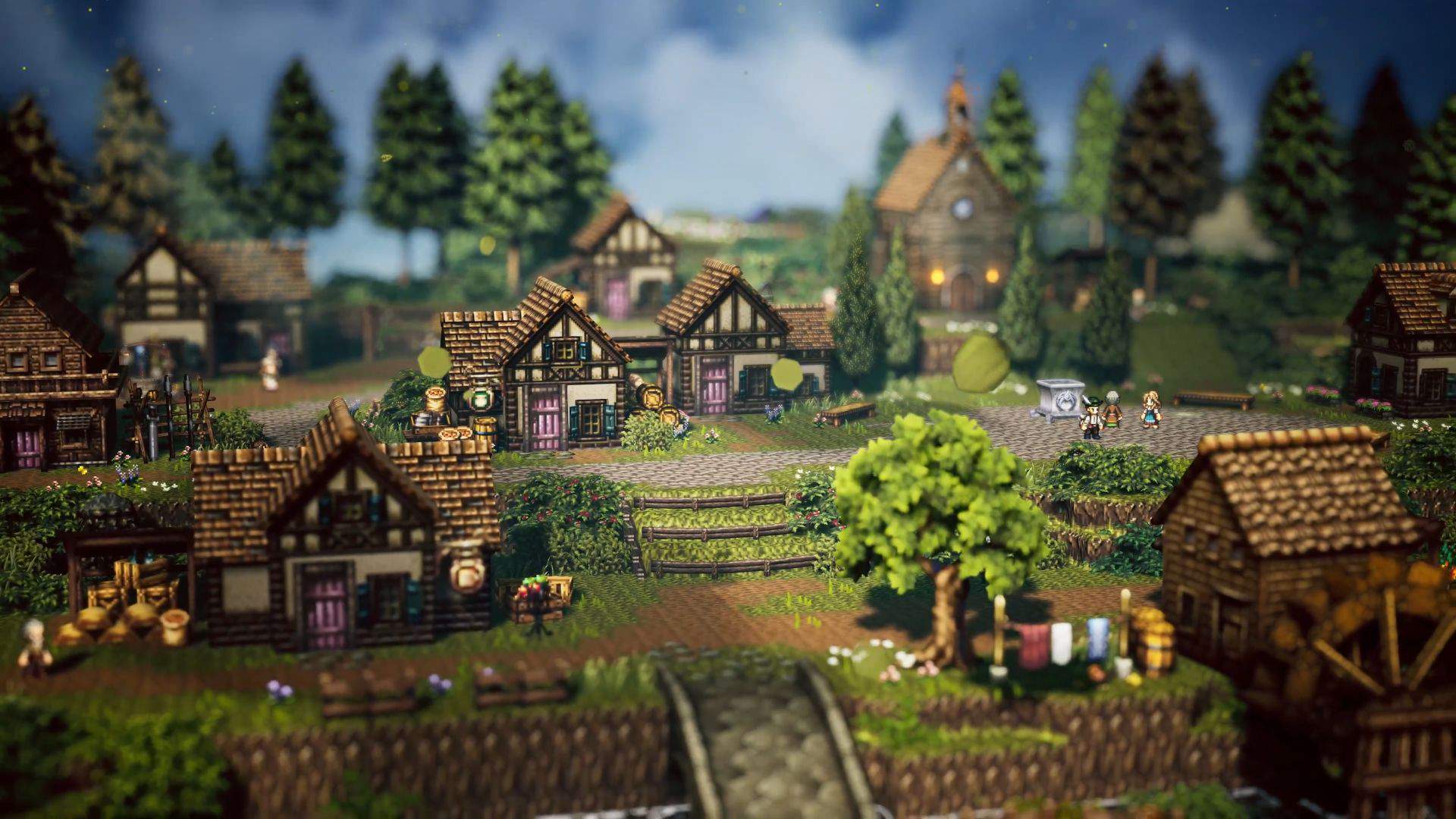
It’s a shame about the rest of it, then. The piecemeal nature of the original mobile game is evident no matter where you look. Even giving you a hometown that you have to rebuild (which puts me in mind of Bravely Default, actually) does little to plaster over the very obvious joins in the facade. As you meander from story to story, you can just feel how different bits have been glued together, the only constant being your team of heroes that are getting stronger and more bullish as you dispatch the various political, social, and religious evils that plague the fair land of Osterra.
In a year when we’ve seen such lofty and emotionally-driven stories such as Tactics and Clair Obscur, it feels archaic and a little misguided. The eventual way the narratives meet is fine, I guess, but after 30 or 40 hours of tolerating this stop-start pacing, it’s not the payoff I’d expect. Even when you do reach the ‘Master of All’ arc – surprise, surprise! – the game segments things off again. And there are more false endings than Peter Jackson’s take on Return of the King. Maybe if I was playing the game with fewer constraints, I’d have more patience for this, but paired with the sheer length of some of the boss battles and even regular encounters, I found Octopath Traveler 0 to be a real slog at times – and that’s coming from someone with a high tolerance for this kind-of setup.

I do really enjoy the synergy you can have with eight characters, though: an upgrade to the four-member parties of the previous games. But when you need to rely on swapping everyone in just to have a realistic crack at finishing off an overly tanky boss, even that novelty begins to lose its impact around 50 hours in. There is a purity to the combat I found compelling, though: there’re no flashy mega-special moves, and talking to townsfolk to recruit them for one-off attacks that may cover weaknesses your current party isn’t equipped to exploit feels like a meta in and of itself.
Octopath Traveler 0 is weaker than the sum of its parts. On their own, the mini stories, the town-building mechanic, and the combat all feel pretty good (if not revolutionary). But mashed together into this lumbering, uncoordinated chimera, it misses the mark. Games in this genre, operating at this scope and scale, need to feel more cohesive to keep your attention into the triple digits, and I think the experiment Square Enix has toyed with here proves you can’t really do that when your trying to hammer so many pegs of various shapes into one, singular round hole.