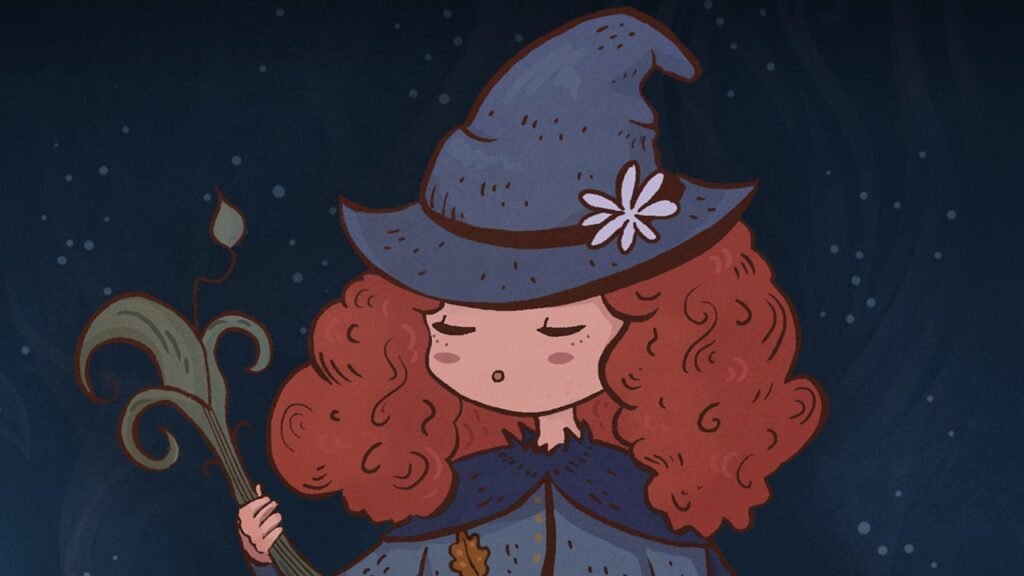
I didn’t expect to spend a full weekend arguing with a sentient bush, blowing my savings on spring seeds, and learning to chop trees by playing a melody on a flute — but here I am, already desperate for more. Songs of Glimmerwick, the next title from Eastshade Studios, drops you onto a strange island occupied by a school of music and magic, then hands you a daily planner full of classes, garden chores, potion ingredients, and townsfolk who are way too charming for their own good. If you’ve ever wondered what it would feel like to attend a Stardew Valley university that teaches Ocarina of Time-style spellcasting inside a Cartoon Saloon film, this is shockingly close to that. The demo only covers the first couple of days in spring, and I lapped up every scrap of it. That said, a handful of rough edges — including two separate softlocks and an options menu that feels like a placeholder — remind me this is still very much a work in progress.
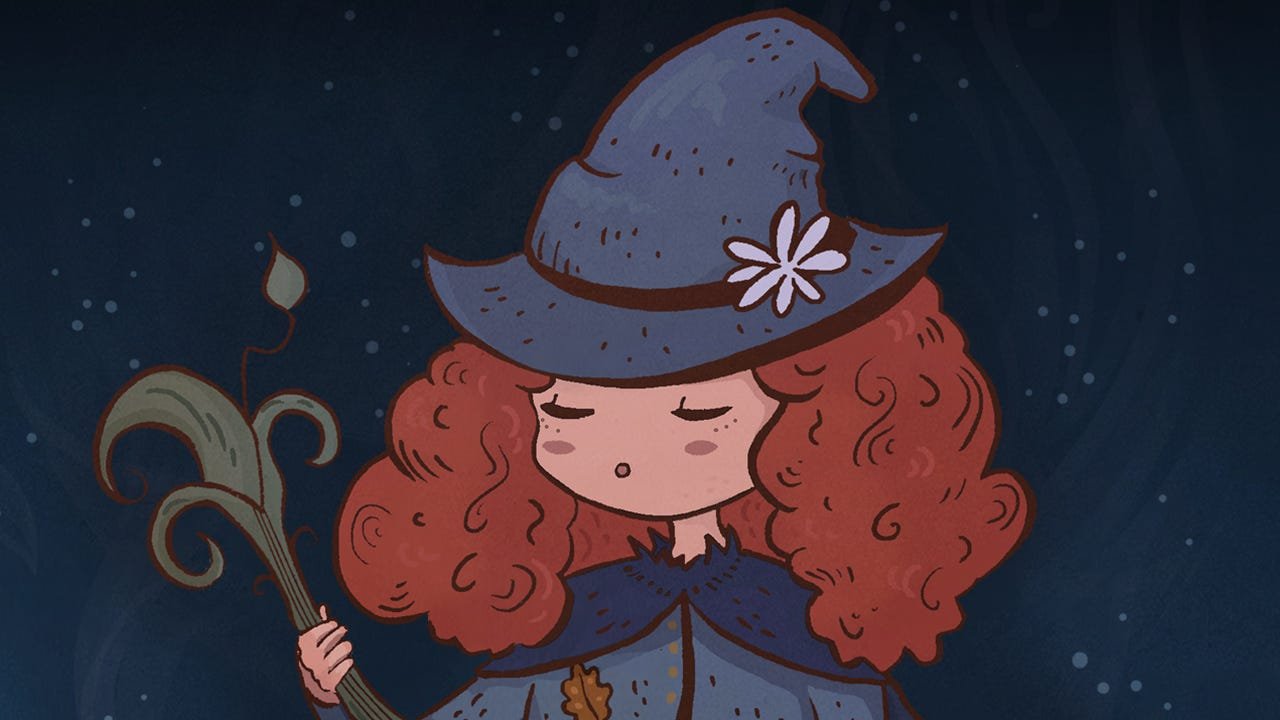
Songs of Glimmerwick is easily the prettiest RPG I’ve played since Baldur’s Gate 3. Hear me out; it doesn’t need polygons to prove it. The art direction channels the handcrafted Celtic linework of Cartoon Saloon films like The Secret of Kells and Wolfwalkers, rendered from an isometric perspective reminiscent of Don’t Starve (though far more colorful and alive). Flora sways in layered gusts, butterflies drift across wildflower meadows, and water catches light in ways that would make a mundane shoreline feel like the margin of an illuminated manuscript. I noticed this immediately, and it holds up because it’s built on craft, without a DLSS toggle in sight.
Meanwhile, the soundtrack is pulling just as much weight. Every composition has a whimsical yet mythic quality — think pizzicato strings mixed with glockenspiels and woodwinds, with a recognizably witchy vibe — woven into full symphonic arrangements that kept me enthralled, barely clashing with the player-operated flute melodies that typically make the main OST duck down when it’s time to sow some basil. Yet, the vibe here is less overtly “Hogwarts” and more “ancient rural co-op tucked into a cliffside, which happens to seat a magical school.” It all fits remarkably well.
Walking into a building triggers an isometric, diamond-shaped dollhouse view that immediately invokes Beacon Pines, the 2022 narrative adventure that used the exact same technique to make interiors feel like miniature dioramas. Glimmerwick takes it further, though. For instance, some rooms are surrounded by water. Others literally contain flowing streams that extend beyond the visible frame. The effect is gorgeous, and it makes every building feel like its own self-contained illustration instead of just a room with four walls.
Reagents Aplenty
In Songs of Glimmerwick, your character is a young witch who got sick of their old life, chartered a boat to “anywhere,” and washed ashore on the titular Glimmerwick island, home to The Etchery School of Magic and Melody — a place that produces great bards, mages, and witches, and where humans, moth people, and mer people seemingly gather to study. The underlying mythology (music is the source of all creation) is Tolkienesque in the best sense, and the narrative draws liberally from Kiki’s Delivery Service and, yes, rather obviously from Harry Potter.
Songs of Glimmerwick reads as a gentler, more deliberately welcoming alternative to the wizarding world of Hogwarts Legacy for players who’d rather sidestep the baggage surrounding that franchise. The character creator offers androgynous options, the student body includes multiple species, and the whole atmosphere leans into warmth and inclusivity. I did notice that the available outfits seemed to fit more naturally on female-presenting characters, which led me to reroll my original bald self-insert into a white-haired, glasses-wearing young lady who felt more at home in this particular world — named after a friend’s D&D character, naturally. That’s not a complaint. If anything, it says something about how thoroughly the aesthetic commits to its own vision.
The writing is a highlight. Characters are witty and idiosyncratic in a way that reminded me of Life is Strange: True Colors, where even the minor townsfolk have enough personality to make you want to seek them out. I got into an extended argument with a sentient bush that was blocking my path. I watched a fox creature obsess over painting his bird companion in exactly the right pose. My roommate blew up her furnace at some ungodly hour of the morning. Lo and behold, around every corner there’s another quest — from faculty, from students, from random townsfolk in Wisk (which is part Hogsmeade, part Pelican Town, and entirely its own thing). The demo also teases locations beyond these zones — the Ochre Woods, the distant Shifting Spires — but caps out after the first couple of springtime days, which is borderline cruel.
Your Flute is a Hoe
If you’ve lost weekends to Stardew Valley, the daily loop here will feel immediately familiar. Each day runs on a limited clock with finite energy, and you’re juggling classes, garden maintenance, potion-making, quests, and trips into town to buy and sell. Crops and gathered goods get tossed into a well — Glimmerwick’s shipping bin equivalent — and when you sleep, an end-of-day tally breaks down your earnings by category. If you’re the kind of player who picks up every mollusc, weed, and foraged mushroom just to see what it sells for, there is a staggering amount of that here. I sold everything in sight, and then I blew all my cash buying every spring seed in stock at the merchant cart — and regretted nothing.
Songs of Glimmerwick Animated GIFs
But here’s the twist that makes Glimmerwick its own thing: the spell system. Learning a new spell means learning a new song through a light, casual rhythm minigame — and then playing that song in the world to trigger its effect. One song chops trees. Another mines rocks. A third plows fields. And so on, but there are clearly uses to these songs that go beyond just basic toolcraft. The rhythm elements are gentle and forgiving, with no sync requirements I could detect on PC. During the school study phase, you can hit the baseline threshold — say, 140 notes — to unlock the song for use, or push for a higher mark like 240 to earn more XP and a potentially stronger version of the spell, though that last bit isn’t fully clear to me yet. I did get trapped inside the music practice booth after finishing the rhythm tutorial once, though — I couldn’t leave, so I had to reload a save. It’s in-development software; it happens.
The Ocarina of Time comparison isn’t a lazy shorthand here. In that 1998 classic, you physically input note sequences on the C-buttons — Zelda’s Lullaby, Epona’s Song, the Song of Storms — and each melody triggers a specific world effect. Glimmerwick operates on almost the same philosophy: learn the melody, internalize the inputs, and quick-cast it in the field by punching in the correct notes. Music becomes a tool, not a decoration, and that’s pretty cool.
Bullywug Trumpet
Unlike Stardew Valley — where expertise grows passively just by doing the activity — Songs of Glimmerwick funnels everything into a deliberate skill tree system. Learning songs, completing quests, and brewing potions all feed XP into a shared pool. Level up, and you allocate points into a branching tree that already looks deep, even from the demo’s limited window. A few perks caught my eye: Tongue of Frog lets you speak to frogs (naturally), and Raindancer increases your rain cloud radius by 50%. That second one is interesting because it implies rain here is a dynamic, localized weather system, not the uniform day-wide toggle Stardew uses. Hidden perks are also teased, which suggests the full tree could reward experimentation in ways I’ve barely glimpsed.
Songs of Glimmerwick Screens
The NPC schedule and seasonal event system carry a Persona-like structure, where each day of each season has its own unique happenings: classes, homework, festivals, and student drama unfolding on its own timeline. Luckily, the quests themselves don’t appear to be time-locked the way some of Stardew’s errands are, because the quest log was already massive by the time the demo kicked me out. Trust me when I say I barely scratched it, and not because I didn’t want to; the demo spat me out before I could. I also ran into a softlock while exploring Wisk — pressing the A button to leave a couch in a tanner’s house triggered an infinite dialogue loop with no way out, causing a save reload I didn’t want to have to make. It’s a demo, so I’m not sweating it too hard, but it did cost me a chunk of progress at that time.
I played Songs of Glimmerwick’s demo on PC, and the settings menu is barebones. You can adjust audio, rebind keys, and change resolution and refresh rate, but there’s no ultrawide support. On my 3440x1440p monitor, I was locked to full-screen 2560×1440 with black bars, and no windowed or borderless mode. This is a visually gorgeous title, so the absence of wider aspect ratio support feels like a missed opportunity.
Songs of Glimmerwick First Screenshots
That said, it’s fantastic that the interface itself is clean and readable. Certain menus could only be tabbed through with RB and not LB. The hand-drawn maps are beautiful, though a player-position indicator would be helpful. Right now, you’re cross-referencing landmarks in your head, which does get mildly annoying after a little bit of circling the rather large game area available in the demo.
I’m also left with a few big questions, like how deep does the story go once the full school year unfolds? Do the NPC relationships evolve meaningfully across seasons, or do they flatten out? How much variety exists in the later songs, and does the rhythm system scale in complexity or stay this casual throughout? The skill tree looks promising, but does it actually reshape how you play by the endgame, or do most paths converge? And, selfishly, will ultrawide support make it in by release?
At the end of the day, I poured a full weekend into the available demo content and came away wanting more in a way that honestly reminded me of discovering Stardew Valley for the first time as a young adult, or (further back) of being a kid stumbling into Harvest Moon for the first time and realizing I could just live in this little world that I’m contributing to. Except, Songs of Glimmerwick pleasantly surprised me with somehow more layers of whimsy and fairytale wonder than either of those, and it makes me feel like I’ve only turned the first page of something sprawling. If you’re craving a cozy witch academy RPG that treats music as more than set dressing and don’t mind waiting for a few demo-era rough spots to get cleaned up, this might deliver exactly what you’re looking for.