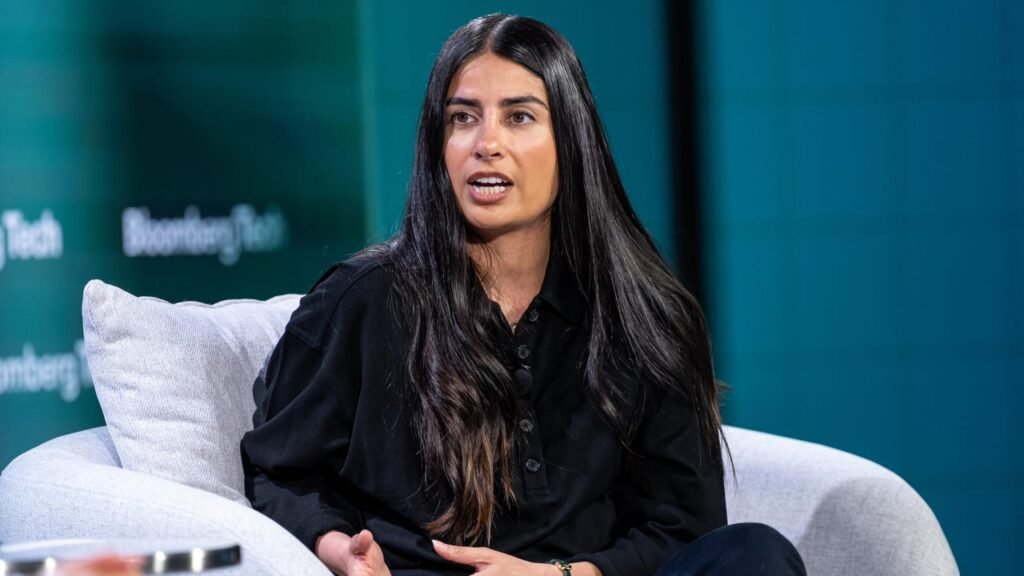
Xbox will likely undergo studio shutdowns and consider ad-supported subscription models following newly-installed CEO Asha Sharma’s blunt warning that a corporate “reset” was now necessary, gaming analysts have told IGN.
Sharma’s memo to Xbox employees, subsequently published publicly online, painted an unflinching portrait of the problems facing Microsoft’s gaming division — and made it clear that difficult decisions were now necessary in the coming days. Indeed, the memo’s arrival prompted a report by Bloomberg that suggested a wave of layoffs would arrive as soon as next month — bringing excitement around the brand crashing back to earth after an encouraging Xbox Games Showcase, which included peeks at numerous upcoming blockbusters and some games being earmarked as console exclusives.
“The company stopped sharing detailed Xbox sales data in 2013, so Asha mentioning the 3% profit margin now is actually big news to justify what is coming soon,” said Dr. Serkan Toto, CEO of consultancy firm Kantan Games, noting Sharma’s public reveal of Xbox’s “accountability margin” spoke volumes. “The business is clearly not working: Microsoft could make more money just leaving its cash to the bank, as the interest rate for corporations in the U.S. is over 3.6% currently.”
“Considering Xbox was one of the biggest spenders over the past decade, buying up ZeniMax Media and ABK [Activision Blizzard King], it is now looking for ways to capture a return on that investment,” agreed Joost van Dreunen, video game industry researcher and professor at the NYU Stern School of Business. “It is common practice for firms to reduce headcount in the wake of an acquisition, but in this case, we can identify several other unavoidable catalysts. First, the RAMpocalypse is real. Xbox had already started to derisk its hardware business by partnering with third-parties and creating a partner network. The tripling of hardware component costs has further catalyzed that effort, yet hardware remains a low-margin part of the business.”
Changes made during the first 100 days of Sharma’s reign have also likely eaten into Xbox’s balance sheet, van Dreunen suggested, such as the cuts to the price of Xbox Game Pass subscriptions, and the decision to give up PS5 revenue for Gears of War: E-Day and Clockwork Revolution. These choices might prove popular among fans, but must also ultimately be balanced financially.
“Game Pass was too expensive, and monetizing players via a monthly subscription clearly has a ceiling. [Sharma has] also signaled the return to exclusives as a central part of its platform strategy. But the honeymoon phase of new management is going to come to an end soon, and we’ll start seeing the real work that goes into turning a $25 billion gaming titan around,” van Dreunen continued. “Before Xbox rolls out additional revenue streams around user-generated content markets and in-game advertising in a long-term, sustainable way, it will be forced to lower its overhead to maintain the 30% margin that Satya Nadella will expect.”
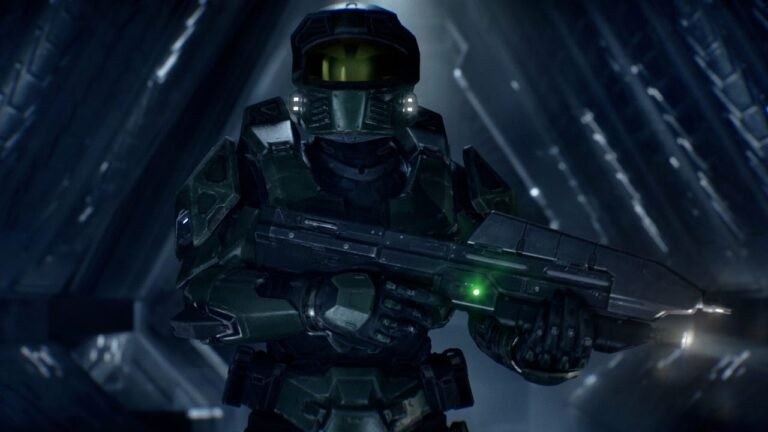
Sadly, layoffs now seem likely. Sharma has suggested that the brand’s biggest franchises would now be the company’s priority, leaving employees not working on core IP such as Halo, Forza Horizon, Gears of War, and Minecraft, likely feeling nervous about the future.
“A 3% accountability margin, down year-on-year, against $20 billion of investment over five years — while revenue actually fell — is a line written for investors,” said Rhys Elliott, head of market analysis at Alinea Analytics. “It’s bad. My read is that the strategy becomes ‘Xbox doesn’t need to make all the games.’ [The company will] concentrate first-party spend on the handful of industry-defining, entertainment-scale IP – the franchises now extending into TV and film – and push the smaller, indie-adjacent bets out to third-party partners instead of funding them in-house.”
Pointing back to Sharma’s memo, Elliot said the CEO essentially said as much when stating that Xbox expanded its studio system for a multi-strategy content pipeline it no longer needed, now that content was cheap and plentiful. “Which means the studios most exposed are the ones that are brilliant for prestige and rotten for the spreadsheet,” Elliot continued. “The Double Fines and Ninja Theories of the portfolio – beloved, talent-dense, critically adored, and small – are on the chopping block. They’re wonderful for hearts and minds, but hard to defend in a margin review.”
“Microsoft will run through its Xbox business with a bulldozer this year,” Toto said, bluntly. “I hope I am wrong, but it looks like we can expect not only staff cuts but also studio shutdowns. The memo sounds like Asha might even change how Xbox is structured fundamentally. One thing is clear: Xbox at the end of this year will be totally different from the Phil Spencer times.”
Structurally that may be correct, though the looming impact of layoffs feels sadly familiar. “I’m genuinely worried about that tier of studio given the rhetoric in the memo,” Elliot said, of Xbox’s smaller development teams. “They were acquired in an era of growth-at-all-costs, and that era is explicitly what this memo is unwinding. And again, it’s not new, either. In 2024, Xbox shut Tango Gameworks, fresh off Hi-Fi Rush, and closed Arkane Austin too. Those studios were prestige-rich, talent-dense, modest on the balance sheet. The memo’s ‘we expanded the studio system… [and] found ourselves over extended’ is the same logic that ended Tango under Booty and Spencer.”
Will exclusive games help turn Xbox’s business around? Analysts seem unsure, and Elliot believes Xbox’s statement that exclusivity decisions will be made on a ‘case by case’ basis gives the company significant leeway to make the rules up as it goes along. “[A] PS5 version of Gears was clearly in development, retailers were lining up pre-orders, and it got yanked late enough that their own staff were blindsided. Pulling a Halo trailer from a PlayStation event is the same instinct – symbolic, relationship-damaging, and revenue-negative. I’m not sure how worth it the exclusivity change is in the long term – and I expect there to be some backtracking once the revenue numbers come in.”
“If the data is any guide, the titles that stay Xbox-first or Xbox-only will mostly be the ones a sliver of the PlayStation audience would have bought anyway,” Elliot continued, “so nobody is really losing sleep over that math. Exclusivity handled ‘case by case’ is a polite way of saying ‘symbolic where it’s cheap, abandoned where it’s expensive.’ The tell will be the third or fourth notable title after Gears: E-Day and Clockwork Revolution. If those quietly turn up on PS5 – framed, of course, as a thoughtful ‘case-by-case’ decision – then the reversal has already begun, and the exclusivity push was always a hearts-and-minds gesture with a shelf life. I’d expect any backtracking to land after a quarter or two of revenue numbers, once the cost of walking away from 90M-plus PS5 owners shows up in a report someone has to present. That’s the moment the spreadsheet wins the argument it always wins.”
What of Game Pass, which has returned to growth following price cuts, though only after months of falling subscriber numbers? Analysts agree that a lower-price, ad-funded subscription tier is inevitable, aping similar offerings from streaming services such as Netflix and Disney+.
“In terms of business models, ad-supported strategies are an effective way to deliver cheaper access to products and services for those that don’t want to pay significant sums or that are happy to have an ad-based solution in exchange for more value,” said Piers Harding-Rolls, games industry analyst at Ampere Analysis. “Ad strategies are working very effectively in the streaming video on demand market to lower subscription costs, are deployed in thousands of mobile games as reward ads used by millions every day and are used to offer cheaper tech to consumers – Amazon’s Kindles spring to mind. I think it’s reasonable to assume that ads will become a more significant part of the Xbox business model mix, likely in Game Pass first, but could be used to deliver cheaper Xbox hardware in the future.”
It’s hard to imagine a tougher time for Xbox to be working on new console hardware, building back from far behind PlayStation and Nintendo in terms of current-gen platform sales, during a component pricing crisis and what feels like a moment of real question around the soul of the brand. It’s a situation that Harding-Rolls described as “highly challenging,” amid high inflation, the knock-on impact on staffing costs, and the console component cost increases.
In an interview this week, Sharma said it was unrealistic to expect any console to succeed with a price point in the thousands of dollars — which is what the current crop of machines are now edging towards after repeated price rises, let alone the next hardware generation. Focusing solely on being the biggest and best console is no longer an option, Sharma continued, and instead there is a need to appeal to as wide an audience as possible.
“Xbox is still committed to a next-gen console but is considering how it can deliver something that will be desired by Xbox gamers, while not pricing out huge swaths of gamers and potentially growing the audience,” Harding-Rolls said. “It’s also thinking about how it can de-risk itself from the costs of subsidising hardware as component costs continue to escalate. There are a few areas I think Xbox could investigate. Xbox has already partnered with Asus to deliver the ROG Xbox Ally, and this could be extended to next-gen console hardware. This sort of OEM arrangement could help with access to components, preferential pricing for storage and memory, flexible configurations of the same platform and extending distribution. This is not a silver bullet and there are already historical examples in the games space where this strategy hasn’t really worked – such as Valve’s Steam Machines. If this is not the approach the company takes, I think Xbox will be looking to get closer to key component manufacturers to put itself in a better position in terms of supply-chain negotiation and prioritisation. Sony’s long consumer electronics history and its other consumer tech businesses means it is better positioned in this context.”
“New business models and partnerships for hardware could mean that Xbox stops trying to be the sole one building the box,” Elliot agreed. “Expect third-party manufactured hardware – partners building Xbox-branded or Xbox-compatible devices under licence – rather than Microsoft eating the full bill of materials and the subsidy on every unit. The ROG Ally collaboration was the trial balloon for this. And of course mobile is that longer-term North Star. But as for the core, Xbox still wants Helix to converge its console and PC offerings. Windows is the actual platform, and the ‘Xbox’ you buy becomes one of several doors into the same ecosystem rather than a single loss-leading box Microsoft fabricates itself. But Xbox is appealing to its console fans along the way as it transitions them into the future. That’s why Helix is half-console, half-PC.”
“You can’t tell tens of millions of console loyalists ‘the box is dead, move to Windows’ overnight without torching the goodwill you just spent 100 days rebuilding – or potentially pissing off 25-year fans,” Elliot continued. “So, Xbox is still shipping hardware and keeping some smaller exclusives to keep the core warm, but the actual centre of gravity is quietly sliding to PC, mobile, and cloud. Helix being half-console, half-PC is that compromise made physical. The word ‘Helix’ is most commonly known in biology to describe human DNA, where two intertwined, spiral strands form a twisted ladder. It’s literally in the name – Xbox is converging console and PC.”
A focus on third-party hardware seems the most likely route for Xbox following Sharma’s most recent comments, though other options are also possible. Microsoft could restart its subsidised console purchase plan, which offered access to Xbox machines via an ongoing subscription — though alternative third-party leasing and payment options now existing make this less likely. The company could also lean into its cloud-streaming offering and re-examine the idea of an Xbox streaming stick. But, as Harding-Rolls points out, “to stream Xbox games, there still needs to be Xbox hardware in data centres to support this model. One of the key challenges that Xbox is dealing with is storage and memory availability and this doesn’t in fact solve this issue.”

Xbox Games Series Tier List
Xbox Games Series Tier List
“There’s a messier possibility worth naming,” Elliot concludes, “that the confident language and candour are masking real strategic uncertainty. The clearest evidence is the contradiction sitting inside the comms – choosing to forgo revenue by pulling games off the biggest install base one week, then lamenting that revenue is too low in the same breath. When you talk out of both sides of your mouth, trust starts to dissolve. The Spencer era had that habit, and the Xbox of new reads like a continuation of it, now with employees being gently primed for another round of layoffs a few months after Booty said: ‘To be clear, there are no organisational changes underway for our studios.’ I also note that Xbox said there would be no layoffs after the Activision Blizzard acquisition. There were a lot of layoffs.
“A healthy Xbox is good for all of us, competition included, and they’re saying a lot of the right things. The candour is real and their diagnosis of the problems are mostly correct. But there’s no easy cure. Trying to be simultaneously the world’s largest game publisher and a first-party hardware platform, at a 5x component premium, with a first-party slate that can’t yet carry exclusivity on its own – that’s the bit I can’t make add up.”
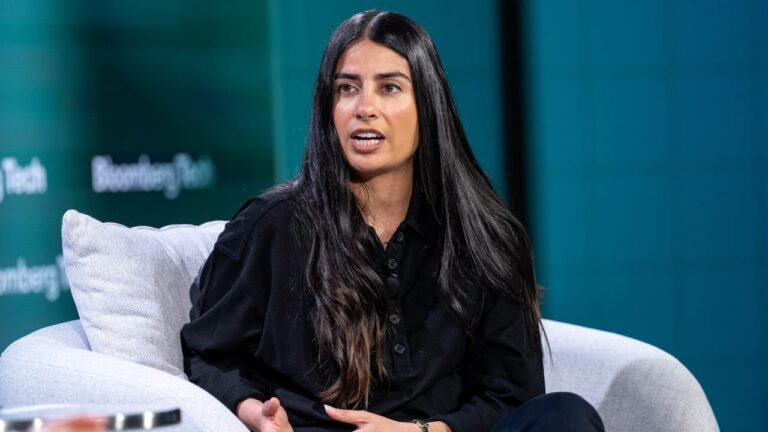
Photographer: David Paul Morris/Bloomberg via Getty Images.
Tom Phillips is IGN’s News Editor. You can reach Tom at tom_phillips@ign.com or find him on Bluesky @tomphillipseg.bsky.social