Hello! Eurogamer’s week of features celebrating the intersection of queer culture and gaming continues today as Khee Hoon Chan investigates the concept of queer time and how it’s being explored in video games. To catch up on everything you might have missed this year and in Pride Weeks past, you can visit our Pride Week hub.
Time functions differently depending on where, and who, you are. Having grown up in Singapore, I’m familiar with the country’s rigid, albeit implicit, timeline of meeting major milestones: dating in our teenhood, settling into our first respectable career by 25, getting married before our 30s, and purchasing our first home before 35. But many queer folk, like myself, live to a different temporal rhythm.
Queerphobia is deeply institutionalised. Queer education is scant, even inaccurate, while anti-discrimination laws for queer people, when and where they exist, are often inadequate; we can even be denied opportunities due to who we are. As a result, we often come to terms with our identities, and realise our coming of age experiences, at a delayed pace. The concept of being at the “right” age to meet these milestones isn’t just tenuous, it’s out of reach for many of us.
Of course, the specific markers of such chrononormativity – the idea our lives should follow an unwritten, yet arbitrary order – will most likely differ across cultures. But the reality that queer people rarely experience time in this prescribed, heteronormative way is universal. And while we live outside this linearity, we are also increasingly resisting it, choosing to live our lives at our own pace, at our own time. We are queering time by bending it to our whims.
As games mature, they also increasingly explore more diverse perspectives in creative ways. And as queer representation becomes more multifaceted and authentic, notions of queer time have found their way into the medium too. Perhaps no other game better encapsulates this theory than Don’t Nod’s Life is Strange, whose queer teenage protagonist Max has the literal ability to manipulate time. In the first game, Max can reverse and fast-forward time to avoid certain consequences, allowing her to revisit conversations with the school principal and tweak her responses, say, or to prevent a classmate from getting injured by warning her in advance.
But one of the most consequential uses of Max’s time-altering abilities involves her best friend and love interest Chloe. Early on in the original Life is Strange, Max saves Chloe’s life by rewinding time and preventing another student from shooting her. And then she saves her life again and again as the story goes on: rewinding time when Chloe accidentally shoots herself in Episode 2, and when she gets her foot stuck in the tracks as a train is approaching.
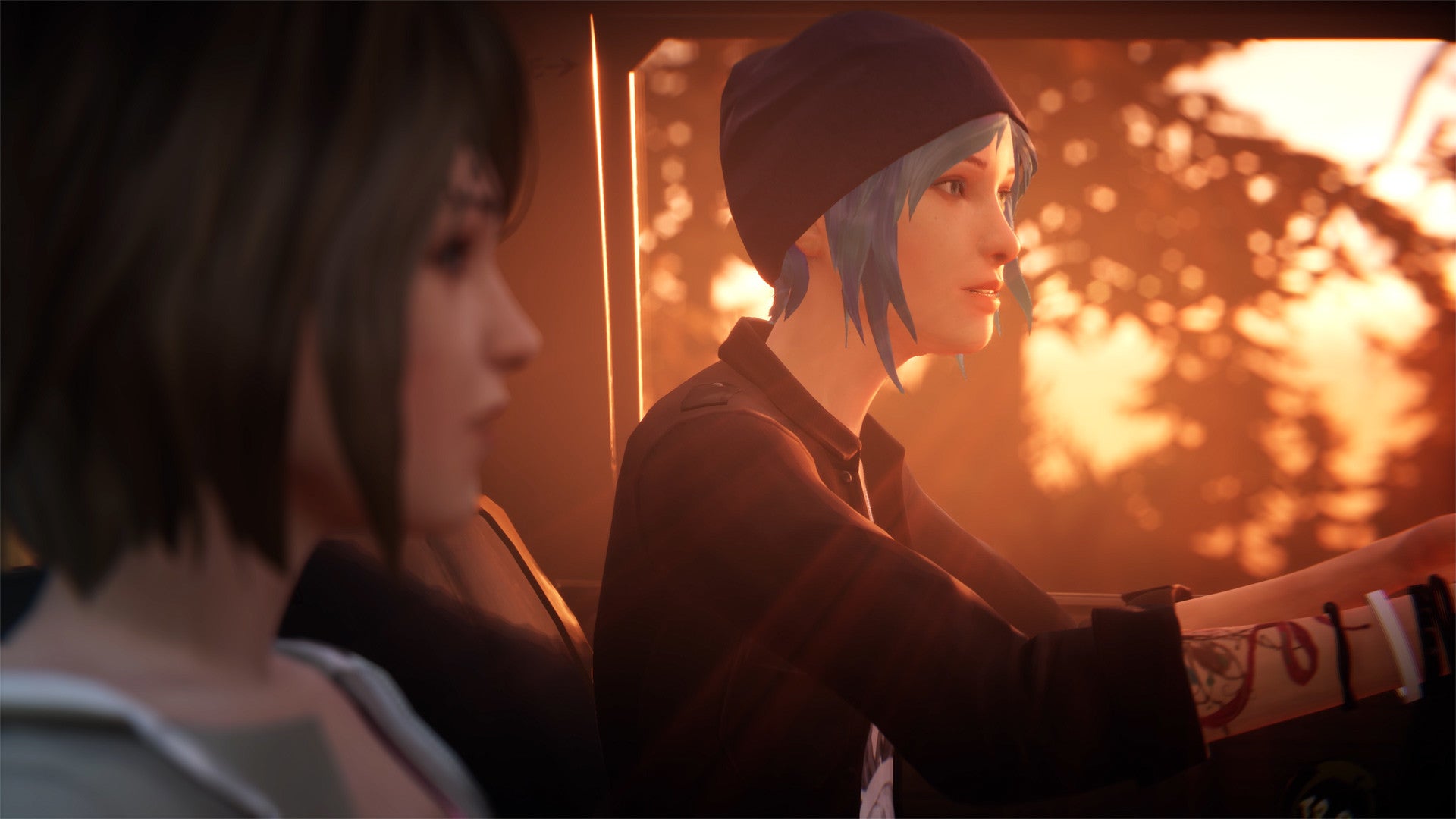
Beyond its literal effects, Max’s power also has a metaphorical bent, which manifests from a yearning to spend more time with a childhood friend she’s lost touch with. It’s a familiar sentiment for queer people who may feel like they are out of time; we often feel like our lives can only properly begin when we start to accept our own identity. Queerphobia tends to exacerbate this, since we spend so much of our youth grappling with who we are. And like the debilitating effects of queerphobia, the incessant disasters that befall Max and Chloe – and their home of Arcadia Bay – constantly threaten to pull them apart, shortening their time together.
But Life is Strange is far from the only game to explore queer identity through the concept of time. Developer Dreamfeel’s acclaimed visual novel If Found, for instance, centres on the experiences of a trans woman Kasio. Having graduated from a Dublin college, Kasio returns home to a disapproving family: her mother frames her identity as a woman as a phase, an “alternative thing” she should snap out of. And her brother spews caustic, transphobic diatribes. This tale is interspersed with a second story about a black hole that threatens to swallow the Earth, and the astronaut who’s trying to save the planet from catastrophe.
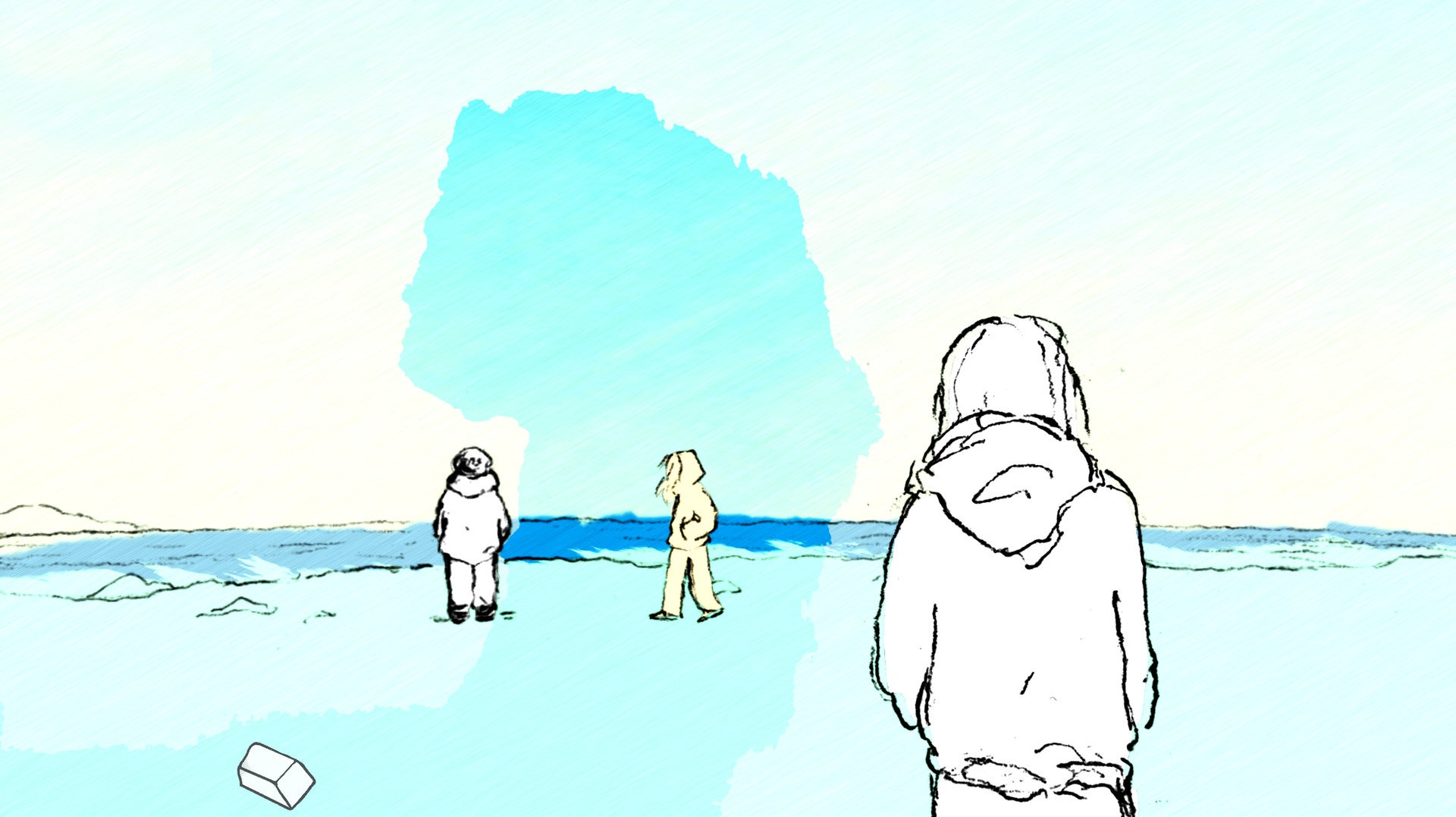
Kasio’s experiences are the epitome of displaced time that many queer people go through. Her mother frequently tells her she needs to “get over” her new identity, marry a woman, and settle down. Kasio rejects a friend with an unrequited crush because she’s still figuring out her identity. When she visits home, Kasio realises her own room doesn’t feel like her own because of the constant changes she has to make to her space for visiting guests. Her identity is inextricably tethered to temporality.
The game’s sci-fi subplot amplifies the emotional stakes, with a reveal that places Kasio at the heart of this earth-rending disaster. And when her emotional collapse culminates with the lines, “Time doesn’t exist in a black hole. Every moment crushed together, past and present and future, in one endless scream,” it’s another example of how damaging hegemonic constructions of time have been for Kasio. Like gender and race, time is a social construct built from a series of agreed upon conventions.
Queer time, too, can explain the sense of isolation many queer people experience, as our peers achieve key milestones ahead of us – and this is something affectingly reflected in developer Gritfish’s Killing Time At Light Speed, a visual novel set in a not-so-distant future where interstellar travel is possible. As Jay, you are travelling to another inhabited planet, but time unfolds at a different cadence; even though the journey spans 29 years on Earth, the trip only takes half an hour from the perspective of Jay.
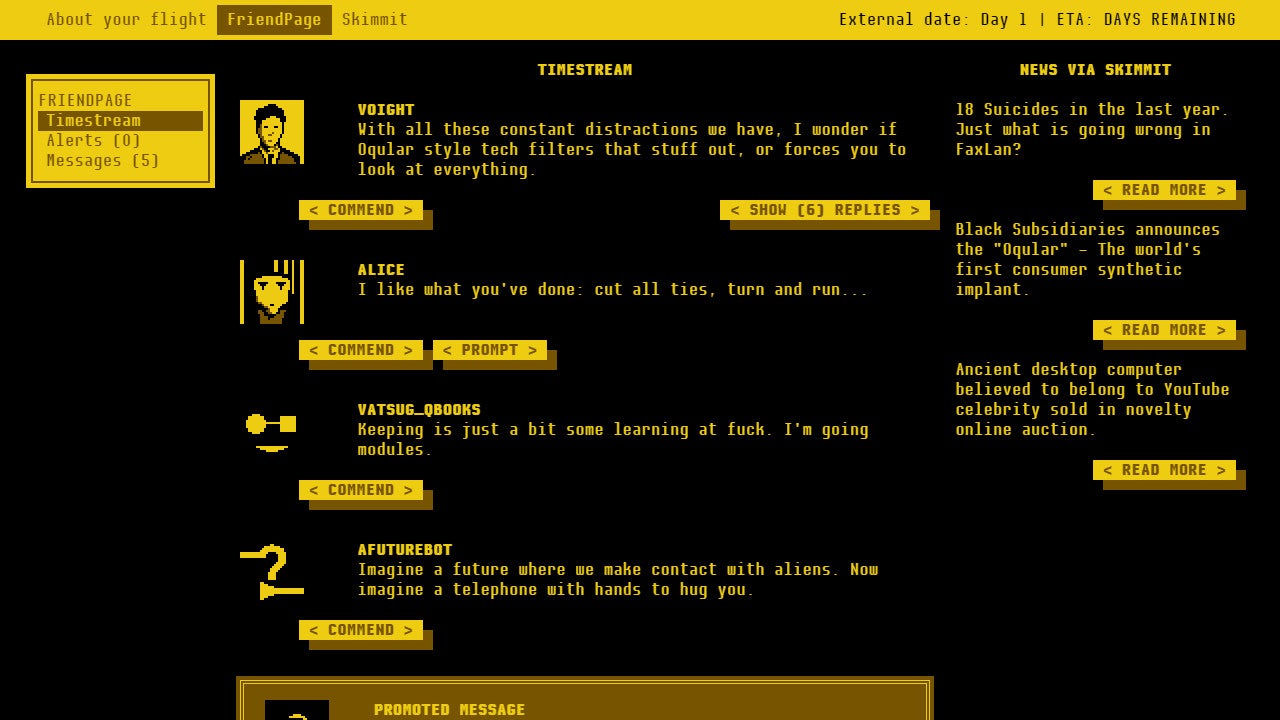
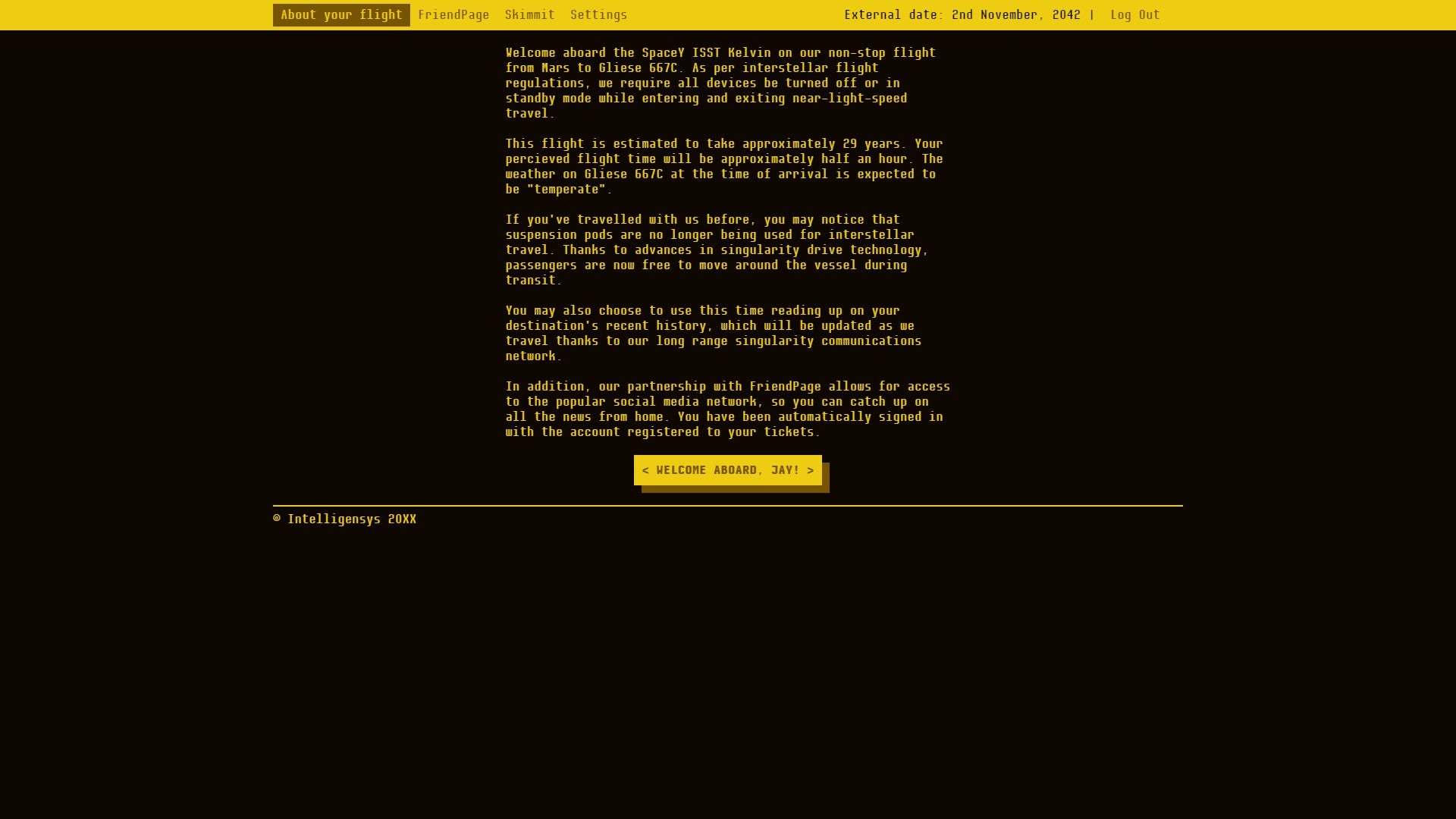
In-game, players experience the journey entirely through the ship’s predominantly text-based interface. Fortunately, the wonders of technology mean you can read the latest news and remain in touch with friends from Earth via the social media platform FriendPage. Unfortunately, the differences in the passing of time mean that, for every refresh of the page, a year has gone by at home. From lightyears away, you’re seeing your queer friends get attached, married, and have kids. You can leave a comment, but your friends will only see it much later, and there’s increasingly little way to respond and engage with them meaningfully.
Eventually they leave FriendPage for another, more relevant social media platform – one you have no access to. And the feeling of being left behind, as Killing Time At Light Speed reaches its ultimately desolate ending and Jay arrives at their destination alone, exemplifies queer loneliness as interpreted through the lens of queer time.
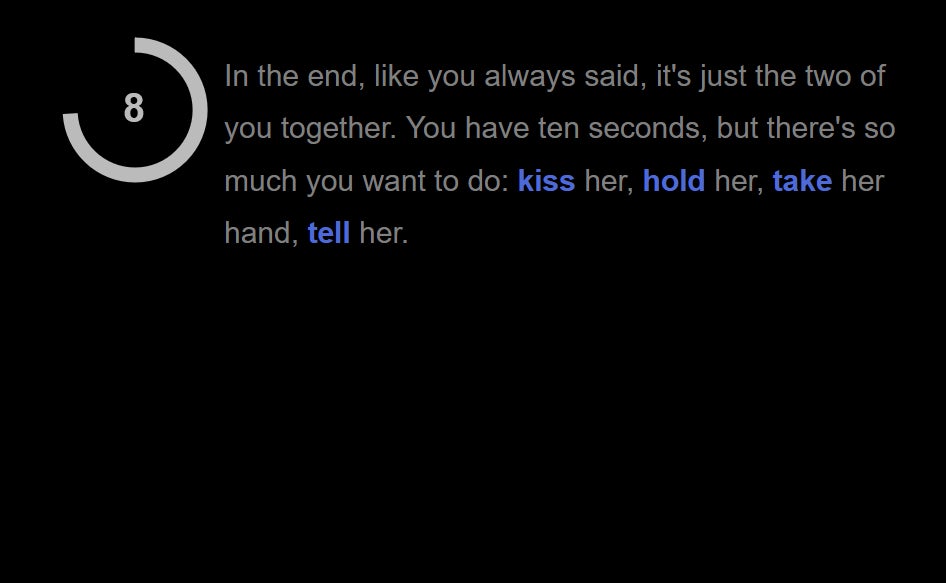
Conversely, Anna Anthropy’s hypertext game Queers In Love At The End Of The World reduces each playthrough to a mere ten seconds, presenting an alternate perception of time. Set in an unknown apocalypse, you only have a fleeting moment to interact with your partner one last time, forcing you to make decisions in split seconds. Life’s conventional markers are all but erased here; the linear, heteronormative progression of time is instead replaced by a cyclical, queer one. You click through the different text options and relive multiple ten-seconds cycles, all to discover more about the last two people in this world.
It’s perhaps notable these games are tinged with an apocalyptic element where time is becoming a scarce resource, and their protagonists must reckon with their ephemeral circumstances. The concept of queer temporality emerged, after all, with the onset of the AIDS epidemic in the 1980s, when the contours of time were reshaped for many in the queer community; 324,029 men and women died of AIDS-related illnesses between 1987 and 1998 in the USA alone. Queer time is thus foregrounded as a liberatory expression in games, one that can help queer individuals like myself explore, interrogate, and reinvent our very relationship with – and against – the passing of time, and of life’s myriad milestones.