Hello! This piece is a part of Optimism Week on Eurogamer – a week of features either about optimism itself or those which hope to inspire it. For more articles like this, you can visit our Optimism Week hub. Thank you as ever for reading!
Suddenly, I’m alone. Where there was once cacophonous sound all around me, now there is none. Where there were once blobby people with sausage noses waggling their Playdough arms all around me, now there are none. All I see is a forest rapidly darkening, and all I hear is the sound of nothing, beating like the sound of my heartbeat in my ears. The contrast is unnerving. Where has my pack of people gone? I don’t want to be on my own.
This seed is what this article grew out of: loneliness. It’s a sentiment that provoked an experiment – a human experiment, to make it sound tantalisingly risqué – about what would happen if I got people together online that didn’t play games online very often. Big Walk was the catalyst for it, an acclaimed game about getting people together online to hang out, solve puzzles and – developer House House hopes – have fun. But what happens if you don’t have friends readily available for this – do you simply miss out? Worse, do you begin to consign yourself to the fact that these games – and they are a whole genre now – are not appropriate for you?
In Eurogamer’s Big Walk review thread – we gave it a big fat five stars if you don’t know – I saw variations of this response, as people commented to say it sounded great but they didn’t have the people they needed to play it with. Or words to that effect. And honestly, I was in the same position: I don’t have a regular gaming group, as silly as that sounds, given the job I do. It seemed like a shame. Big Walk appeared to be the spoonful of positivity and wholesomeness so many people, including myself, could use. So I decided to do something about it. In the name of Optimism Week on Eurogamer, I played matchmaker and brought people together, and a few days later, I was hosting a session of Big Walk, waiting for people to join in.
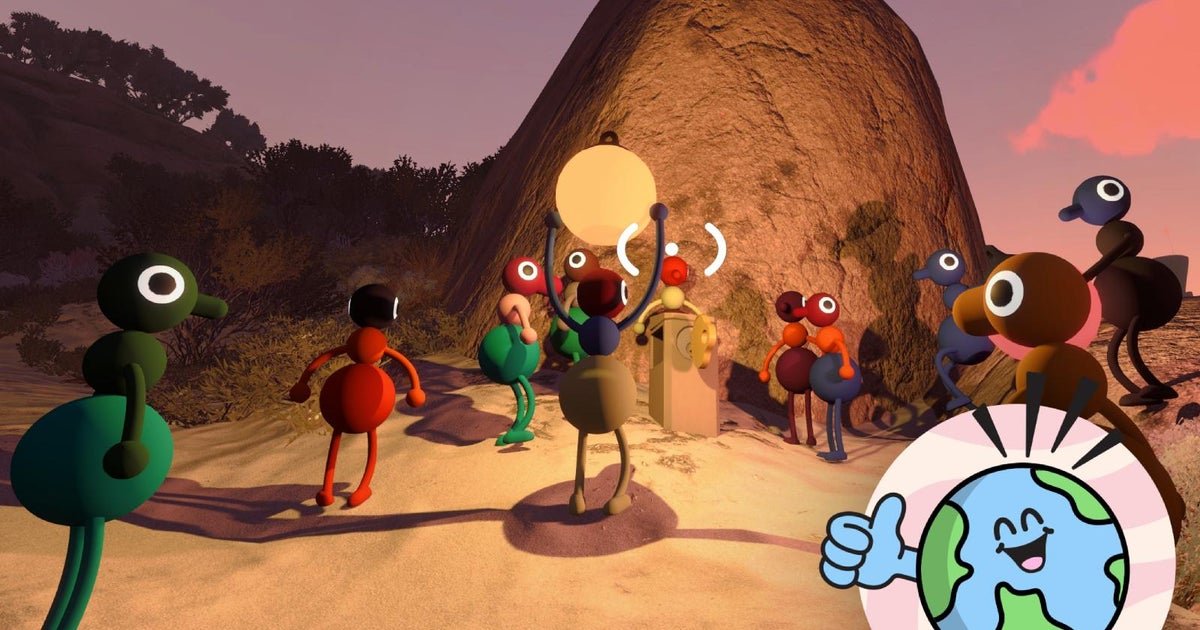
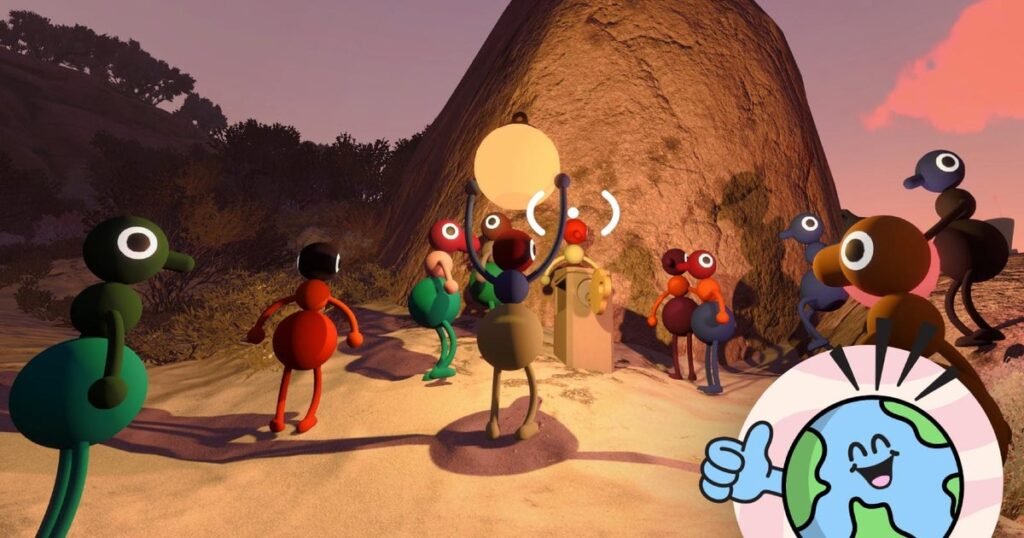
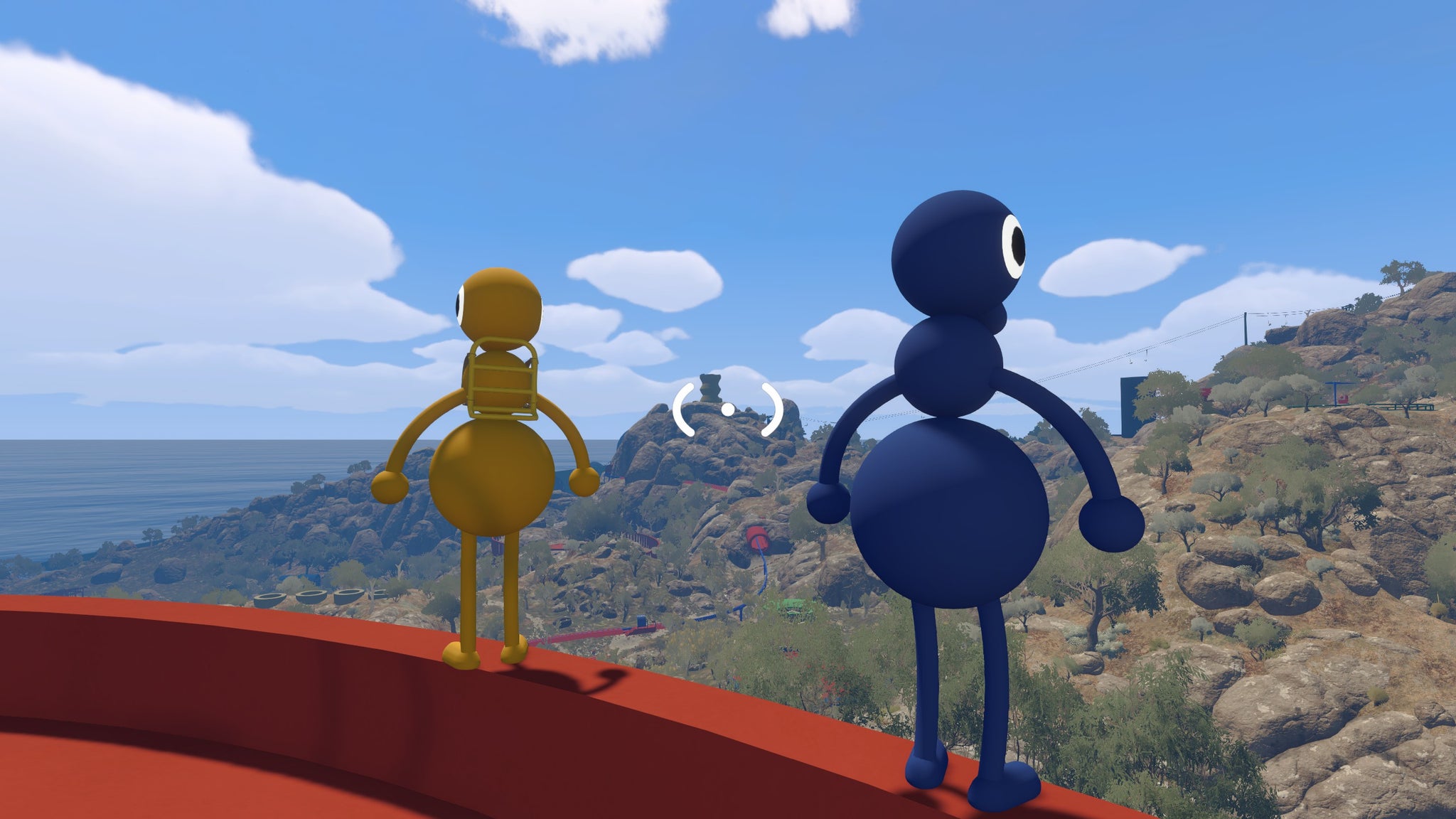
And I remember this feeling. I used to play massively multiplayer online games and I felt it there. It’s a profound feeling that comes from such a simple thing: simply gathering people together. Put them in a virtual space as a person or a ‘something’ and see what happens, and the result is what I’m seeing now as people filter into my game. There’s another person! Look at what I can do with my arms! I can pick up a bell and shake it! I can slide down a slide! I can pick another person and hold them above me! We can make blobby people towers! Hilarity genuinely ensues, and the game hasn’t really done anything yet. It’s all us. And there are a lot of us – 12, the upper limit that Big Walk supports.
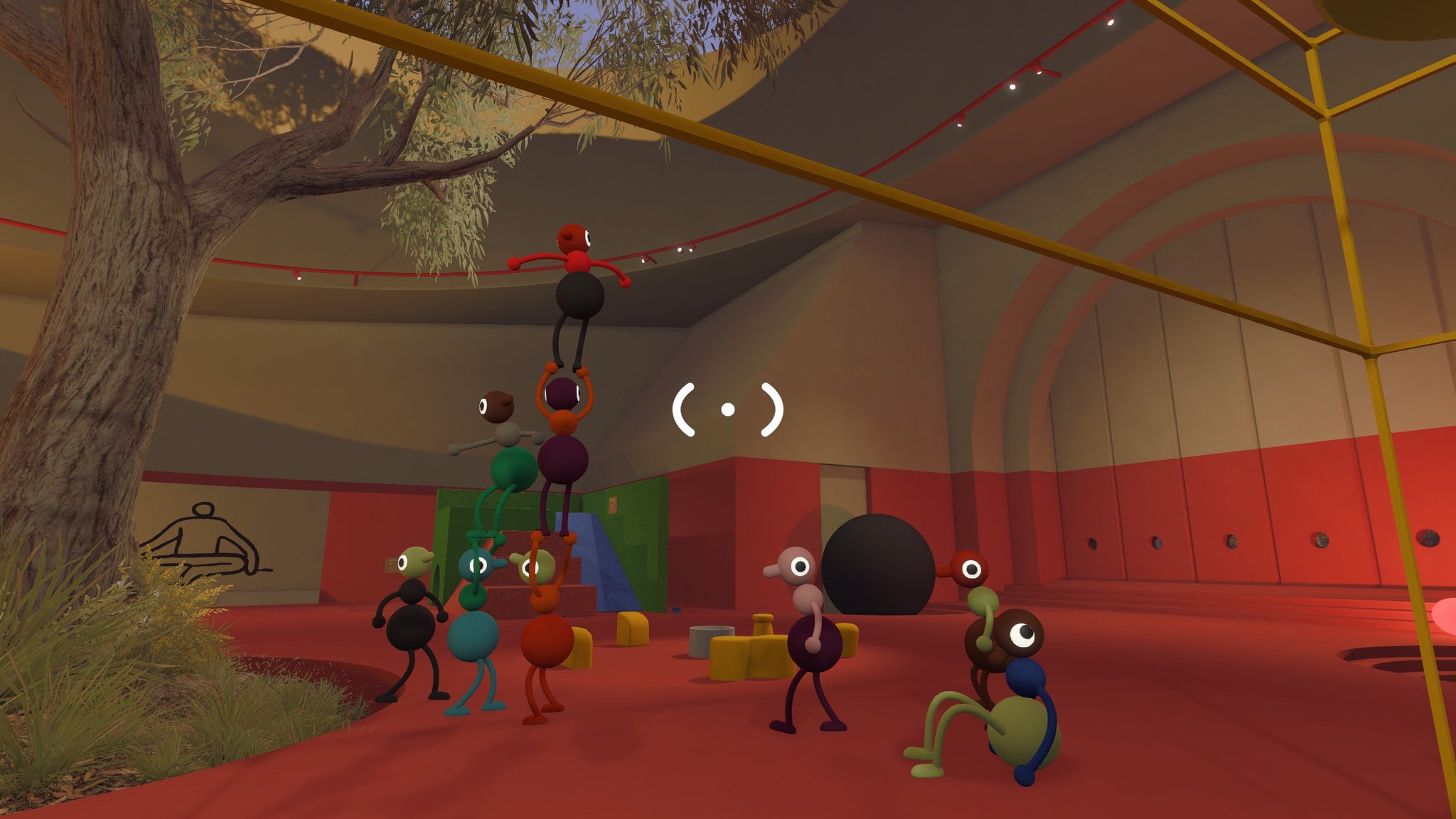
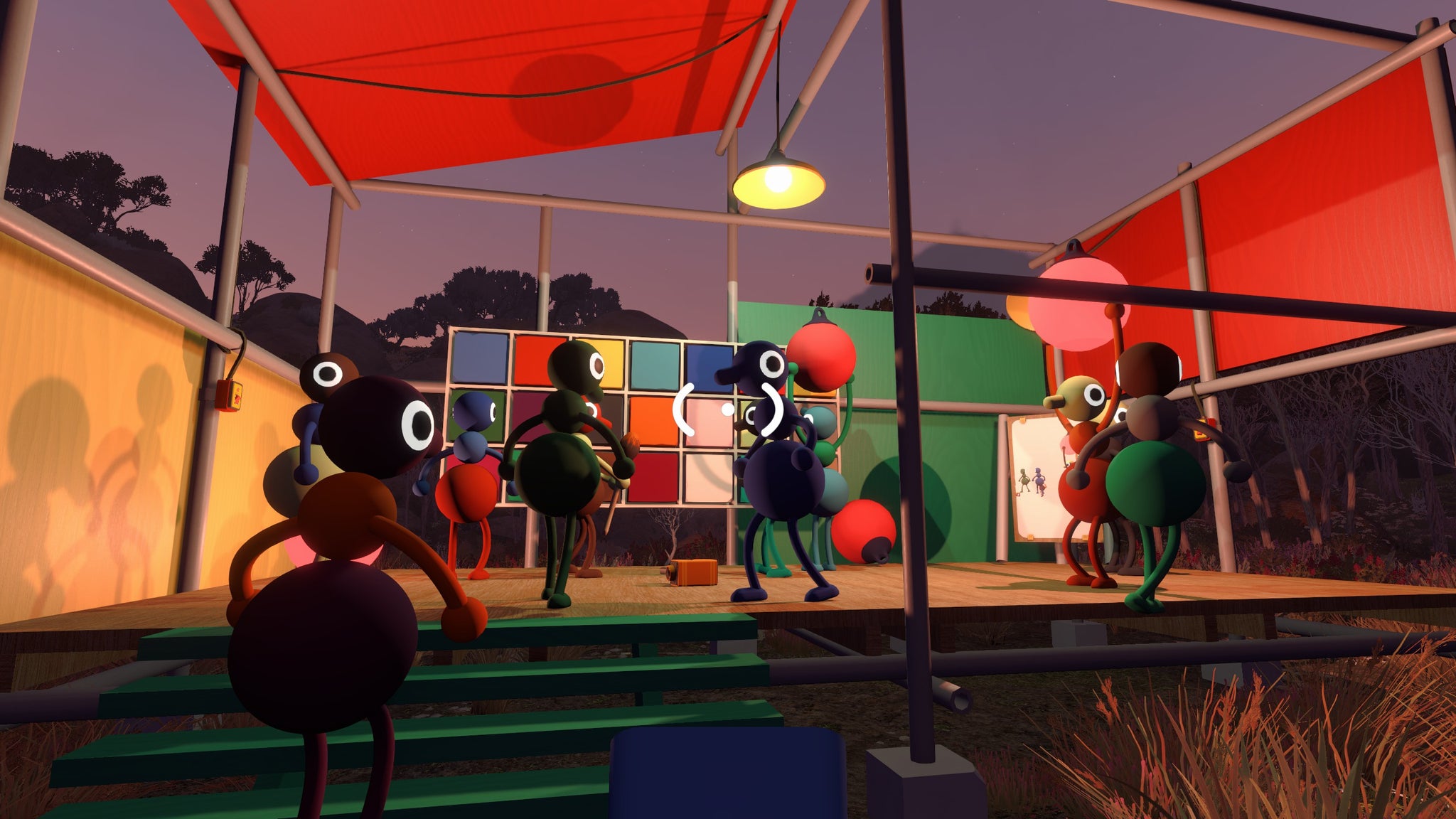
What I admire early on is how deliberately reductive Big Walk is. For instance, I have no idea who’s who. I’ve talked with some of these people on Eurogamer’s Discord for months and probably years at this point, and seen many others in Eurogamer’s comments, but I’ve never heard most of their voices before. And now there are a lot of voices, all speaking over each other, laughing, being silly, and all veiled by a layer of enforced anonymity. Perhaps that helps people feel safe. There are no player names. The only identifying feature is a blobby person’s paint job, for want of a better description, which you can customise with paints soon after leaving the tutorial area. Someone paints me while I’m not paying attention (which I rarely am) and I don’t realise it until much later on, and I love that someone did this for me.
But a dozen people is a lot to coordinate, I quickly realise, as we flood out of the tutorial gates into the valley, scurrying across the grass like ants, massing around the painting area, wondering what to do next. The party splits as some people – the eager ones, the achievers – head to a platform on a hill with a telescope, while the remainder make for a strange green scaffold jutting from the trees. We declump and reclump many times during those early moments, as much by luck and instinct as anything else. Most of us play follow the leader, a few move with actual purpose.
It complicates matters, having this many people. Big Walk supports up to 12 people but the puzzles are designed to be solvable by four, which means you’ve three times as many people if everyone shows up to a puzzle to help.
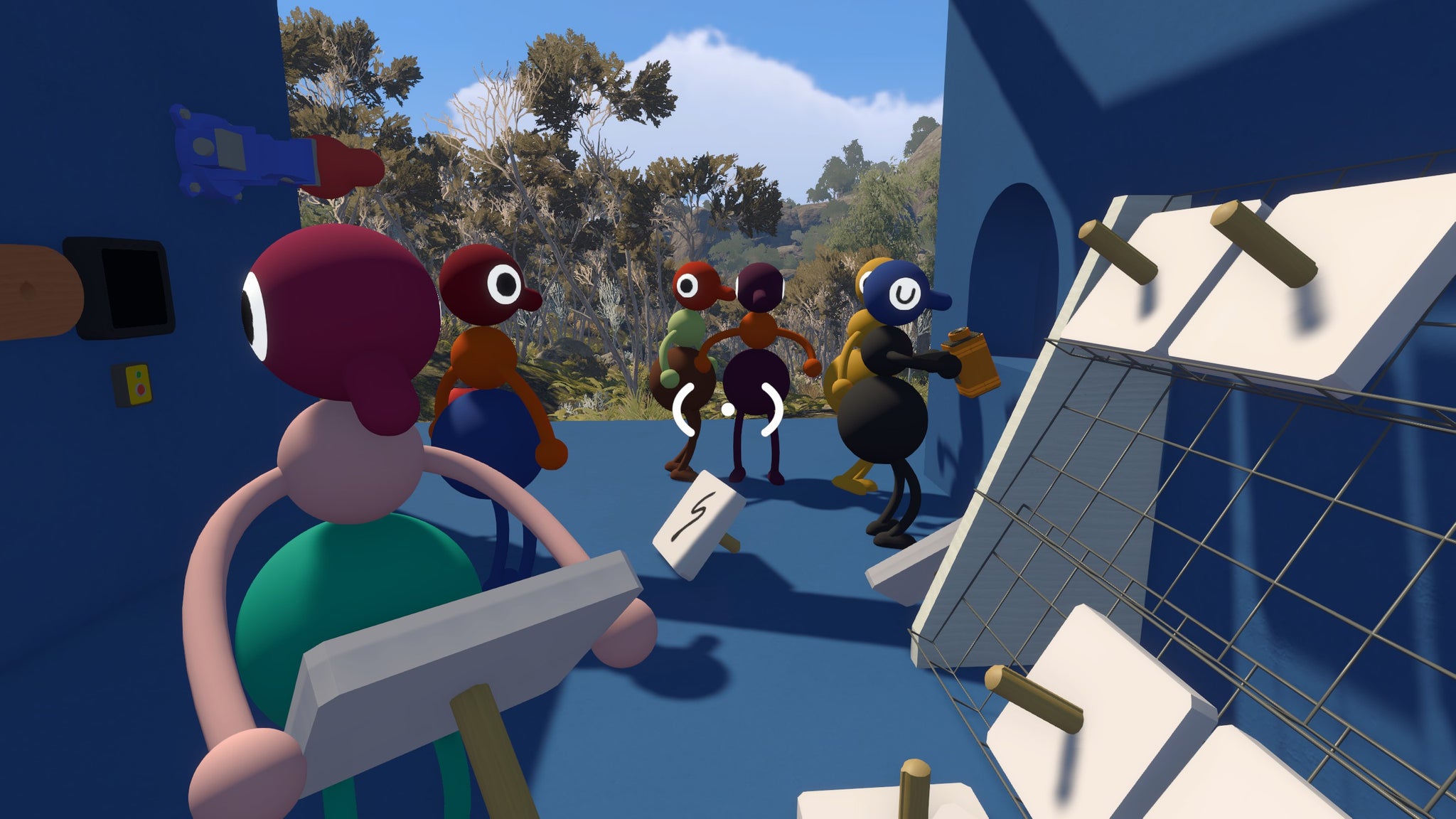
Fairly early on we encounter a maze we need to move a sort of egg-timer through before it ticks down and breaks apart. The solution to this, we slowly begin to realise – I won’t spoil it fully, but just know Big Walk is a game of penny-drop moments – is ultimately such that the difficulty modifier is us. As more and more people swarm the maze, ideas, opinions and people are everywhere, and one clear route through the maze isn’t apparent. Four people would have made better sense of this. We’ve overwhelmed it.
Yet over time, order miraculously – perhaps inevitably, as in society – begins to present itself, as leaders emerge and the group realises it can break apart into smaller groups of four. Breakaways start to form, meaning breakaway stories begin to emerge, because once you’re out of earshot, you effectively disappear, contactable only by the people around you, unless you have something like a walkie-talkie. It keeps experiences incredibly local.
I find myself peeling excitedly away from the pack in the woods with another person to investigate what we think is an underground base. I lift them up so they can get in and then they reach back down to help me get in, and together, we step forward to discover… It’s a tunnel that leads back out into the forest. We laugh; it’s a moment.
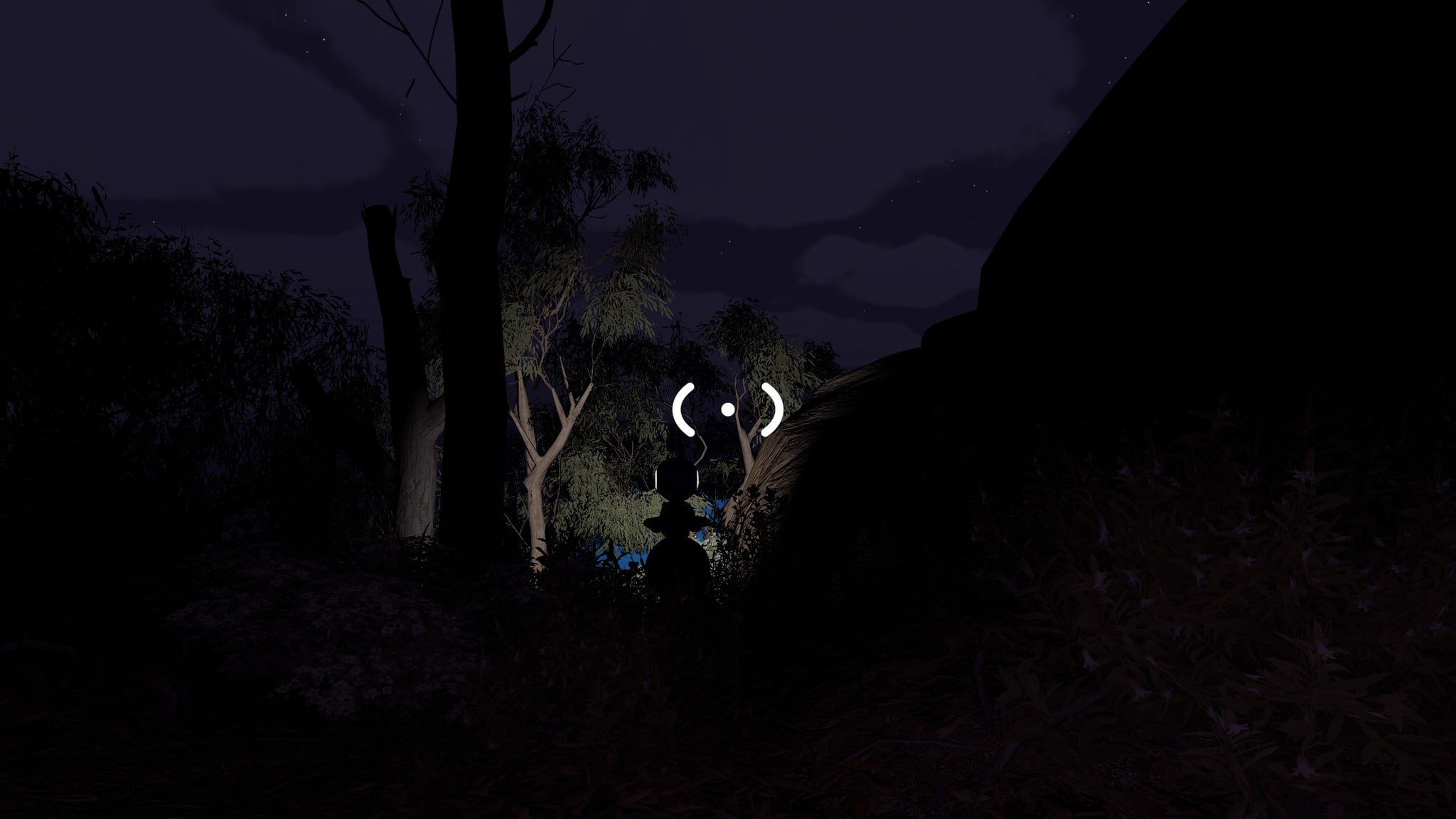
Another time, I’m totally alone in the dark – this is the moment I began the piece with – and Big Walk gets very dark, if you don’t have a portable light source. And I can hear someone’s voice faintly coming from a walkie-talkie that must be nearby. It’s eerie, insofar as Big Walk – a game styled a bit like a TV show for infants – can be eerie. The person on the other end of the walkie-talkie is pleading for it not to be left behind, which clearly it has been. So seeking an opportunity for heroics, I step in, clambering up the mountain – in the pitch dark – to retrieve it. “This is Bertie. I have retrieved the walkie-talkie. Over,” I say when I recover it. Silence. And then: “Tower to Bertie. Thank you. Head back to base.” I’m made up. Another moment.
But perhaps my fondest memory is when four of us discover a circular spaceship-like structure in a forest, suspended on stilts, that has a puzzle nestled within. (Skip the rest of this paragraph if you don’t want to spoil the solution!) There are four soundproof rooms each of us needs to enclose ourselves in, so that we can be given a pictorial clue we can relay to one other person using an intercom.
It sounds simple but understanding the puzzle and what you need to do to solve it is a large part of the experience. What I found so memorable about this puzzle was the interactions it forced – something Big Walk does over and over; it constantly finds ways to isolate, to separate, to divide.
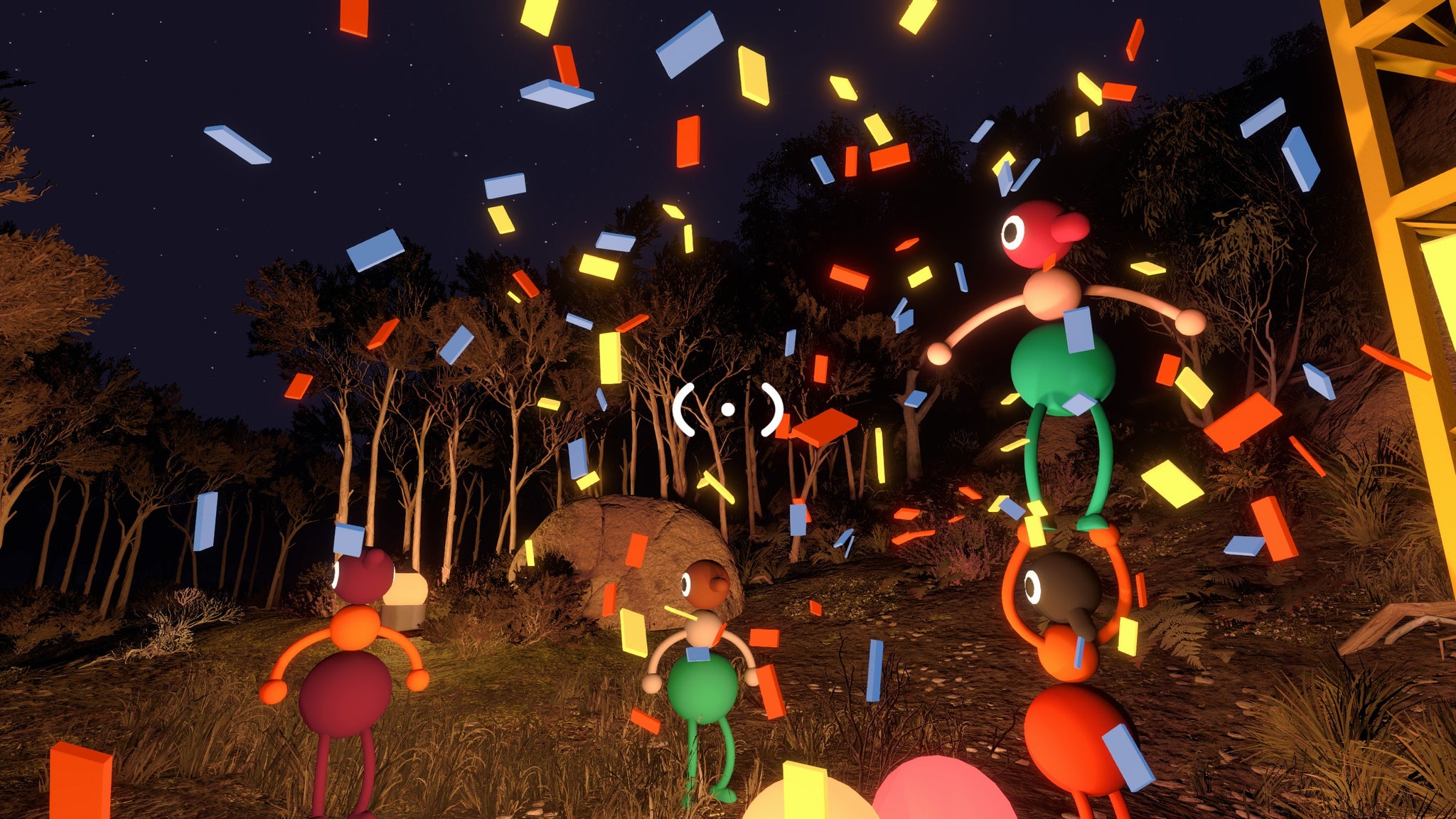
It was being isolated in a quiet room and hearing only sporadic intercom messages from one other neighbour that I remember. It was the nervous waiting and pressing a button to say ‘I’ve done it, I’ve done my part’ over and over that I remember, in the hope others had done the same. The first time, we failed (don’t tell anyone but I think it was my fault) so the pressure mounted. But then there was an explosion of confetti to denote we’d solved it the second time, and I rushed back to the central chamber flush with triumph to talk about how it had gone down. Our little pack: we did that.
People drop away as the night wears on, as life calls them back, and our collective rhythm – by now quite steady, actually, quite organised – begins to slow. Things are coming to an end. Except, it’s not an end, I come to realise – not even as we bob and flail to each other on top of a tower, saying our Big Walk goodbyes. Because a shared experience like this? It lives longer in the memory, and it’s in the Eurogamer Discord after we disembark that the experience really comes into focus.
“What a lovely way to spend an evening,” one person says. “Not sure how much use I was but I enjoyed it!” says another. “Really annoyed that I dropped a walkie-talkie off a cliff,” says yet another. It’s the little interactions as people identify themselves – “I was the all-blue guy” – and ask who it was they want on an adventure with which stick out to me. “Who was it I did the coordinates puzzle with?” someone asks. “They basically held a button for five minutes while I fecked off and then came back with a ‘Bertie’.” (‘Bertie’ was the name affectionately given to the gourd-like red things you collect in the game, I guess because they look like me?). “Twas I!” the reply eventually comes. “Amazing. I feel we bonded a bit.”
It’s messages and moments like this that warm my heart. I think it’s safe to say that Big Walk warmed my heart – Big Walk played with these people. It’s a game that’s easy to look at and dismiss because of the superficial simplicity of it. But providing the right kind of space to encourage and support gatherings like this? That’s genius.