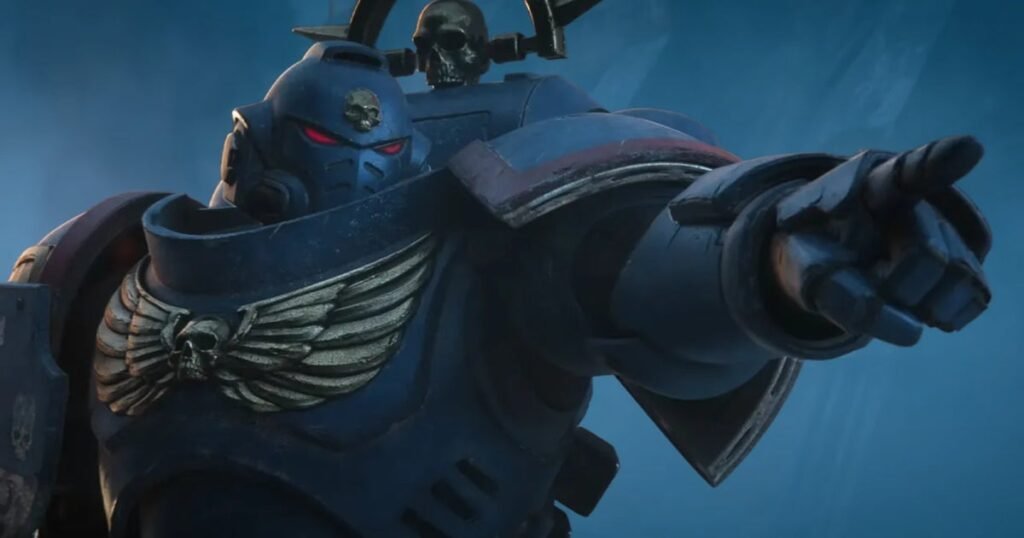
In a small room inside a crowded Koelnesse convention centre, a short presentation on Total War: Warhammer 40,000 is shown to a gaggle of tired writers. Creative Assembly’s brand manager says they’re hoping to make the definitive game in the 40k universe. After playing the game for a little while, I think they may have pulled it off.
The game is, like all Total War games, a grand strategy, set in an especially chaotic corner of a war-torn galaxy. In the demo I played, I was able to experience a slice of the tutorial campaign and the main campaign, plus a challenging large-scale battle to wrap up. It was a small window into what is looking to be a gargantuan tactical experience: nonetheless I left convinced of its merit.
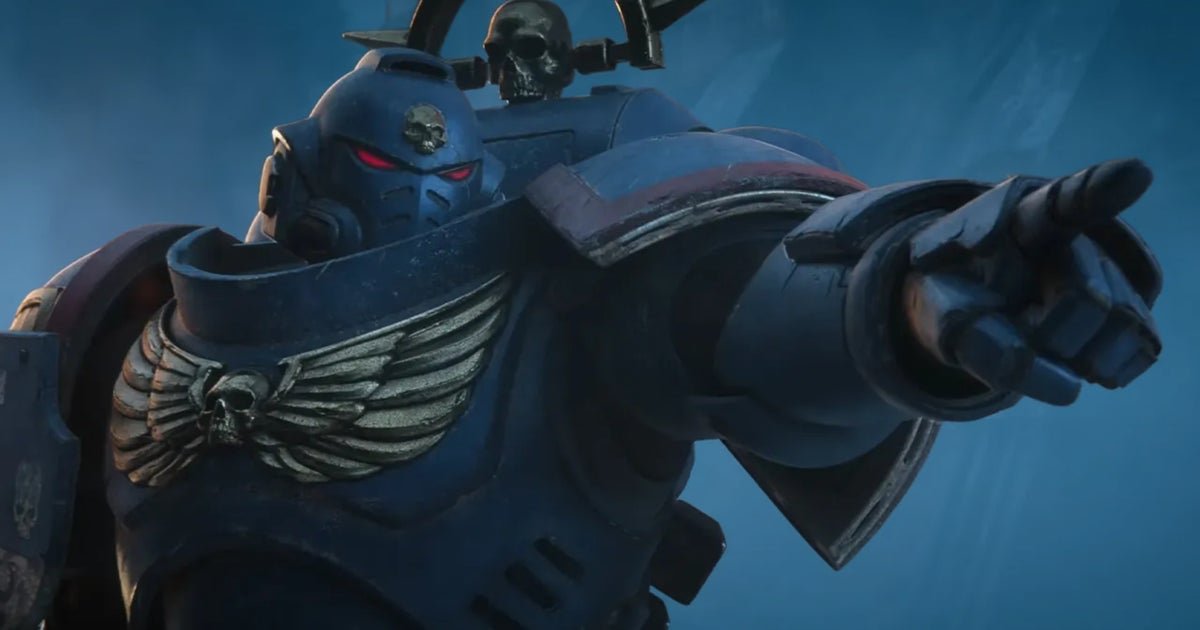
First off, the presentation here is brilliant. Everything looks just right, sounds just right. A bolter erupts with just the right force, and looks exactly as it should. A dreadnought, stomping across the map, does so with the weight it deserves. There’s this thing I do in Total War sometimes: I zoom right up close to fights to get right into the action. Doing so here is like opening a portal into the grim darkness of Warhammer 40,000. This game is Creative Assembly’s first 18 rated game and it shows: Orks running into your firing line erupt in a carnival of gore.
It’s also worth noting that this game is a new direction for the Total War series. Prior games have featured ranged units, gunpowder-covered rifleman, agile elvish archers, and so on. There is however a fundamental difference between a strategy game that features ranged units, and a game built around ranged combat. Given the deluge of guns in this sci-fi setting, making that leap has required some major changes to how a Total War game works.
For one, Total War: Warhammer 40,000 has leant into cover systems and sightlines. Ruined buildings and makeshift battlements are littered across maps, and positioning your army around such positions is paramount. Likewise, this cover can be demolished by chunkier units. There was this brilliant moment when my Space Marines were thrown out of their defensive position by an ork truck that accelerated through the light cover I had them in, flattening that location and my troops alongside them. Likewise, watching an Ork Stompa walk through a building was a moment of cinematic chaos that must be applauded. If anything, the importance of cover here was akin to how the old Dawn of War real-time strategy games handled it, which anyone who has played those games will know is a major plus.
During my time with the campaign, I was able to navigate the overworld of a single planet within a solar system. The map was split into various sections controlled by factions present, and mechanically this will look very similar to prior Total War games. The aesthetic, as you may have imagined, is bonkers. Stretches of barren wasteland extend across the surface, alien flora grows around scrapyard settlements and space junk floats above orbit. So too does your fleet, and I took great joy in seeing my Space Marine battle barge floating above the map.


I also noted the presence of a ruined Land Raider on one of the tiles, one that could be recovered if units were moved over to do so. I was able to upgrade my settlement to provide a negative health debuff to invading armies, and felt firmly embraced by the managerial slice of the Total War series. It’s here, and in top form.
I’m also a massive fan of how small features and mechanics from the tabletop game have been implemented here. The reinforcement system is a clear example of this. In prior games, any reserve units you had would usually walk onto the battlefield from a border. But this is 40k, so instead they deep strike in from orbit at a chosen location. Seeing drop pods full of terminators crash into the backline and start clearing out troops is exactly the sort of fantasy I wanted. Likewise, when units are about to flee, they enter battleshock. It’s little things like this that indicate Creative Assembly is serious about doing justice to the franchise they’re working with.


As a final note, these games have a well-earned reputation for being tricky to get into. Lots of moving units, lots of UI showing different command options at your disposal. This game, I feel, is at risk of seeming daunting to a strategy freshman. What I’ll say is, from the tutorial I’ve played, things were explained gradually and clearly. I’m not the deftest commander in the world but Total War: Warhammer 40,000 gradually lowers you into its complexity as if it were a warm bath. That slice I played, it’s worth noting, is a portion of a dedicated tutorial campaign. I was told the team believes it is their most approachable game yet, and despite all its moving parts, I think that might be correct.
Obviously, I had only around an hour in a game that is meant to be played for hundreds of hours. Campaigns are meant to stretch out across planets, not just one small region. Even so, as far as first impressions go, this game appears to be an absolute scorcher. Total War: Warhammer 40,000 is very much a game to keep a big red cyber eye on.