Assassin’s Creed creator Patrice Désilets’ witchy action-adventure hits early access in rough shape, but its centuries-spanning mix of open world investigation and combat is ambitious, complex, and at times audacious.
There’s an old Sam Raimi profile in the New Yorker I think about quite a bit. This is because, mid-way through the piece, Raimi says one of the most interesting things I’ve ever heard a film-maker, or any kind of creative person, put into words.
Raimi’s talking about the films he made with his friends when they were really young. Super-8 stuff. The camera would swoop in on two toy soldiers stood up on the carpet, and then the film would cut to Sam and a friend standing next to each other. And this is the thing: nobody watching the film would understand what the two shots cut together were meant to represent. They were telling you that Sam and his friend were the soldiers on the carpet. That’s what you were meant to take away. But everybody in the audience missed it.
Raimi then explains – and I wish I had the quote – that as a kid he was making films that were so bad that nobody could even tell they were bad. The audience was just bemused. For the audience to understand that they were watching a bad film, Raimi would first have to become a better film-maker.
I appreciate this sounds like a brutal way to open a discussion of a video game, but be warned: if anything, I suspect I like 1666: Amsterdam a lot more than most people will. Even so, there’s no ducking the fact that it is an odd game. And it’s often odd through necessity, I imagine.
And this is why I thought of Raimi. In one sequence early on in the game – no matter why any of this was happening – I was wandering through a 1990s boutique hotel in Amsterdam almost entirely naked. I was trying to get to an outside space that I had just seen in a vision. But my path was blocked, and it was blocked by strange, low-res groupings of people, their faces not much more than bland cartoons. They were standing together, perfectly still if my memory is correct, clustered in doorways. What to make of it all? These groupings, so almost-sketched in, each one with at least one entirely replicated person amongst their number. And so still! So blank of expression. I had no idea what to think. Was this a dream? Were these people possessed? Had we fallen outside of time and space somehow?
What I now reckon is this: the game needed to hem me in, to drive me towards tackling a specific puzzle about getting to that outdoor space. And it wanted me to tackle that specific puzzle in a specific way. So it used crowds to close out doors I wasn’t meant to go through. But because of the challenges of making an ambitious game with a relatively small team and a limited budget, it had to rely on low-res character models. And it had to duplicate some of them. And I don’t think it could animate them at this specific point. That’s my guess.


This led to Raimi-style confusion. Forget good or bad, what even is this? What am I meant to take from this moment? But untangling this whole sequence also led me to understanding something about 1666: Amsterdam. I’m on its side. It’s not bad. In fact, some of it is really good in principle. But in trying to execute on an ambitious plan, the whole thing’s over-stretched itself. And hence a game about witchcraft contains accidental surrealism along with the real thing.
This is the pact you make with 1666: Amsterdam, I think. To enjoy it you have to survive a bunch of things that are not really that enjoyable. There’s the AI stuff in the game, of course, which is just as miserable as always. Then there are the bugs and rough edges. Alongside the odd crash, I’ve had to quit and restart numerous times because the cat I was playing as – I’ll get to this – descended into the game’s geometry and got stuck. Walking through Amsterdam’s busy streets, the people I pass are animated, but they’re still regularly duplicated, a city of twins and triplets. And I cannot work out the rules governing who has collision turned off (most people) and who doesn’t (some people, some times).
A lot of voices online are saying that the game’s in too rough a shape to be heading to Early Access like this. And I guess that’s true. But I guess what’s also true is that, again, a fairly small team is making this game, and the design is complex and at times pretty audacious. Sometimes, I imagine you need to get money coming in just so that you can keep on trucking. There you are: another kind of pact.
Anyway. As I write this I’m still in the early sections of 1666: Amsterdam’s current early access build. I’m told there’s about 15 hours in it total, and I’m just nearing the end of the first proper mission. I’m about six hours in. The reason I’ve stopped playing now to write this is because I’ve hit a bit of a milestone. I’ve just beaten a boss, sure, and I’m about to get to the outer arm of what I assume the main loop is. But more than that, after being intrigued and frustrated and confused by what I’ve been playing, I’ve finally hit on what feels like the peculiar magic of this game. I’ve found the thing that makes it worth playing and that actually makes it kind of wonderful.
1666: Amsterdam is a tale of witchcraft and devilry, and it’s made by Patrice Désilets’ team at Panache. Panache made the memorably odd and frustrating and thought-provoking Ancestors, in which you guide an early hominid through the wonky chicanes of evolution. But Désilets himself is probably best known for his work on Assassin’s Creed.
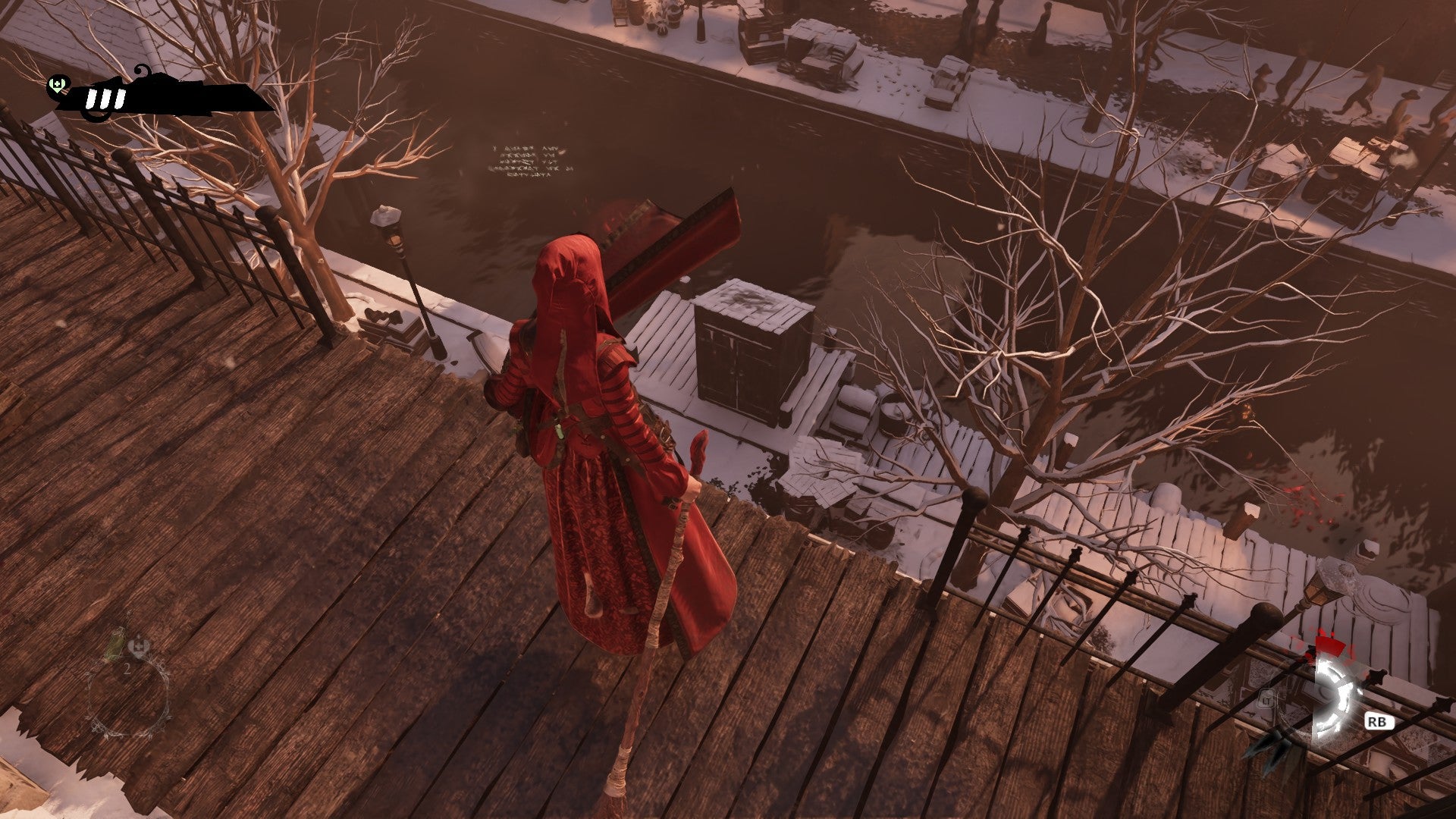
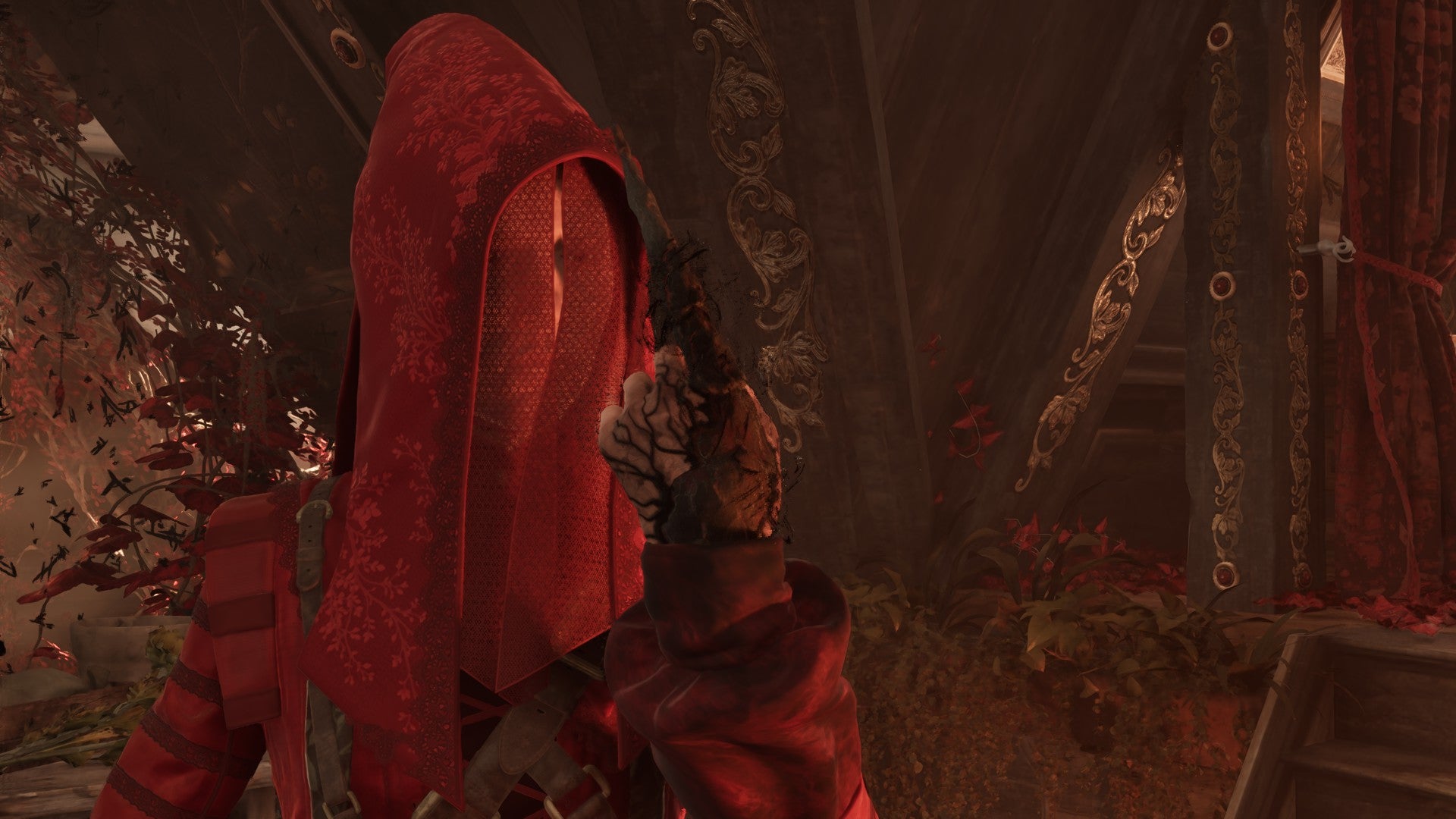
And 1666: Amsterdam initially looks a lot like Assassin’s Creed. This is potentially a problem, because that’s a really bad lens through which to view this game. But again, you play someone in the present who’s learning about someone in the past. You dance between time periods – three in this game: the present day, the 1990s, and the year 1666. In the 1666 part you play someone in a hood that hides all but the surly curl of their lip, and that person is tasked with tracking down various targets in the city and getting rid of them. That sure sounds like Assassin’s Creed!
But in fact things are very different. I’m going to focus on the 1666 part here because, from what I can tell, it’s both the main event and the most satisfying part. Noa, who you play as in this era, is a kind of assassin, perhaps, but she’s primarily a witch. And while she can gad about the waterways when nobody’s looking, and engage in staff-based combat when she really has to, she can’t mantle and wall-run like Ezio and all the rest of them. For the most part she has to keep her witch self concealed and move about Amsterdam meekly, avoiding any kind of scrutiny.
So rather than scaling towers and dropping out of the sky to put a blade through someone’s throat, she wanders the streets and listens to crowd chatter and slowly works out the identity of her next witchy target. In the first proper mission, this is a prosecutor of some kind who is known for being particularly tough on witches. With her perp IDd, Noa then needs to gather a bunch of evidence before the prosecutor can be unmasked and dispatched – cue boss fight.
Real talk: I am not enjoying combat in this game. With its jumps and flourishes it looks wonderful, but Noa is too delicate – a few hits and she’s gone – and her dash move is too useful for creating space. Together, these things mean that I avoid the more complicated options I have, which involve special attacks and witch-based triggering of environmental hazards, and I just lamp people with my wooden stick and then dash out of harm’s way. It gets me through most battles without too much annoyance, but it is the opposite of fun. For me, I think the diagnosis is this: failing is so arduous that I just want to work through the fights as conservatively as I can. In other words, the balance is off.
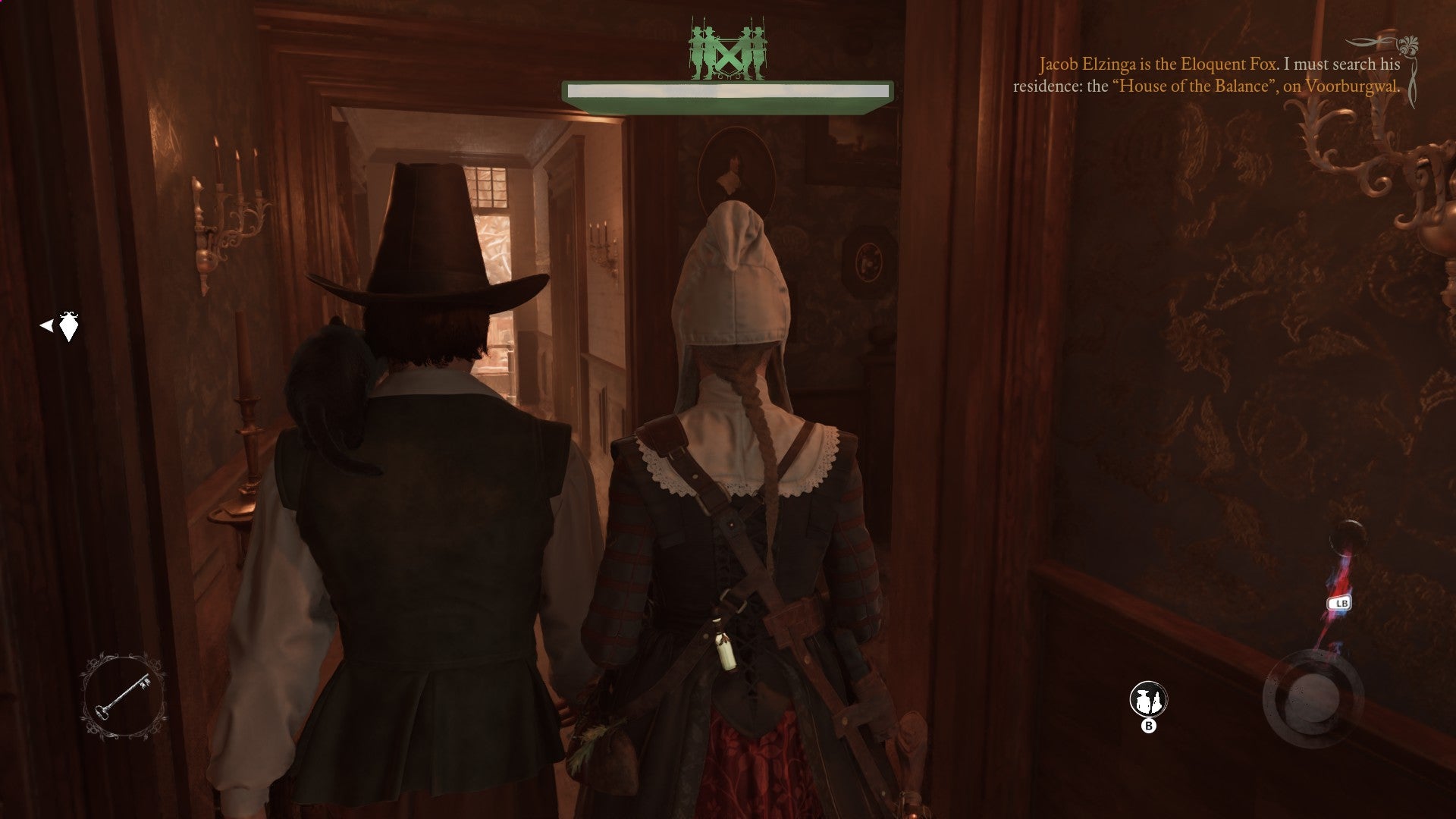
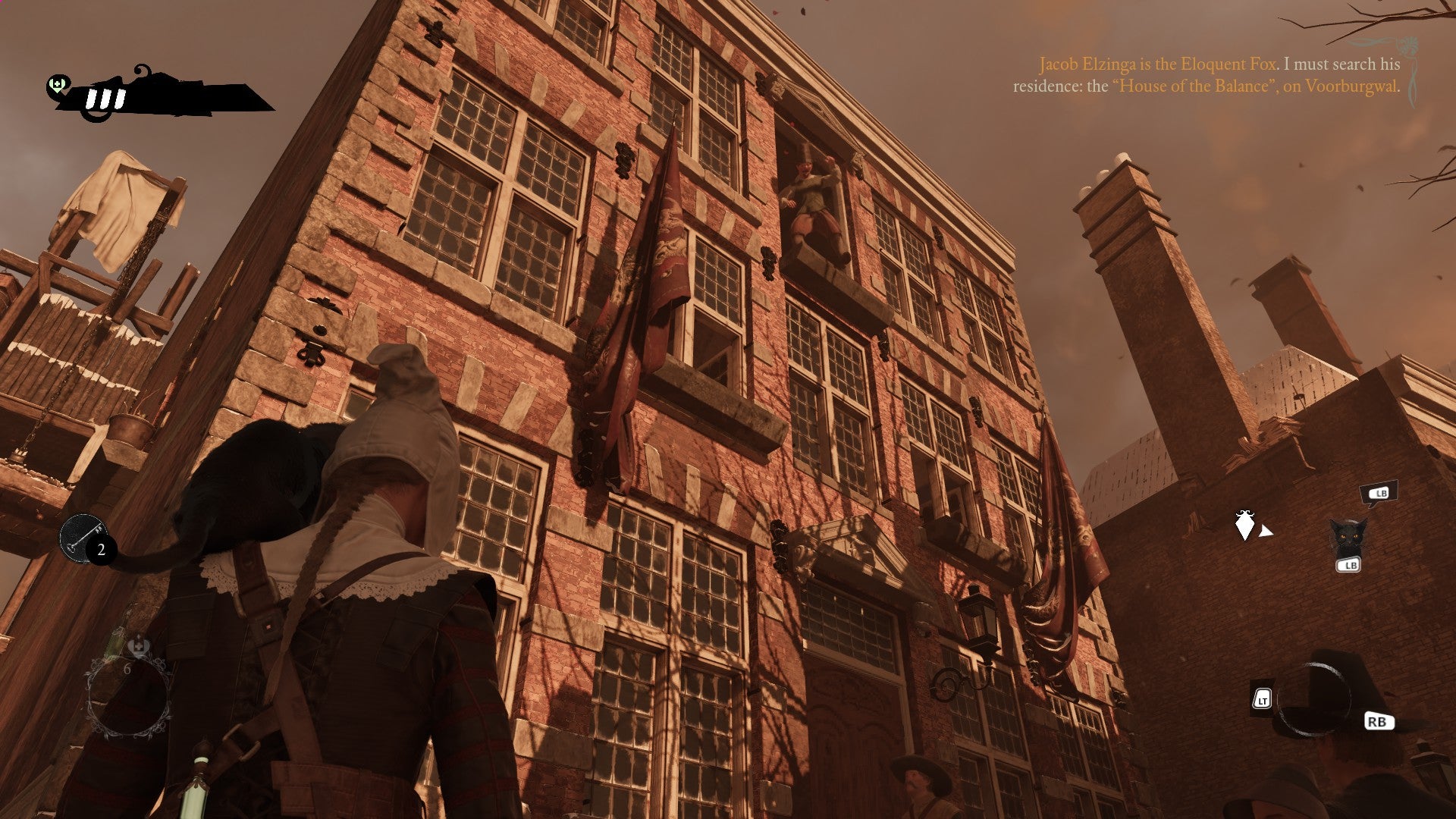
But the stuff in between that? This is the part of the game I think I may love. And this really is an inversion of Assassin’s Creed. Rather than a huge city to scramble over the outside of, 1666: Amsterdam gives you a single neighborhood of Amsterdam at any one time, but it seems to model the insides as well as the outsides of most buildings. It’s practically an immersive sim, albeit one that feels like it’s arrived at that genre unintentionally. This is that rare open world game where you can actually step through most doors and see what’s lying beyond them. All of this is delivered with wonderful lighting that invokes the spooky art of the Dutch Golden Age.
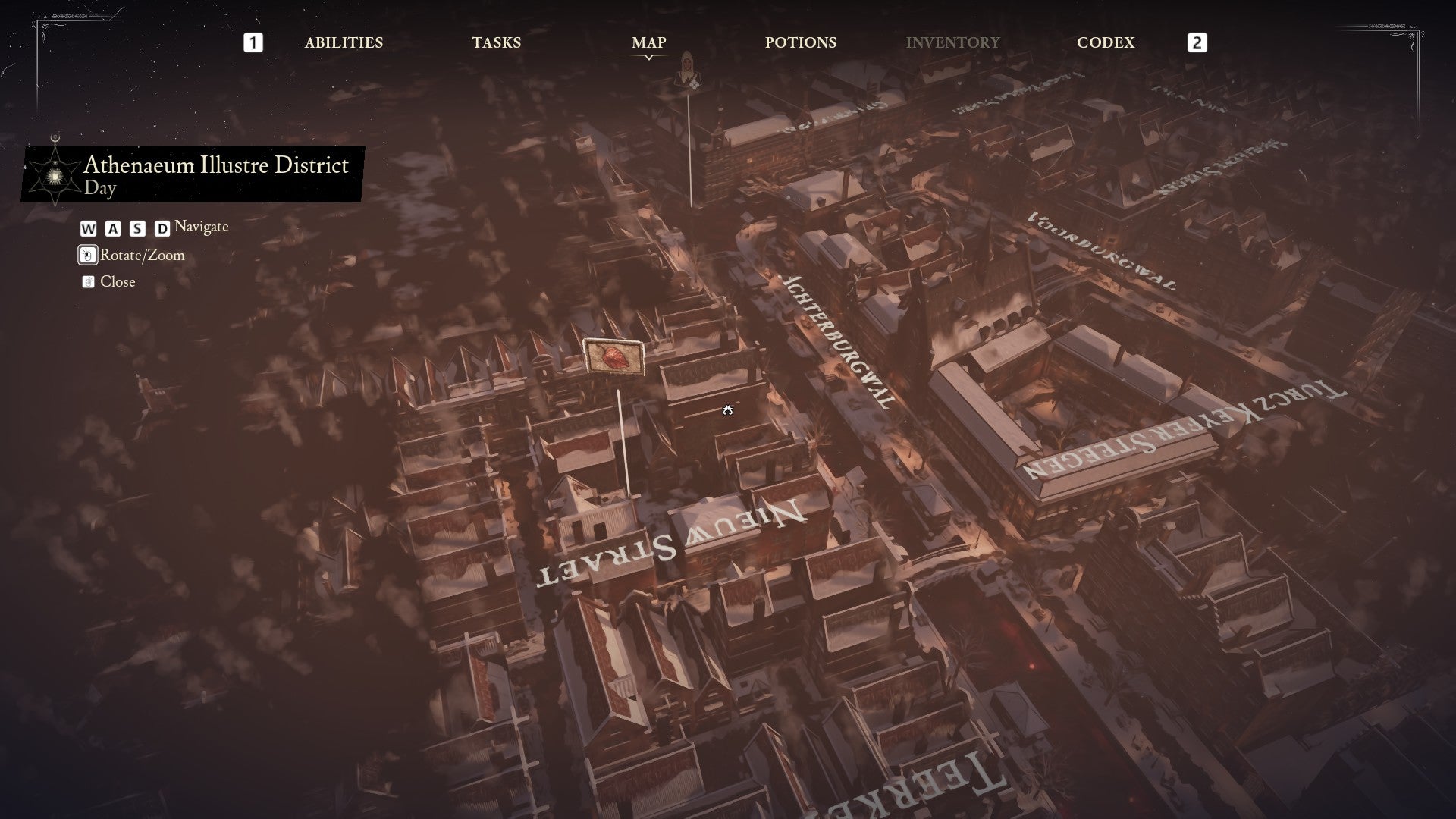
This sounds overwhelming: a whole neighborhood to explore. In truth, the game’s pretty quick to put you onto the correct target. Within minutes of leaving the house to uncover my foe, I had been directed towards a trial taking place and I was pretty sure I had my man.
Now I had to prove it, though. And that meant finding out where this prosecutor lived and then infiltrating their house to look for the things I needed to prove their demonic guilt. And so I discovered that a lot of 1666: Amsterdam is about sneaking through someone’s private residence and trying to open as many of its locked doors as you can.
The house I wanted into was both extremely large, being spread over several floors, and heavily patrolled by guards. Going in there as Noa was not an option. Instead, I could use my witch’s cat. This cat is where the game’s parkour-like elements come in. It can climb up gutters and jump between ledges. And because it’s a cat in a city filled with rats and other vermin, it can pretty much go wherever it wants. Pretty soon I had got the cat into the house I was targeting and I was casing the joint, threading through guards’ feet, locating the kitchen, the dining room, various bedrooms.
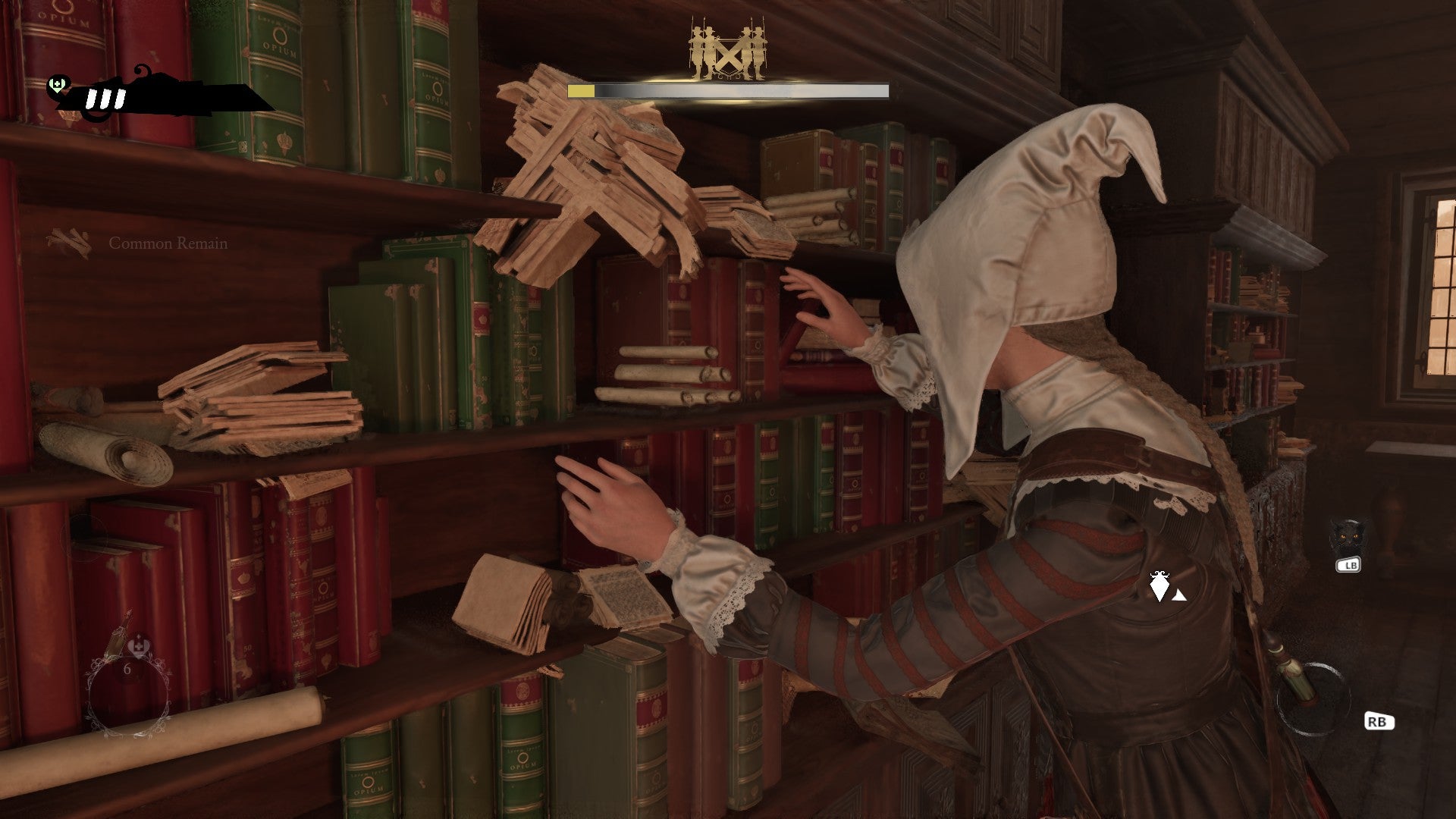
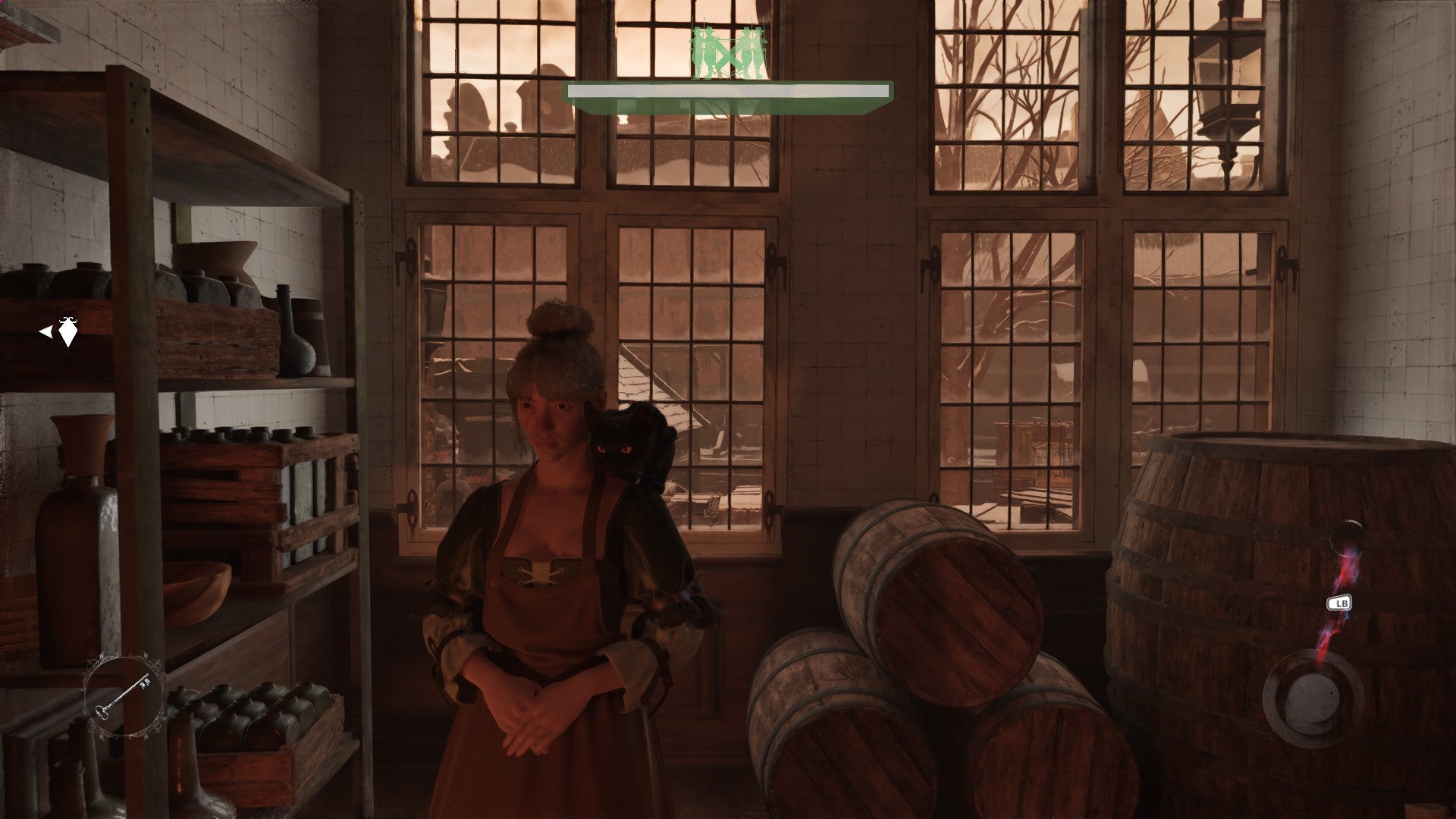
But vital rooms were still locked off. And at this point the game really becomes a spatial puzzle. Over time I realised I could leave the house via an upstairs window and move around the outside ledges a little to access some of the locked rooms, at which point my cat could unlock doors from the inside. Neat trick.
Even neater, I could possess specific guards – any that were visibly scared by the presence of a cat – and then use them to walk about the building and access new parts of it. Certain possessed guards could club other guards and get them out of the way. And one of them, I found, could actually invite Noa inside, taking me along with me, as it were, and then Noa could explore spaces and root through drawers and get the evidence she (I?) needed.
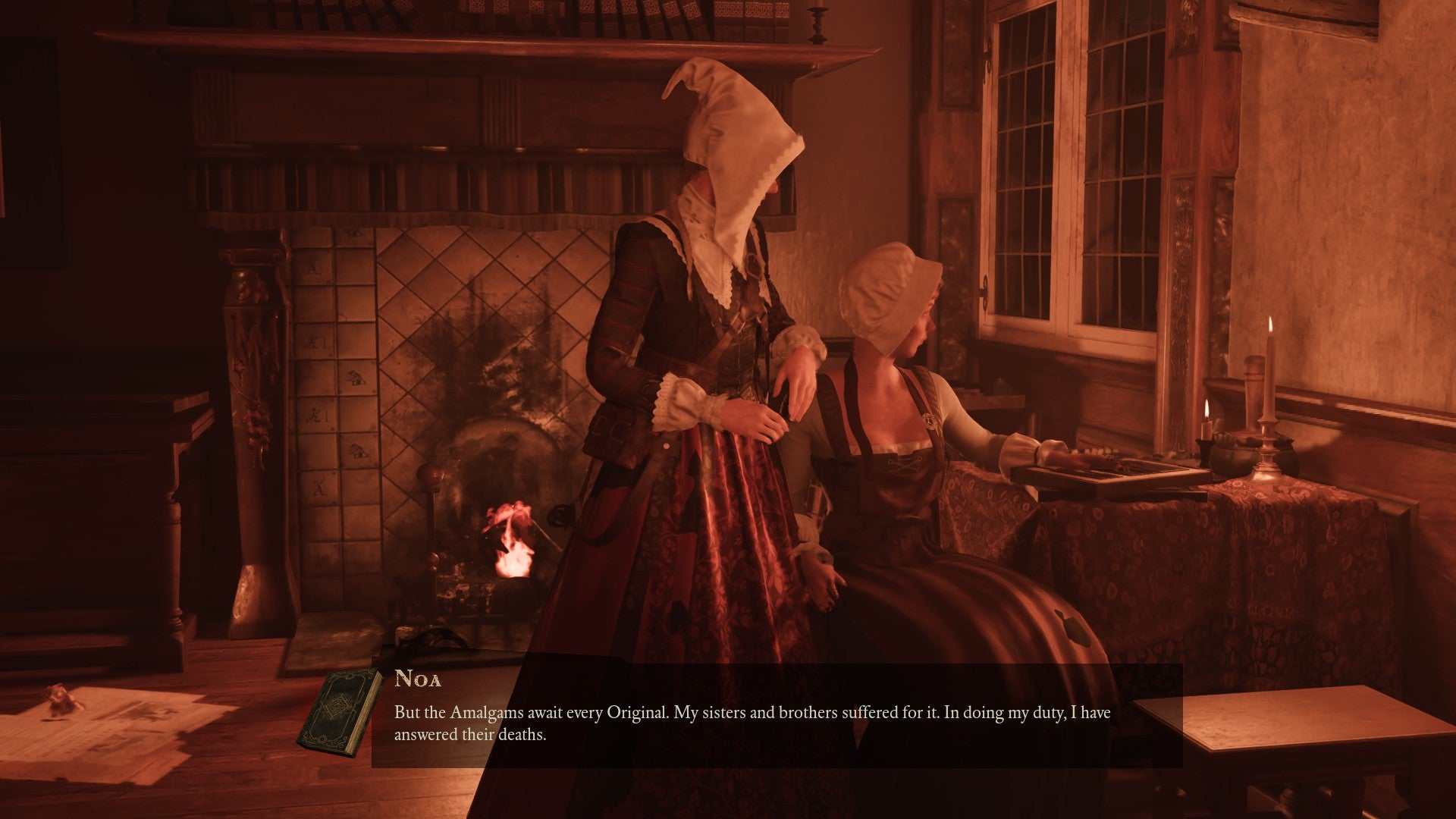
Now. This is very complex, and it’s also a bit silly. A lot of big moments in the game are signalled by a stately Dutch person having a massive scrap with a cat. But what I like about all this is not just that it’s a bunch of lovely illicit spatial challenges – who doesn’t like nosing through other people’s things in a game? What I like is that it seems to get at an interesting truth about the era that the game examines.
I’m not an expert on the art of the Dutch Golden Age, but I am a fan. And even if you’re a very lapsed fan, you’ll experience this game as a bunch of pleasant little instances of shocked recognition. The game opens with a collection of still lives, the paintings of everyday objects and fruits and vegetables that a master like Adriaen Coorte could really make sing. His bunches of asparagus look as vast and godly as alien space ships. His apples and pears look like dwarf planets floating undiscovered in the Kuiper Belt.
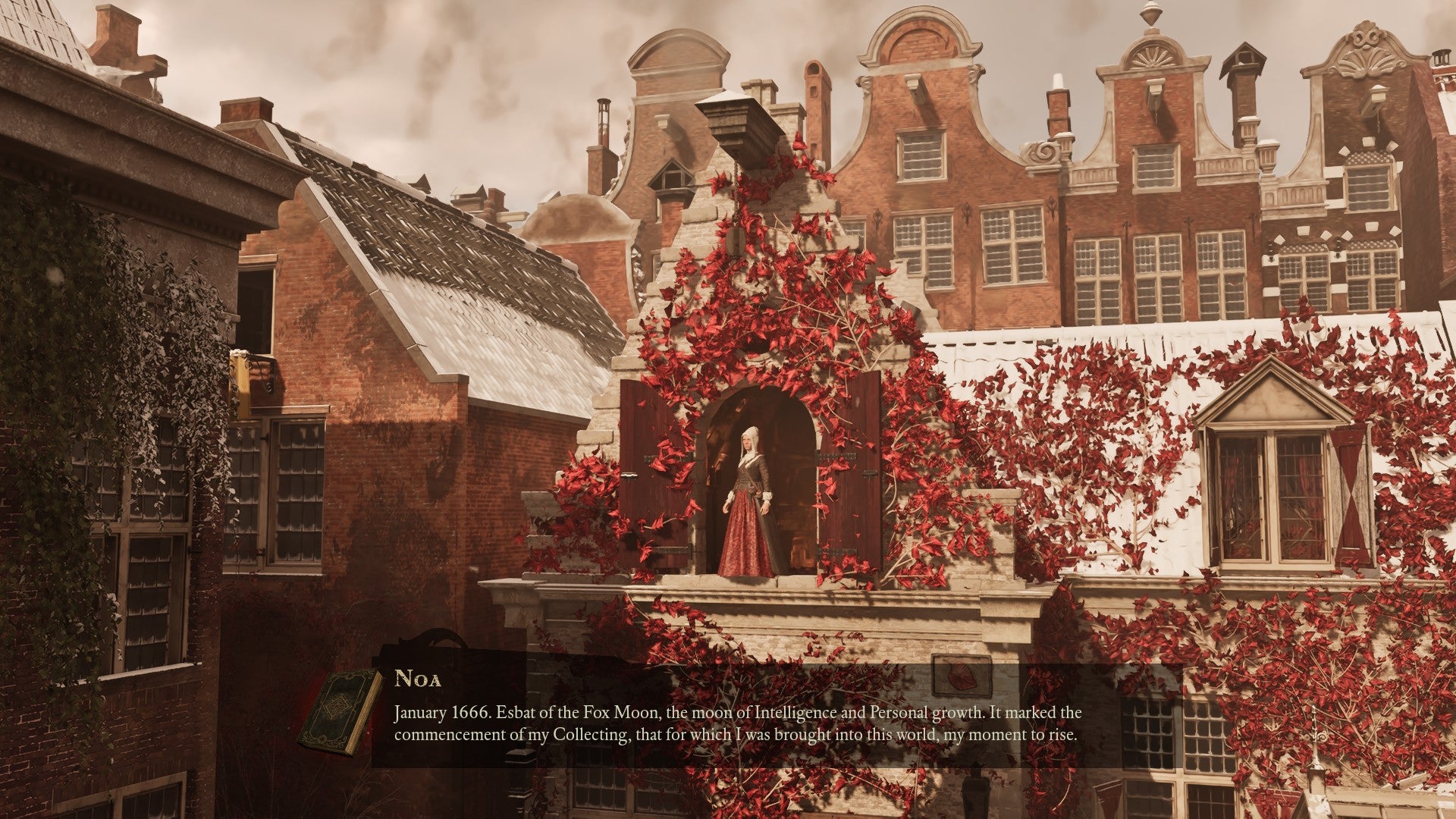
And then you’re in Amsterdam itself. The complex windows. The red brick. The little arches and doorways. You only need to see a handful of Vermeers or Rembrandts to know how lovingly this stuff has been observed. I walked 1666: Amsterdam and I was in a permanent flashback for a life I had never lived, but had only experienced through oil paintings.
But here’s the thing. My limited understanding of one of the real breakthroughs of Dutch art is that this prosperous country – prosperous for some deeply awful reasons, obviously – was one of the first to really turn art inwards. People like Vermeer stayed in their houses for the most part and just painted what they found there.
These are great artists of material culture, and they spoke to a time of merchants and traders. They spoke to a time where your home and its contents were clues to the puzzle of who you truly were – or who you wanted to present yourself as, at the very least. (This goes back a few centuries to van Eyck, incidentally. And van Eyck, to use a bit of art history jargon, is the absolute freakin’ business. When the zombie apocalypse finally comes, you’ll find me in the National Gallery trying to ease his Arnolfini Portrait out of an open window.)
Marry this art to a game about poking through other peoples’ houses and there’s something there that I think is really harmonious. And there is something about Panache, too. This company makes audacious, overly ambitious games that don’t entirely work but also won’t leave my head at the very least. I didn’t love playing Ancestors, but I still think of it quite regularly when one of its ideas strikes me as being intriguing or under-explored elsewhere.
And similarly I was in the Wallace Collection last week when a friend and I stumbled across Pieter de Hooch’s A Boy Bringing Bread. We were both captivated by this scene, which uses a series of rectangles to recreate the interior of a Dutch household where a child has come to the door and is being greeted by a woman. Inside the house you sense a cool, spare elegance. A nearby chair has a cushion on it, and art hangs from the walls. But out through the door you can see a stretch of tiling, an arch, and another house across the street, where another figure, perhaps the boy’s mother, is waiting for him.
It’s one of those paintings that opens out the past and encourages you to imagine what it would be like to step onto its streets. And in 1666: Amsterdam, you can kind of do that.
A copy of 1666: Amsterdam was provided for this review by Panache Digital Games.