Nvidia’s gen-AI-powered, graphics-changing DLSS 5 tech has been tested and it really does take a heavy toll on a game’s frame-rate. There was suspicion of this last week, ahead of DLSS 5’s debut implementation in NBA 2K7, and now it’s been properly tested, the performance toll has been confirmed. The experts at Digital Foundry declared it “super, super heavy”.
Digital Foundry highlighted an approximately 40-60 percent frame-rate difference in NBA 2K7 when DLSS 5 was turned on. A topline GeForce RTX 5090 card running the game in Ultra settings at native 4K resolution dropped from 128.4 FPS to 62.7 FPS, for example. Even an RTX 5060 running Ultra settings in 1080p dropped from 72.8 FPS to 42.3 FPS.
“This is super, super heavy,” Digital Foundry founder Richard Leadbetter said, “but it’s also running on the entire RTX 50 series stack including laptops, which I didn’t anticipate.” And he added: “That’s couched by the fact that, compared to a triple-A colossus, this is a relatively light game by comparison, so that has an impact.”
To see this content please enable targeting cookies.
The primary point of performance discussion was around “frame-time cost”, which is a relatively fixed cost with DLSS 5, apparently. This varies from 8.2ms to 13.7ms depending on the graphics card and resolution being used. “Eight milliseconds of processing time at 4K on a 5090: that’s mega expensive,” Leadbetter said, “let’s put it this way.”
DLSS 5 was criticised ferociously in March when it was announced for using a gen-AI-powered “neural rendering” to alter the appearance of characters in games. Digital Foundry’s John Linneman was particularly outspoken against this aspect of it, so it’s interesting to see him be impressed by NBA 2K7’s “very, very subtle” implementation here.
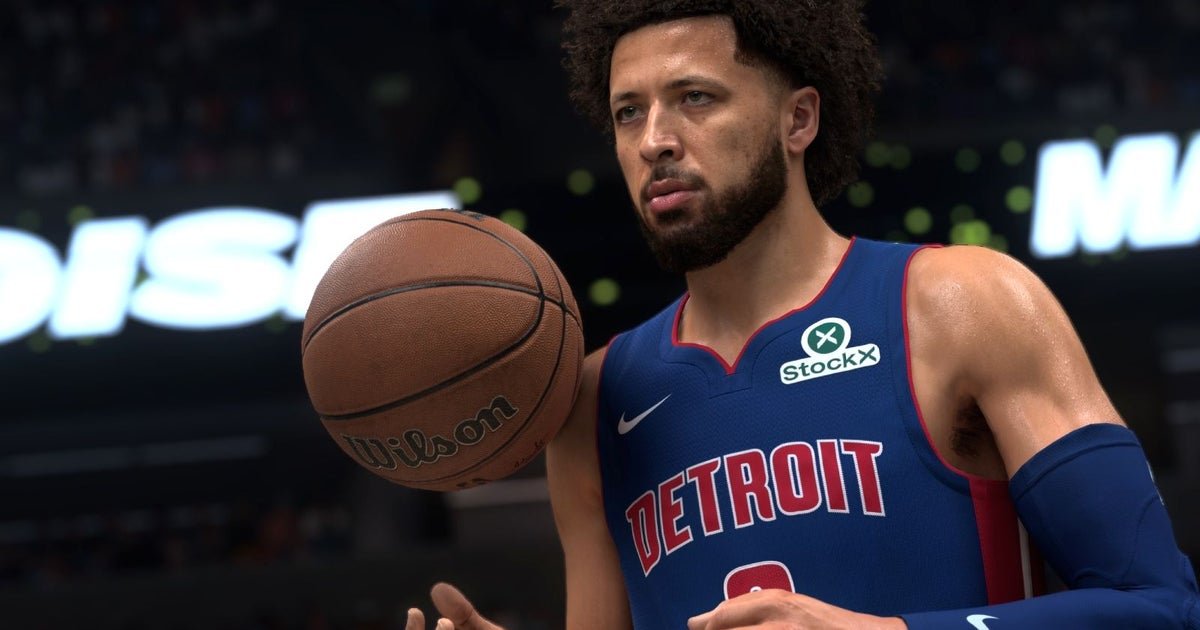
“It actually works pretty well, I would say,” Linneman said, highlighting the effect DLSS 5 has on crowd lighting and on a player’s jersey, adding a kind of drop-shadow depth which wouldn’t be there otherwise. And that’s it; there’s no character textural alteration.
“I felt like this was pushing back against what we saw in March,” Linneman added, “which was just wholesale, massive changes to the way games were looking, to the point where it almost felt like you had lights being added from places where logically there would be no light and stuff like that. And I didn’t really feel like that with NBA, so it was a convincing example.”
But, as he later pointed out, “It just seems like a really expensive way to add nice lighting detail into the image,” even if “it doesn’t seem as crazy as it first sounded”.
The Digital Foundry video showed footage of NBA 2K7 running with DLSS 5 on, as well as glimpses of the tech modded into games like Final Fantasy 7 Rebirth, Monster Hunter Rise, and Starfield. The team’s general thoughts were this was a first attempt at a technology that will likely improve in time, which tallies with Nvidia’s pledge to keep improving performance, though there’s obviously concern about how it will develop from here.
It’s a confusing prospect for DLSS, which has until now been a technology that’s improved performance in games by lowering the native resolution and then upscaling the image. This DLSS 5 development is the first time it’s attempted something otherwise, and perhaps this signals the future for it going forwards. DLSS 5 is currently only available for 50-series GeForce cards and only officially in NBA 2K7.