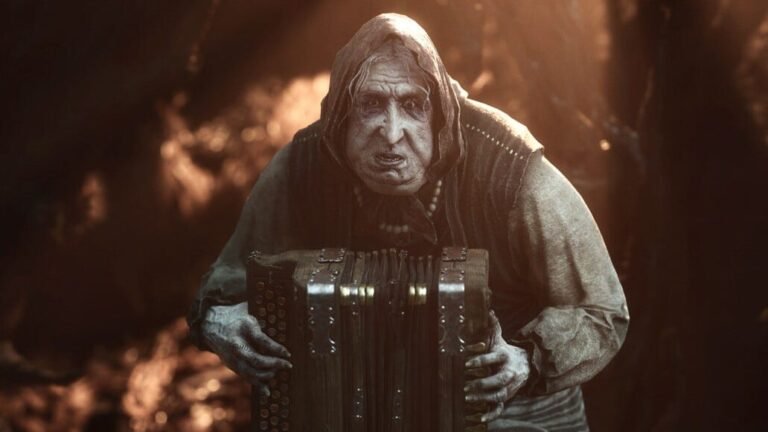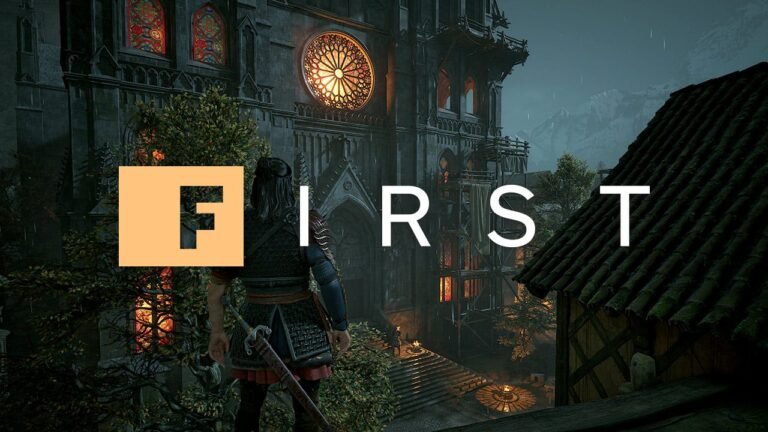
Castlevania Belmont’s Curse is a grand return to the series’ platformer roots. Developed by Konami and Evil Empire, it’s a gothic cathedral built with new material, upon the strongest of genre foundations. In the few hours I had to explore the game’s opening act, I was quickly thrust into the classic Castlevania experience – battling against various enemies with a repertoire of weapons and magic – but there are some bold twists here that help differentiate this game from its ancestors.
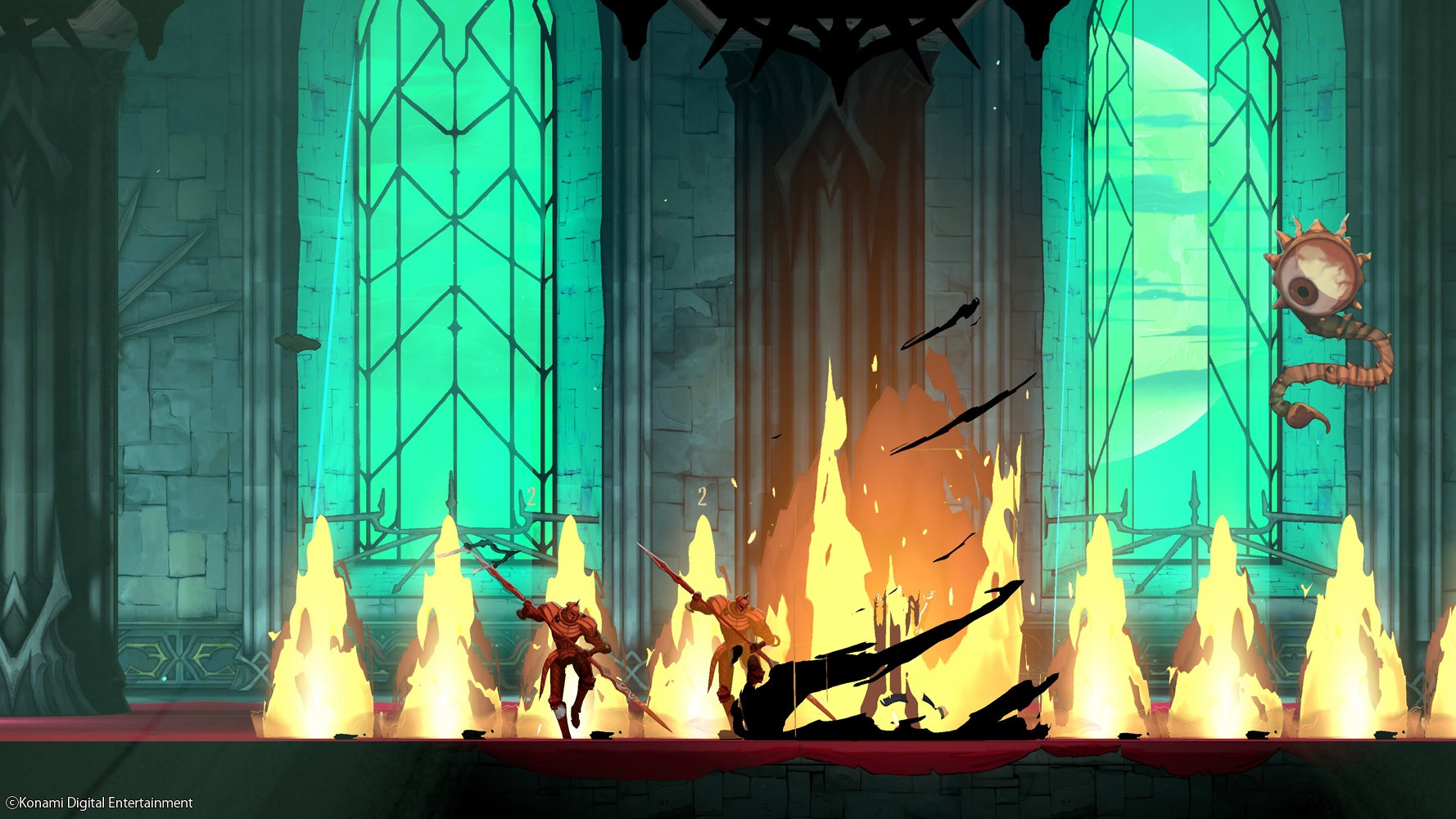
Likewise, Castlevania Belmont’s Curse’s visual stylings struck me immediately. The game is rich with colour. Each major region – of which there were three in the demo I played – was distinct and gorgeous. The game would play with dark wine reds and earthy tones to present a Paris overrun one hour, then vivid greens and blue water caustics the next.
The good news is navigating these landscapes was a joy as well, courtesy of Rose Belmont. A new initiate into the Belmot family of vampire hunters, Rose occupies the middle-ground between her combat savvy father Trevor Belmont and her mystical mother Sypha Belnades. Rose can slice and dice ghouls just like her (now absurdly handsome) dad, and thanks to a set of magical tarot cards left behind by her very dead mum, she can sling spells too.
Combat in Castlevania Belmont’s Curse was punchy and immediate. Blows with melee weapons crash into enemies with a cathartic kick. Movement – like combat – is tight and responsive. You can slide behind enemies and deliver devilish combos that look, sound, and feel just right. Even clashes against menial monsters are hard to skip as a result; Belmont’s Curse is a joy to play.
The game throws new weapons and spells at you as you progress, quickly expanding your arsenal with distinct weapon types that alter how you approach moments of action. The sword, available straight away, felt like an introductory tool that gently pushed me to learn the ins and outs of how the game works, whereas other arms allowed me to tailor the pace and strategy of fights. I love me a greatsword, and Belmont’s Curse has a real whopper. Quick clashes were disposed of in favour of brutish blows that required a slower approach in exchange for overwhelming damage output. If you like things faster, a pair of brawler’s gauntlets push up close for fast strikes and aerial combos. For those who play defensively, a built-in horizontal charge present with the short sword and shield is a place of comfort.

This arsenal on its own would make Belmont’s Curse a likeable action game, but these weapons can be improved with relics that further morph your play style. Small modifiers, such as a damage boost when at full health, further shift how each fight should be tackled. In prior games they were typically toggled on or off, but here you can construct builds that subtly alter your approach to challenges. Each discovery you obtain through exploration is a potential new loadout to play with.
Magic, too, is implemented with deftness by Konami and Evil Empire. You start with one tarot card unlocked, a basic spell which grants a ranged projectile. However, by defeating bosses more are unlocked, and each can be modified through the completion of specific challenges. For example: killing off ten enemies in a single cast. Unlocking many of these seemed impossible during the short span on the build I played, but nonetheless it adds further depth to a combat system that is bountiful when considering all these possible tweaks. It’s also a more deliberate evolution on upgrade systems found in previous entries in the series, one that’s more deliberate, and an example of an innovation this game brings to Castlevania.
Beyond the combat, Castlevania Belmont’s Curse has a movement system that acts not only as an enjoyable tool in that combat, but also a bridge between encounters that’s exciting to cross in itself. The keystone holding it up is the whip, which is used both to navigate the environment and zip to enemies around you. Again, a brilliant new idea that feels like an interesting concoction that helps Belmont’s Curse stand out. Whip mobility is a yet another example of how some bold new ideas helps make this game feel like a step forward for the series.
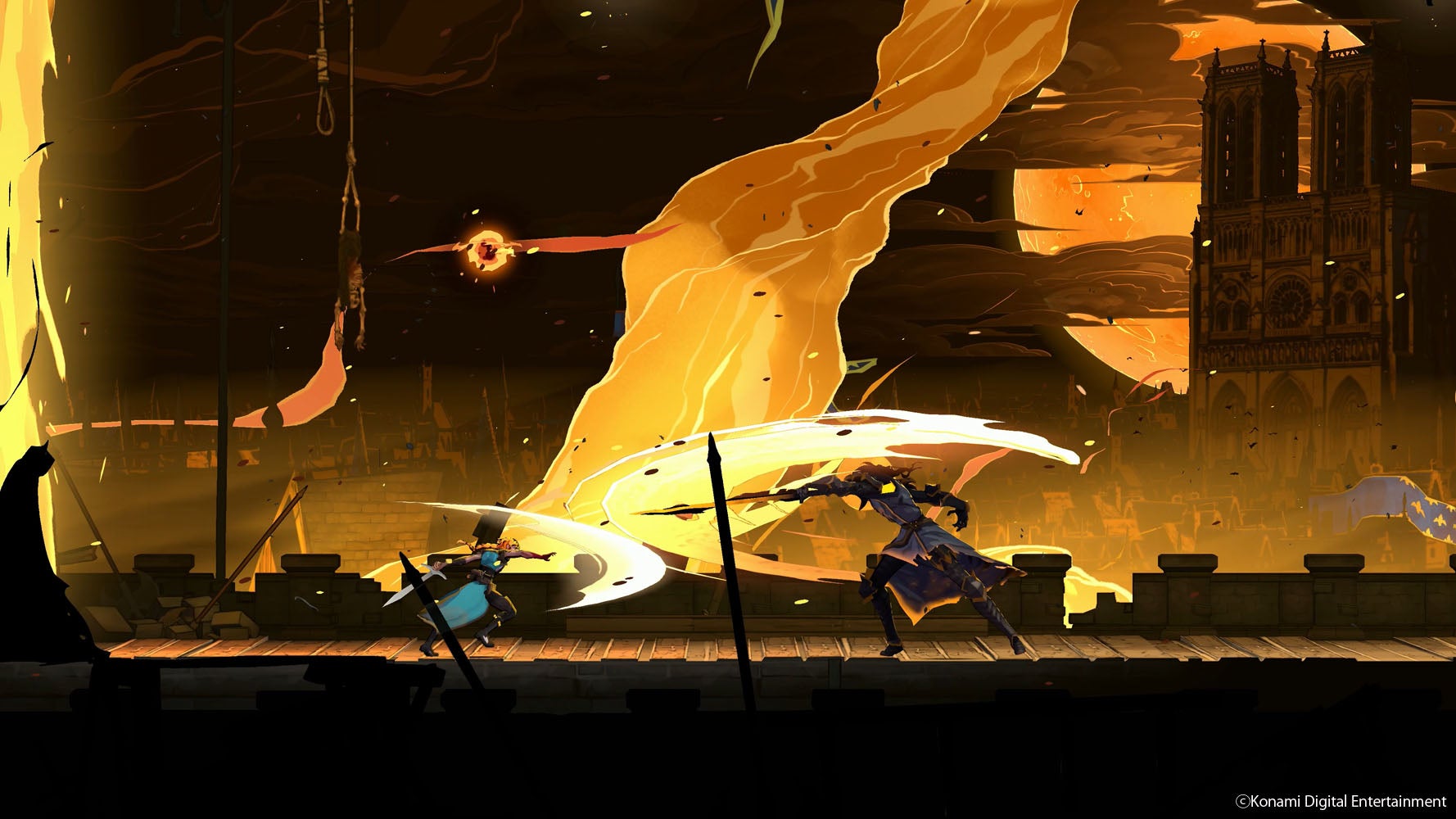
Like with the fighting, controls are responsive, and with a little bit of practice navigating fraught battles and perplexing puzzles became a real highlight. Propelling myself towards enemies before striking them with a powerful aerial blow never lost its lustre, while the challenging acrobatics required to claim certain relics and character upgrades was a morish delight in and of itself. In the right hands Belmont’s Curse is a game you can fly through, and it’s at these moments, when you precisely fling yourself through grapple points and dance through enemies, that it shines the brightest.
Like all good action platformers of its ilk, Belmont’s Curse is sprinkled with hidden treasures. Treasure chests locked behind daunting fights or complicated trials of mobility were few, but a joy to track down. Boosts to your health and magic metres can be found, as can statues packed with XP. You can even find NPC ghosts who will provide hints for upcoming bosses. Konami and Evil Empire understand that great games in this genre don’t just make the player feel drawn to undiscovered corners of the world, but reward those who retread their steps to squeeze the map dry of its loot, be it boons or delicious wall chicken.
What struck me most in even this brief session with Castlevania Belmont’s Curse was a sense of deliberacy in its design. The game will show you a treasure just out of reach as you progress, and through this slight flash of its ankle plant a seed in your head, that returning to older zones is a habit worth nurturing. It will introduce a new enemy and force you to tackle them with the tools at your disposal, then soon after provide a new toy that works well against them.
The same is true for its action. The classics in this genre are almost like puzzle games, with each enemy possessing crucial weaknesses that can be exploited. Positioned in specific spots, paired with other nasties that compliment their downsides, they pushed me to think on my feet. The consequence is that I never once felt a death was undeserved, and moments when I overcame a particularly oppressive fight felt like a victory well-earned.

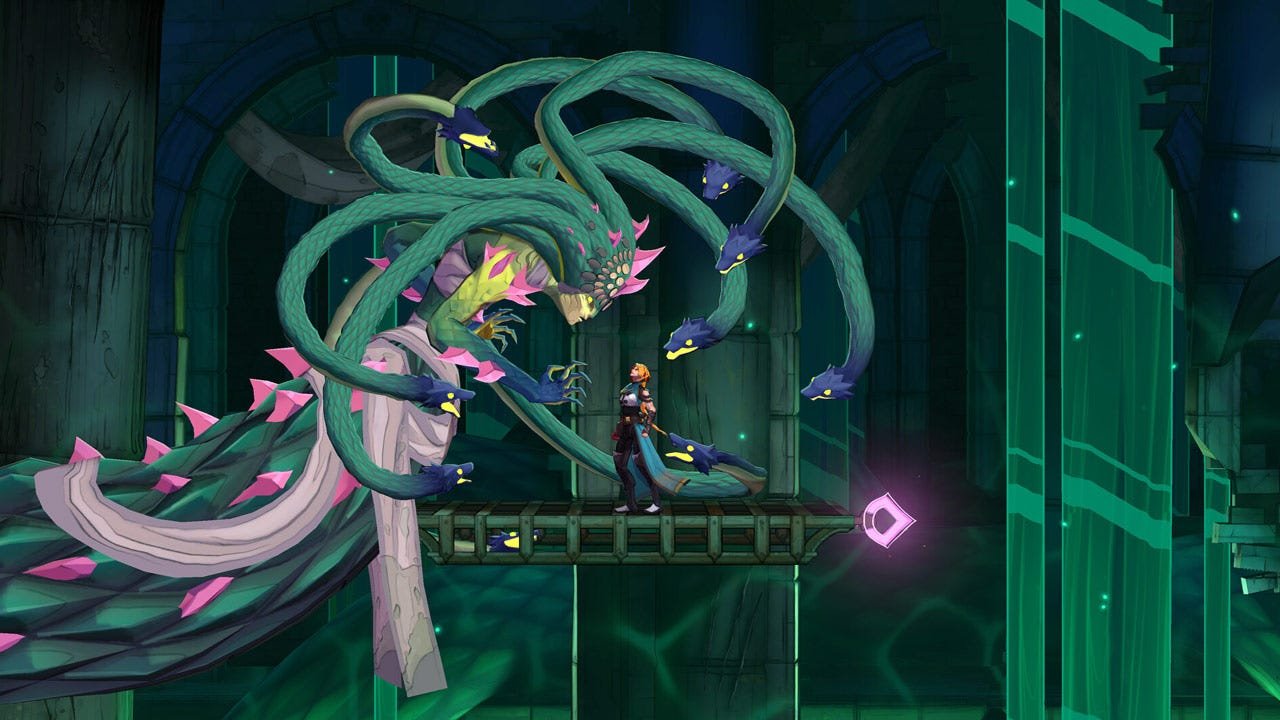
This to me culminated in the opening act’s third boss: Medusa. A returning favourite, she’s a leviathan possessing a short-ranged flurry attack, the ability to drop boulders on your head, a petrification attack that stuns you if you’re facing her, and an arena-wide laser blast that deals massive damage.
I don’t want to foster any hard feelings, with peers sitting beside me as I played, but I found it very interesting how we tackled this boss totally differently. They ran in close and constantly chased, chipping away at her health when they could and dashing behind cover to avoid the deadly lasers.
I, on the other hand, explored a bit and found a spear weapon nearby. This weapon allows you to throw ranged attacks from a great distance, and flips the boss on its many heads. I could avoid chasing Medusa entirely, and instead focus on lobbing spears and facing away from her stare. Through exploration and some thought, the puzzle was solved and Medusa quickly fell, making me the first in the room to beat the build (not that I’m boasting or anything).

I do have some small concerns. I mentioned earlier that XP statues are one example of hidden treasures you can find, and it’s true that XP is something you gain while killing enemies and breaking these statues. To tell the truth, I didn’t feel the impact of this at all. Most of my power seemed to come from the weapons, magic, and relics I used rather than some imperceptible boost to my damage. It’s possible this system bears fruit within the full game, but its absence wouldn’t have been felt within the section I played, and as such I can only speculate on how it’ll impact the full game experience.
Then there’s the question of its difficulty curve. Aside from a few deaths to a boss here and there, I didn’t run into anything that felt especially challenging. Again, perhaps a limitation of the scope of this preview, but nonetheless something I feel is worth mentioning. As long as you go into fights with your eyes open and deny the temptation to autopilot yourself through menial fights, I didn’t run into anything that felt truly intimidating, even in optional rooms where treasures were hidden.
Those are my small troubles with Belmont’s Curse. If you got the impression that I came away thoroughly impressed by Belmont’s Curse you’d be correct. Evil Empire and Konami’s collaboration has – assuming the level of quality present in the game’s opening hours persists all the way through – created something superb here. A combination of Konami’s decade’s old expertise with this series and the knowhow of what makes a good Castlevania – plus Evil Empire’s bold new approach to designing a game of this genre – has manifested in a game of superb quality. As long as there’s no unforeseen fumble, it’s absolutely a game worth trying out later this year.
Castlevania Belmont’s Curse was previewed at a press event hosted by Konami.