Earlier this month, Sony announced that it’s ending manufacturing of physical PlayStation discs beginning January 2028. The shocking decision means future releases, both from Sony Interactive Entertainment and every other publisher on the planet, will only be available in digital formats.
This is concerning news for many people, including savvy shoppers sensitive about price. One need only examine historical evidence to see how Sony’s decision could make games more expensive in the future.
Dutch website Tweakers has done exactly that, publishing a detailed report looking at historical prices for 16 first and third-party PS5 games. The report compared the average price at retail with that of the PlayStation Store. It also looked at how well PS Store promotions compare to retail prices.
To begin with, the data is based on Tweakers’ own Pricewatch service, which tracks and compares prices across retailers in the Netherlands, alongside Dutch PS Store prices from PSprices. The data goes back four years, and doesn’t take into account pre-order discounts. Tracking starts 8th July 2022, until the present day, though some of the games were released earlier than that.
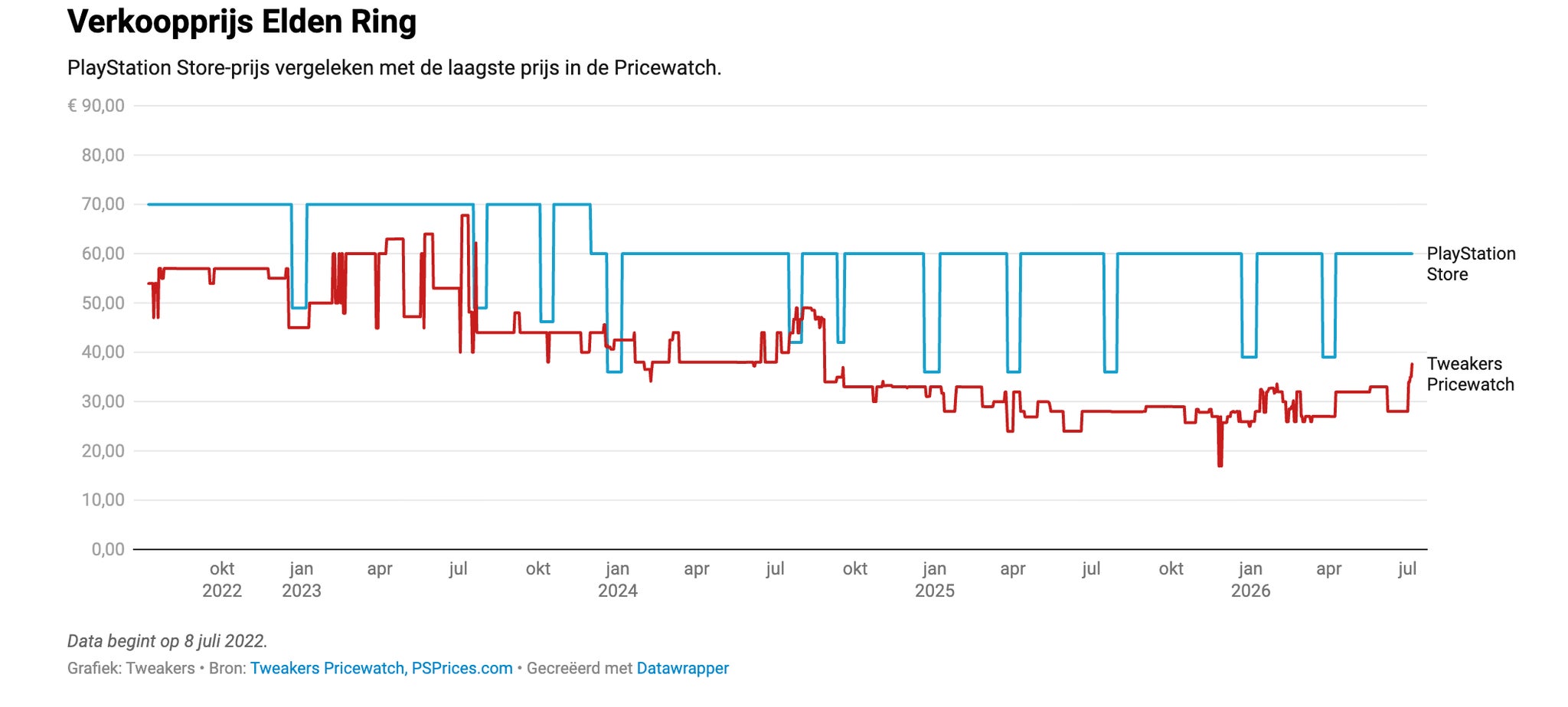
The first takeaway is that a game’s price will typically drop over time at retail, but the same is not true for the PS Store, where games can still be found at their full launch prices years after release. That’s assuming they’re not included in any ongoing sales.
When the PS Store runs a promotion, prices drop, but they shoot back up to where they were afterwards. Prices fluctuate more often at retail, according to the report, meaning they don’t follow the rigid structure of Sony’s own digital store. Third-party games sometimes receive permanent price drops on Sony’s store, but again, it’s not very common.
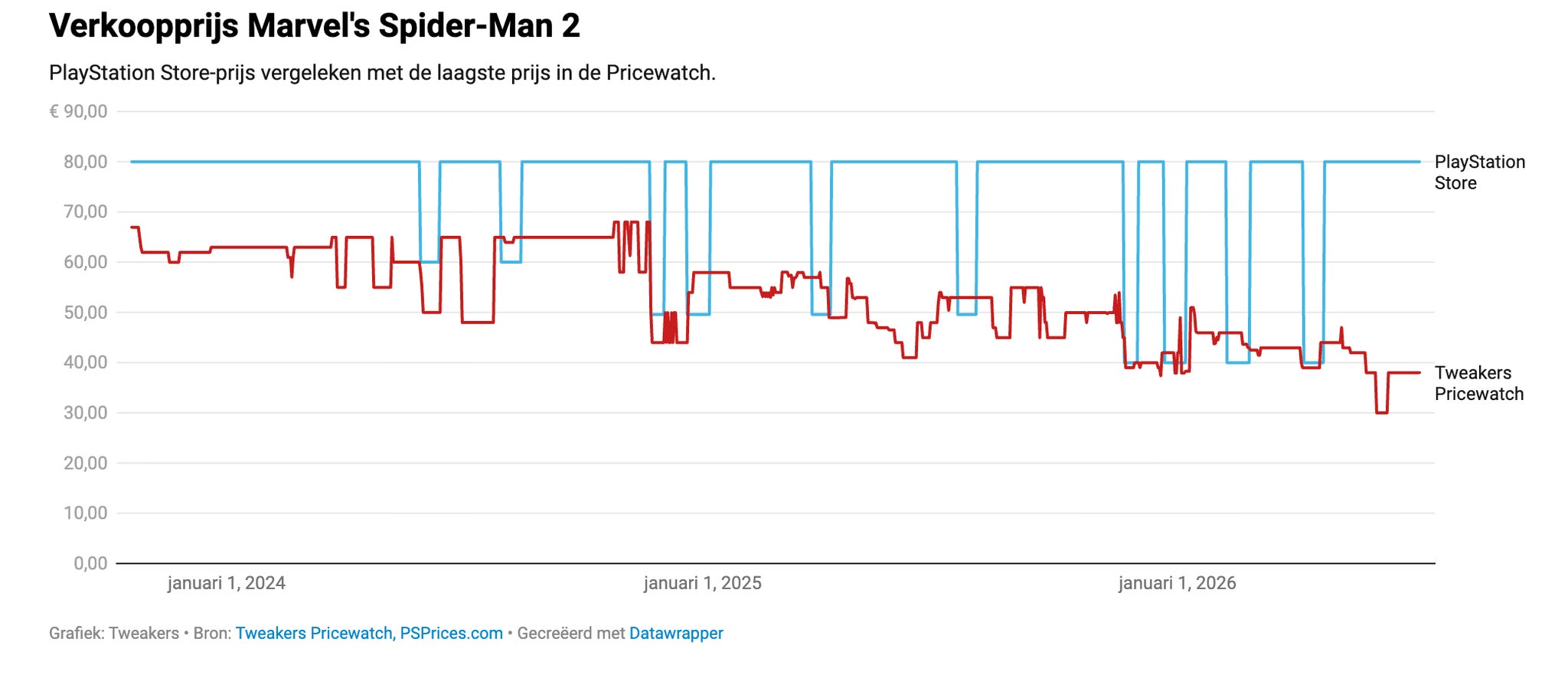
This is even worse for first-party PlayStation exclusives, which the report found to be “almost never cheaper than their physical counterparts”. First-party titles do go on sale but Sony almost never lowers their initial prices. Even older titles like Ratchet & Clank: Rift Apart are still at the price they launched at years ago. Of all the first-party titles in the survey, only Horizon Forbidden West has dropped its base price permanently, from €80 down to €60.
The PS Store price can be cheaper than retail, provided you check it during a sale, but as the report notes, you’re much more likely to find a given game cheaper at retail at various points throughout the year. “If you buy a PS5 game now, statistically speaking, the physical version is most likely to cost less,” the report points out. Another thing to consider is that when prices drop at retail, they tend to continue going down.
It’s worth keeping in mind that retailers will still be allowed to sell ‘physical’ games, but they will be code-in-box games or include vouchers. So while Sony’s decision unequivocally kills second-hand game sales, because there’s nothing to resell or share, retailers could still compete on the prices of digital vouchers.
The decision to cease disc manufacturing has been poorly received. Hundreds of thousands signed a petition asking Sony to revert its decision, while the company’s social media accounts – and notably, its 2013 PS4 anti-DRM video, have received millions of new comments either mocking Sony or lamenting the death of physical PlayStation media.
According to many of the experts we spoke to following the news, retailers and price-sensitive customers will be the biggest losers. Setting aside the total market control this will give Sony, the financial incentives behind that decision are quite clear: Sony gets to keep more of every game sale.
According to some calculations by Bloomberg reporter Jason Schreier, the company stands to earn significantly more revenue per game sold. For a typical $70 game, it can be as high as 54 percent, and it’s 40 percent for a third-party game. That’s before you get into anti-consumer practices like dynamic pricing, which raise and lower prices for different people, and which further obfuscate the value of games.