As much as I like Assassin’s Creed: Black Flag, I cannot help but think the recently announced Resynced remake is a sign that the franchise is struggling to stay afloat, forever incapable of living up to the quality and cultural relevance of its first fistful of games. Black Flag was, arguably, the franchise’s last big win – the last to be beloved by nearly everyone, the last to still feel like a genuine event. And while Ubisoft could follow in the footsteps of Disney and give digital facelifts to their beloved classics in an attempt to re-capture Assassin’s Creed’s glory days, the developer will eventually run out of games to remake and have no choice but to take another stab at making an original game that can capture the magic of the Ezio era.
But what could that game be? What setting and story could win Assassin’s Creed universal adoration and avoid the mixed receptions of Odyssey, Valhalla, Mirage, and Shadows? News of its increasingly troubled development makes me doubt that it’ll be the medieval Europe-set witch trials of Hexe. But there is an Animus project that Ubisoft could draw inspiration from – Netflix’s recently announced Assassin’s Creed TV show set in ancient Rome.

Starring Sandra Guldberg-Kamp (Thalis in Apple TV’s Foundation adaptation) and Youssef Kerkour (the blacksmith in A Knight of the Seven Kingdoms), this show will reportedly take place in 64 AD, when Rome was ruled by the infamously cruel and unpredictable emperor Nero. More specifically, it’s the year of the so-called Great Fire of Rome, which destroyed more than half of the city while Nero – so the story goes – stood by and played his fiddle.
Though I have little faith in the TV show itself – one of the showrunners worked on the perennial disappointment that is Westworld, while the other will be coming from Paramount’s underwhelming Halo adaptation – I think this setting would make fertile soil for a game, capturing the series’ original spirit without relying on nostalgia bait.
Though Assassin’s Creed games take place all over the world, from colonial America to feudal Japan, no country or culture has been explored more thoroughly than Italy. But while we have seen Italy during the Renaissance – a historical period marked by renewed interest in Roman history and culture – we have yet to see it populated by the Romans themselves.
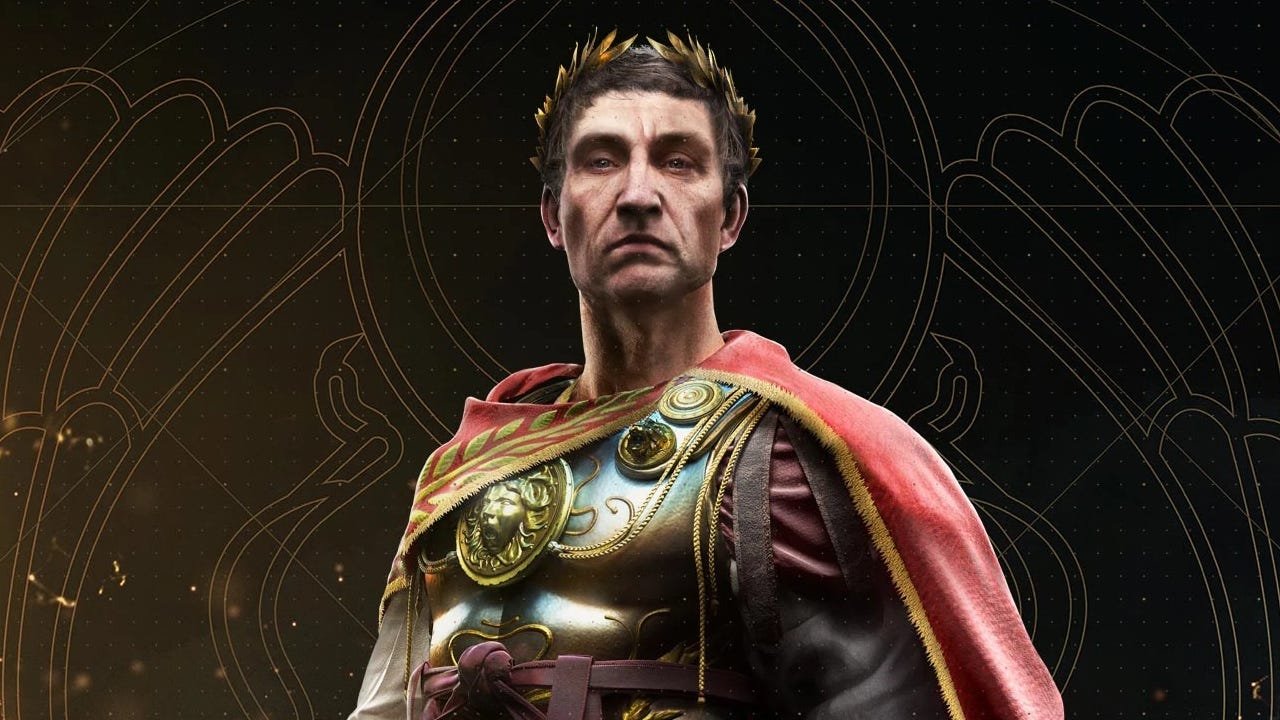
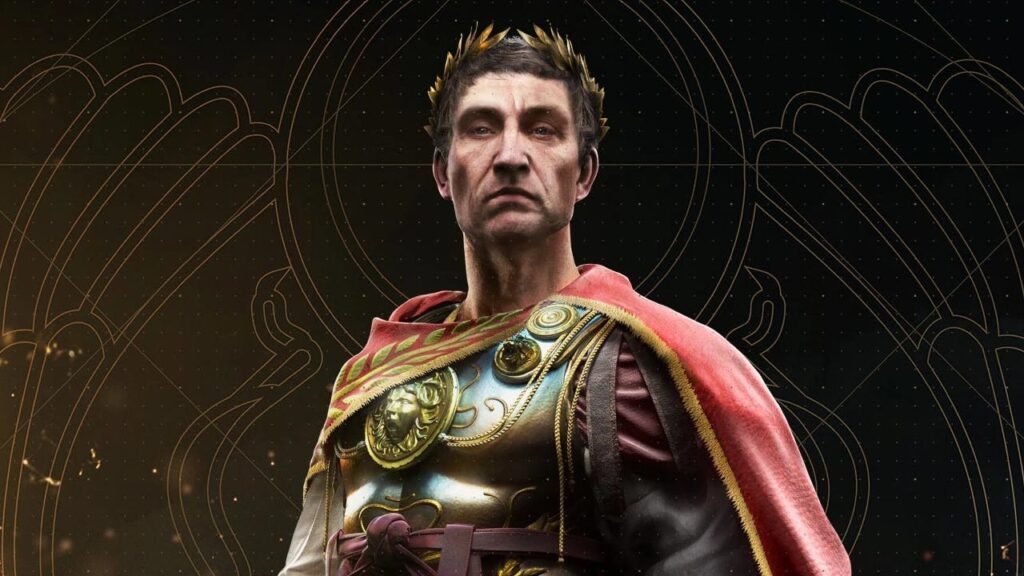
Origins gave us a brief glimpse of it by introducing us to Julius Caesar, the charismatic general whose rise to power spelled the end of the Republic and midwifed the birth of the Empire through his adopted son, Augustus. A game set during the reign of Nero, Augustus’ great-great-grandson, would more or less pick up where Origins left off.
A game set in ancient Rome would also give Ubisoft an opportunity to bring the city to live in ways it couldn’t in the past. Though Rome as represented in Assassin’s Creed: Brotherhood was widely hailed as one of the best open-worlds ever created at the time of its 2010 release, it cannot hold a candle to the Paris of Assassin’s Creed Unity, one of the few aspects of that game to receive near-universal acclaim.
To recreate ancient Rome, Ubisoft could take the famous Plastico di Roma Antica, a detailed scale model of the city at the time of Constantine I (early 4th century) and work its way backwards to the age Nero. Many famous landmarks that still exist today – including Trajan’s Column and the Colosseum – wouldn’t be there, as they were constructed by Nero’s successors.
In their place, though, Ubisoft could give us the many megalomaniacal architectural projects that Nero is said to have built, almost all of which are lost to time. These include the Colossus – a 120-foot statue in the emperor’s own image, mimicking the Colossus of Rhodes – and his Domus Aurea, a Golden Palace erected in the wake of the Great Fire. These would make for instantly iconic viewpoints.
Rumor has it Netflix’s Assassin’s Creed series will dive into the many conspiracies surrounding the Fire. Though many modern historians believe it was an accident, some ancient sources say that it was started deliberately on Nero’s own orders, to clear land for that aforementioned palace. The emperor himself famously blamed everything on the Christians, crucifying them as punishment.
Nero’s unstable reign and the mystery surrounding the Great Fire form a compelling backdrop for an Assassin-Templar-style conflict. At this time in Assassin’s Creed alternate history, the two groups of course went by different names: the Hidden Ones and Order of the Ancients. In Origins, we learn that dictators Caesar and Augustus were members of the Order, while Caesar’s republican assassins allied themselves with the Hidden Ones.

Based on these allegiances, it seems the Order would back Nero and the Empire while the Hidden Ones would fight for the Christians and the restoration of the Republic. That said, a video game set during this period could turn things around by having the player side with Nero.
This setup is not as crazy as it sounds. Despite his reputation as a bloodthirsty tyrant, there’s reason to believe that Nero was actually a fairly decent emperor. He lowered taxes for the working poor, banned capital punishment, and allowed slaves to sue their masters when mistreated.
He also didn’t play the fiddle while Rome burned – the fiddle hadn’t been invented yet, and he was in another city when the fire broke out, but rushed back to organize relief efforts as soon as news arrived. (When you dig into Roman history, it makes way more sense for the Hidden Ones to have sided with Caesar and Augustus rather than against them, but I digress).
Bottom line: the way we remember Nero today is likely the result of slander and propaganda, and a game set in ancient Rome could subvert our expectations by showing us a side of the emperor we haven’t really seen in pop culture before.
Then again, he did kill his own mother, Agrippina the Younger, and became increasingly paranoid after people conspired to kill him following the Great Fire. But instead of depicting Nero as an unhinged maniac from the very start, an Ancient Rome-set Assassin’s Creed could show his gradual descent from a troubled but well-intentioned ruler into the monster we now remember him as, creating a moral dilemma for the Hidden One we’d play as.
In my own opinion, the most compelling Assassin’s Creed games are those with stories that force the Assassins to question the righteousness of their own cause. Think Assassin’s Creed 3’s Connor debating with his father Haytham and falling out with George Washington after he learns the latter ordered Charles Lee to burn his village. Or – better yet – Edward Kenway charting his own course in Black Flag, staying clear of Assassins and Templars alike.
Regardless of who is allied with whom, a game set in Nero’s Rome would force both sides of the conflict to reassess their own beliefs. The side that supports Nero will come to regret doing so when the emperor loses his grasp on reality, while the side trying to kill him learns that his death – far from restoring the Republic – ushers in a year-long civil war that births yet another imperial dynasty.
Assassin’s Creed games are at their most immersive not when they’re devoid of bugs or packed with RPG elements, but when they tell an original story full of unpredictable twists and turns – one that not only takes players on a journey through history, but also through the life and struggles of a particular character.
Black Flag already did that with Edward, and sharper graphics and fewer tailing missions won’t make his game any more memorable than it was when I first played through it on the PS3. As it stands, I’d take a trip to ancient Rome over a second cruise through the Caribbean.
Tim Brinkhof is a freelance writer specializing in art and history. After studying journalism at NYU, he has gone on to write for Vox, Vulture, Slate, Polygon, GQ, Esquire and more.