“One thing we always think about a lot is how does our game open,” says Mike Fitzgerald, Head of Technology at Insomniac Games. “When you start our first Spider-Man game… you jump out the window and you’re swinging down the street. So what’s the version of that for Wolverine?”
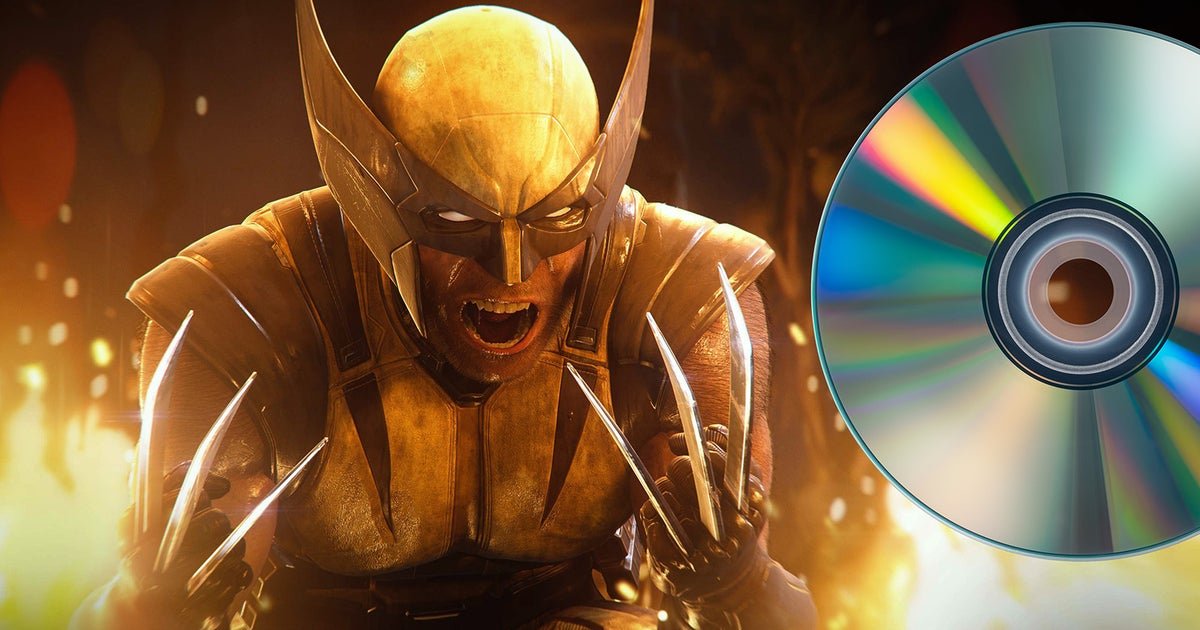
The answer to this – at least initially – is naked and afraid. The opening scenes of Marvel’s Wolverine see Logan in a feral state, running through the jungle before being subdued and rescued by a seemingly-benign Nathaniel Essex. Yet it doesn’t take long for the claws to come out. A quick flash-forward to the present day, and we find Wolverine on a rescue mission retrieving Essex from billionaire bad guy Bolivar Trask, entering the action by toppling backwards out of a helicopter. Two middle claws up while doing so, of course.
It’s exactly the kind of bombastic opening you would expect to find in a Wolverine game, and true to Insomniac’s words, you soon find yourself right in the middle of the fray, doing very Wolverine things. You hack and slash your way through enemies, leaping from victim to victim to shred them as quickly as possible. You’re introduced to Logan’s regenerative powers when he’s knocked down by a barrage of bullets – activating his second-chance ‘last stand’ ability with the help of some frenzied button-mashing. And before you know it, you’re sneaking through long grass to take down enemies, aided by Wolverine’s heightened senses – which give you a heads-up on enemy locations with glowing outlines and directional cues. It’s an introduction that’s cinematic, highly polished, and dedicated to getting you into the feeling of being Wolverine as quickly as possible. Though perhaps the question on many people’s minds is this: does being Wolverine actually feel good?
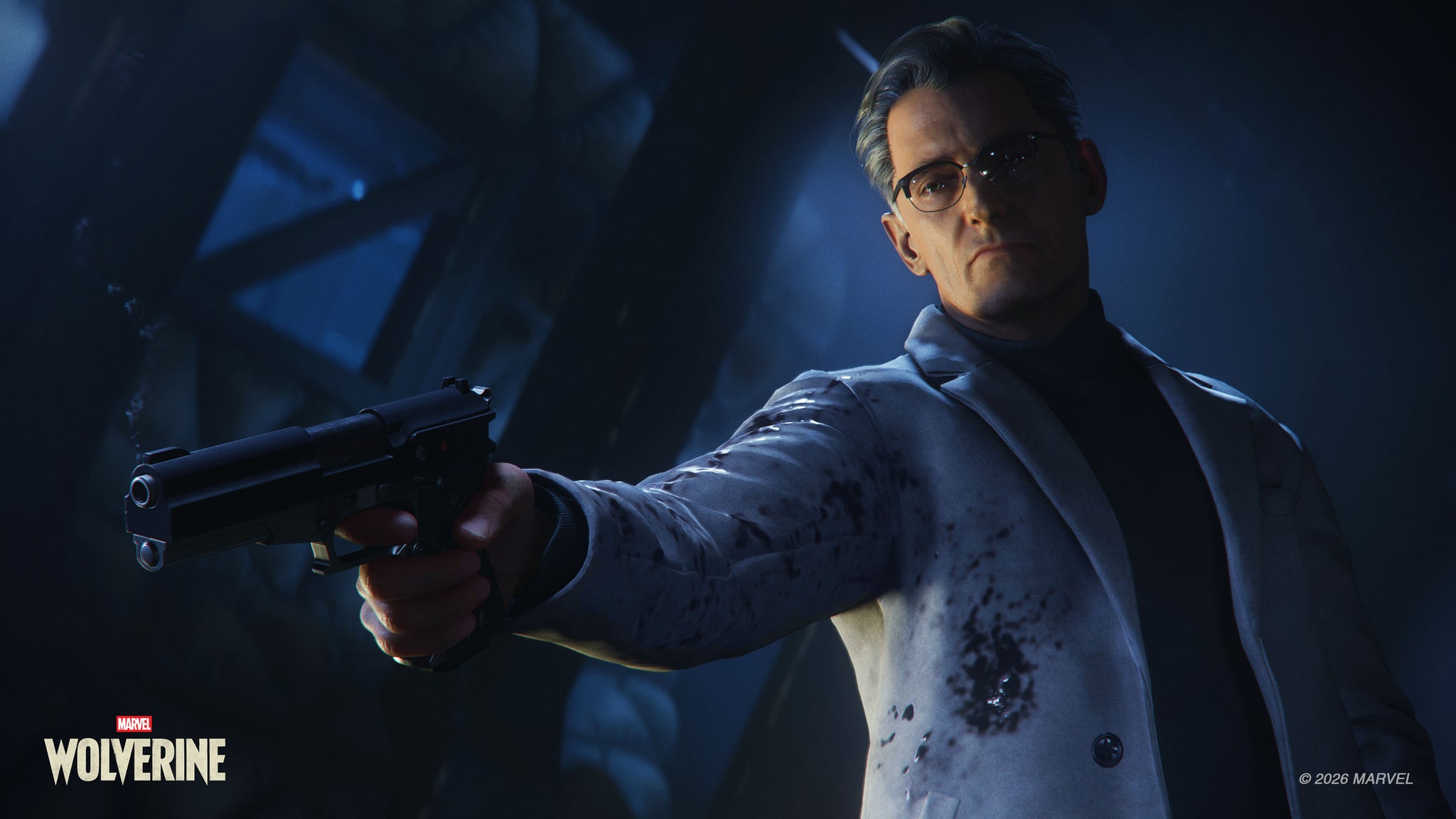
In this world, the X-Men don’t exist, which Fitzgerald says was a deliberate decision to give Wolverine the full spotlight. “There are tons of mutants that players will recognise and fan favourites… there’s plenty to dig into in the larger sort of mutant sphere,” Fitzgerald adds.
Image credit: Insomniac Games/Sony
On paper, Wolverine is a character with some seriously fun weaponry – indestructible claws, super-fast healing and heightened senses – but these abilities don’t come without their design challenges. With his healing providing near-invincibility, it would be easy to fall into the trap of making Wolverine an overpowered bullet-sponge hero, with a simplistic button-mashing fighting style. Compared to the zippiness of Spider-Man in Insomniac’s previous games, Wolverine is also a far heavier character with a more direct approach, demanding a very different style of combat. “We knew with combat, we always wanted it to be moving forward and aggressive, not a big blocking, slow thing,” says Fitzgerald. “But you need to feel like this animalistic character,” he adds.
Even in the game’s early stages, you can trace how Insomniac has attempted to fold both Logan’s clinical efficiency and wilder tendencies into the combat design. The bread-and-butter moveset is a ‘barrage’ claw combo with a finisher move – creating that feeling of really mashing an enemy – and once you’re done with one foe, you use a leaping move to grab onto the next. This acts as a basic foundation for the combat, creating a steady sense of rhythm as you bounce between groups of enemies. Some element of mindfulness is then required to dodge ranged attacks, while there are also opportunities to parry. Yes, yes, another modern video game with parrying, but Insomniac brings a twist to this with a ‘reckless’ golden attack, which if parried correctly rewards you with a satisfying take-down move. Where an unparryable attack would require the player to dodge, this mechanic asks the opposite, encouraging the player to dive into the middle of combat and adopt an aggressive and opportunistic fighting style.
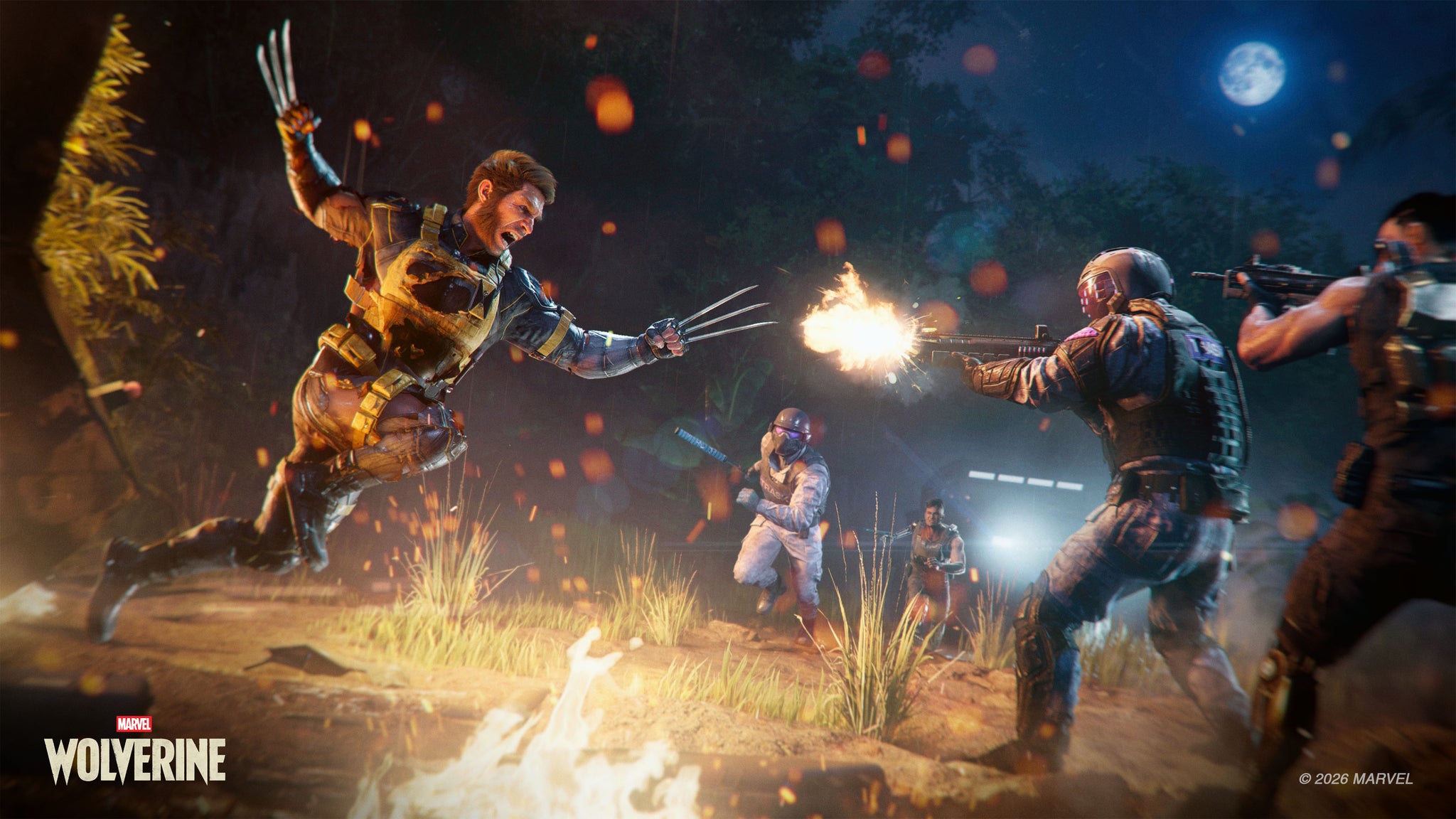
True to Wolverine’s violent fighting style, this game is definitely for a mature audience. Yet the blood and gore never feels truly gruesome or gratuitous – acting instead as a way of exaggerating your combat moves – and there’s an accessibility option to disable it entirely.
Image credit: Insomniac Games/Sony
Far from being a full mash-fest, these early jungle fights cement the idea that Wolverine is a skilled fighter, demanding some amount of caution and crowd control. Wolverine can hold his own and regenerate his health to some extent, but it’s possible for him to be swarmed, making efficiency and repositioning part of the combat language. “Logan’s really good at fighting one-on-one,” explains senior project director Reiner-Reed. “And then two, three start to show up… and you really start to feel that Logan could potentially be taken out if there’s enough enemies around him.” New challenges are then continually introduced to counter Wolverine’s skills and make you continually reevaluate your tactics – such as enemies with riot shields that must be kicked down, and ‘inhibitor’ machines that limit Logan’s healing abilities until they are destroyed. Just as soon as you think you’re in control, Insomniac tweaks the formula, and you suddenly have a new set of problems to deal with.
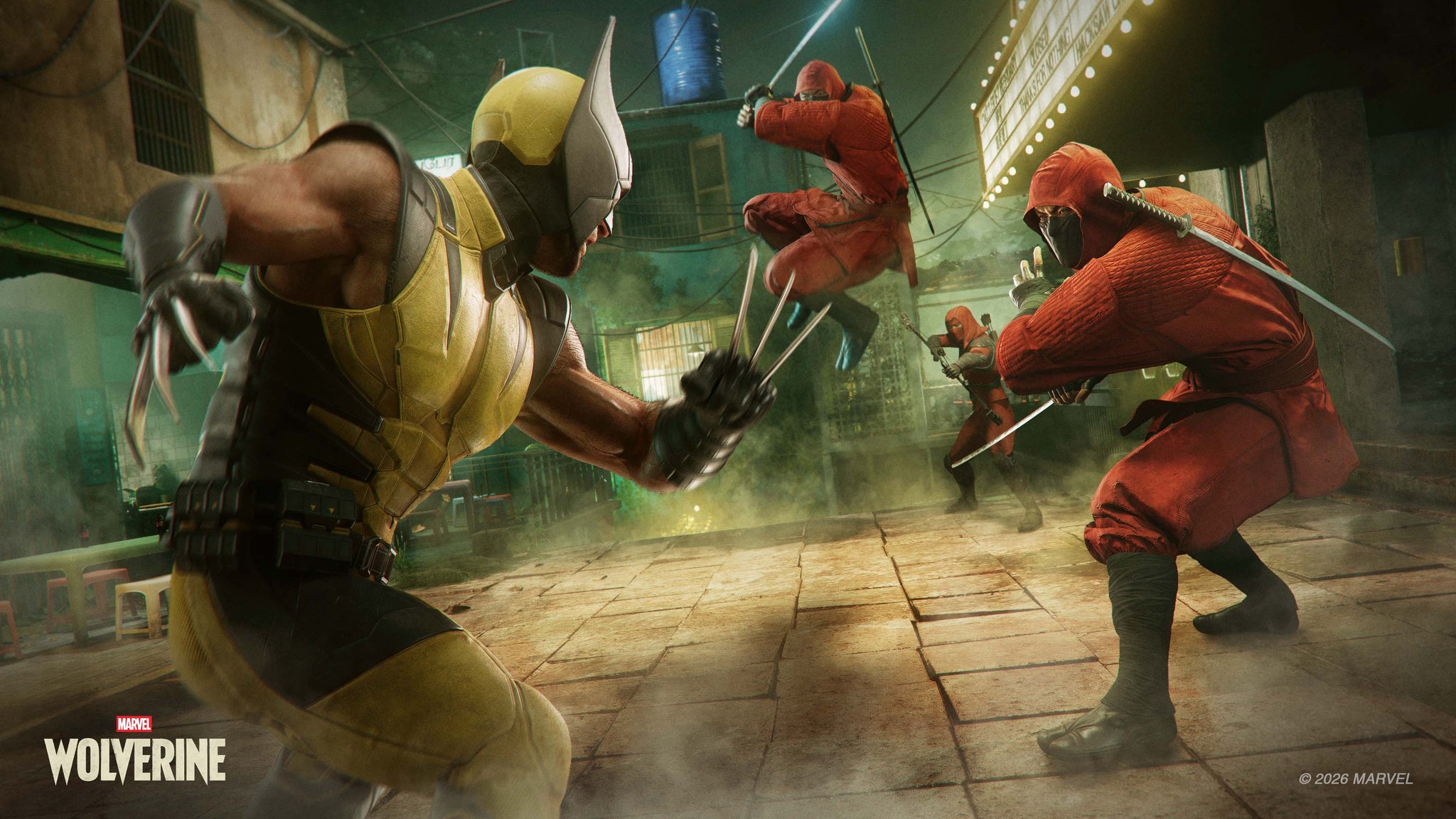
There’s no need to feel too sorry for your enemies – most of them have signed up for a job performing live experiments on mutants.
Image credit: Insomniac Games/Sony
Insomniac then brings in that other side of Wolverine – that animalistic fury which manifests most clearly in the game’s ‘rage’ meter. A mechanic that essentially dictates the pace of the gameplay, this meter fills up as you slice and dice enemies like human kebabs, promoting continual aggression in combat. Once you reach rage tier two, combat-enders become more powerful, while you also gain access to ‘last stand’ (that animation where you force Wolverine to his feet once more). Take Wolverine all the way up to rage tier three, and the red mist descends… really quite literally. Your vision switches to a mixture of grayscale and bright red blood splatters, while Wolverine’s fighting style becomes less about precision and more about ferocity, unlocking the ability to jump between enemies and instantly perform finishing moves. Fitzgerald tells me that an ongoing theme throughout the game’s story is how Logan is “grappling with his relationship to rage and anger”, and rage tier three is a way for Insomniac to “express that through the gameplay”. Sure enough, when we first see rage level three in our demo session, it’s after a character close to Logan is kidnapped, and his (already-thin) patience finally snaps. It’s an effective way of carrying that emotional energy straight into combat.
That sense of flow from cutscene into gameplay is one of the most impressive elements of Wolverine’s early hours. “Fluidity” was a word that Insomniac was eager to emphasise during our visit, and to my mind, the studio’s ability to seamlessly blend traversal with combat is one of its key talents. There were some brilliant flashes of it here. One of the stand-out sections of the jungle level comes when Wolverine enters a more open area – a training ground filled with fake houses – and is able to prowl between groups of mercenaries, stealthily picking them off by climbing up to the rooftops and dropping down on them from above. Later, we see Logan take the more straightforward approach by kicking the door down so damn hard that it flies off its hinges and squashes his foes outright. This area gives the player a great deal more choice in how to approach combat, and that flow between parkour and battle feels quintessentially Insomniac. (It doesn’t hurt, too, that so much of the environment feels like it can be shredded by Wolverine’s claws – creating the feeling of a sandbox that you can pull apart at your choosing.)
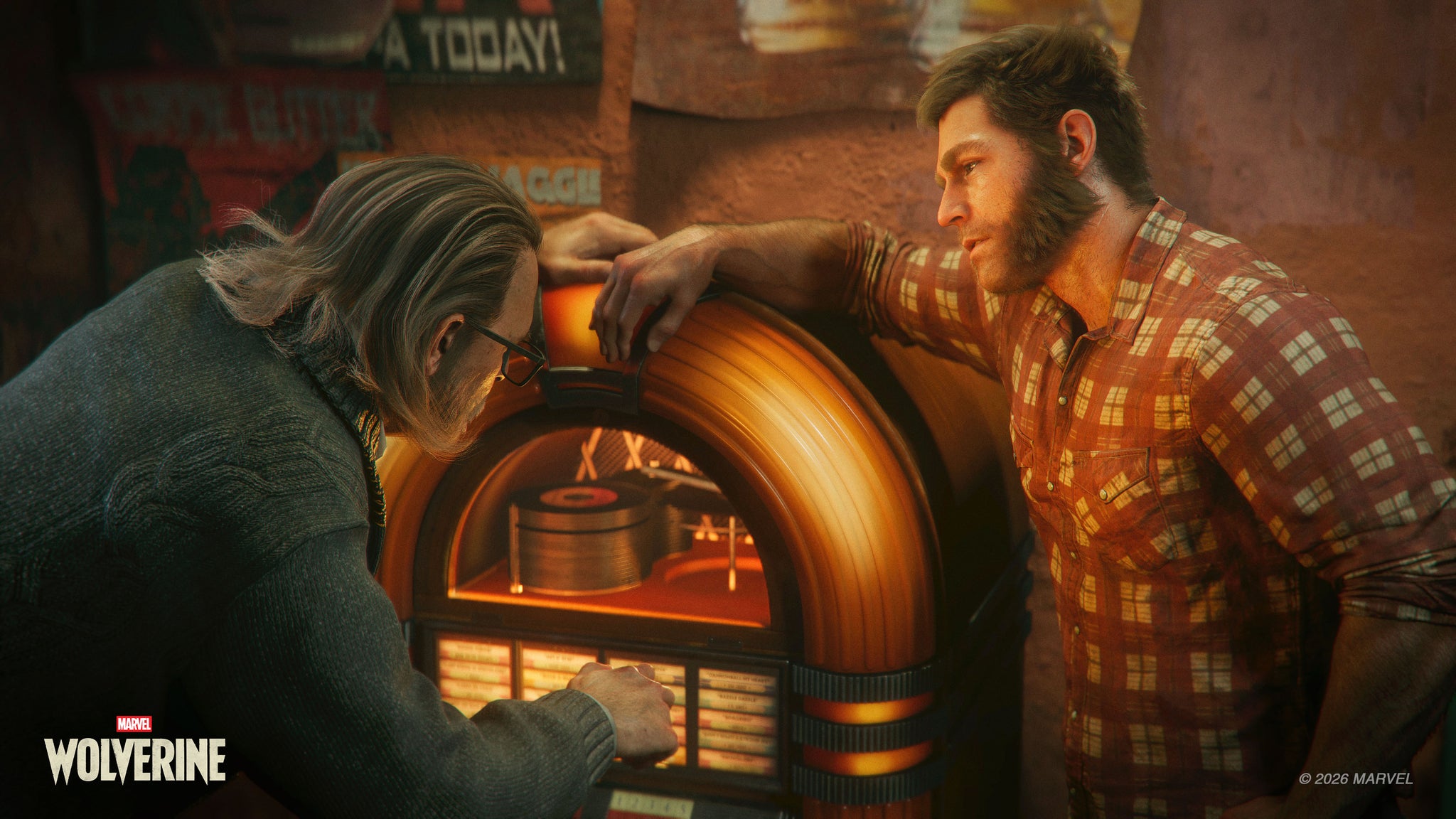
Marvel’s Wolverine may not be open world, but there’s still some optional exploration to be undertaken, with items like whisky bottles and suit-crafting materials hidden around for those willing to look.
Image credit: Insomniac Games/Sony
Another real stand-out section comes later in the game, when a peaceful bar hangout suddenly transforms into a high-speed pursuit over the rooftops. One moment you’re following the scent of your target – using Wolverine’s claws to ascend up vertical walls and poles – the next, you’re intercepted by bad guys, and plunged into the middle of a brawl. It’s another fantastic example of how you can use the environment to your advantage – dropping down on enemies, or pushing them up against a wall to pulverise them. But it’s also an example of how Marvel’s Wolverine has been structured to keep you constantly on your toes. Or, err, claws. In any given level, you can be sneaking around, then thrown into battle, then treated to a cinematic cutscene. There’s always a sense that the pacing of these levels has been carefully engineered – often feeling like a fast-paced rollercoaster ride, before Insomniac allows you to temporarily disembark and have a poke around for yourself.
There’s also something that feels a little old-school about this game. Perhaps refreshingly so, in regards to its linear structure. Reiner-Reed explains this was a design decision made to suit the character of Wolverine, who is “driven” and “not a guy who hangs out in one place for too long – he doesn’t have a friendly neighbourhood”. (Honestly, it’s pretty nice to just rampage through levels without sweating over checklists of uncompleted side quests.) Beyond this, that old-school feeling is also noticeable in the cinematics, and that seamless transition from cutscene to chase sequence.
At times, things get a little too retro: a boss battle against a giant ‘sentinel’ robot sees Wolverine have to dodge its massive arms and glowing attack areas until an opportunity arises to hit its weak points, which certainly feels rather familiar. And though it’s a little early to say for sure, the writing thus far appears to be fairly on-the-nose, standard superhero fare. There are a lot of gruff conversations and tetchy arguments between team members, while the main story beats include the following: tension between humans and mutants, Logan trying to remember his past, and a seriously unsubtle ‘are we the baddies’ moment. Some of the conversations in the bar area do at least hint at the possibility of more intricate character development further into the story, so I hope Insomniac is able to push things beyond the surface level.
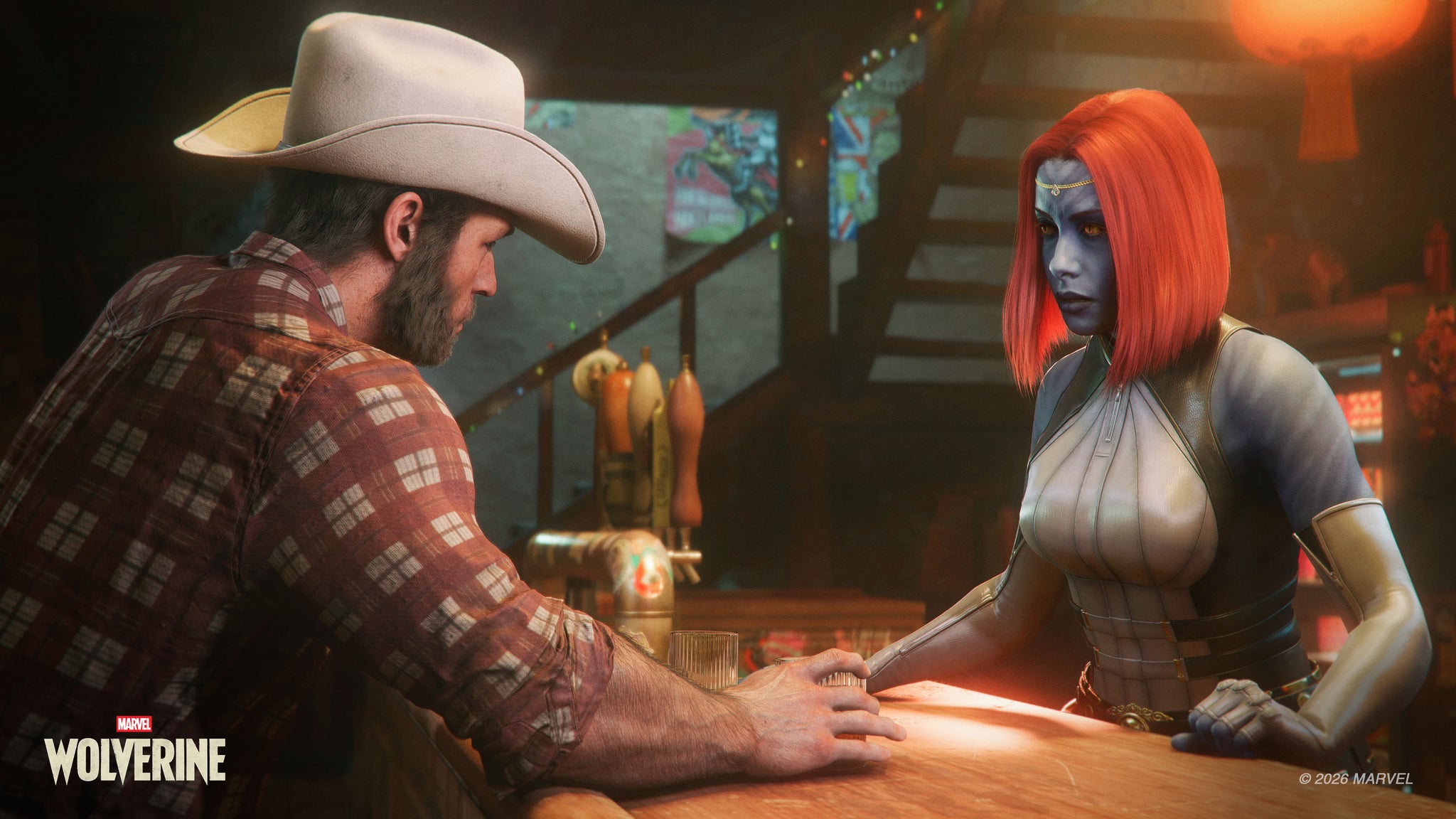
Beyond character heart-to-hearts, Nightmare Cabin levels are also used to give a bit of backstory: complete these parkour and combat challenges, and you’ll be rewarded with a bit of narrated Logan lore. The adaptation unlock doesn’t hurt either.
Image credit: Insomniac Games/Sony
And for all the talk of creating a fluid combat style, there are moments where this fluidity appears to stutter – particularly in those early Talambang jungle levels. The number of enemies flying into these fights can sometimes feel unmanageable and unpredictable. Without the tools to deal with numbers, in these early stages you often find yourself having to run away, taking yourself out of the centre of the melee to try to pick off enemies from around the edges. It’s easy to find yourself caught in two minds – wanting to be more aggressive to keep your rage meter topped up, while also not wanting to overstretch yourself. Adding to the frustration, it can feel hard to target your attacks towards certain enemies, meaning you can end up knocking down a lot of different soldiers without really finishing them off.
I suspect some of these annoyances are eventually smoothed out as you progress through the game and the choice of combat mechanics expands. There are four special technique slots that can be filled with moves like a whirlwind spin (which is quite a useful ‘get the hell off me’ option in a pinch). There’s also an adaptations tree, which allows you to pick some more passive buffs. Sure enough, in a later section of our demo when several of these abilities are equipped, crowd control becomes less of an issue, and there are hints of being able to lean into a particular playstyle. Reiner-Reed gives an example of how players who enjoy rage tier three can change their build using the progression system so they reach this state faster. Fitzgerald adds that the dev team has “definitely seen people’s personality coming across as in the techniques they choose to equip in adaptations they choose to use”. My hope is that Insomniac doesn’t take too long to get these tools into your hands – and that these combat techniques really do combine to create a playstyle that feels a little deeper and personalised.
So, where does this leave us? With a decently solid action game, I think – despite some quibbles and concerns. Wolverine’s early hours don’t produce the same mind-exploding feeling of picking up Spider-Man for the first time, which promised seemingly-endless opportunities to approach fights from any direction. In many ways, that’s down to the superhero being represented here. Logan’s directness is an altogether different proposition to the mobility of Spider-Man. He’s a force of nature – something I think Insomniac effectively conveys through those highly-destructable environments and combat that ratchets up in intensity until Wolverine is in a full rampage. And despite the design challenges, Insomniac has still created moments here where traversal and combat meld together brilliantly. Does Marvel’s Wolverine reinvent the action game wheel? Probably not. Yet as an entertaining, cinematic spectacle and faithful rendering of Wolverine… I think it’s going to do just fine, bub.
This preview is based on a trip to Insomniac’s offices in California, North America. Sony provided flights and accomodation.