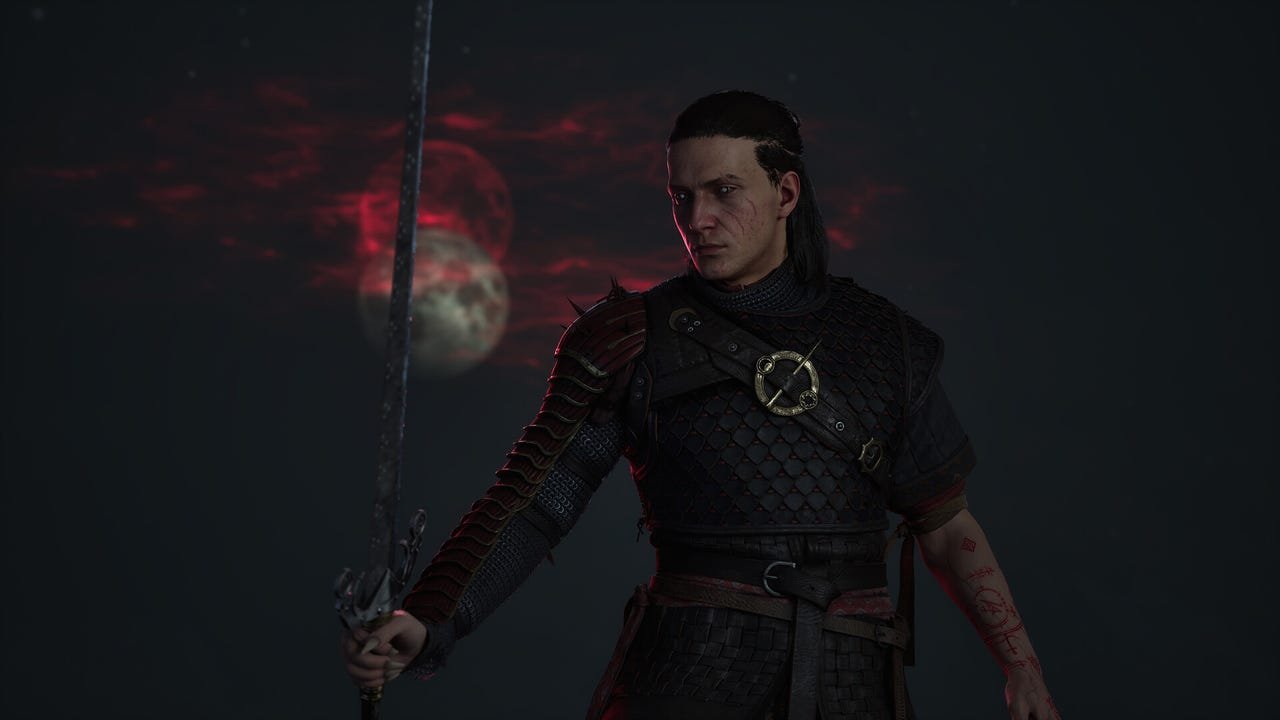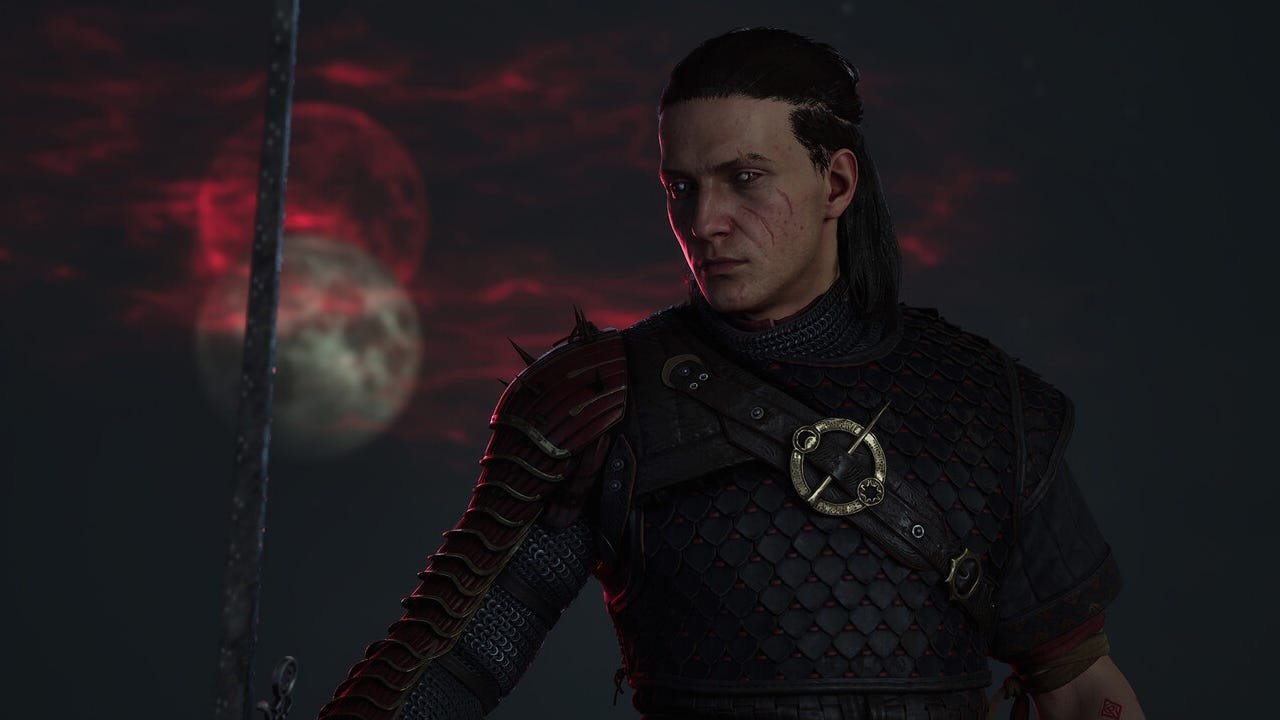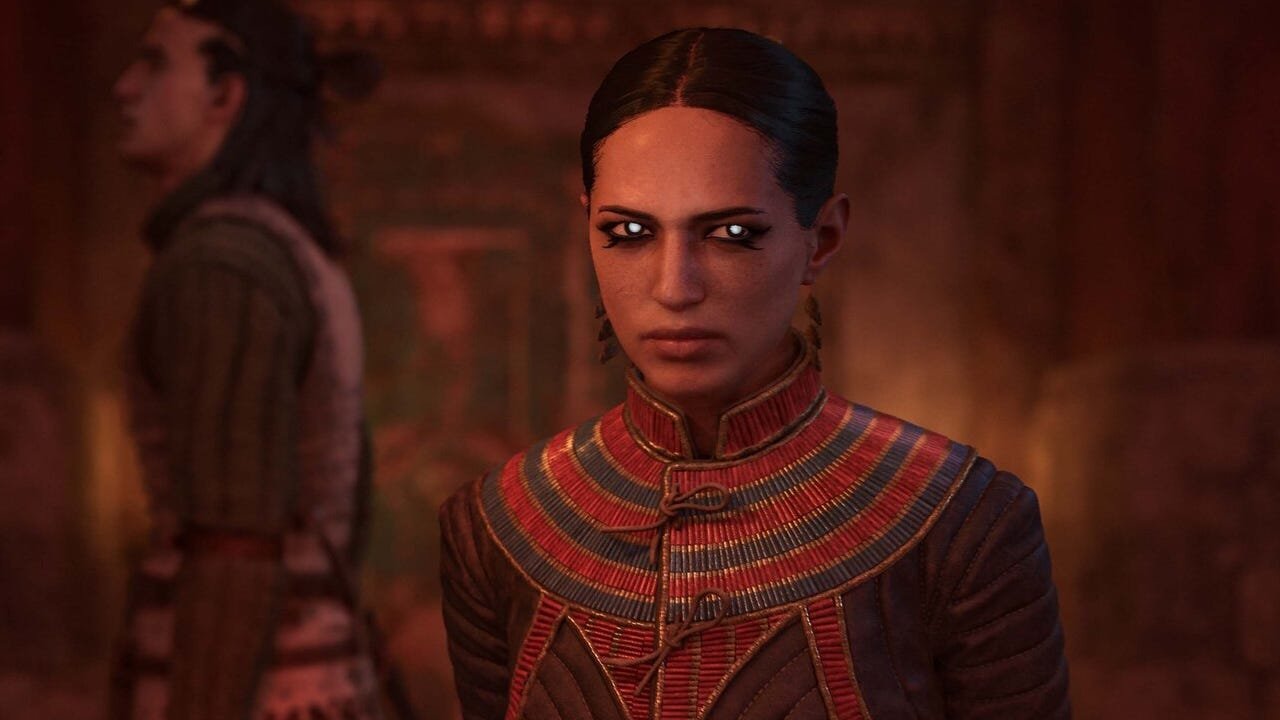
What struck me most about the 90-minute presentation of The Blood of Dawnwalker I watched recently, at developer Rebel Wolves’ studio in Poland, is how confident this dark fantasy role-playing game is. That’s despite being a debut, and amplified by how boldly it embraces difference – and how sophisticated it is in its approach.
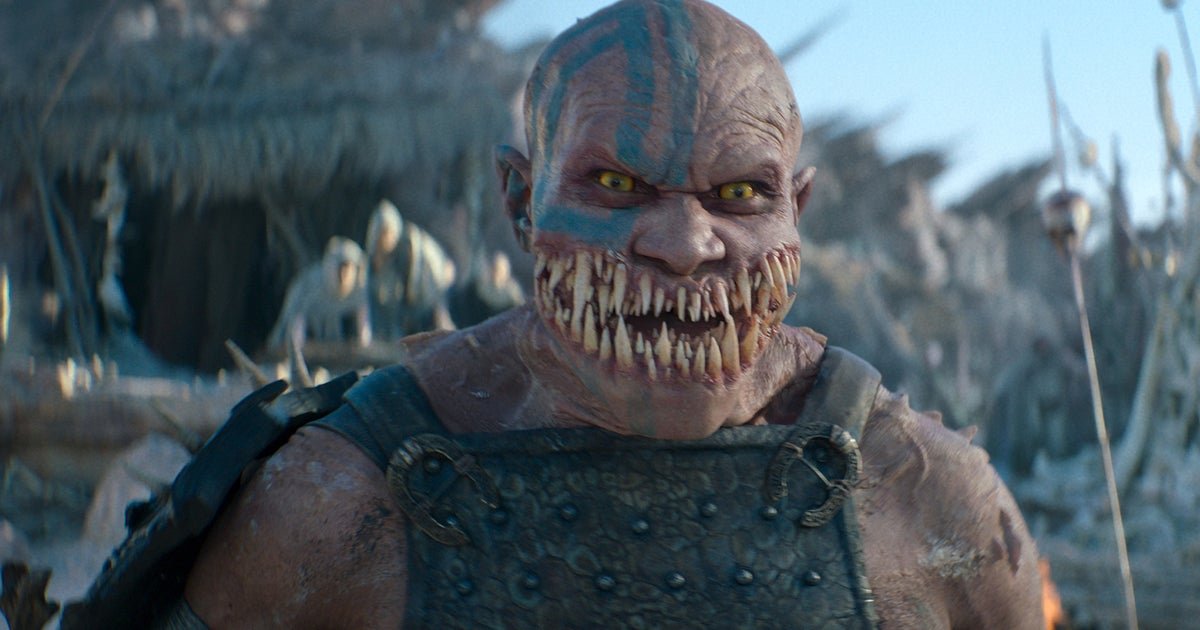
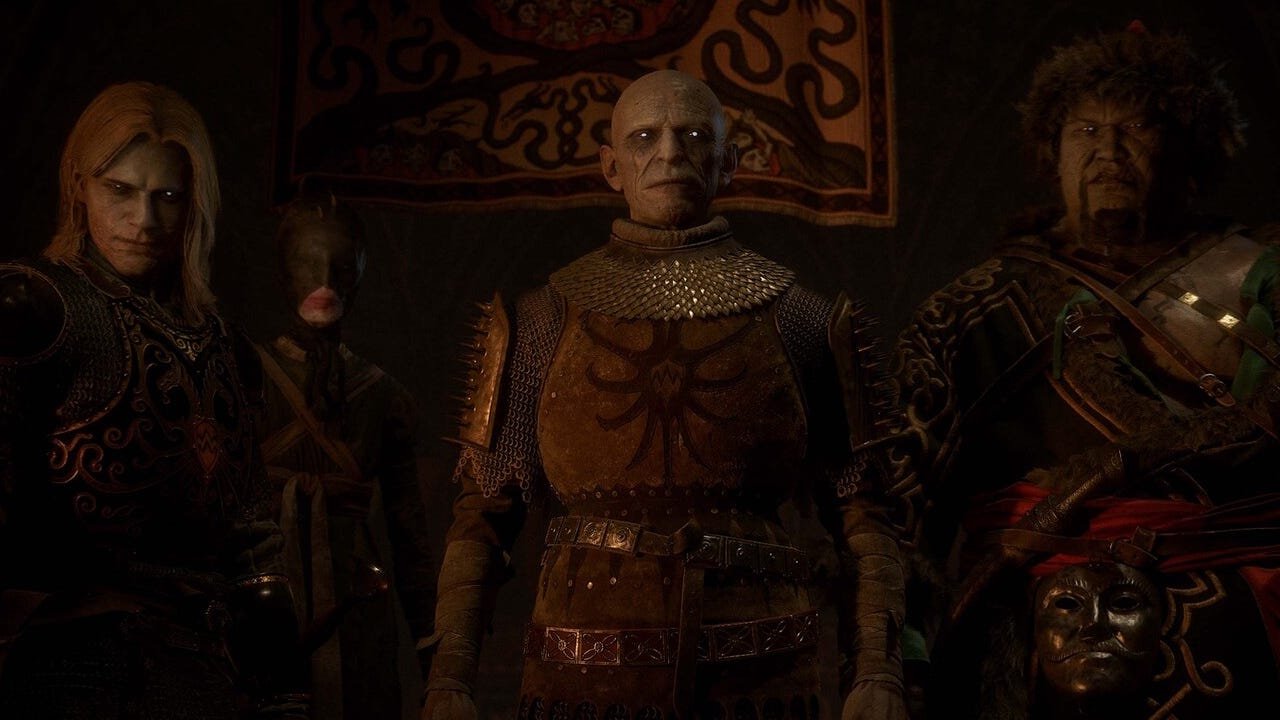
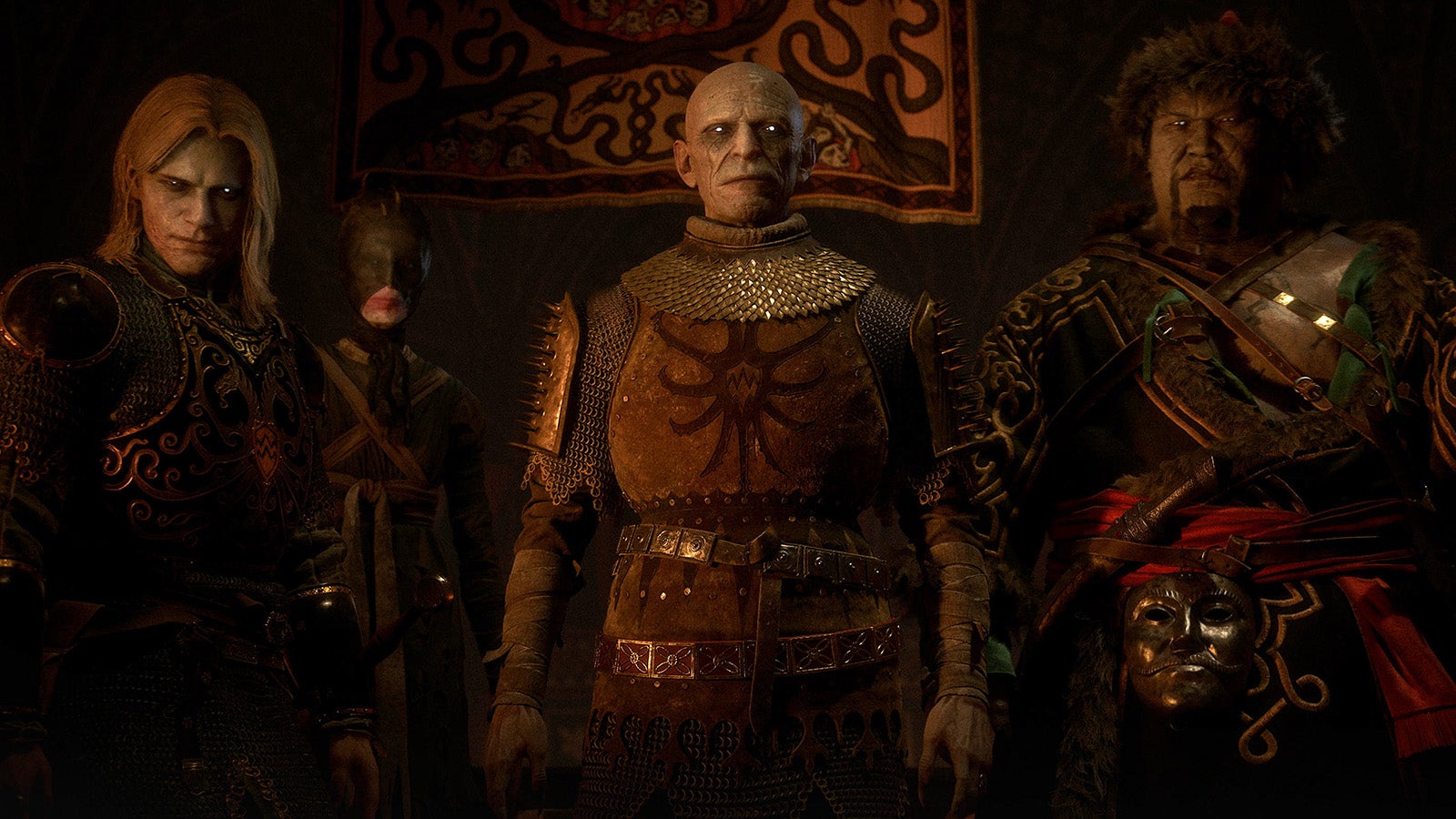
One of the moments that keeps returning to my mind as demonstration of this is a particularly unsettling one, towards the end of the game’s Prologue – a previously unseen area of the game – where we witness a kind of Unholy Communion in a local church. This is thrown not in honour of the Christian god above, but in honour of the flesh and blood vampires who rule this area of the Carpathian Mountains, Vale Sangora. They saved it from the Black Death plague, and now they demand penance.
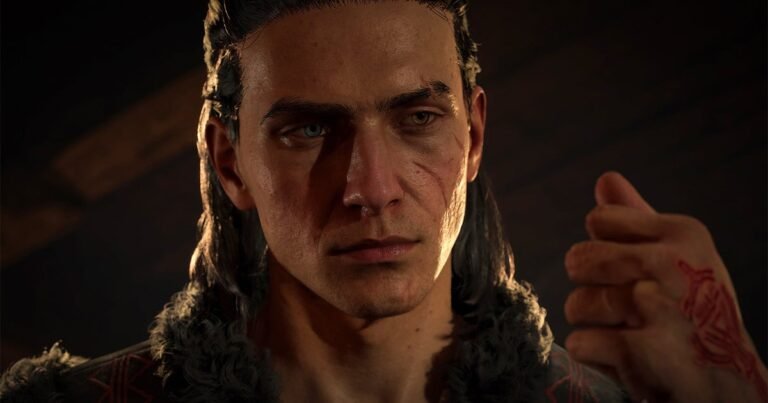
The whole service is overshadowed by a figure who’s been strung up to the rafters to show the town what happens when ill blood is detected – something the vampires have a knack for sniffing out. The tension builds as a poorly character – someone emotionally close to you, Coen, the player character – approaches the priest’s bloody cup. Will they be sniffed out?
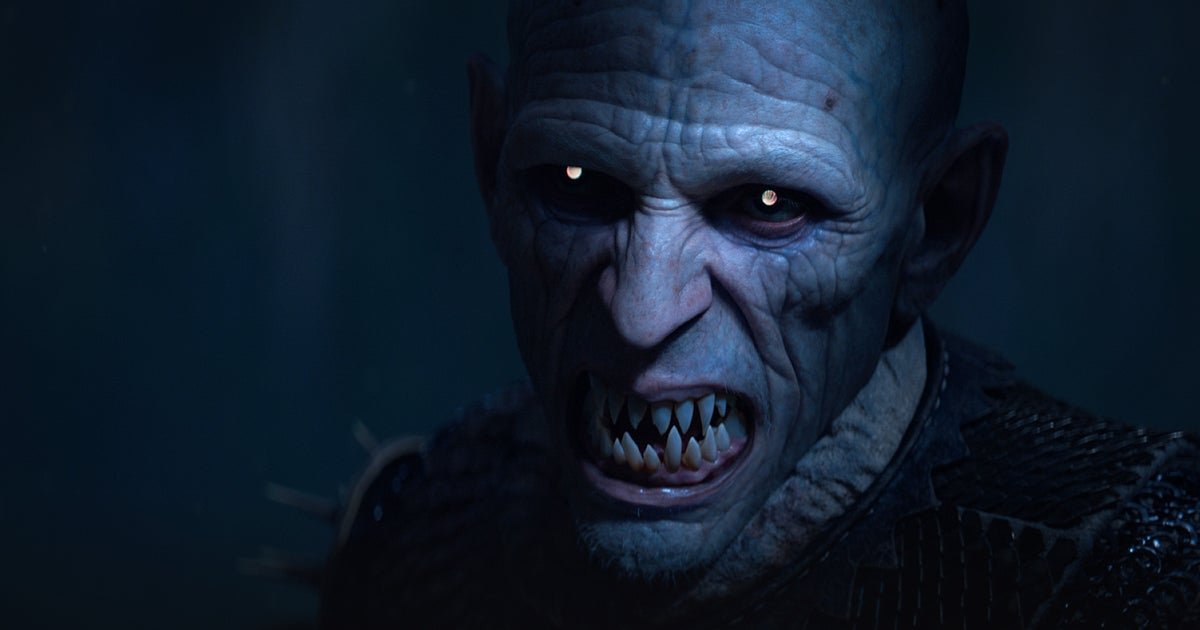
The answer lands like an anvil blow, as the deception is discovered and the character grabbed and made an example of. They’re thrown upon a stone table as if they’re being thrown to the dogs; indeed, the lead vampire’s posse descends upon them in a similar way, like animals on prey, spiny teeth erupting from mouths as claws lacerate and flesh is torn in chunks. Then, as quickly as it started, it’s over, screams ended, fangs retracted, the menacing posse reformed as if ready to pose for a gruesome selfie.
What I like about this moment is that the game doesn’t dwell on it. A more inexperienced developer, or a more juvenile one, would revel in the gore, would make players appreciate the gore, metaphorically thrusting their faces in it. ‘See what we’ve made! See how adult we are!’, only to usually give the opposite effect. But Dawnwalker does exactly as much as it needs to – to show these vampires are not to be trifled with – before moving on. As gruesome as the scene sounds, it’s done with sophistication, and I think you can see it across so many parts of the game.
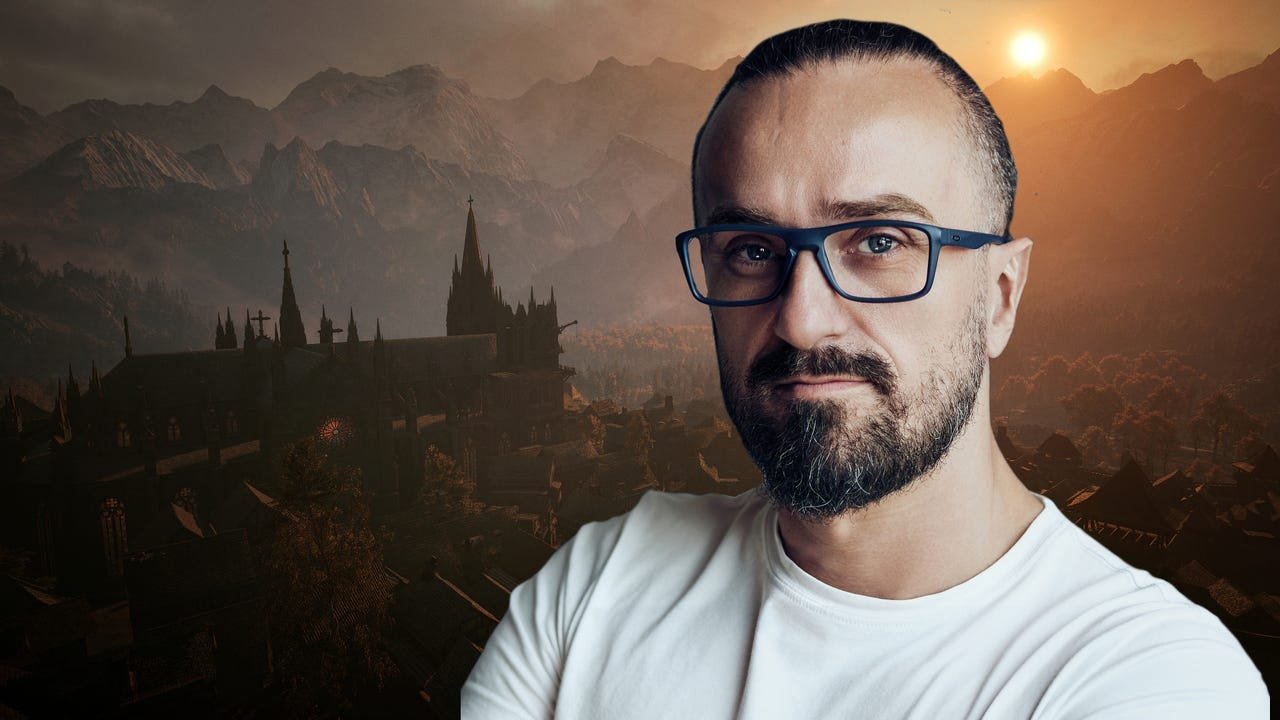
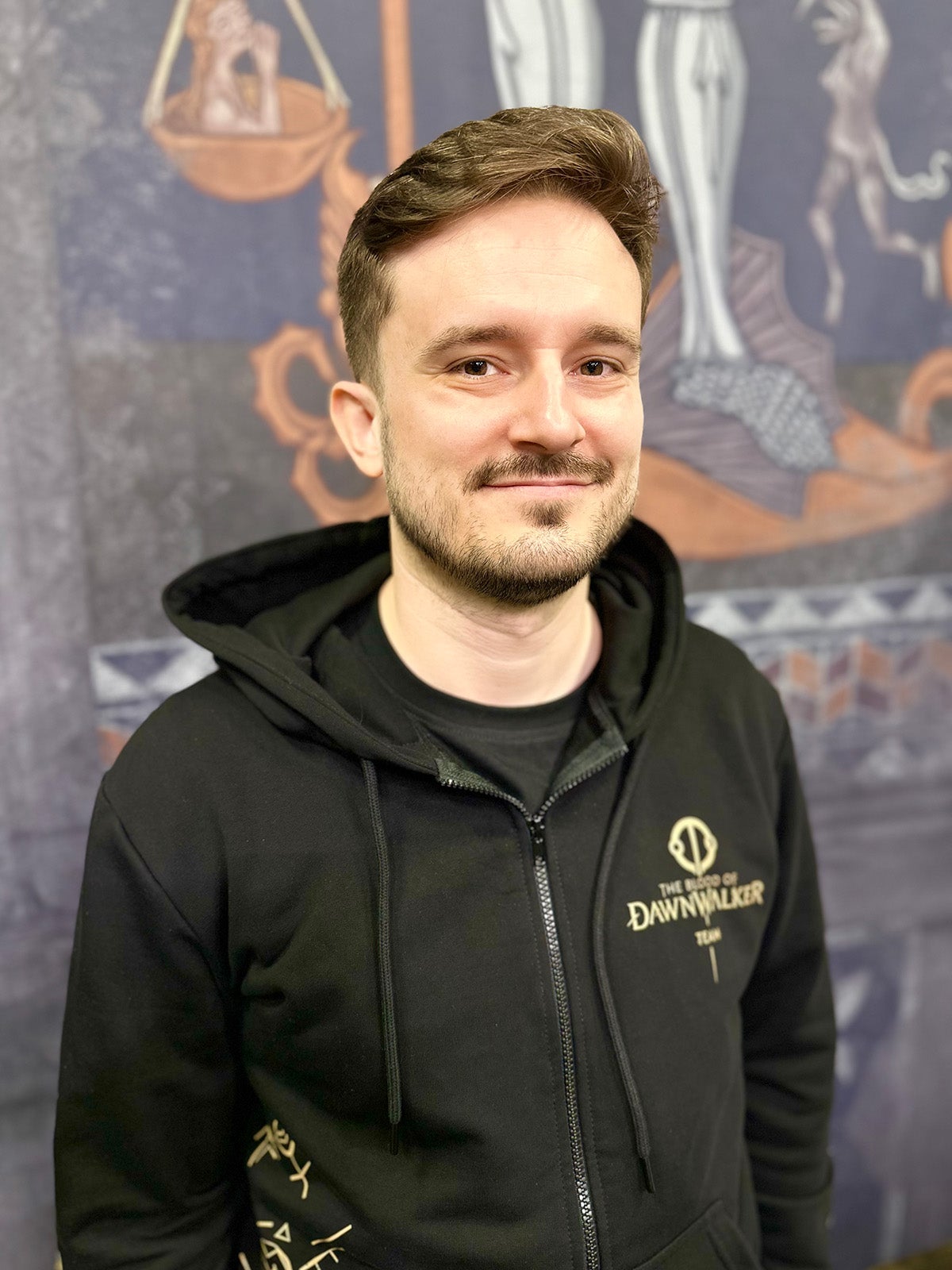
Let’s rewind a little bit. The Blood of Dawnwalker is Rebel Wolves’ debut game, but this is not a game made by newcomers. Far from it. The project is led by Konrad Tomaszkiewicz, who directed The Witcher 3 and its expansions (there was a vampire one, appropriately), and much of Cyberpunk 2077. There are also many other former CD Projekt Red people here, as well as veteran developers from elsewhere. That there should be so many similarities to The Witcher 3 in The Blood of Dawnwalker is perhaps unsurprising, yet there are still a surprising number of them. The menus, the music, the general feel of the action and the supernatural folklore vibe to the setting and world. There’s even a ‘pull a trigger to enact detective vision’ ability, and fist fights to get yourself into. One glance is all it takes to evoke a comparison.
“It’s really hard to avoid,” Konrad Tomaskiewicz says of The Witcher 3 comparisons during a group interview, “because me and many from the team are the people who co-created those games. It’s hard to change yourself, because we put our style into it. That’s why you see it in this game.”
He cites film directors as a similar example. “Don’t get me wrong, I still have a lot to prove – but when we take for example Tarantino movies, there’s a lot of those movies, but you start to watch these movies and you know that it’s Tarantino. There is something like this, that when you have your own style, you will feel it through the art these people create.”
.JPG?width=2048&height=2048&fit=bounds&quality=85&format=jpg&auto=webp)
The Blood of Dawnwalker developer Rebel Wolves’ studio.
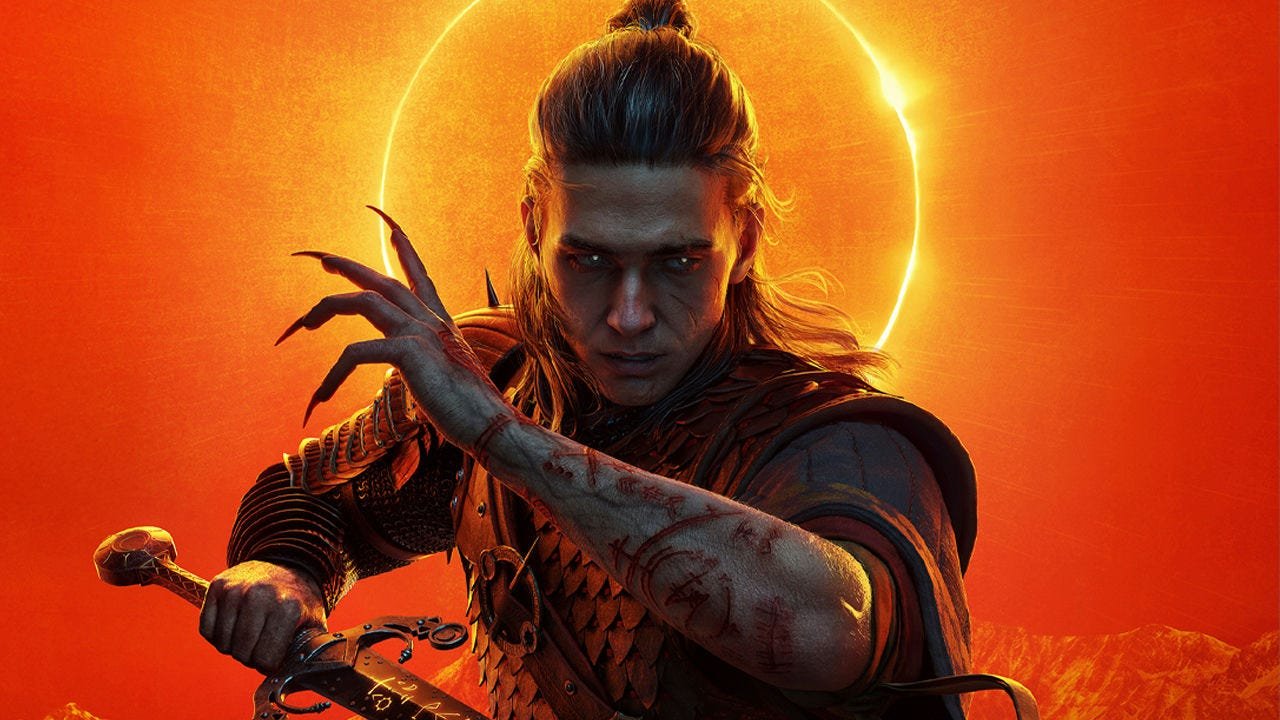
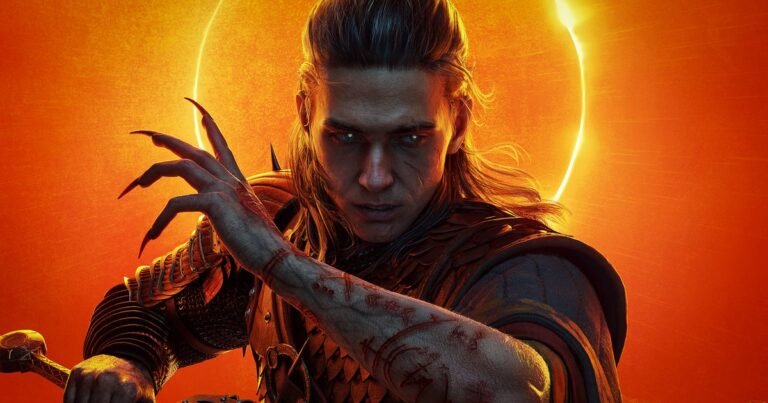
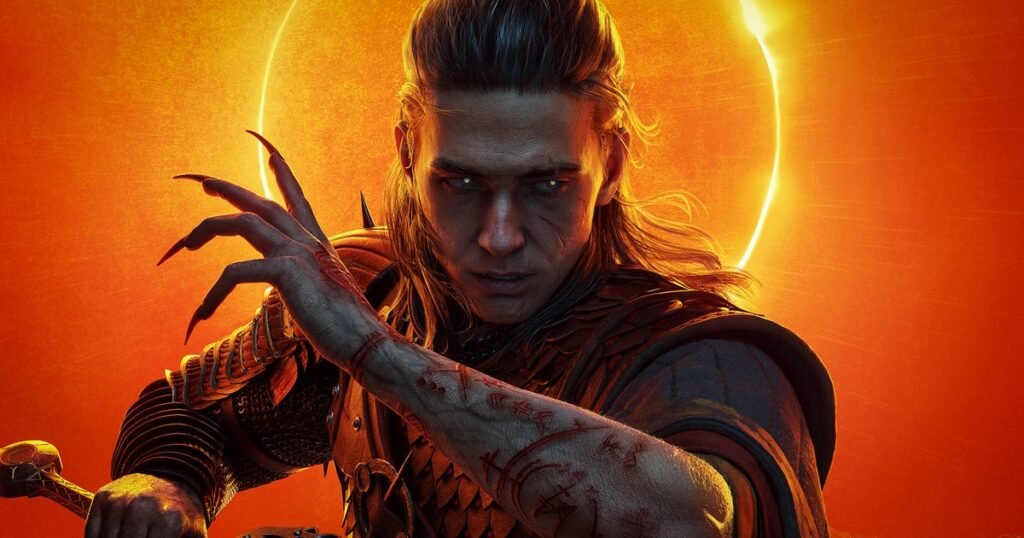
But The Blood of Dawnwalker gets more exciting when you consider its differences. The most obvious of these is that we’re playing as a vampire, a Dawnwalker, who presents as a human by day and turns into a vampire at night – state changes that, naturally, bestow us with varying gameplay opportunities. But perhaps the biggest point of difference is in the game’s structure. We’re not led through this world by a main quest.
Instead, we have a “narrative sandbox” – a phrase heard a lot over the course of my day at Rebel Wolves – where we make our own story, picking our path through the open-world playing area. There’s an overarching goal to rescue our family from the vampires in 30 days and 30 nights, but even that’s a soft goal: we can absolutely fail to do it, I’m told. Governing all of this is the game’s deliberate control of time, whereby every quest (barring some bandit camp clear-out activities) will have a time cost associated with it, which you’ll see denoted by an hourglass symbol. You are in control of time here – it won’t passively slip through your fingers – and it’s crucially important to everything you do.
This has caused some concern among players, who fear they won’t be able to vacuum clean the game’s map and complete quests as they can in other RPGs. While it’s true that, yes, The Blood of Dawnwalker has been designed specifically to make you choose a path and therefore write your own distinct story in the game – not the same one as everyone else – there is still a lot you are able to do.
“It would be super harsh if you would miss out on like 70 percent of the content,” game director Mateusz Tomaszkiewicz tells me, coincidentally Konrad’s brother. “I think people would be rightly annoyed with it. It’s the other way around: we made it quite liberal, so on an average playthrough, if you do most things and don’t limit yourself, you’re able to do around 80 percent of the content before the clock runs out.”
We’ve seen some extended gameplay demonstrations of these systems at work in previous The Blood of Dawnwalker videos, but what we lacked last year in those demonstrations was story-based context for what was going on, which is exactly what I get watching the opening sections of the game. Here, we learn how Coen becomes a vampire, and meet the family he’s going to have to save.
Like The Witcher 3, it begins with a smaller open-world Prologue area in which to get your bearings, and the tension is high from the beginning as we witness – in a cinematic – the sudden arrival of the vampires in the region who, for all their malice, bring much needed stability and protection against the plague. They also leave an indelible mark on our family, although not yet on Coen himself, intriguingly.
Fast forward a few years and we’re in an idyllic mountain farming scene, distant drama forgotten – although not for long, as Coen’s day quickly turns into a nightmare. Skies bloody and monstrous transformations greet him, in an eerie and discordant premonition sequence which introduces us briefly to gameplay systems and even vampiric powers, before we suddenly wake again. We’re fine, we’re human, but we’ve got a really bad feeling about what’s about to come.
14th century village life greets us as we walk outside, and as we stroll through the village, through chickens and pigs and farms, our eye is drawn to various goings-on and villagers who have various quests to give. The majority of the game will be questing, by the way – these are the activities that will propel us around the Vale – but they are hand-made, storied quests all designed to tie back into the plot. Case in point, we talk to a villager who wants us to look for his pig, and to a guy hoeing a field who asks us to look for his missing brother. Both sound like innocuous fetch quests, but they lead to multi-stage events with varying outcomes. Tracking the pig’s trotter-prints also brings our first taste of the game’s time-controlling hourglass symbol, as we decide to follow the prints and move time on by one segment.
.jpg?width=2048&height=2048&fit=bounds&quality=85&format=jpg&auto=webp)
One concern I had about Dawnwalker before seeing this section was visual repetition, because being located in one valley in the Carpathian Mountains, however crisp-aired and forested and full-bloom it is – and it is all of those things – doesn’t naturally beget much biome variation. But in the 90 minutes of gameplay we see, there is some, glimpsed in boggy swamps and ancient ruins underground, where many of the game’s deepest secrets lurk. So while there is real-world inspiration here, there is also dramatic licence taken; this is less a one-to-one recreation but rather a ‘greatest hits’ of the Eastern European mountain chain, which snakes, lest you need reminding, through Dracula’s home of Romania. I’m told that the castle where the head vampire Brencis resides is nearly an exact copy of where Vladimir Țepeș lived – the real person otherwise known as Vlad the Impaler, or Vlad Dracula.
Our hunt for the missing brother culminates in an underground boss battle with an ancient zombie skeleton, and our hunt for the missing pig culminates with us delivering it back to the villager’s house, only to be invited by him to help join in the slaughter of it – an option I’m glad our demonstrator declines. It does highlight an off-beat sense of humour in the game, though, and the abrupt, ruddy-faced charm of rural medieval life – something The Witcher series always realised so well.
It seems The Blood of Dawnwalker cares about this aspect too. Open-ended questing starts to tie together as we reach the Unholy Communion scene towards the end of the Prologue. That brother we rescued: he wouldn’t be in the church had we not rescued him. And that person who’s about to get pulled on stage and not in a voluntary way: we could have helped their fate by getting them herbs to hide their malady, but we didn’t, so they will meet their violent end. The Blood of Dawnwalker is not afraid of letting you fail.
It’s these events that fuel the conclusion of the Prologue and your eventual transformation into a vampire: a turning which sets the course for the rest of the game and, mechanically, furnishes you with a full suite of available powers. And it’s here, in the way the game plays, I think you can also feel a layer of sophistication, particularly in combat, where a concerted effort has been made to give you more to do than hit and dodge.
.jpg?width=2048&height=2048&fit=bounds&quality=85&format=jpg&auto=webp)
.jpg?width=2048&height=2048&fit=bounds&quality=85&format=jpg&auto=webp)
What you can do depends on your form. As a human, you fight with a longsword and with blood magic powers developed later on. Your primary concern is correctly performing directional attacks – up, down, left, and right – and blocks, a little like in the Kingdom Come: Deliverance series. Attack to an unguarded area to score a hit, and match an incoming hit with a parry and you’ll block it: it’s that sort of thing. There are a few special attacks you can perform as you unlock them after levelling up and, like you, enemies have unblockable attacks that you’ll have to dodge. Getting the hang of all this looks complicated. In my case, the demonstrator turned on some icons which telegraph the direction of attacks and blocks; I wouldn’t fancy playing without it.
As a vampire, you won’t need to worry about those directional attacks and blocks because you’re much hardier in this form, your claws apparently less fussy. But you will need to keep an eye on your stamina. You can dodge with a shadowy teleport, and you can also, of course, drink the blood of enemies to regenerate health. The two systems together, human and vampire, seem to compliment each other well, and offer necessary and engaging variation.
There are also dense-looking skill trees that I hope give us a good level of customisation in our builds. Vampire form improves exploration as well, using a Shadow Step – think Blink from Dishonored – to reach platforms you otherwise couldn’t, and to give you a sense of momentum as you dart around. Then, you can re-orientate gravity to walk up walls with Plane Shift (think Batman and Robin in the old TV series, but without a rope), before Claw Riding down the other side to get back down.
.jpg?width=2048&height=2048&fit=bounds&quality=85&format=jpg&auto=webp)
But perhaps the most exciting part of being in vampire form is the risk you run in accidentally eating people. When your health is low, Blood Hunger will take over. And if you start a conversation with an NPC while in this state, there’s the very real possibility your hunger will override your control and Coen will be forced to drink and kill whoever he’s talking to. I see this happen. The dialogue choice words grow and wobble until the demonstrator is no longer in control and Coen slakes his thirst.
And in keeping with the role-playing freedom of the game, it seems all of the NPCs are killable, even quest-giving ones, so you might very easily drink and drain someone you really shouldn’t have (Bertie, you shouldn’t drink and drain at all). What this means more tangentially is that evil playthroughs of this game are possible; I’ve heard it whispered that you can even become the new evil lord of the land. There are romance possibilities for Coen here as well, in case you’re wondering.
I find it all tremendously exciting. Konrad Tomaszkiewicz has talked about RPGs needing something fresh and different, and pointed at games like Clair Obscur as an example of a game delivering it. There are parallels here: a smallish team – okay, 160 is not small but it is in the triple-A space – and slightly non-mainstream, leftfield approach. Could The Blood of Dawnwalker go on to become this year’s breakout RPG success? It’s been a good few years for them.
Then again, there’s still a lot of The Blood of Dawnwalker still to see. It was disappointing to travel that far and not play the game, however generous our hands-off presentation was, and what we saw was only the Prologue. It felt tight and tense, but we save-game-jumped through it. What will it be like in actual play? And what will the wider world feel like? Will the quests be good enough to hold it all together across the 50 hours it’s estimated to take to finish the game? Will the combat feel good to play? There are still many questions to answer, I have to remind myself. But I’m excited. This could be great, and with a freshly announced release date for later this year, there isn’t long now until we can play it.
This preview is based on a visit to Rebel Wolves’ studio in Poland. Bandai Namco provided travel and accomodation.