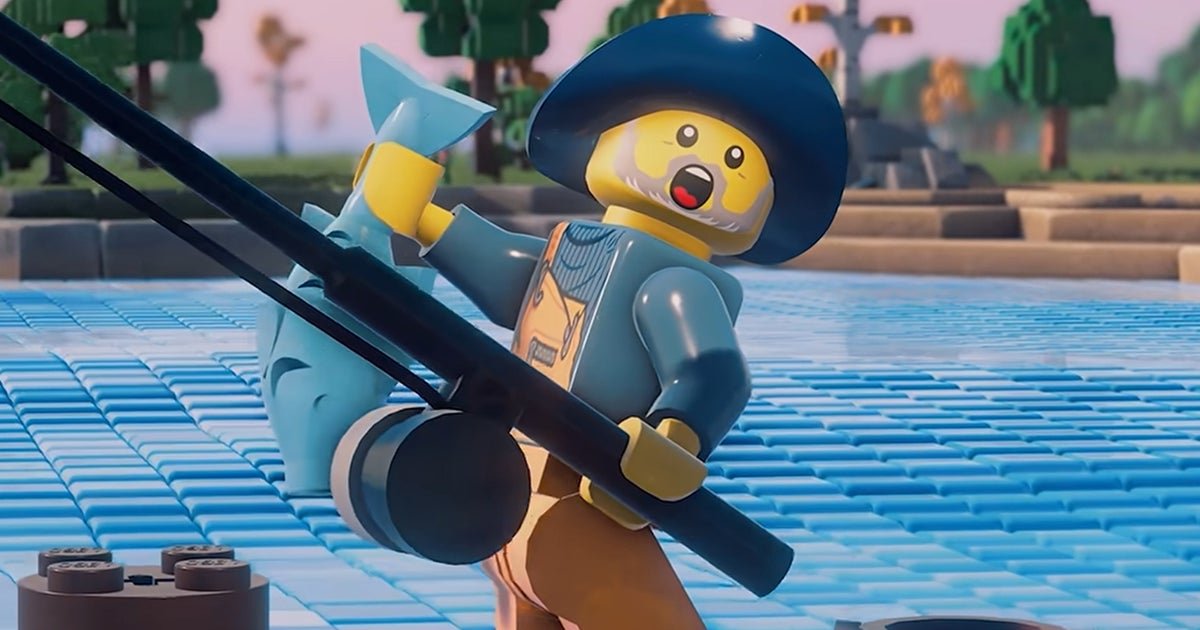
How’s this for an unhelpful opener: in a lot of ways, Lego Skylines is exactly what you think it is; but in others, it’s probably not. Conceptually, it’s a winner, of course – a city builder built with Lego! – and yet it takes things unexpectedly far. But also there’s a lot that publisher Paradox and developer Iceflake Studios are keeping quiet for now, and I suspect it’s in these still-mysterious details where the game’ll really come alive.
Let me explain! You’ve probably seen Lego Skylines’ trailer, and the obvious assumption is that Paradox is pitching it as a sort of stripped down, ultra-accessible My First Cities Skylines. (developer Iceflake, if you weren’t aware, is the current steward of the franchise, following original studio Colossal Order’s ousting amid a disastrous run for Cities Skylines 2). And as my 45-minute hands-on begins, that’s exactly what Lego Skylines feels like.
It’s a wonderfully characterful, colourful thing that begins with a boat ride to an untouched island on my first day as a Master Builder. Almost immediately my skills are in demand, and I’m asked to build a house for a family keen to make the island their home. That unlocks a range of ‘small home’ prefabs – a traditional suburban house, a range-style abode, and so on – that I can select then plop into the world, the building satisfyingly assembling itself in a quick brick-by-brick flurry.
Lego Skylines is – initially at least – very much a city builder envisaged at a more intimate, micro level, and progress is powered by requests from the cheery Lego folk who’ll populate your growing town. And it’s not long until the Lego bit comes to the fore: your second task is to pretty up the house you’ve just built, by going into edit mode and decorating the garden from a wide variety of options – plants made of Lego, lamps, fences, gnomes, hot tubs, BBQs, and so on – meaning creative sorts have plenty to keep them amused without even considering the wider simulation.
Before long, I’m dragging-and-dropping roads (pleasingly built from those classic grey Lego plates), then I’m placing a farm after a request for a work place, fields so it can produce goods, shops that’ll sell those goods, earning your township tax income and giving your slowly expanding citizens a good-old consumerist buzz. I’m placing billboards, I’m turning my scattershot placement of buildings into elaborately planned streets, I’m squeezing in parks, trees, fountains, sculptures to satisfy my own aesthetic whims – but to increase the surrounding appeal for my citizens too.
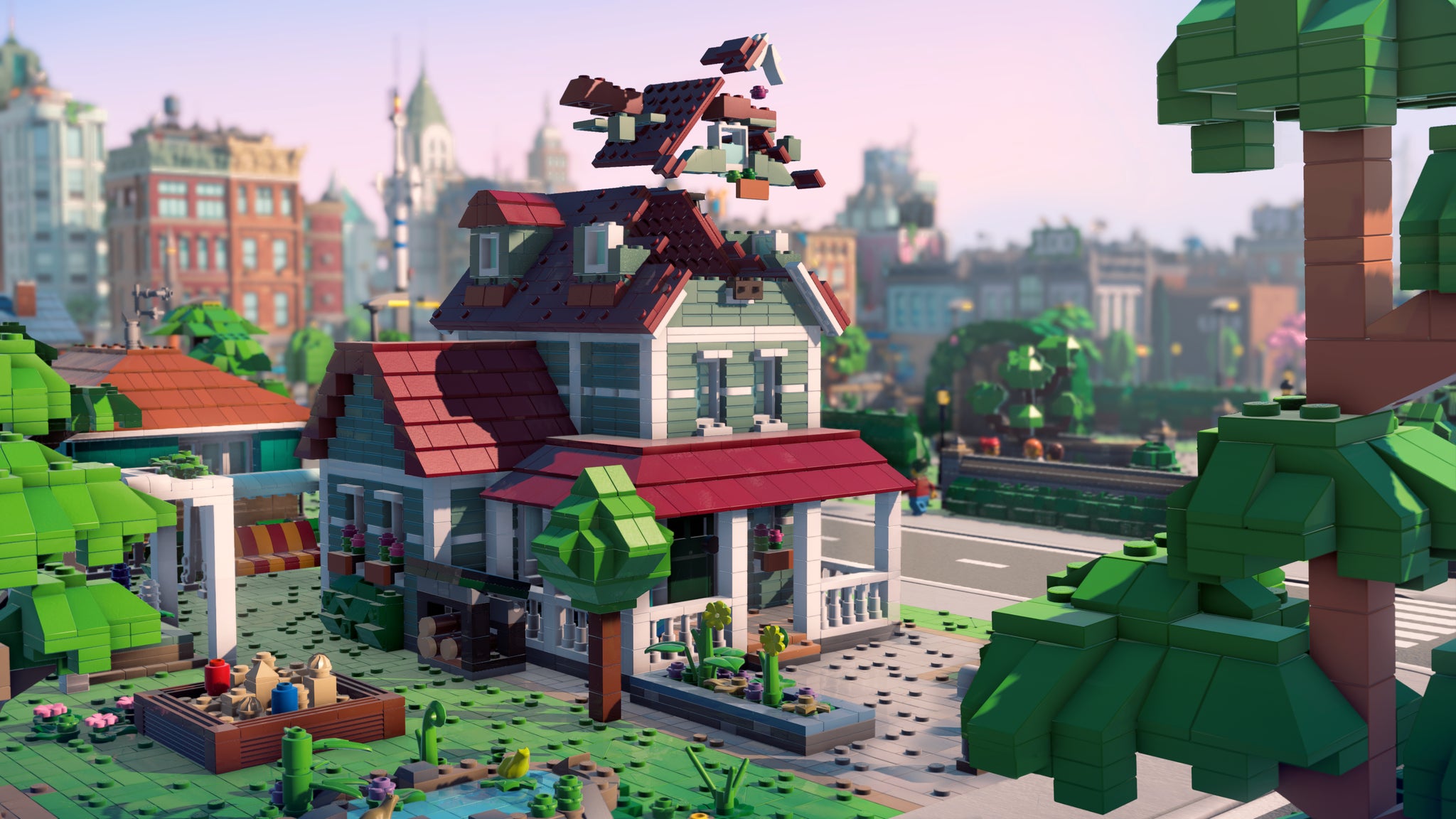
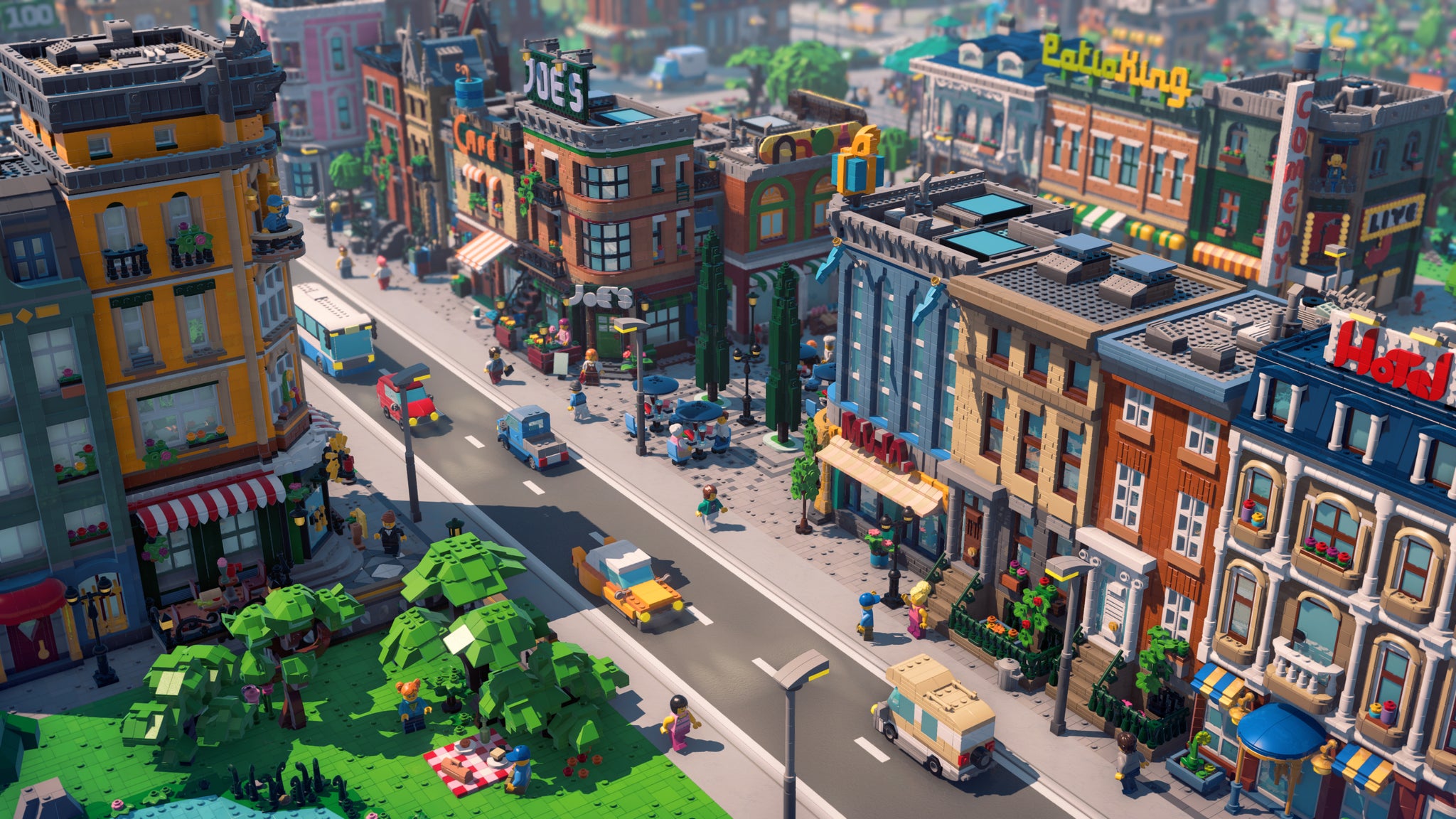
That in turn keeps my Lego folk happy, as does moulding the buildings, the streets, and the world to suit their own specific desires: each citizen has their own Flavour preferences, meaning the type of decorations – cosy, say – I use matters. And the whole thing is just an absolute delight to behold, a world that’s both convincingly, vibrantly Lego in form but packed with so many incidental touches – little Lego people thundering round a basketball court when I zoom in close enough, police officers quietly munching on doughnuts – it feels wonderfully alive.
It’s lovely – pretty much exactly what I was expecting when the words Lego and Skylines were officially jammed together during Gamescom Opening Night Life. But then an Iceflake rep offers to open a later map and my adorable little town suddenly explodes. Now I’m playing across a vast, bustling Lego metropolis; fire engines, police cars, ambulances squealing through the streets, tiny people milling around, as looming skyscrapers spear the clouds. The scale is significant enough, and unexpected enough that it feels like we’ve shifted from toy – that My First City Builder – to serious sim.
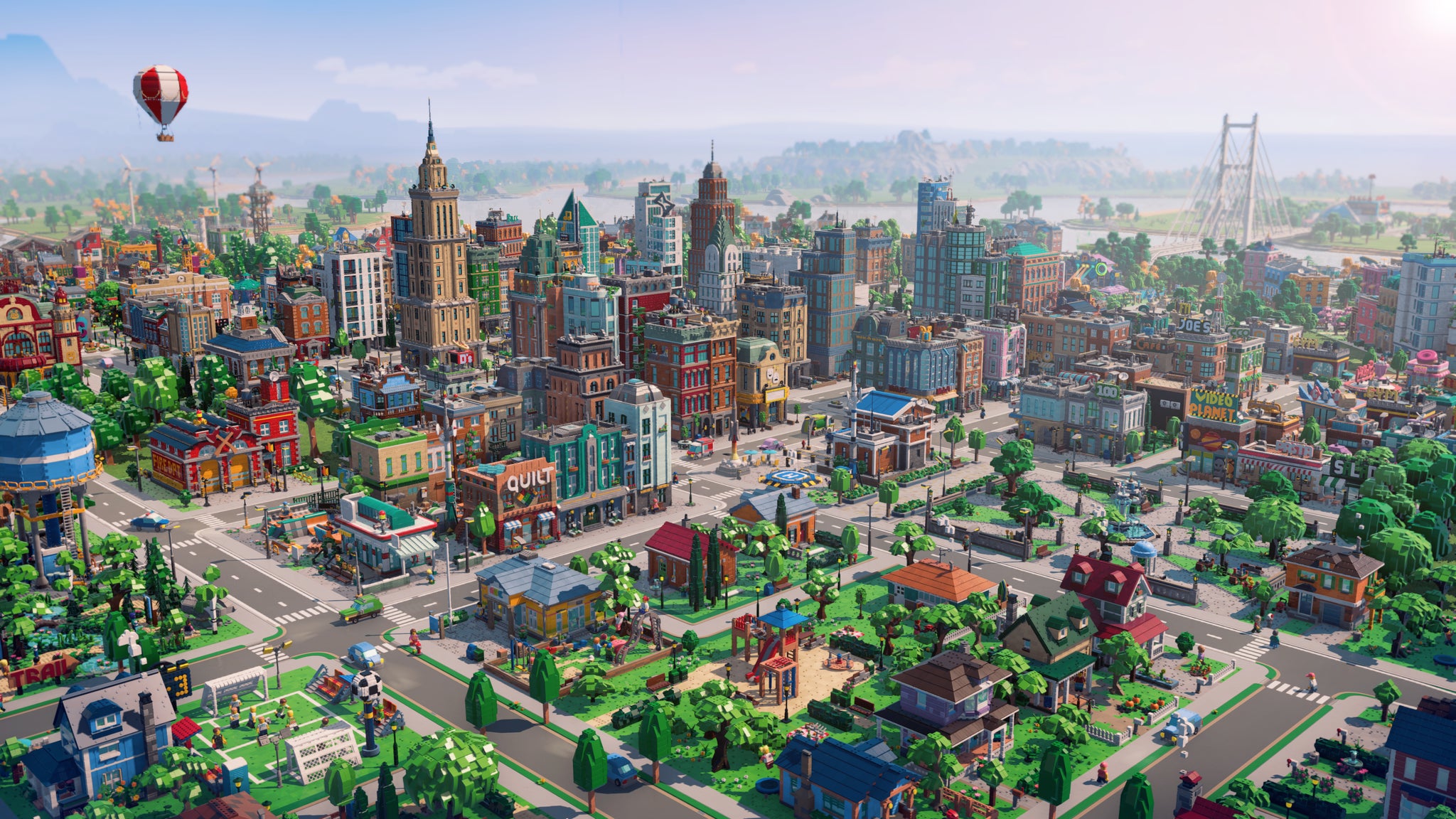
And despite its cheery veneer, Lego Skylines game designer Lasse Liljedahl is very clear on one point: “This is a cosy city builder, but for adults. This is not a game for kids, the complexity is too high.” Which isn’t to say it’s not family friendly – there’s no reason you couldn’t build your city together with a younger Lego fan – but the clear sense is that, while it’s approaching the citybuilder genre from a different, more intimate direction, it’s not reigning things in.
You’ve got rubbish collection to worry about, for instance, recycling, ground pollution, noise pollution; you’ll need to provide places to learn through higher education if you want to expand into certain industries. Your families require childcare, even elder care, and you’ll need to ensure citizens have plenty to do in their free time. There are city specialisations if you want to lean into culture, sport, or science, and bigger end-game buildings like stadiums. There’s transportation – buses, railroads, and so on – as well as communication, most obviously manifesting as radio towers.
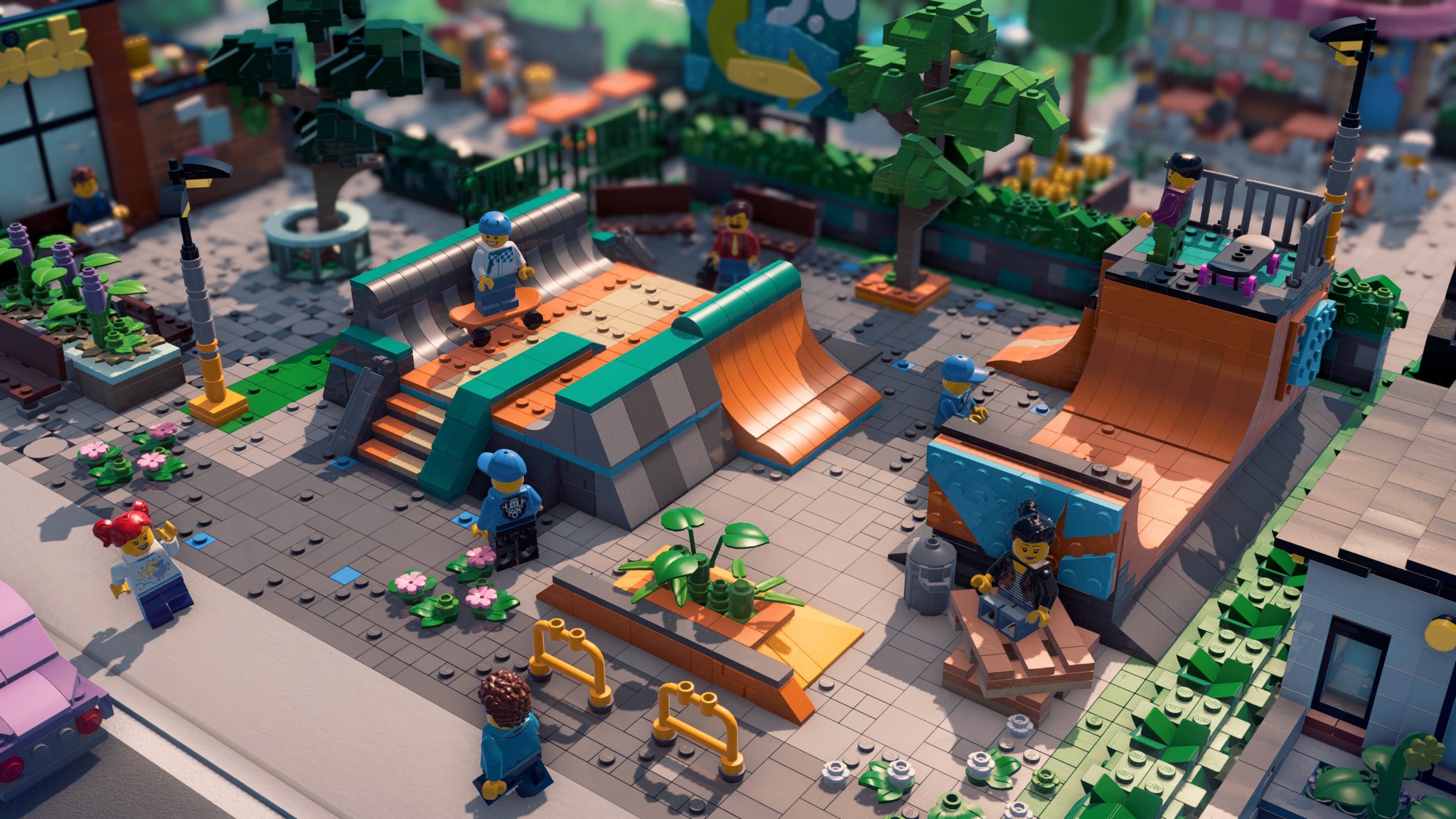
And throughout it all you’ll find various strands of progression. Core progression is based on milestones which unlock new buildings and features, as you perform basic tasks accumulate XP, while other currencies feed into other later-game opportunities. It might have Lego in the name, and a cheery veneer, but it’s still aiming to be the real city building deal – even if Iceflake’s goal is to maintain the charm and personality of those early hours by keeping the wants of your Lego folk at the heart of it all.
And Liljedahl notes you don’t have to go big if you want to. You could keep things cosy and never go beyond a small-scale town, choosing to focus on finessing and customisation rather than furious expansion. Or you could string together a cluster of smaller towns if you wanted more scale without going full-on metropolis. And while Lego Skylines’ full gamut of features is – from what I can gather – tied to the number of citizens you have, Liljedahl suggests it’s been designed in a way that’ll give you all the core amenities no matter how you choose to play.
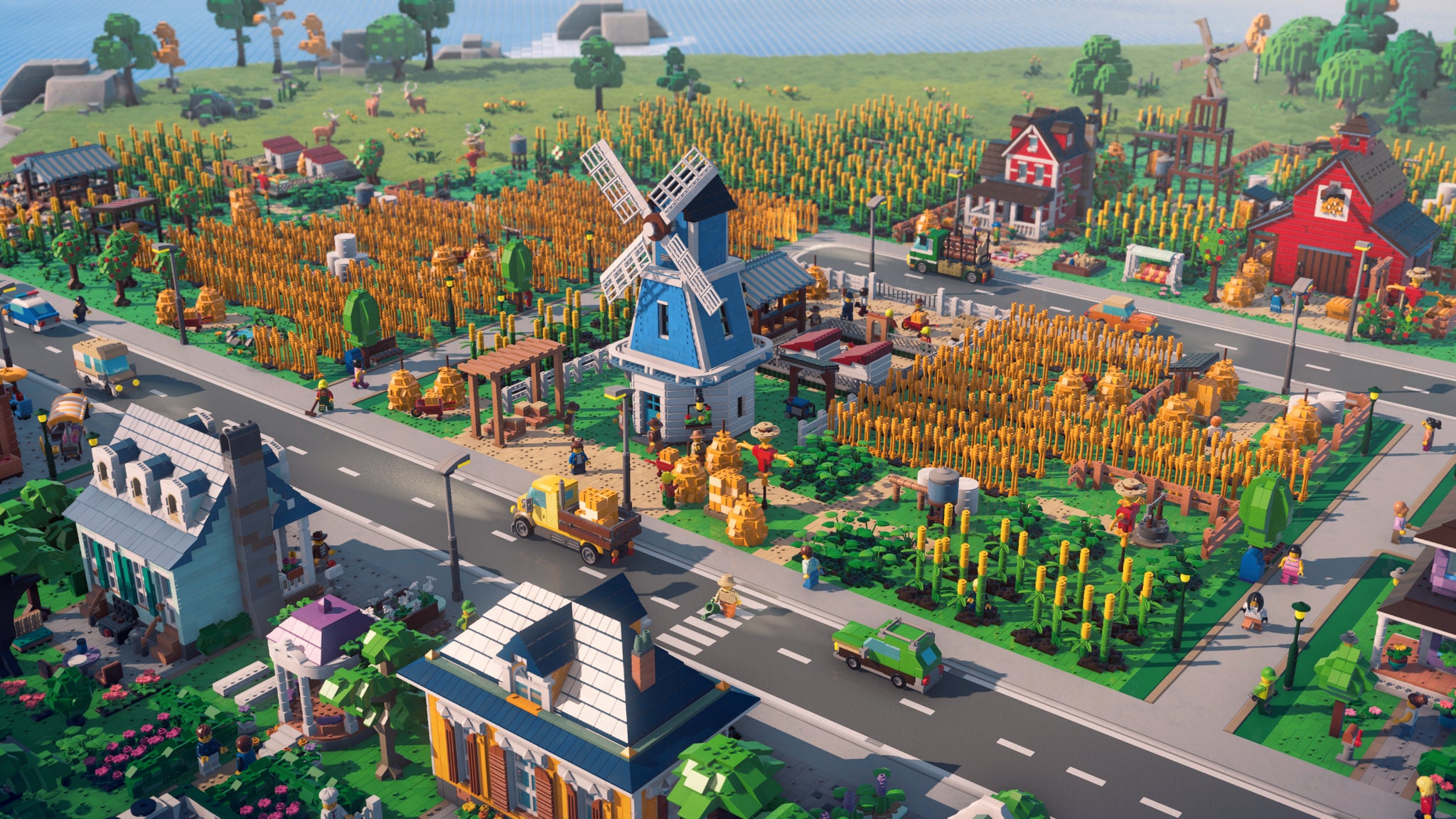
Even after just 45 minutes, I walked away impressed by the scale, the ambition, and the winning personality of it all. But something kept nagging me: there’s more to Lego than just looking at it. And I couldn’t help wondering just how deep the customisation really can go. If it’s not just about sprinkling a few decorations around; if players can properly roll up sleeves and design their own houses, their own factories, their own shops, cars, ambulances, monuments, whatever from scratch – if players can turn their cities into something that’s every bit their own, and share those creations with others – Lego Skylines could be something truly special indeed.
But Liljedahl is being coy on that front for now. Perhaps surprisingly, given how obvious a question it is. “This is a Lego game and this is a Paradox game,” he teases when I ask if this kind of thing is possible. “So it’s very natural that there’s a lot of ability to customise your own city. But there’s a lot we’re not yet showing, so we will come back to those a little bit later.”