The first day of my career was October 1, 2002. I’d been lucky enough to get hired by Official Xbox Magazine. The fledgling Xbox console was not quite a year old, and when I got settled in on the staff, it quickly became clear that Xbox was really about one thing above all else: Halo. I remember being surprised in my first days on the job by what would happen every single day, like clockwork, at 5pm: consoles and TVs would get turned on, Halo would get fired up, and we’d all play a round or two of Capture the Flag on Blood Gulch before we all went home. Fun and friendly banter ensued. Halo was baked into the Xbox’s DNA from the very start.
It is one of my very first of many thousands of great Xbox memories. I’ve been lucky enough to have a front-row seat for most of the Xbox’s 25 years, covering the high highs and low lows of Microsoft’s pivot into the living room. It’s been quite a ride since November 15, 2001, and I wanted to mark the occasion by sharing some of my biggest memories with you. And, like everything else with Xbox, it started with Halo.
Thank goodness for Combat Evolved, in fact, because most of the rest of that first year of Xbox history was pretty bleak. Lots of C++ spaghetti was thrown at the wall, and most of it didn’t stick. Oh, don’t get me wrong – there were moments! Steel Battalion, Capcom’s batshit-insane mech vertical tank simulator that cost $200 and came with its own custom 40-button controller and foot pedals was quite simply amazing as both a game and piece of hardware and would never get made today. Meanwhile, The Elder Scrolls 3: Morrowind was the beginning of Xbox becoming a Western-RPG powerhouse. But first-party hadn’t really found its footing yet, as it published stuff like the now-infamous Blinx: The Time Sweeper.
But thanks to Combat Evolved carrying the Xbox through its first trip around the sun, things got really interesting in Year Two. It turns out I joined the magazine at just the right time! Halo: Combat Evolved was the biggest very real reason to buy the console in its first year, but its critical second year was defined by three things: Xbox Live, Tom Clancy games, and BioWare.
Year Two
Xbox Live was a massive swing that connected for a home run. Back then, high-speed internet was far from ubiquitous. In fact, dial-up 56k modems still dominated the American online infrastructure. But Microsoft put a big bet on broadband by putting an Ethernet port into every Xbox. In the first year, that port only got used for Halo LAN (er, System Link) parties, but then, on the one-year anniversary of the system on November 15, 2002, Xbox Live launched. And it was a loud launch in the very best of ways. MechAssault brought an action-first take on MechWarrior to the console audience – including an excellent multiplayer suite – while a faithful port of the PC’s outstanding military FPS Tom Clancy’s Ghost Recon was a perfect fit for the new online service. And all of it was buttery smooth and almost entirely free of latency on account of everyone being on a high-speed connection. Plus, every Xbox Live kit came with a chat headset, and in those earliest days, people actually used them! Party Chat didn’t exist yet, so everyone talked to each other, and trolls were few and far between on account of the service having a $50 per year buy-in.
A mere two days later, a second, wholly original (albeit single-player-only) Tom Clancy release dropped exclusively on Xbox: Splinter Cell. PlayStation had Solid Snake, but the young Xbox had the sardonic and effortlessly cool Sam Fisher (voiced to perfection by the irreplaceable Michael Ironside). Incredible real-time lighting, super-fun spy gadgets, memorable setpieces, and stellar stealth gameplay all combined to create an instant hit for Xbox – and one that also served as a technical showpiece for the console’s potent graphical capabilities.
The Tom Clancy brand becoming synonymous with Xbox would only continue in 2003, when yet another Tom Clancy gem, Rainbow Six 3, hit Xbox that holiday and did some truly awesome stuff. For one, it looked and sounded great. That was a common thread running through all of the early Clancy games on Xbox: great visuals and sublime Dolby 5.1 surround sound. But more than that, its campaign was augmented by a compelling new feature: commanding your AI squadmates with your voice. Remember that chat headset that was bundled in with every Xbox Live Starter Kit a year earlier? The brilliant designers at Ubisoft Montreal had put it to good use, allowing you to shout things like, “Go! Go! Go!” when all of your guys were stacked up at a door and ready to breach. I sounded like an absolute lunatic doing this in the middle of the OXM office as I reviewed the game, but did it add to the fun? Unequivocally, yes. And then that same chat headset got put to great use for its original purpose: online multiplayer. Rainbow Six 3 dominated Xbox Live; it was arguably the online service’s first killer app. Xbox Live programming director Larry “Major Nelson” Hryb used to regularly post the top 10 most-played games on Xbox Live, and Rainbow Six was firmly entrenched in the top spot for months after its release (until November of 2004; you can probably guess why, but we’ll get to that…).
But 2003 saw far more than just one significant release for Xbox. That summer gave us one of the five best original Xbox games ever – a truly special release that doubled as one of the best Star Wars games ever made and tripled as one of the best RPGs ever made. And I had the tremendous pleasure of reviewing it. It was, of course, Star Wars: Knights of the Old Republic, an epic tale set thousands of years before the original film trilogy that let you fully embrace either the Light Side or Dark Side of the Force. I opted for the latter, mostly because no game I’d ever played had fully supported evil choices. But KOTOR absolutely did, allowing me to double-cross people I’d made deals with and generally just be terrible. It was glorious, and it legitimized RPGs on the Xbox. I still remember driving 45 minutes from the OXM office to Skywalker Ranch to get the review build installed on my Xbox debug kit. I had no idea what a ride I was about to go on, and to this day KOTOR remains either my 1a or 1b favorite RPG of all time, along with the very next Xbox-exclusive game the KOTOR development team at BioWare would make, which I’ll talk more about later.
Grand Theft Auto 3 and Vice City also came to Xbox in 2003 as part of the GTA Double Pack, as did Max Payne 2 and one of Xbox Live’s first big multiplayer hits, the class-based first-person shooter Return to Castle Wolfenstein: Tides of War. The much-hyped first-party exclusive Brute Force dropped that year, too, and though it couldn’t quite live up to its “The Next Halo?” headline we’d put on it on the cover of OXM ahead of its release, it was nevertheless pretty good, though it failed to take off. But Crimson Skies: High Road to Revenge, a console continuation of a previous PC game, very much did, becoming another Xbox Live hit. So did the golf action of Links 2004 and the tennis competition found in Top Spin – two pillars of the short-lived XSN program. Voodoo Vince, meanwhile, was a really good platformer even if it didn’t sell all that well. But you know what did? Project Gotham Racing 2, a semi-realistic racer that deftly straddled the line between sim and arcade and proved to be a huge success. First party was finally starting to find its footing beyond Halo.
Halo Freakin’ 2
Xbox’s third year built on the impressive momentum of the previous one. A murderer’s row of killer games hit the console in 2004. You already know the big one, but let’s not forget about the rest. In fact, the 2004 lineup begins with another top-five original-Xbox GOAT, Ninja Gaiden. Designer Tomonobu Itagaki (may he rest in peace) and Team Ninja followed its Dead or Alive 3 day-one Xbox launch title with a revival of the 1980’s arcade and NES classic, translated gloriously into a 3D fast-action challenge of your wits and skill. My colleague Mitchell Saltzman, a connoisseur of the genre, called Ninja Gaiden the best pure action game ever made – and he did so 20 years after Ninja Gaiden’s release. And he’s absolutely right. We had a playable demo of Ninja Gaiden on the OXM demo disc prior to its release, and we got enthusiastic letters about it for months on end. That demo probably sold tens of thousands of copies of that game, and it was a point of pride and a privilege for us to be able to be the vehicle for introducing so many Xbox gamers to it.
Just a few weeks later, Splinter Cell returned with Pandora Tomorrow, delivering another excellent stealth campaign. But that’s not what Splinter Cell’s first sequel is best remembered for. That honor goes to another reason you absolutely had to pony up the $50 annual subscription for Xbox Live if you hadn’t already: the wholly original, wildly innovative Spies vs. Mercenaries multiplayer mode. In it, two Sam Fisher-like Spies – playing from the same third-person perspective as the single-player campaign – faced off against two first-person-viewing, heavily armed Mercs as they battled over objectives. Spies were nonlethal with one notable exception: if they could sneak up behind the Merc and grab him around the neck from behind, not only could they break said neck to take them out, but the mic chat would suddenly open up, allowing the Spy to vocally taunt the Merc before making the kill. It was genius stuff that’s still revered today.
I’ve already written extensively about The Chronicles of Riddick: Escape from Butcher Bay and shared my memories of when developer Starbreeze first brought it to the OXM office, but hoo-boy, what a masterpiece this was. All of a sudden, licensed games weren’t terrible by default. I’d go so far as to say a lot of games based on an existing IP owe a debt of gratitude to Riddick.
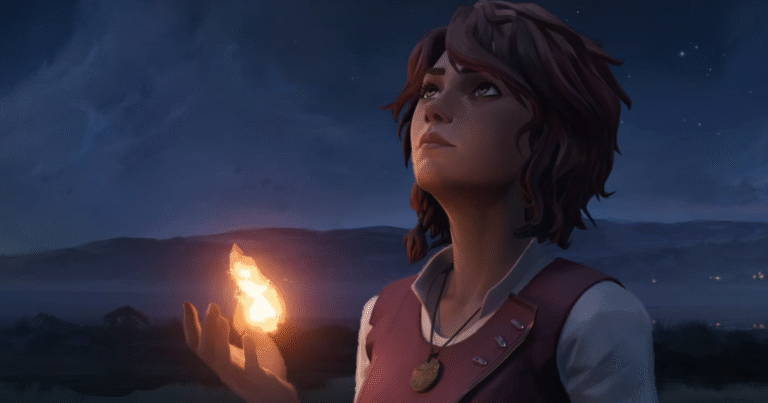
Which brings me to Fable. Is it on the short list of best Xbox games ever? Admittedly, not quite – and I say that as the person who reviewed it for OXM and gave it a very strong 8.9 out of 10. But it did successfully birth a franchise, and it was a great game. It had the unfortunate burden of having to live up to series co-creator Peter Molyneux’s boasts and promises – most notably how Fable would have such advanced systems that you could plant an acorn early in the game, and by the end of the campaign it would grow into a full tree (you couldn’t). But this was a world full of charm and humor and some really high-quality action-adventuring. And it was a hit!
And then there was Halo 2. Where to even begin? It was probably the most fun I’ve ever had in my career covering a single game. The buildup to November 9, 2004 was unlike anything I’ve experienced as a gamer or as a media professional both before and since. The hype was truly unprecedented – everyone was fired up for it. In the pre-social media era where monoculture was still alive, Halo 2 had everyone’s attention. I’ve never been more excited for a first hands-on with a game than I was the first time I laid hands on Halo 2 back at E3 2004. The year prior, Bungie showed the now-infamous single-player demo – but nobody in the media got to play it.
In 2004, however, my first taste of Halo 2 came from a single-flag CTF match on the Zanzibar map during E3. Dual-wielding weapons, boarding vehicles, the new graphics, the new weapons – it was all in there! Remember, we’d been playing Halo 1 multiplayer at OXM every day; we’d never stopped. So to say I was excited for the first new Halo of any kind since the original would be a colossal understatement. These behind-closed-doors multiplayer sessions were by appointment only, and as you can imagine, they were booked solid throughout the entire week of E3. But inevitably there were no-shows here and there, and I was able to sneak my way back in for a couple more rounds that week. Afterwards, all I could think about was Halo 2.
Luckily for me, Bungie held an all-day multiplayer hands-on session at its studio later that summer, and somehow none of my more senior OXM colleagues pulled rank, so I got to go. I was like a kid set loose in the Wonka chocolate factory as I took in as many maps and modes as I could (which wasn’t all of them, as Bungie intended to keep some secret for launch, but more on that shortly).
And then, as Halo 2’s November 9 release started getting closer, we got the call from Bungie: we’d been invited up to do a world-exclusive review of Halo 2 for an OXM cover story. Because magazine lead times are quite long – meaning, it has to be done quite far in advance to hit the magazine’s newsstand on-sale date – it meant that I found myself at Bungie at the end of September in 2004 with our editor-in-chief, Rob Smith. I wrote all about this recently, but one thing I didn’t mention in that piece was the secret map thing. Through our multiple days of time with both the campaign and the multiplayer, we discovered that Bungie was hiding a surprise for Halo fans: a remake of one of Combat Evolved’s most beloved multiplayer maps, Blood Gulch. It was called Coagulation in Halo 2, but Bungie didn’t want us to spoil the surprise. Rob and I argued that we’re reviewing the game and thus it was fair game for the magazine because it was part of what we wanted to talk about. The compromise we reached was to do a special sealed page in the OXM review. You literally had to cut the magazine spread open if you wanted to see the surprise reveal of Coagulation. By the way, that wasn’t an easy thing to arrange with our magazine printer! It was the one and only time we ever did it.
The Road to Next-Gen
I’m going year-by-year here because the first handful of years for Xbox were both important and extremely memorable. I promise I’m not going to write about every single one of the Xbox’s 25 years, but I certainly have to talk about 2005, as it was a pivotal year for the upstart American console brand.
Everyone remembers 2005 as the launch of Xbox’s most successful console, the Xbox 360, but that wasn’t until November. The original Xbox went out with a heck of a bang in the 10 months leading up to that. In March, Ubisoft Montreal dropped another banger in the form of Splinter Cell Chaos Theory. It was three masterpiece games in one – another Michael Ironside-voiced stealth sandbox campaign, an evolved Spies vs. Mercenaries mode that added an extra player on each side for 3v3 matches, and a pioneering two-players-required four-mission co-op campaign (later upped to six via two free DLC missions) that ended up serving as a sneak preview for the It Takes Twos and Split Fictions we enjoy today. I gave it a 9.9 out of 10 – OXM’s highest score ever at the time (Halo: Combat Evolved got a 9.6 and our aforementioned boss Rob Smith gave Halo 2 a 9.7) – and it’s a score I still firmly believe in today.
Chaos Theory already flexed the Xbox’s graphical muscles, but in April, id Software dropped a stunning Xbox-console-exclusive port of Doom 3, which was top-shelf PC stuff when it was released just eight months prior. BioWare followed up KOTOR with another Xbox exclusive: Jade Empire, which IGN gave a 9.9 out of 10 to at the time. Psychonauts hit that same month, debuting on Xbox first and bringing another game-design legend, Tim Schafer, into the Xbox fold for the first – but not last – time. Forza Motorsport was the start of something truly special in May, while Grand Theft Auto: San Andreas finally came to Xbox in June. The fur-shaded Conker: Live and Reloaded was Rare’s first proper Xbox project after Microsoft bought the revered studio from Nintendo in 2002. And just before we said hello to the Xbox 360, Valve brought the brilliant Half-Life 2 to a console for the first time with a port to the original Xbox in November.
The Next Xbox
Word of the next-gen Xbox – codename: Project Xenon – built throughout 2005. At OXM, we had the great privilege of getting all of the information on the new console well in advance on account of those aforementioned magazine lead times. Because of this, Microsoft required that our open-office space within the bullpen of our publisher, Future, be walled in and secured with a locked door. Nobody outside of the eight of us on the OXM staff could see what was on our screens and, later, on our desks.
At E3 2005, I happened to have an Exhibitor badge, because our company, Future, had a booth on the show floor. That meant I could access the halls of the Los Angeles Convention Center before E3 properly opened. I remember being on my way to Future’s booth but passing by 2K’s floor space and spotting a Top Spin 2 kiosk. It was powered up and ready to play, so I picked up the controller – my first time picking up the revised Xbox 360 “Krypton” controller (as it was so codenamed), which became the template for many gamepads that would follow it, from Xbox’s own revisions to Nintendo’s Pro Controller to even the PS5’s DualSense, to a degree. This all-too-brief (and unauthorized) hands-on was technically my first time actually playing an Xbox 360 game, though it was on the initial development kit, which was – fun fact – a PowerMac G5!
Later that year – after a preview cover story I wrote for OXM that summer that sent me to Infinity Ward to get the first hands-on with the day-one Xbox 360 title, Call of Duty 2 – I had the excitement of going to pick up our Xbox 360 debug consoles in September (when I say debug kit, it means that it was an Xbox capable of playing unfinished builds of a game, whereas a regular retail Xbox can only play games that have been certified by Microsoft). I don’t think I’d ever been more excited to get my hands on a new console. Sadly, we didn’t have much to play on them at first – we played a lot of the built-in puzzler Hexic HD, and I recall getting Amped 3 quite early – but even poking around the new (and retroactively beloved) Blades Dashboard interface was endlessly entertaining.
When November 22, 2005 finally came and the Xbox 360 was released – just four short years after the launch of the original Xbox – it would prove to be the peak of Xbox’s popularity and public perception. Yes, the Red Ring of Death scandal was a serious problem in the following year or two, but the Xbox 360 was so popular and well-loved that somehow the brand made it through relatively unscathed. It started with an excellent day-one launch lineup that, while lacking any Halo-caliber killers, nevertheless brought 18 games to the table, including Call of Duty 2 (thus marking the beginning of CoD’s ascent to the top of the mainstream), Project Gotham Racing 3, Perfect Dark Zero and Kameo from Rare, and the underrated horror game Condemned: Criminal Origins.
Glory Days
2006 and 2007 were unquestionably the glory days of the Xbox 360 and, by extension, of Xbox. We knew we had it good back then; we just didn’t know that, even though we’ve had plenty of amazing games since, it would never reach those high highs again. Between first-party and third-party, Xbox was on a generational run in the 360’s first two full calendar years.
Following that very good day-one launch lineup in November 2005, Xbox 360 kicked off its 2006 with the face-melting graphics of Fight Night Round 3, aka the first “holy sh*t!” graphics moment of the newly launched HD Era, in February. The next month, we got the next-gen-exclusive – and thus, Xbox 360-exclusive for the time, in the absence of the PlayStation 3 – Ghost Recon Advanced Warfighter (GRAW), immediately followed by what was, in my humble opinion, the 360’s first true killer app: The Elder Scrolls 4: Oblivion. You simply had to play this game. It was that stunning of an open-world, and a true step change from what we saw on the original Xbox and The Elder Scrolls 3: Morrowind. Some of my fondest gaming memories ever are the 44 hours I spent reviewing it from Bethesda’s basement. When it finally came out weeks later and I started over at home, I proceeded to put another 100+ hours into it.
But 2006 was far from done. Heck, that was only the first quarter of the year! We got Dead Rising that August, another system-seller in Gears of War in November, and as a cherry on top, Rainbow Six went next-gen that November with Rainbow Six Vegas.
Side note: it’s absolutely bonkers how awesome the Xbox and Xbox 360 eras were for Tom Clancy games: all the Splinter Cells, the Ghost Recons, the Rainbow Sixes. They just kept dropping, and they were all fantastic.
As for 2007, it wasn’t just that it was full of bangers, it was the wild coincidence that they all came out at the same time.
It’s not fair of me to fast-forward past the first two-thirds of that magical year, though, because earlier in 2007 we got Lost Planet, Crackdown (aka The Delivery Vehicle for the Halo 3 Multiplayer Beta), Guitar Hero 2, Forza Motorsport 2, The Darkness (Starbreeze’s underrated follow-up to the also-underrated The Chronicles of Riddick: Escape from Butcher Bay), Blue Dragon, and GRAW 2. Seriously, WOW. What a year!
And I haven’t even mentioned Xbox Live Arcade yet. It was the pioneering, pre-App Store digital download service for smaller, cheaper, downloadable games. Every Wednesday, a curated batch of games – good ones or even great ones, more often than not – were released on Xbox Live Arcade Wednesdays. And in 2008, the Summer of Arcade program started. It was a cream-of-the-crop 4-5 week run during the typical slow summer release period that delivered us legends like Limbo, Braid, Castle Crashers, Shadow Complex, Trials HD, Brothers: A Tale of Two Sons, and plenty more.
But 2007 brought one seismic surprise on the back of such a memorable year of game releases. Just after the release of the hotly anticipated Halo 3, Bungie announced it had split from Microsoft to go independent. It would leave Halo behind, but not before making two more games: 2009’s tonally unique Halo 3: ODST, and 2010’s prequel Halo: Reach, which remains many fans’ favorite Halo to this day. Bungie’s history from this point forward would prove to be quite the story unto itself, but that’s a tale for another time.
Kinect and the Pursuit of the Wii’s Casual Gamer Audience
In 2009, Xbox announced Project Natal, the codename for a device that would become known as Kinect. It was, as you may recall, a peripheral that plugged into your Xbox 360 and turned your body into a controller, reading your movements and translating them on the screen. I will never for the rest of my life forget the reveal event at E3 that year. Microsoft hired Cirque du Soleil to put on a bespoke performance in the USC basketball arena. The catch was, attendees such as myself became part of the show via a white cape with shoulder pads that had lights built into them that would sync with the performance. You had to put it on. No exceptions. Mercifully, there are no pictures of me at this that I’m aware of, but there is a picture of Ninja Gaiden designer Tomonobu Itagaki, who looked about as pleased to be wearing the “space poncho,” as it came to be known, as the rest of us.
The Kinect ended up splitting the Xbox 360 generation into two halves. The first one? Magic. Loved it. No notes. The second half? In hindsight, this is where Microsoft leadership at the time seemed to lose its focus on what got it to where it was, which at the time was ahead of PlayStation in North America. That’s probably a sentence not even the most optimistic projections would’ve believed at the time. Anyway, “what got it there” was a focus on core gamers. First-party exclusives. Third-party exclusives. Paying Rockstar $50 million dollars to get GTA 4 DLC as a timed exclusive on Xbox 360. Powerful, PC-esque hardware that made it easy for developers to build and optimize games for the 360.

It was the Kinect – and the very successful introduction of a Netflix app to the 360 – that started to change things in the tail end of the Xbox 360 generation. Sure, there were some very good Kinect games, like Dance Central, Kinect Adventures, Kinect Sports, and The Gunstringer, but I wouldn’t go so far as to say there were any truly great ones. Certainly nothing that could stand up to any game I’ve already mentioned for the Xbox 360 in this piece. And as it would turn out, that focus on Kinect and a mainstream audience foreshadowed the worst month in Xbox history.
How PlayStation 4 Killed Xbox One With a Single 21-Second Video
May 21, 2013 should’ve been a great day. Instead, it was the start of a month-long nightmare for Microsoft. The next Xbox, codenamed Durango, was formally unveiled as the Xbox One. But instead of speaking to the core gamers that got Xbox to where it was – and the very people that would be most excited to “jump in” on day one and tell all their friends about the new console – Microsoft instead touted the new machine’s “all-in-one” capabilities (hence the name), focusing its message on TV. Or, as it would be colloquially known after an internet recap went viral, TV TV TV.
Sure, we got first looks at Forza Motorsport 5 and Remedy’s Quantum Break (which itself had live-action TV “episodes” interspersed between gameplay missions), but the TV and Kinect functionality was all anyone remembered. Thankfully, Microsoft still had E3 to talk about VIDEO GAMES, so surely that would go great, right?
I was there that day, on June 10, and as I recall, it was going fine. Numerous games hit the stage: Metal Gear Solid 5! Ryse: Son of Rome! Dead Rising 3! But then, near the end of the press conference, Xbox was running towards the end zone with nobody behind them. Surely they wouldn’t slip, faceplant, and fumble the ball at the one-yard line, would they? Phil Spencer walked out on stage and would no doubt give us the price and launch date for the new console. I was in the corner of the room at the far left side of the stage, which let me see the teleprompter, and so I saw what words Spencer was about to say. It was like watching a car wreck in slow motion.
“Oh no,” I thought as I read the words on the prompter before Phil said them. “Xbox One will launch this November in 21 markets around the world at $499 in the US.”
Five hundred bucks? And the Kinect was bundled in with it? The moment of stunned silence was deafening before the crowd finally responded with a polite clap. It was a hundred bucks more than the Xbox 360 had been eight years earlier, and it didn’t go over well.
But it got a lot worse for Xbox. You all remember what happened later that same day. Sony killed the Xbox One with one video in broad daylight – the infamous “Official PlayStation Used Game Instructional Video,” made in response to the Xbox’s One’s just-announced (and poorly received) 24-hour online check-in requirements and digital authentication policies. And at the Sony press conference, PlayStation CEO Jack Tretton twisted the knife and didn’t try to hide it. “When a gamer buys a PS4 disc, they have the rights to use that copy of the game. They can trade in the game at retail, sell it to another person, lend it to a friend, or keep it forever.” The crowd roared. Tretton audibly chuckled. He knew what he’d just done. “In addition, PlayStation 4 disc-based games don’t need to be connected online to play, or for any type of authentication. If you enjoy playing single-player games offline, PS4 won’t require you to check in online periodically. And it won’t stop working if you haven’t authenticated within 24 hours.”
The ultimate uppercut? PS4 was also more powerful, and it was $100 less at $399. Game over.
I had been at IGN for a year by this point, and it was truly surreal to be covering. I remember being in a car with a PR person I’d known for many years – an ex-Microsoft PR person, in fact – on my way over to interview the reclusive Bungie cofounder Jason Jones about Halo and the then-upcoming Destiny. “Xbox is gonna have to walk back the online stuff, right?” I wondered aloud. “They’ve got to.”
Silver Linings
And they soon did. Everyone knows the story from there. The script flipped. Sony had all the momentum, and the indie developers, and the more powerful hardware. Xbox lost 30 million players in the Xbox One generation. Phil Spencer would later admit, “We lost the worst generation to lose in the Xbox One generation, where everybody built their digital library of games.”
That being said, it was hardly all bad. Titanfall, from ex-Call of Duty creators Jason West and Vince Zampella and a substantial number of their team who left Infinity Ward to start Respawn Entertainment, was incredible – and exclusive. Beloved PlayStation darling Insomniac Games made the exclusive Sunset Overdrive for Xbox, but it never got the love it deserved; it’s fantastic. Xbox had the 10 out of 10 Inside, from the makers of Limbo, as a timed exclusive. Microsoft bought Gears of War from Epic Games, who was all-in on its billion-dollar Fortnite cash cow, and kept the franchise rolling along nicely with Gears of War 4 and Gears 5. And the Forza Horizon franchise turned into a juggernaut as the wizards at Playground Games dropped one masterpiece after another.
Oh, and the Xbox One X, so far Microsoft’s only mid-cycle hardware upgrade, helped Xbox reclaim the hardware horsepower throne by offering true 4K gaming, which the competing PlayStation 4 Pro (mostly) could not do.
You Gotta Spend Money to Make Money
Near the tail end of the Xbox One generation, Microsoft had a first-party game problem. Namely, it didn’t have very many of them at all. And it had launched Xbox Game Pass, which promised to feed gamers a steady diet of first-party games as part of its “Netflix for games” pitch. So it started opening up its fat wallet and began buying studios. Lots and lots of studios. And then it started buying publishers – first Bethesda and then, very controversially, Activision-Blizzard-King.
Then things got weird. Microsoft started publishing its games on PS5, with occasional Nintendo Switch versions too. Gamers didn’t know what to think. Or rather, they mostly asked themselves the question, “Why should I buy an Xbox?” And the sales data suggested they were answering that with, “I guess I shouldn’t.” Sure, Xbox Game Pass Ultimate might’ve been the “best deal in gaming,” but the economics weren’t working for developers, and it wasn’t luring in nearly as many gamers as it needed to.
Fortunately, the Xbox Series X itself was and very much is a great piece of hardware. It’s powerful, quiet, and reliable. The memory of the Red Ring of Death has long since faded. I haven’t heard of a single widespread issue with the Series X, which is great. That’s how it should be! Anyway, the weirdness continued. I suppose, really, that the weird cloud has hung over Xbox this entire generation, given that it launched in the middle of a global pandemic.
Xbox published a couple games exclusively on PS5 for a minute after acquiring Bethesda in order to honor previously signed agreements. Supply chains fell into crisis, causing console shortages. More recently, AI data centers began gobbling up the world’s supply of RAM and hard drives, causing all consoles to skyrocket in price. The Xbox Series X that cost $500 at launch inexplicably costs $750 today.
A New Era Begins
Earlier this year, Microsoft lifer and day-one Xbox employee Phil Spencer, who took over running the business in the wake of the Xbox One’s disastrous launch and did everything he could to try and fix things, retired. He’d greenlit a number of gamer-first initiatives, like backwards compatibility and cross-play. In came game-industry newbie Asha Sharma, who immediately began flipping tables. Xbox Game Pass Ultimate, which had seen its price skyrocket to a painful $30 per month, got slashed down to $23. The controversial “This is an Xbox” marketing campaign was fed into the woodchipper. She handed Halo to Activision, betting that the Call of Duty machine will get Master Chief back into action more regularly than Halo Studios (nee 343 Industries) could. She canceled an Avowed sequel at Obsidian Entertainment and got the developers of the beloved Fallout: New Vegas going on a new Fallout game instead. And, perhaps most boldly, she’s trying to put the exclusivity toothpaste back in the tube, saying Xbox would “return to exclusives.”
Unfortunately, she also laid off a shitload of people and spun out five studios. We can’t leave that part out, because it flat-out sucks.
And then there’s the wild card: she also announced Xbox’s next-gen machine, a console/gaming-PC hybrid codenamed Project Helix. It’s a bold pivot away from the traditional console model, which seems to be what Sony will stick to with the PlayStation 6. The reality is that the console market is not growing, but the PC market is. And Microsoft can certainly scale its next box in a way that Valve can’t with the probably-similar Steam Machine. So we’ll see what happens with the Helix.
The Great Unknown
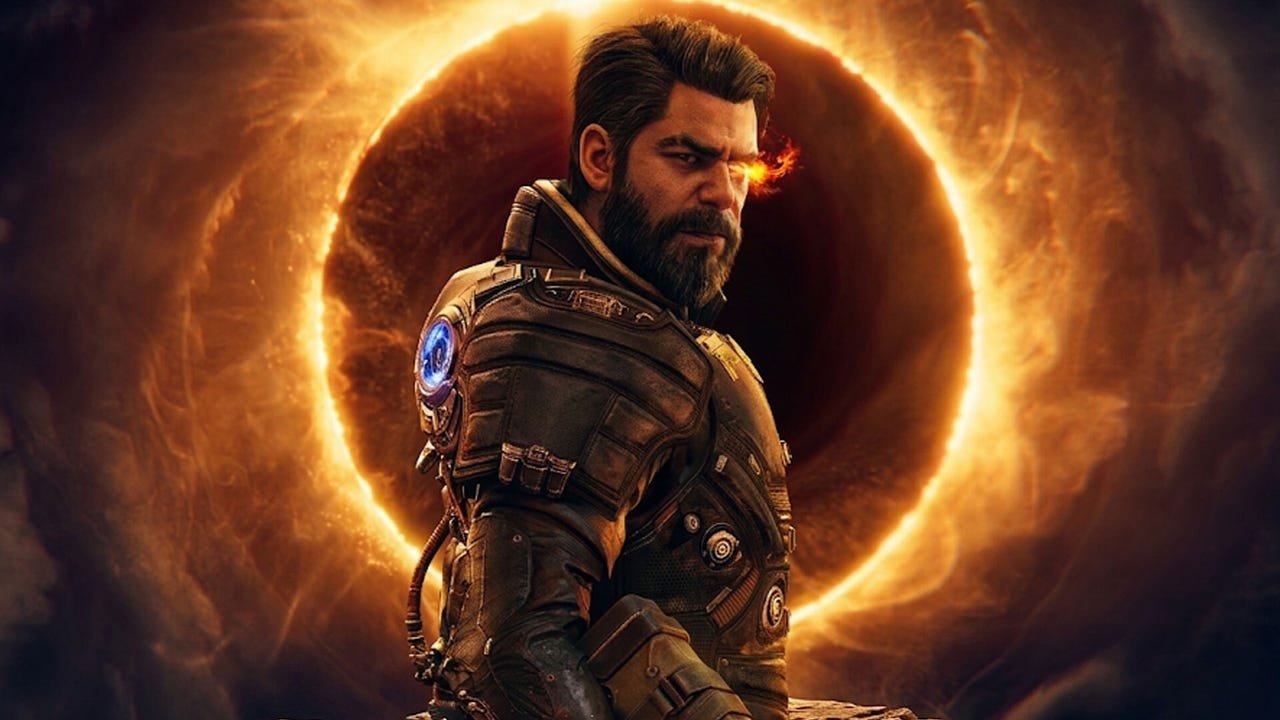
Twenty-five years in, Xbox’s future is up in the air, and seemingly far less predictable than that of its competitors. But if you take a step back and zoom out to the 10,000-foot-high view, its present is pretty good. Forza Horizon 6 was another gem, Gears of War returned with a potent prequel. Fable is coming back in a few months – and if it’s as good as Playground’s other games, we’re all in for a treat. Clockwork Revolution probably won’t sell systems, but it’s a promising RPG from some seriously talented RPG developers. And then there’s The Elder Scrolls 6: Sentinel. Sure, it’s at least a couple years away, but if Sharma decides to make it an exclusive, then the console market might start to get spicy again.
Suffice it to say, the Xbox’s first quarter-century has been full of things none of us would’ve ever seen coming. We’re all unequivocally better off in the gaming world for Xbox being in it, though, and here’s hoping the next 25 years give us a lot more great gaming memories to treasure.

Ryan McCaffrey is IGN’s executive editor of previews and host of IGN’s weekly Xbox show, Podcast Unlocked, and a co-host of Next-Gen Console Watch. He’s a North Jersey guy, so it’s “Taylor ham,” not “pork roll.” Debate it with him on Twitter at @DMC_Ryan.