I’ve played about three hours of Hitman studio IO Interactive‘s 007: First Light, give or take. The most immediate takeaway I have? This is not a Hitman game. I’m not a major Hitman expert, mind, so I can’t speak to the really minute things that might subtly carry across, but I’ve played enough to know the essentials. I always saw Hitman, especially the most recent version, as being about playing in a big, layered sandbox of lethality. You can biff a guy with a flying suitcase or drop a piano on someone or, I dunno, twist a sign around so when your assination target runs really, really fast they unwittingly go straight off a cliff.
Hitman always had a faint whiff of Looney Tunes to me, basically, albeit one brought about by flexibility and breadth: a range of options; an open area; a lot of NPCs with convenient back-office uniforms; a lightly systemic world of loosely chained events. And so naturally, the first guess at what a Bond game might look like in action has been, well, mostly that. You’re a guy in a suit at a fancy ball, with a piano that needs a-droppin’ and some henchmen who need a-poppin’.
But 007: First Light isn’t that. In fact it’s quite the opposite: this is a very straightforward, really quite old school, linear third-person stealth-action game – at times, during my demo, so linear it’s essentially on rails. If you were hoping for the Hitman-but-Bond version, that might sound a little disappointing – I think it is a tad myself – but once you get your head around it, things look better. These classic, straight-line games are about forward momentum, spectacle, pizzazz. And in those terms, 007: First Light looks pretty good.
IOI, for its part, is plenty aware of the differences, and its decision to move away from the Hitman formula here clearly comes from thinking about those differences rather deeply. “Hitman is the best in the world at what he does – of course, he operates clandestinely as well as Bond does, but Hitman is an agent of chaos,” Rasmus Poulsen, 007: First Light’s art director, tells me during an interview at the time of my demo. “Bond is a hero, and has to be a hero.”
Poulsen, an enjoyable mix of frank and philosophical during our brief conversation, is keen to emphasise “a lot of differences” between the characters, which have informed IOI “in how we approach game design – specifically game design – and in very, very important ways.” But he’s also aware of the obvious similarities. “We’ve done worlds of, let’s say, clandestine operations before. And that’s sort of shared between the two universes. And then, personally, I’ve been inspired by Bond for decades in my professional career, so when I say there’s a ‘bit of Bond in Hitman’, that’s certainly true. So lots of overlap as well.”
When it comes to that game design, the differences quickly make themselves quite clear. My time with 007: First Light played out across several missions, starting right at the beginning, with Bond, a lowly Royal Navy airman, crash-landing on an Icelandic Beach after a strange surprise attack on him and his crew. My first tasks as pre-007 involve a lot of learning to walk, crouch, jump, and cling to ledges. It’s subtle, but the attention paid to the basics here – in a tutorial mission that actually blossoms into quite a fun, if simple, stealth-rescue attempt amongst a bit of classic bonk-patrolling-guard-on-the-head action – suggest a game very intentionally pitched at the broadest of audiences. This isn’t Hitman because, while brilliant, Hitman isn’t for everyone. A triple-A James Bond game, with the mainstream audience that naturally attracts, absolutely must be.
Maybe the stand-out part of this tutorial-slash-introduction is the sheer production values involved. Developers always front-load the pretty stuff with opening missions, naturally, but on a hefty PC for this demo, the leap from Hitman: World of Assassination to 007: First Light is significant. With this mission taking place at night, patrolling enemies slow-march through long grass and sweeping flashlights sway with ominous menace. Of all things, I was taken with a lovely bit of animation blending as Bond hopped onto a ladder from just beside its base. Little details like this, which often take significant amounts of time to make in practice, feel like a lovely flourish.
Next after this opener was a slight skip forward to another tutorial, this time in the form of combat training for MI6. In a way, this felt like the most open of the missions I played – a hint maybe at there being more open ones within First Light that I simply haven’t seen. Here, you’re dropped into an old fort on a sunny European coast and asked to capture a flag at its central peak, a couple of routes available to you – left, right, high, low – and a range of options for getting past the grunts in your way. It’s also the first time you use your special watch, which, somehow – it’s Bond, don’t ask – packs both a kind of Batman detective vision and four types of minor remote annoyance.
In practice, across not just this tutorial but the other, fuller missions I played, the variation between options here was a tad disappointing. The way it works is simple: you pick up one of two resource types – battery charge and chemicals – from things laying around the world (clearly marked in blue or green). Blue, battery-powered abilities allow you to do things like make guards go “Huh?!” and walk away from their post, because you’ve turned on a massive vacuum cleaner from around the corner. Green ones are more of a human disruption – sticking someone with an irritating dart, say. Both can be deployed right in the middle of combat, too, buying you a vital beat to land a couple punches or creating enough space to whip out a pistol.
In stealth, these tools ultimately provide a kit that feeds nicely into First Light’s overall positioning. Namely: a relatively forgiving, enjoyable, entry-level stealth game, but not a hugely sophisticated one. An early-to-mid-game mission I played serves as a good example.
This one’s classic Bond – a gala! A bit of blagging! A femme fatale! A baddy with dodgy hair! – as you, without permission, naturally, go in search of the person behind an earlier, unspecified tragedy. Cue a chain of events – albeit, as far as I could tell from watching other players’ screens against my own and quickly testing boundaries, a mostly linear one. (Alex Donaldson saw a hands-off version of this mission a few months back, and there were some minor differences that led to the same outcome: joining a camera crew and getting a video camera, for instance, instead of what I did here. Other options included impersonating a delayed guard after overhearing another conversation, as well).
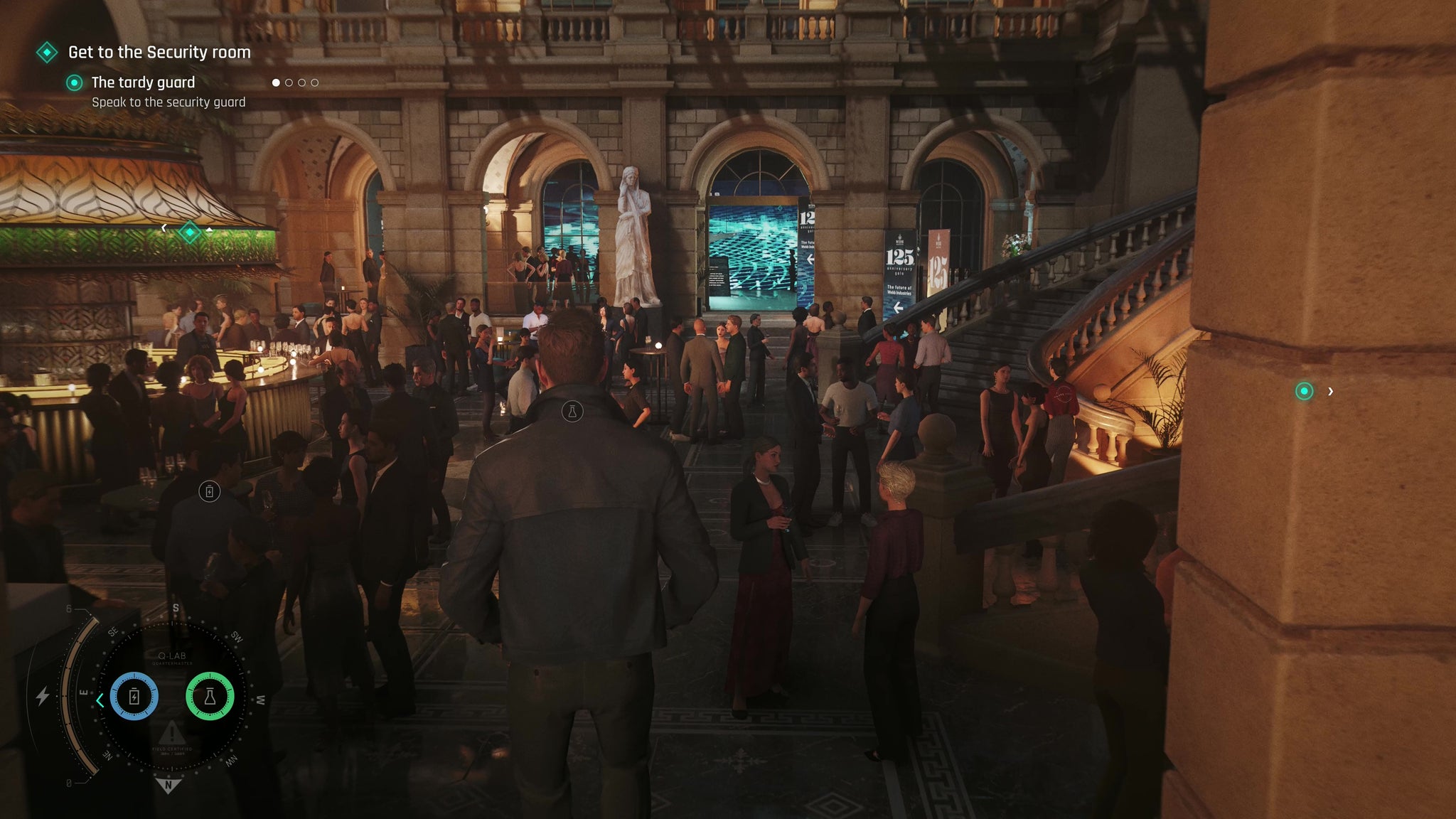
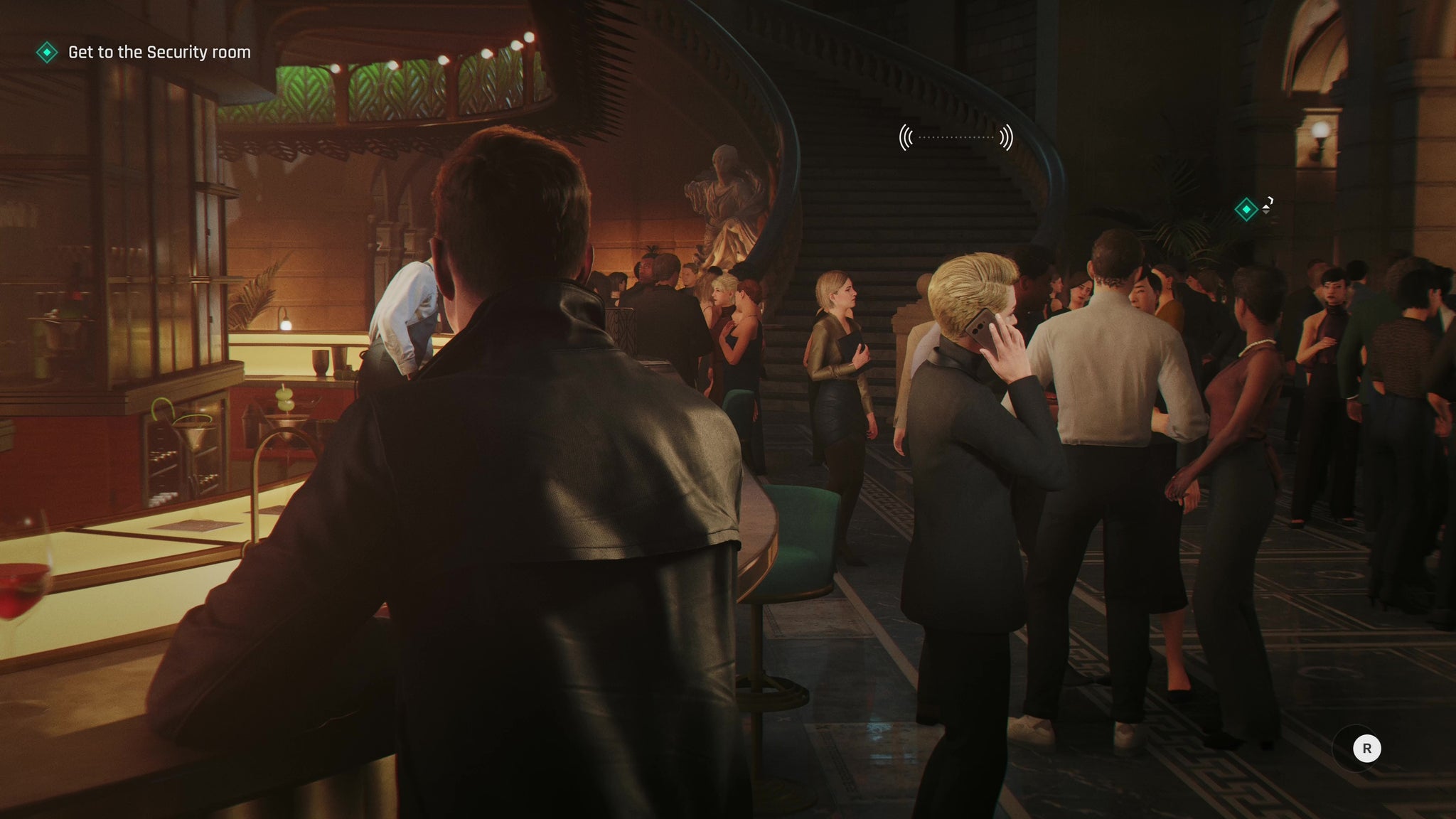
After distracting someone in the lobby to blag an invite – a couple options but I just jabbed a guy with my watch and yoinked it from his pocket – you’ll worm your way through a thrumming crowd and past a prominent photographer and his big camera.
Here, a chance for some earwigging – first with the arrogant posho father of a major character, whom you can briefly chat to, and then in my case with a PR lady, having quite a loud phone conversation about a late journalist (never!) who’s yet to show up. Bingo: you quickly slip into character with a dialogue choice and convince her you’re the guy, at which point she tells you to hurry up and grab your camera. Bingo number two: Chekov’s camera, which almost blinded you on the way in, and which you need to find a way to nick. Surprise: I binged the guy with my watch again so the camera went dead; he went off to put it on charge; I distracted the bloke guarding the area and stole it, and then you’re away.
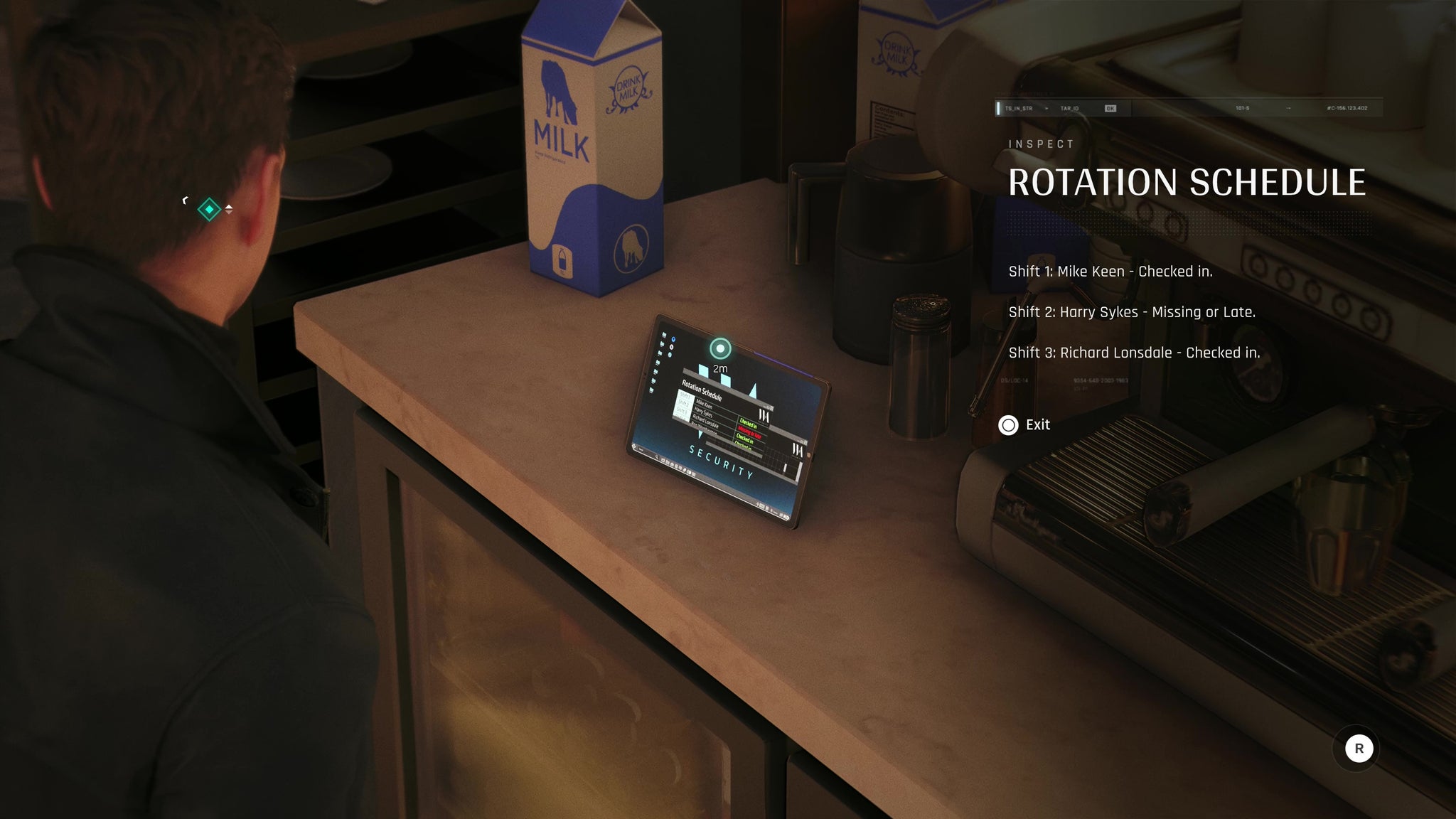
That gets you as far as one restricted area. Then, a few fraught phone conversations with a young Moneypenny (busy on a never-that-serious date and easily swayed to help you out here – much more fun) and you need to find your way into another restricted area, where all the security footage is held. Cue the demo’s main, enforced stealth section.
Progress here largely involved listening to some genuinely funny personal monologues from guards (“swipe, swipe” goes one on not-Tinder; another is dreadful at not-Wordle; all of them have a case of the “Oi guvs” when it comes to English accents but we’ll allow that) before a variation of remotely accessing things like that vacuum, a photocopier, an air conditioner, an enjoyably explosive fire extinguisher, a vending machine, and so on. IOI’s signature impish humour is still present here, even in this slightly more restrained context.
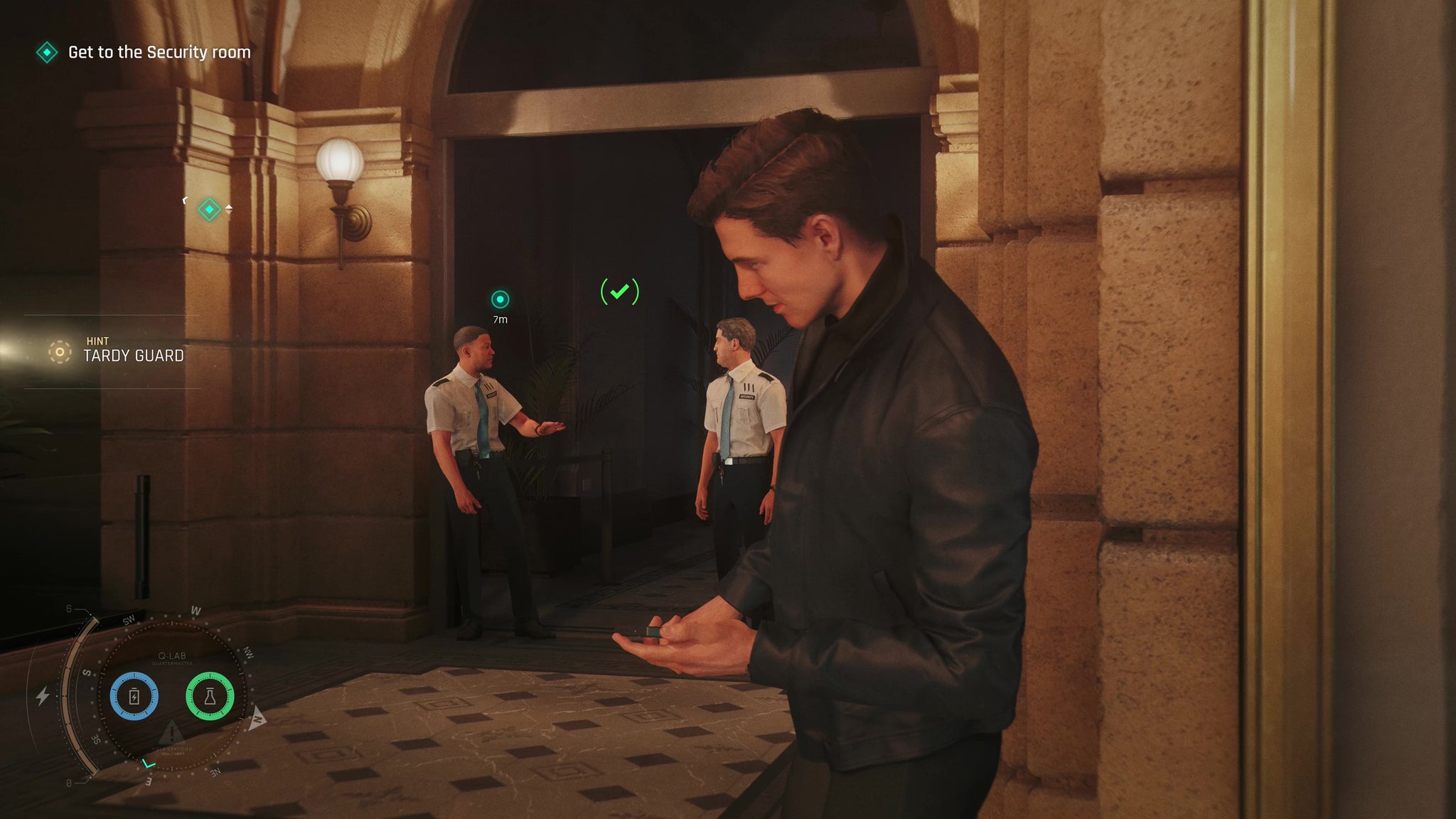
Alternatively, you could, in theory, punch your way through this, though guards will regularly radio for backup – and quite swiftly too – when you’re discovered. So 007: First Light’s relatively grounded hand-to-hand combat means you’ll quickly be overwhelmed. Enjoyably, and very Bond-ly, there’s also a kind of ‘blag’ mechanic. This was never fully explained, but it seems when you’re discovered in most stealth scenarios, you can quickly press a button to offer a barely believable excuse as to why you’re there. This buys you a bit of time to quickly pass through or grab something essential before someone gets suspicious (“Aren’t you a little underdressed?”, “Casual Fridays”, “It’s Thursday…”, etc.). From what I could tell, this is powered by a kind of Bond-o-meter on your UI, for which you earn points by doing Bond-y things like successfully beating people up. I’m a big fan.
The path here was a forking one again – ultimately, another left-or-right decision, albeit with slightly branching paths on each side, such as staying inside or going round the balconies on the exterior of the building to the right. But this is also an example of the move away from sandbox stealth for IOI. On failing – getting caught and beaten up – you’re bumped back to a pretty recent checkpoint, sometimes even mid-way through your path through the restricted area. It’s without a doubt more approachable, though fail to concentrate and you can quickly slip into a loop of rushing back in to try again, failing, respawning, and repeating without pausing for thought – essentially bashing your head against the heavily guarded wall until you break through to the next checkpoint. Ultimately, it’s a moderately satisfying game of moving guards around with distractions and managing some security cameras, by being smartly economical with limited Q-watch resources.
Not to sound too bloodthirsty, but things improved for me when Bond’s allowed to start shooting people. That’s defined here by the ‘license to kill’ mechanic, whereby you’re only able to use lethal force when an enemy shows lethal intent first. In these cases things feel a little more open again, and likewise more free-flowing. Often, if you’re like me, you’ll start working through an area all quiet-like until someone spots you and you think, you know what, it would be quite fun to have a bit of action now, and off you go.
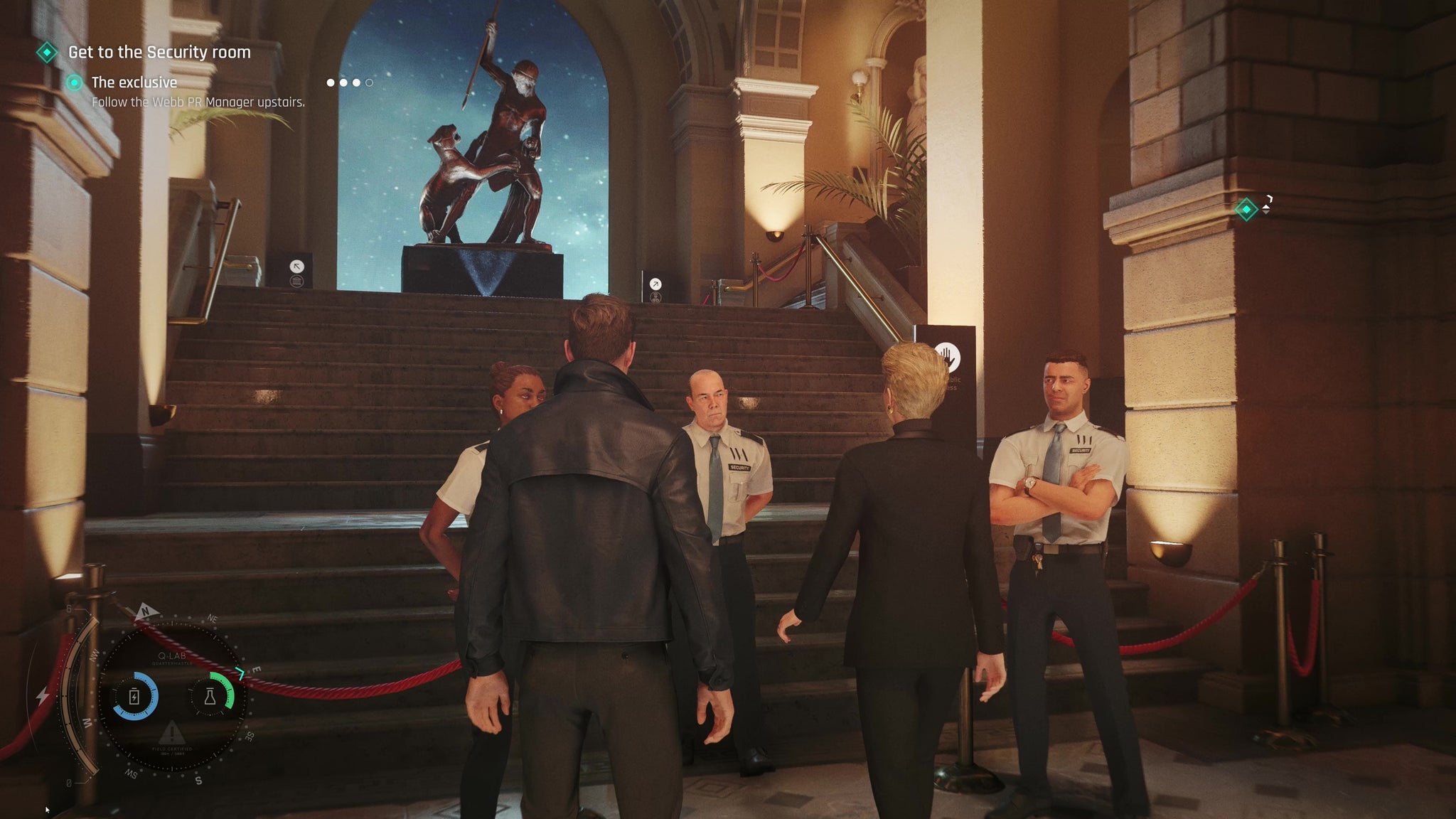
There’s a handy time-slowing mechanic for aiming – based on Bond’s ‘instinct’ ability – though I didn’t tend to need it. Gunplay here is sharp, as is the hand-to-hand combat. An earlier mission, based in an apartment, had a cracking, Bourne Identity-style fistfight in the kitchen, which also showed off the nice touch of allowing Bond to wing various nearby items at enemies to create another quick opening (and for an accompanying quip, of course). Plus, he can rather savagely bash their heads into various surfaces. After a lot of fist-fighting – it’s fun! Clearly something had got into me that day – you will likely notice the combat does tend to repeat a fairly small pool of animations. But they are gloriously meaty ones; this is gritty, modern Daniel Craig Bond here. And there’s a nice, if again relatively simple, rock-paper-scissors system of punching, blocking, countering (if you time a block very well), and grappling (best used against people who are themselves blocking).
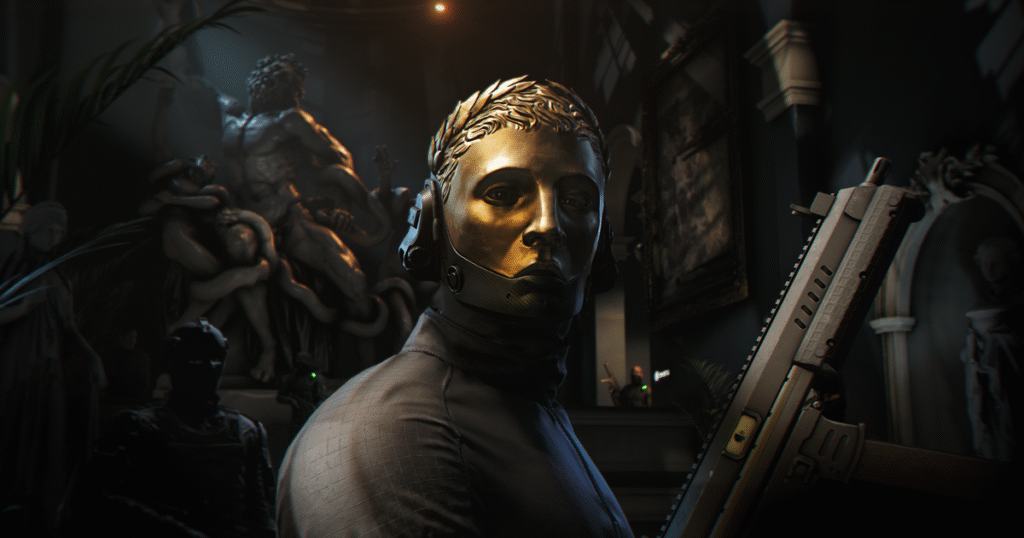
What struck me most, though, was the sense of forward momentum to First Light’s combat. There’s some subtle but very clever design going on here: low amounts of ammo; just enough dropped weapons; a compact, John Wick-like kineticism to rapidly moving between fists and pistols at close range; lots of cover and a little burst-sprint-to-cover system to go with it. You’ll find yourself charging forwards without even realising it, darting from behind a wall to a waist-high blockade, yanking some poor mope over it then hopping over yourself, grabbing a gun, shocking a guy with your watch, taking out a couple at range – who seem to pop up for you, ready for a bullet, with almost Hollywood timing – and on to the next. There were a few moments like this but none better than the main mission’s climax, a crescendo of theatrical, electric red and heavily armed silhouettes dotted amongst statues – so, unbelievably James Bond – where I felt myself almost sucked forward, into and through the rising action, as though the power of cinema compelled me.
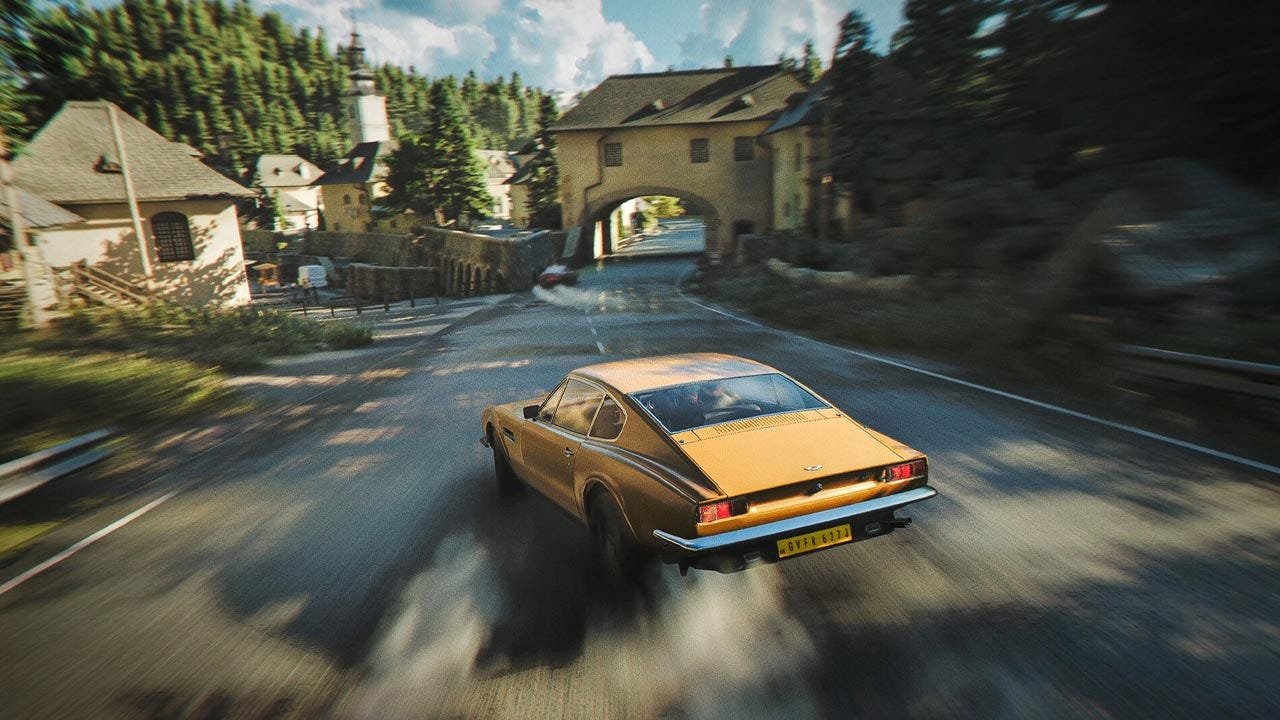
Poulsen, as an aside, is intentional in not naming a specific film as a main inspiration when I ask – but gives a great snippet of insight into the care taken by IOI to strike at these kinds of historic, cinematic subtleties. “We would dive into, for instance, colour grading on Goldfinger, looking at the mountain chase, stuff like that,” he says, referencing one of the iconic Bond scenes. “So the blue looks a certain way, fits a certain way, so there’s some sort of a timeless postcard aesthetic to some of the older movies, which inspired us in terms of colour choices.” He points to Bond’s car too, naturally – “What colour? Grey? No, no! Never grey!” – and minutiae down to the face of his Omega watch.
These parts, and a few others, are magic. There’s a slightly funny, slightly Hitman (and slightly Indiana Jones?) boss fight in a kind of museum storage room, for instance, involving taunting the dodgily-haired dude into places where I could drop big things on him (couldn’t find a piano, sadly) or give him an electric shock. Plus, a fantastic, if not enormously novel encounter with this Bond’s crimson-gowned femme fatale, and a comically arch villain. There are other moments, though, which do raise a few questions.
One is where we move from linear to, as I hinted above, essentially fully on-rails set pieces. The intent here is obviously to enable real spectacle. 007: First Light’s most obvious inspiration is surely Uncharted, a series you may view as either a timeless classic or the type of games that had their place, but which maybe aren’t the profound revelations they were once billed as in the context of game design today (you can probably guess where I land). In certain sections here, for instance, you might find yourself running along from left to right, crouching behind cover, while invincible enemies shoot at you from not-that-far-away and you just have to keep pressing right on the analogue stick.
Marginally more interactively, another set-piece had me hopping from cover to cover behind the chimneys of London’s moonlit rooftops, remote-activating (magic Q-watch power again!) a series of very conveniently positioned floodlights to blind an enemy sniper. These sequences were fine, and will work better in the final game the rarer they are – as brief moments of punctuating ‘interactive cinema’. But they might be a problem if they become too central a part of the game.
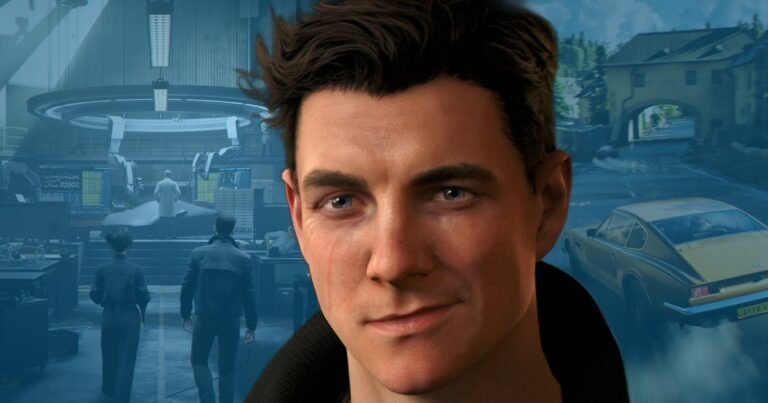
Similarly, a question probably at the forefront of a lot of Bond fans’ minds: is this version of James Bond himself actually any good? Call me a coward, but it’s probably too early to tell. Dexter’s Patrick Gibson is inoffensive as a young 007, but in my time also not particularly captivating – fellow First Light star Lennie James’ hire-him-for-the-main-gig push recently is a stretch. I’d put this, at least partially, down to the choice of going with a young Bond in the first place.
There are reasons for going this way, of course. As Poulsen put it, offering the chance to play a “developing” character, with a sense of progression for the player, was one, “and that’s a very good one, because it allows us to align the character with the player. You know what Bond knows if you step into this world of espionage with him, alongside him. And together, you and him as a character venture forth,” he tells me rather poetically. “It also makes it easier for us to craft a character that we feel is relatable – because I can relate to some of these aspects, whereas I can relate less to an older, scarred agent who’s seen it all. So in that sense, it makes for a more compelling story.”
He’s also wary of the pitfalls, which have “aesthetically or tone-wise” been a key discussion at the studio. “The risk would be to make a silly buffoon who stumbles around, doesn’t know what he’s doing and hasn’t tried anything yet – not very cool. That’s not what we’re doing. We’re freshening him up and making him a little bit less scarred. He has received scars in his life – that hasn’t been easy for him – but hasn’t received the specific scars from the craft.”
More of an issue for me were some of the supporting cast. That super-arch supervillain was spectacularly hammy: “You know how I get, father…” [seductively brushes finger down elderly dad’s tie] – ew! But also, that’s part of the fun. Moneypenny meanwhile, harsh as this may sound, came across in my time more as someone doing an impression of Moneypenny than someone who’s not only embodied, but actually taken ownership of the role.
And that takes me on to my biggest lingering question for 007: First Light. At times, you can’t help but wonder if it’s actually, really, possible to nail James Bond in this way. Great emphasis and great care – in many ways to already great success – has been placed on understanding and recreating the ineffable Bond-ness of the licence. That goes from the casting decisions to the story to the way Bond moves and talks; the way the game’s mechanics are constructed; the tiny, missable moments of craft across animation, sound, music, lighting. The options available at any time. Even the type of game 007: First Light actually is.
At the same time, approaching it in this way opens you up to the one potential issue that so many of these new swings at big, pre-established licenses tend to face – from Bond, to The Lord of the Rings, to Star Wars, to all the many, many Hollywood remakes and beyond. Spend too much time trying to reverse engineer and rebuild the originals – often in the hope of proving to the most die-hard fans how much you genuinely care; how seriously you’re taking their beloveds – and you risk becoming less of a proud, self-confident new entry with its own take, to the tune of Casino Royale, as you do a kind of extraordinarily dedicated but ultimately star-struck tribute act. How exactly you fall on the right side of that line I couldn’t say. And I certainly couldn’t say, yet, where 007: First Light lands either. But I do know it’s going to dazzle, and at the very least be jolly good fun either way.