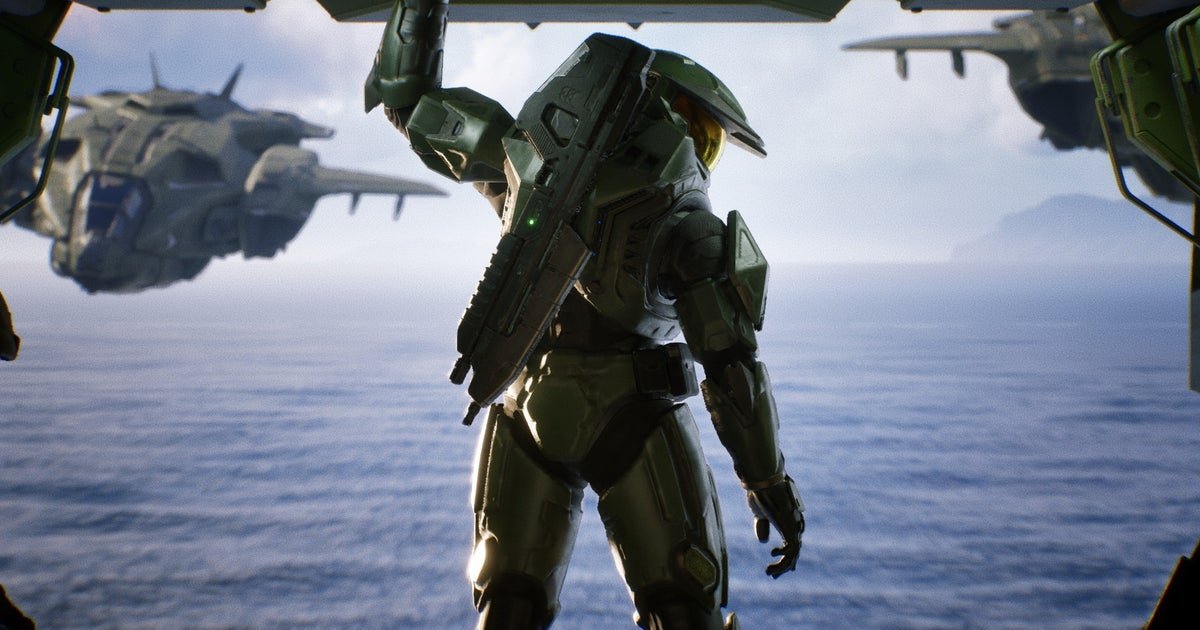
My relationship with Mass Effect begins and ends with the first game (let’s just blame the M35 Mako and leave it at that), and so Exodus – which is making no bones about being something of a Mass Effect spiritual successor, borne of some of the same creative team – isn’t a game that’s been anywhere close to my radar. But the Gamescom gods contrived to put Exodus on my appointment schedule, and while the 45 minutes or so I played wasn’t what I was expecting when I first sat down, I’ve come away both intrigued and impressed by what developer Archetype Entertainment is trying to achieve.
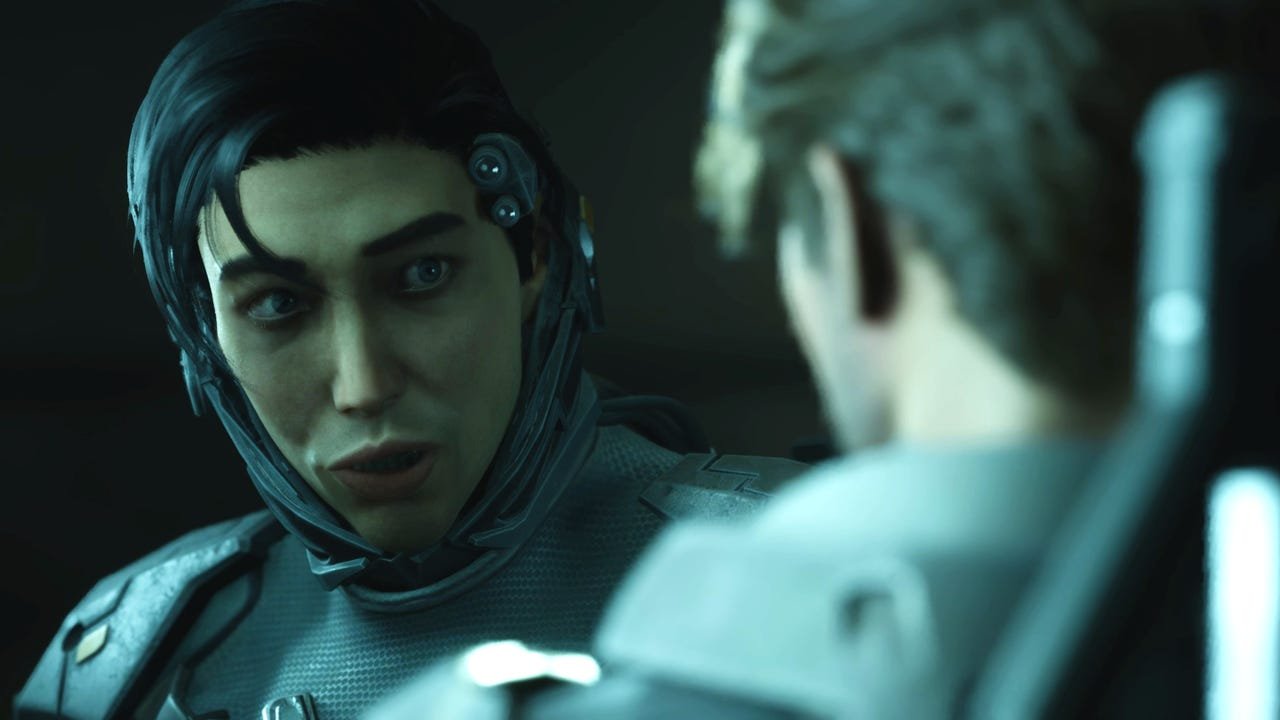
Exodus, for a quick story refresher, takes place around 40,000 years from now, focusing on protagonist Jun Aslan – a sort of evolutionary bridge between humans and an advanced, genetically engineered form of humans known as Celestials – who, as the narrative unfolds, becomes embroiled in a quest to save his home planet, Lidon, from a Celestial techno virus. As our Gamescom demo begins, however, there are other concerns. As the slick opening cinematic briskly conveys, our intrepid party is attempting to infiltrate the defence platform Khonsu, orbiting Lidon, somewhere in the year 42530.
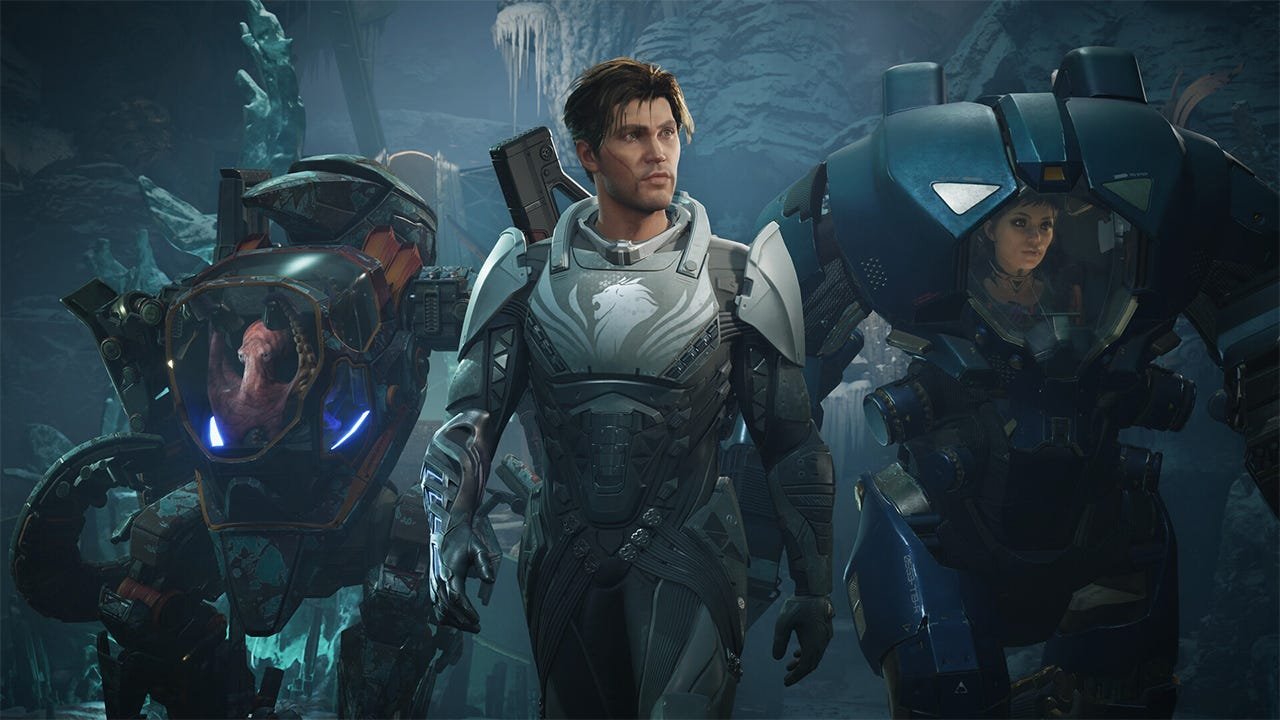
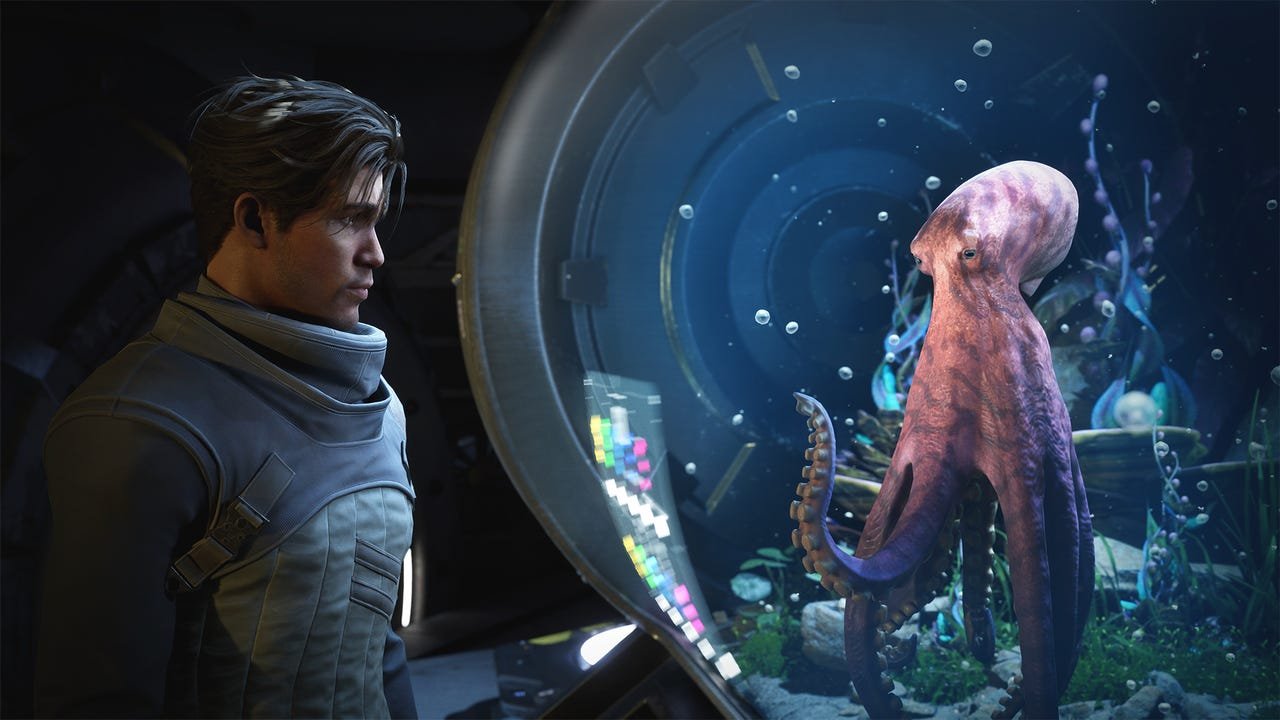
At this juncture, our crew consist of Jun, pilot and mechanic Kara Voss, Parliament of Ravens operative Suliman, heavy hitting weapons expert Elise Charroux, and Awakened Octopus mercenary Salt (in Exodus’ lore, the Awakened are essentially upgraded, highly advanced animals now trying to find their own place in the world after having been looked down on by humans for so long – which is how Jun’s adopted brother, Houston, another companion, is a wolf). And as the sequence unfolds, there’s a moment of tension as our team attempts to slip through security using an illicitly acquired access code, but ultimately – success! – we slip through and the mission begins.
And what sights! Once Exodus’ switches to playable third-person mode, its action really does look striking: as we strap on mag boots and navigate the treacly micro-gravity environment of the station’s airlock exterior, we’re treated to some lovely deep space vistas; Lidon looms out among the stars, while vast ships spew green lasers amid swirling asteroids. Space debris – rock chips and other detritus – clusters in small groups along our path ahead, scattering outward as we stride on through.
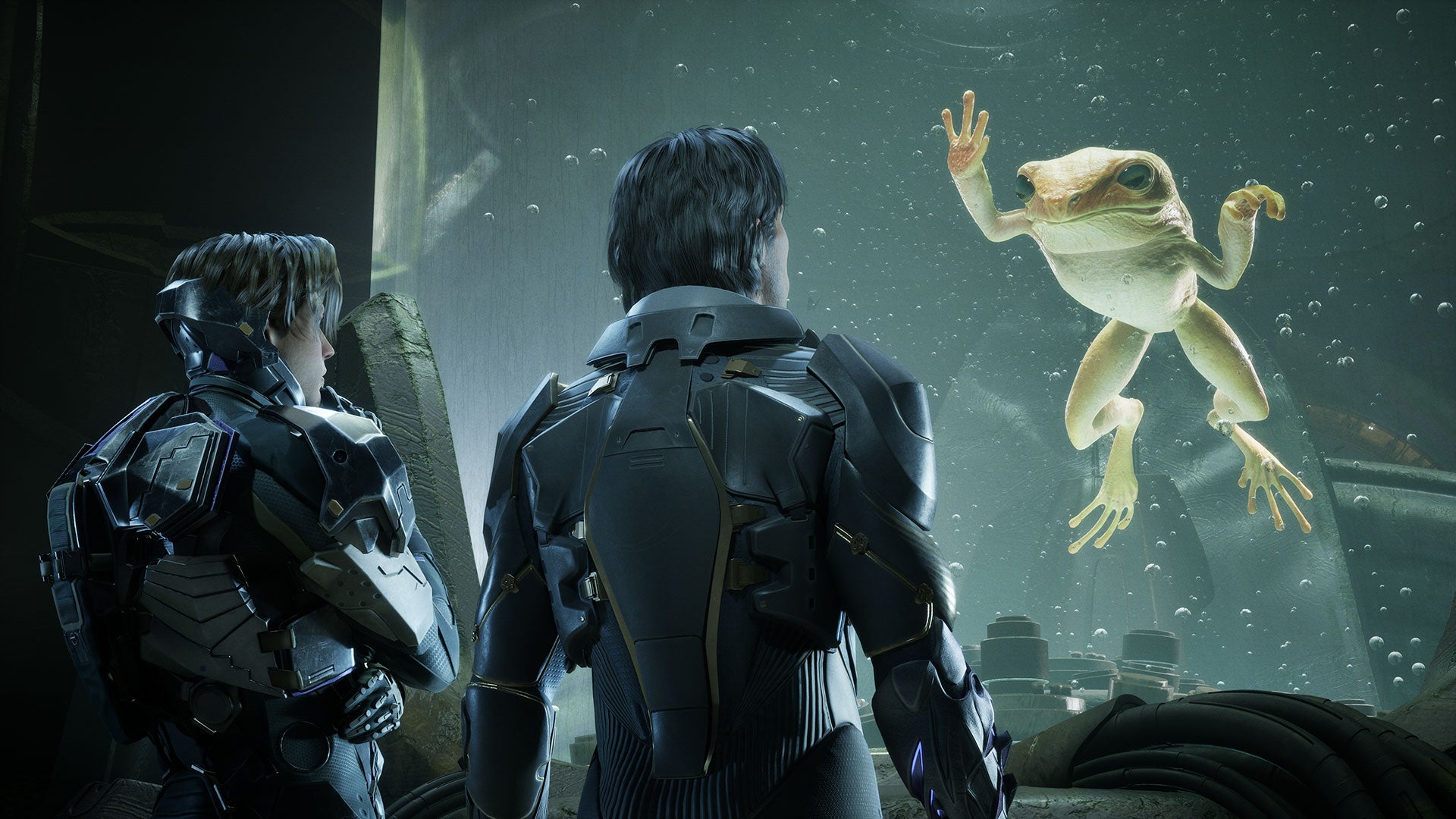
As game director Chris King explains, the set-up and the sequence – which sees our group on a mission to liberate the frog-like Kay (another Awakened species) imprisoned within Khonsu – is very much inspired by Star Wars’ iconic Death Star infiltration, but the goal is to “surprise players and put our own twists on it”. And that starts with a station aesthetic that eschews shiny metal in favour of mineral: first an exterior of cavernous sweeping curves, then within, spaces structured from livestone – a key substance in Exodus’ lore – resembling the kind of hexagonal structural jointing you’d find in Northern Ireland’s Giant’s Causeway.
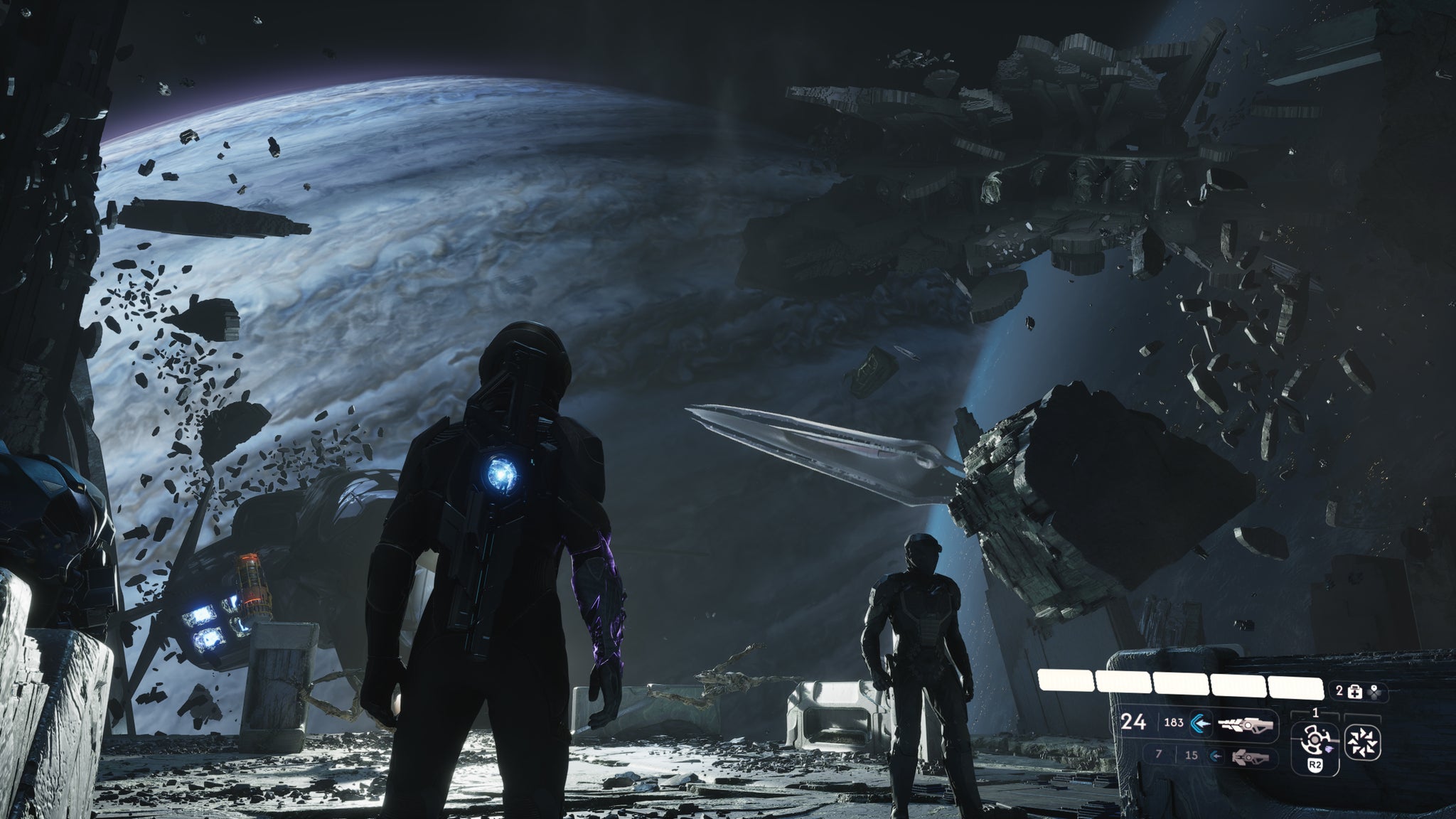
And as luck would have it, one of Jun’s party tricks is his ability to manipulate livestone. That means, at certain points, you’re able to summon elevated platforms from the ground, or march him over to impassable chaos, and conjure walkways where none were before. Jun can also use his “precognition” ability to highlight potential areas of intrigue around the environment – a weak wall, say, or a hidden room, which may house useful resources or weapons mods – lending progression a light exploratory side focus.
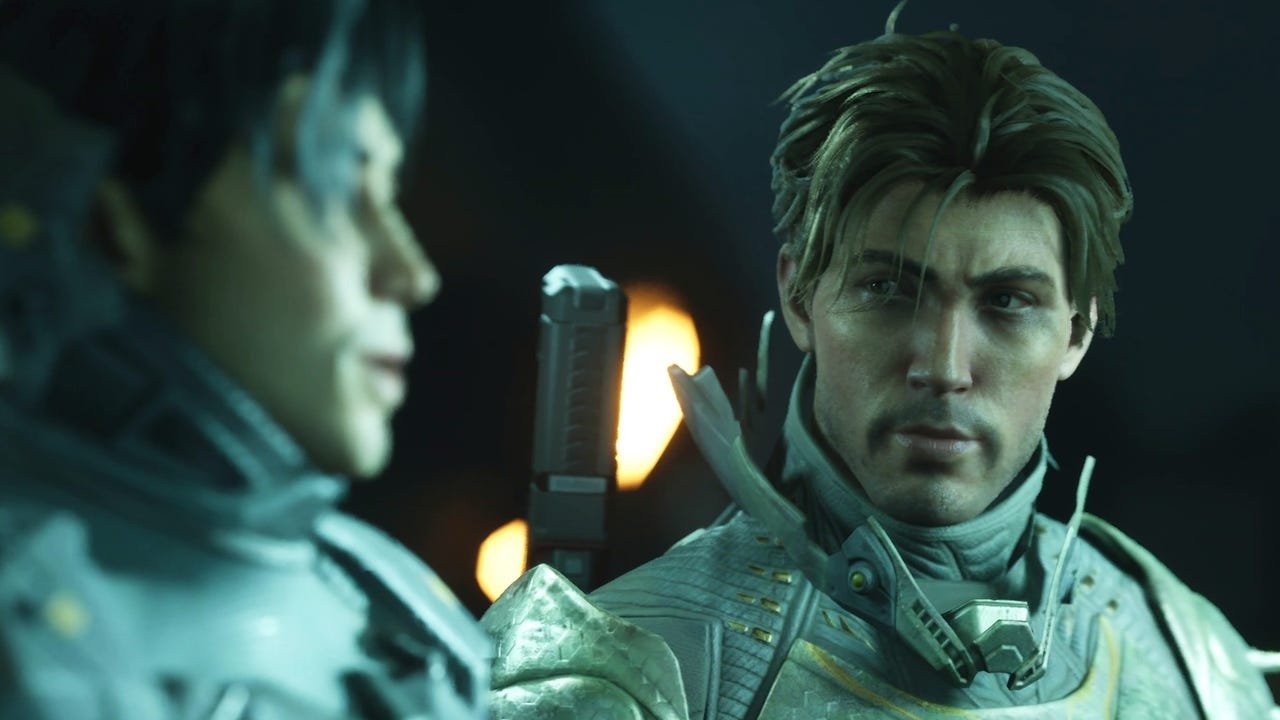
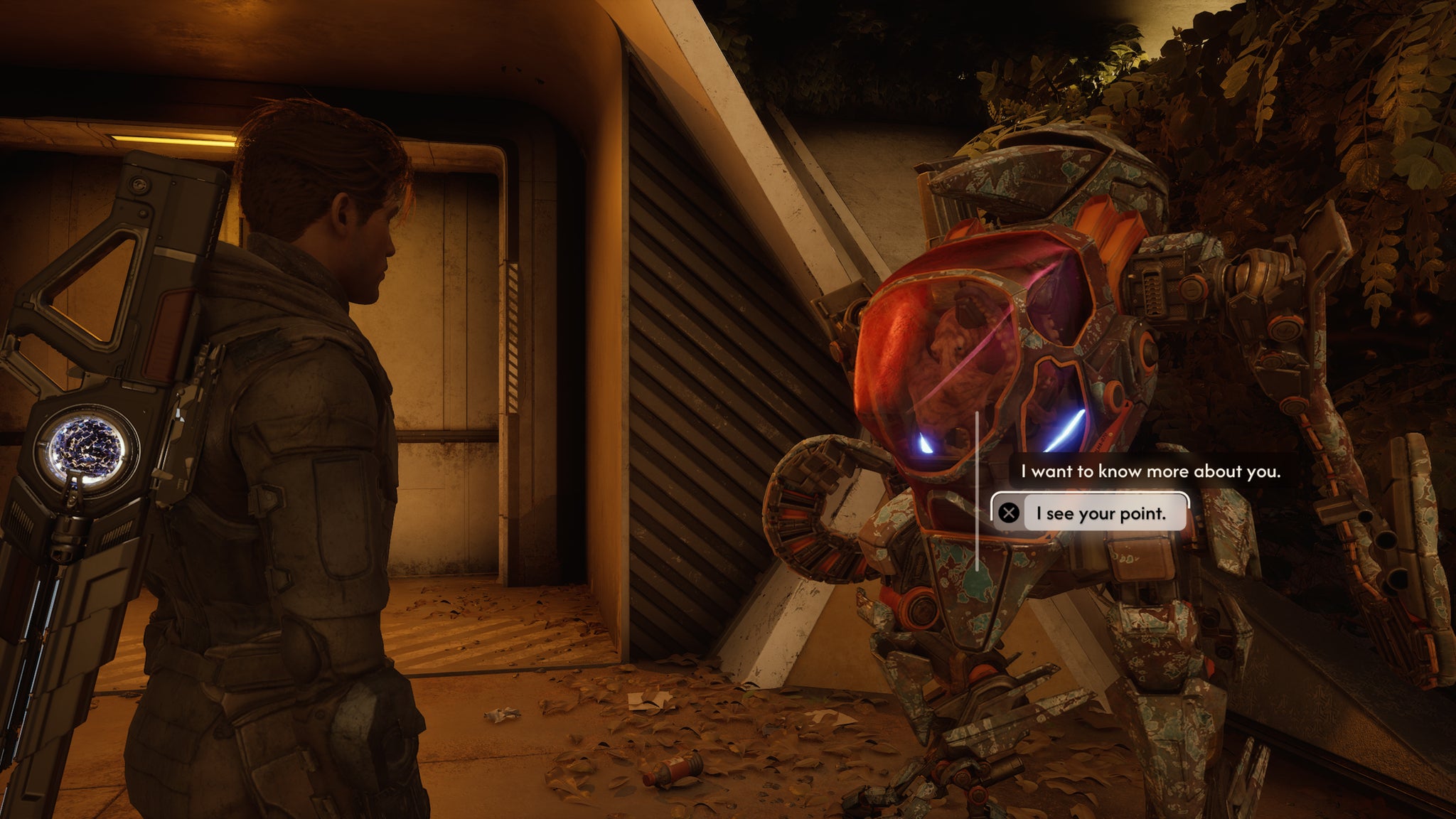
There are moments, too, when the action takes a pause for dialogue-driven story beats. There are choices to make as Jun and friends converse with the imprisoned 42C, an enthusiastic Kay ‘human expert’ whose knowledge has mostly been acquired by scanning the airwaves – which explains why most of the conversation plays out against the backdrop of loud heavy metal – and, later, there’s a bit of conversational bartering with a robot worker who’s camp enough to give C-3PO a run for his money. (Narrative director Drew Karpyshyn tells me that while this particular mission is perhaps one of Exodus’ more humorous ones, the team isn’t going for grim sci-fi and wants to mix in moments of levity.)
And as King tells me, one of the reasons for showcasing this particular mission at Gamescom was the simple fact it includes “a bit of everything,” describing it as “a really nice representation of the game. There’s some fun combat. There’s a good bit of exploration with some side areas in it, but then there’s also some cool choices that you get to see preview some of the longer-term ramifications.”
But undoubtedly it’s combat that takes centre stage here, with Khonsu effectively playing out like a linear series of combat events – which, given my previous obliviousness to Exodus, initially took me by surprise given I was expecting a quieter, talkier sort of game. But the more I played, the more it made sense.
For much of my playtime, I’m locked in battle with Khonsu’s surprisingly competent, resilient Ghosts. Ghosts which, as Karpyshyn explains, are abandoned automated soldiers who, thousands of years later, remain unaware the war has ended (in-game, each Celestial faction’s ghosts have their own tactics and builds). And combat-wise, Exodus’ cover-shooting core is, foundationally at least, a familiar one. But it’s the way Archetype builds out from there that gives Exodus its own identity – one that mirrors the focus on choice and player agency evident elsewhere.
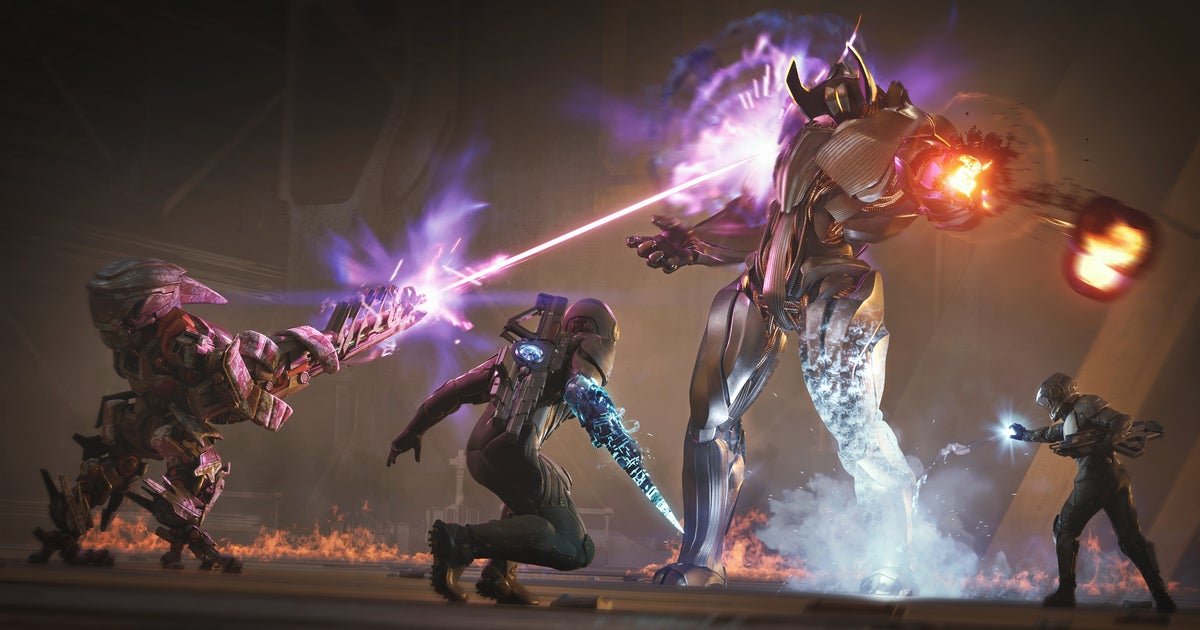
Yes, you can go into any encounter guns-ablazing – and when you do there’s a slickness and weight to the action that feels properly satisfying (I probably spent just a little too much time giddying watching Jun spring back and forth over cover). But there’s also genuine scope for both stealth and wider experimentation, thanks to skill-tree upgrades that give you freedom to tilt toward certain styles of play, a flexible weapon system, special abilities, and a companion system that’s got a real-time tactics vibe to it, opening up all sorts of combat synergies.
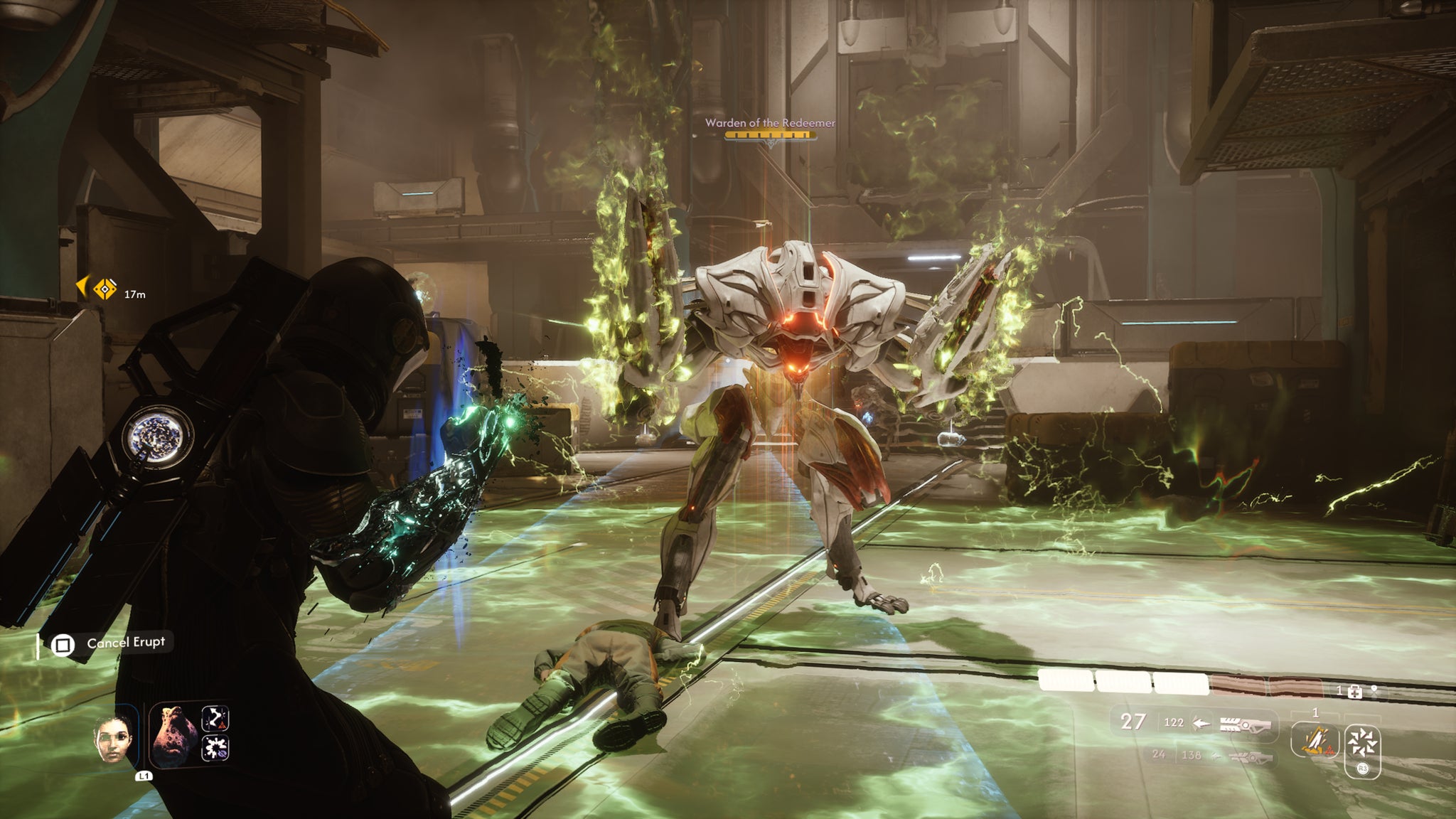
Starting with Jun’s own skillset, there’s his core weapon, the Recycler. This can switch between four distinct modes on the fly – the rapid-fire Repeater, the semi-automatic Piercer, the close-range Shredder, and the Spectre, which serves as a sort of silenced crossbow. He’s also got a cooldown-based Erupt move, capable of sending shockwaves along the ground, slinging enemies caught in its path into the air – which immediately opens up some breathing room. Later on in the demo, after successfully infiltrating a glyph shrine, Jun upgrades his gauntlet to gain Petrify, which temporarily encases a targeted enemies in livestone (handy for a few moments of unimpeded attack) and of stalling machinery, for a couple more puzzley moments. Additionally, his precognition has useful secondary utility in combat, enabling players to mark enemies and track them through walls, or identify notable weaknesses.
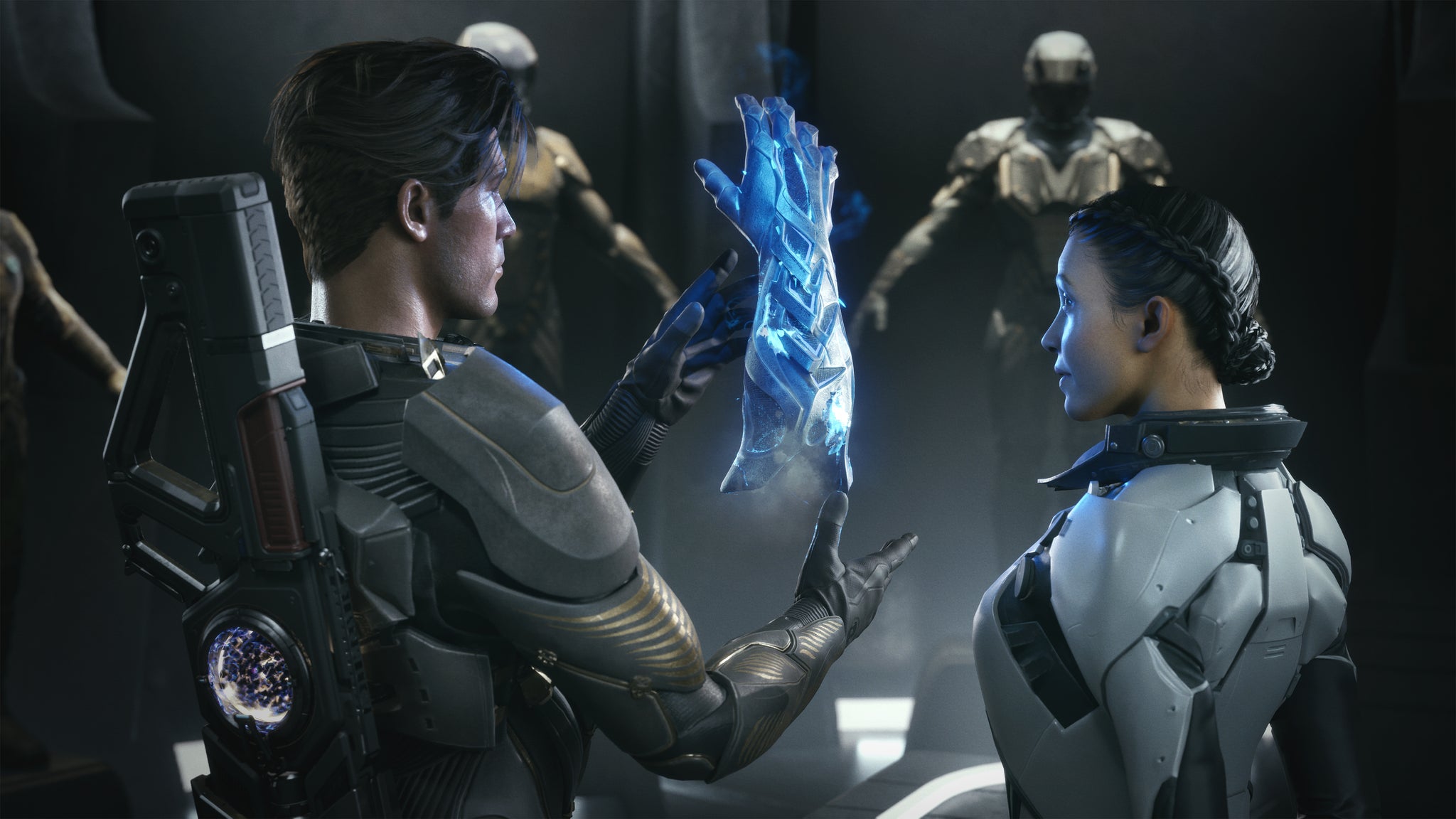
But more than that, there’s the diversity of your companions, each with their own distinctive skillsets, consisting of cooldown abilities and action-driven ultimates. Sulliman, for instance, is very much a stealth-focused ally, and his Vendetta ability allows players to target an enemy – or enemies – which he’ll then stealthily attack from behind. And even if you don’t plan to go fully stealth during an encounter, it’s a handy way of thinning out the crowds before you unleash more sustained chaos.
Speaking of which, Elise is a considerably more aggressive force built around heavy firepower, raining down micro-missiles in various forms – including “bombastic” Ultimate – at your command. Salt, meanwhile, sits somewhere between the two, and is notably able to shroud enemies in fog to limit their vision. Companions all unlock Focus Fire early on too, which sees them requesting help with a specific enemy, and if players oblige, their Ultimate meter is filled faster. All this, says Karpyshyn, allows for a “lot of interesting synergies”, as companions are able to set-up attacks while others wrap things up with a “cool finishing move”.
And interestingly, while you’ll only ever have two companions fighting alongside you at once, all of them are technically with you at all times and can be freely switched out upon reaching a level’s waypoint. And that in turn means you’re not locked into an earlier decision if a particular companion selection isn’t working out. Waypoints, incidentally, act as multi-purpose check points, also providing a place to turn scrap into the likes of telepacks, grenades, or special combat abilities. Additionally, companions all have their own upgrade paths, giving players further choices about how they choose to evolve them. As Karpyshyn puts it: “We really want players to have that axis of agency in how they fight.”
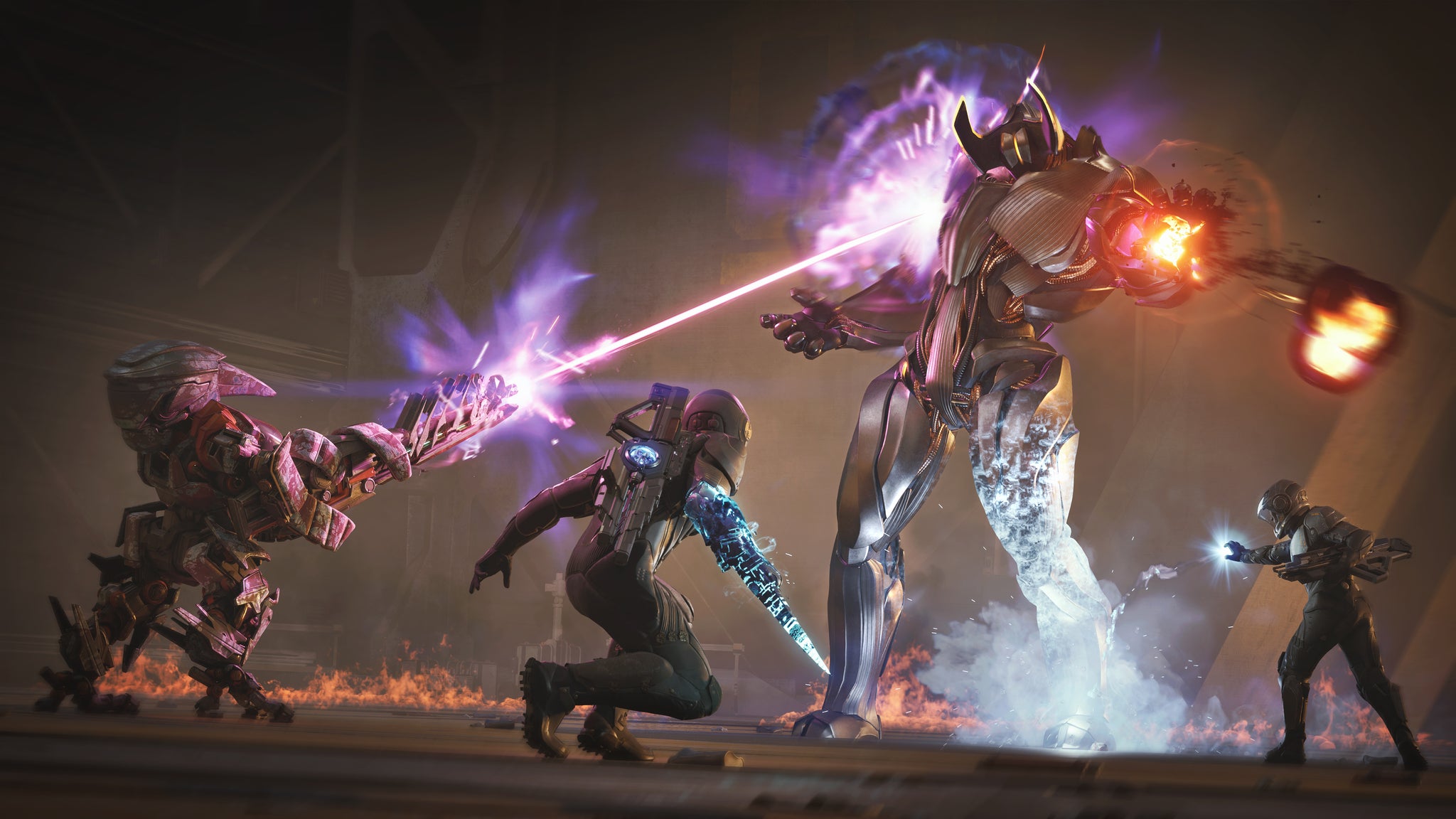
And that freedom is, as King sees it, very much in the spirit of Exodus’ broader vision. When people think of player agency, he explains, they tend to focus on the story side or progression, “But we’re also trying to introduce that in the moment-to-moment … One of the things we found was a lot of our favourite sci-fi franchises introduced this trope of: you’re always going deep into enemy territory and you’re outnumbered, so you have to be a bit scrappy and sneaky, and we sort of have this joke – ‘observe, plan, execute, and oh s***’ – and that was kind of the inspiration for it.”
“So it’s really giving players options into how they want to approach that stuff. If you are into stealth, you can double down on that, bring companions out through that skill tree, put on special suits and weapons that’ll sort of over that sort of playstyle. So it’s up to the players how they want to approach it.”
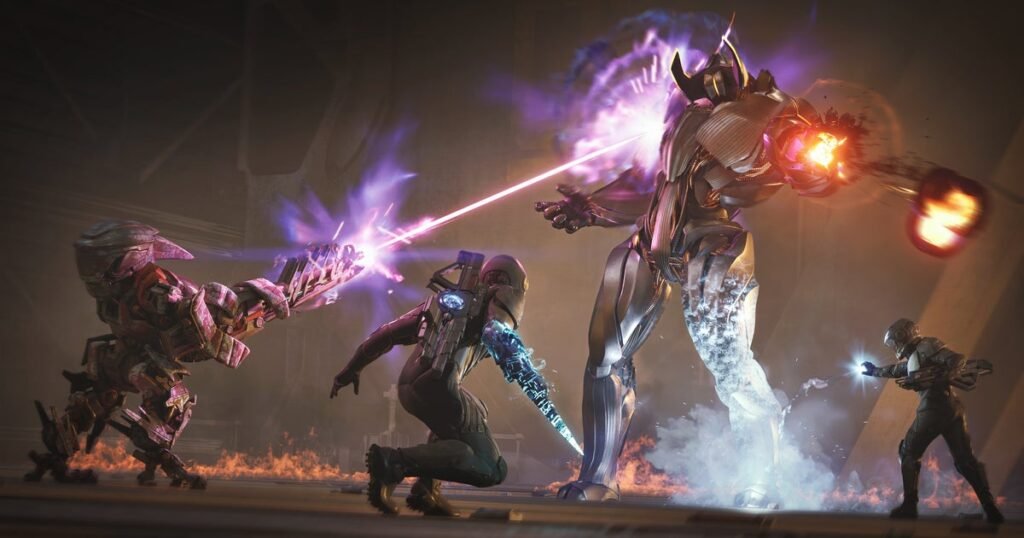
I’m later told there’s a boss fight against an Awakened bear toward the end of the demo which I never quite reach (I end up getting totally distracted using precognition to find secret frogs), but a mid-stage encounter against a missile-spewing enemy much tougher than the opponents I’ve encountered so far gives a clear sense of how Exodus’ interlinking battle tools pull together. By this point, I’m starting to feel more comfortable with its combat rhythms, and more confident with experimentation. And as the fight unfolds, I find myself switching back and forth between weapon types, angling into the safety of cover, flicking through abilities to Erupt some of the more bothersome grunts into the air.
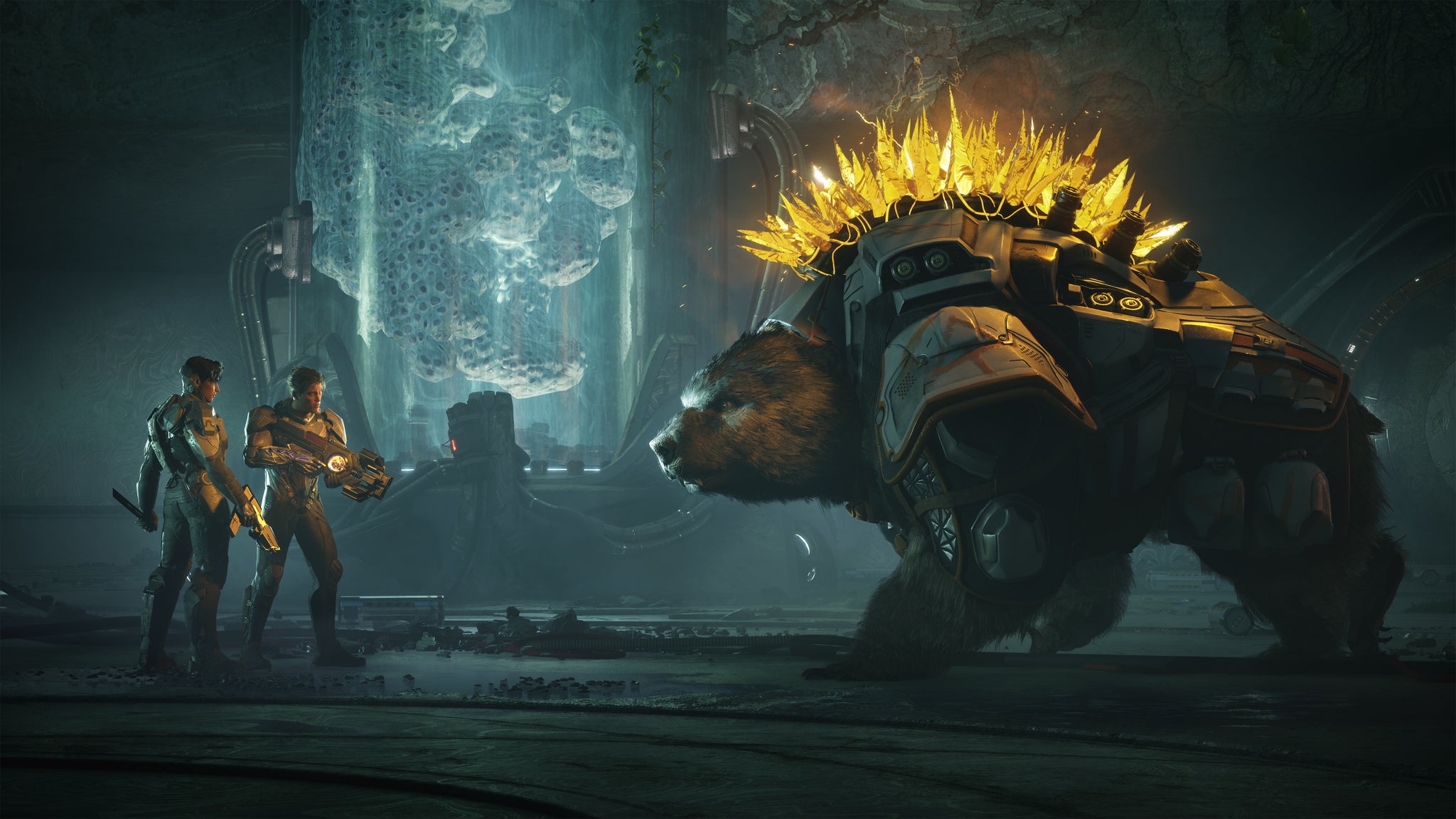
I turn to the stomping battlebot boss, unleash Petrifying to root it to the spot, then call on a couple of Elise’s missile strikes to whittle down his health, swinging back to clear out his pals once they’ve returned to the ground.
And there’s a nippiness to it all, a nimbleness, that’s enormously satisfying, particularly once the double-tap-to-evade dodge is introduced – meaning half my brain is engaged in cerebral pursuits, attempting to analysis the situation and think about all my available options, while the other is just having a hoot, dashing and springing and sliding around. And there’s a neat little extra wrinkle in that your Recycler is capable of turning found resource scraps into ammo on the fly, adding an interruptive beat to combat that you have to be ready to work with.
But as enjoyable as Exodus’ combat is, I suspect it’s the promised choice and consequence stuff, and the way it affects Exodus’ broader canvas, that people will be most curious about still. And while Archetype isn’t giving away too much just yet, the demo holds a few early hints of how the studio plans to thread decision points – with both minor and major ramifications – throughout its sci-fi adventure, even amid all this action.
At one point, for instance, I come across a dying soldier – or rather, I would have done if I hadn’t been so focused on finding secret frogs. But if I had found him, there’s the opportunity to save him. King offers this as an example of a smaller-scale choice point, where that character, once saved, might come into play or be meetable later. “Sometimes in a mission, you’ll strike alliances or deals, and you may piss someone off,” he explains. “So we’re trying to give different types of choices along the way that ripple short-term, medium-term, and long-term.”
More significant, perhaps, is a bigger choice toward the end of mission, forcing players to decide whether they save the Kay or leave them to their fate on Khonsu – a choice that will either bring you closer to Sulliman or cause a fracture in your relationship. As Archetype general manager Chad Robertson notes, it’s these kinds of choices, with a more emotional element, that the team is particularly keen on, “because it’s got multiple layers to it. You have to think about it … do I want to side with this person or that person? How do I think this is going to play?”
As for choices with longer-term impacts, that is, of course, where Exodus’ much-discussed time dilation mechanic comes into play. The idea is the game respects the rules of relativity, and nothing is capable of travelling faster than light. That’s important because, at critical story points, Jun and his crew will be required to travel to distant worlds years and years outside of their home system. Near faster-than-light travel means that while these missions play out in what seems to be just a couple of days for the team, years – maybe even decades – might pass back on Lidon, which effectively serves as Exodus’ playable hub area.
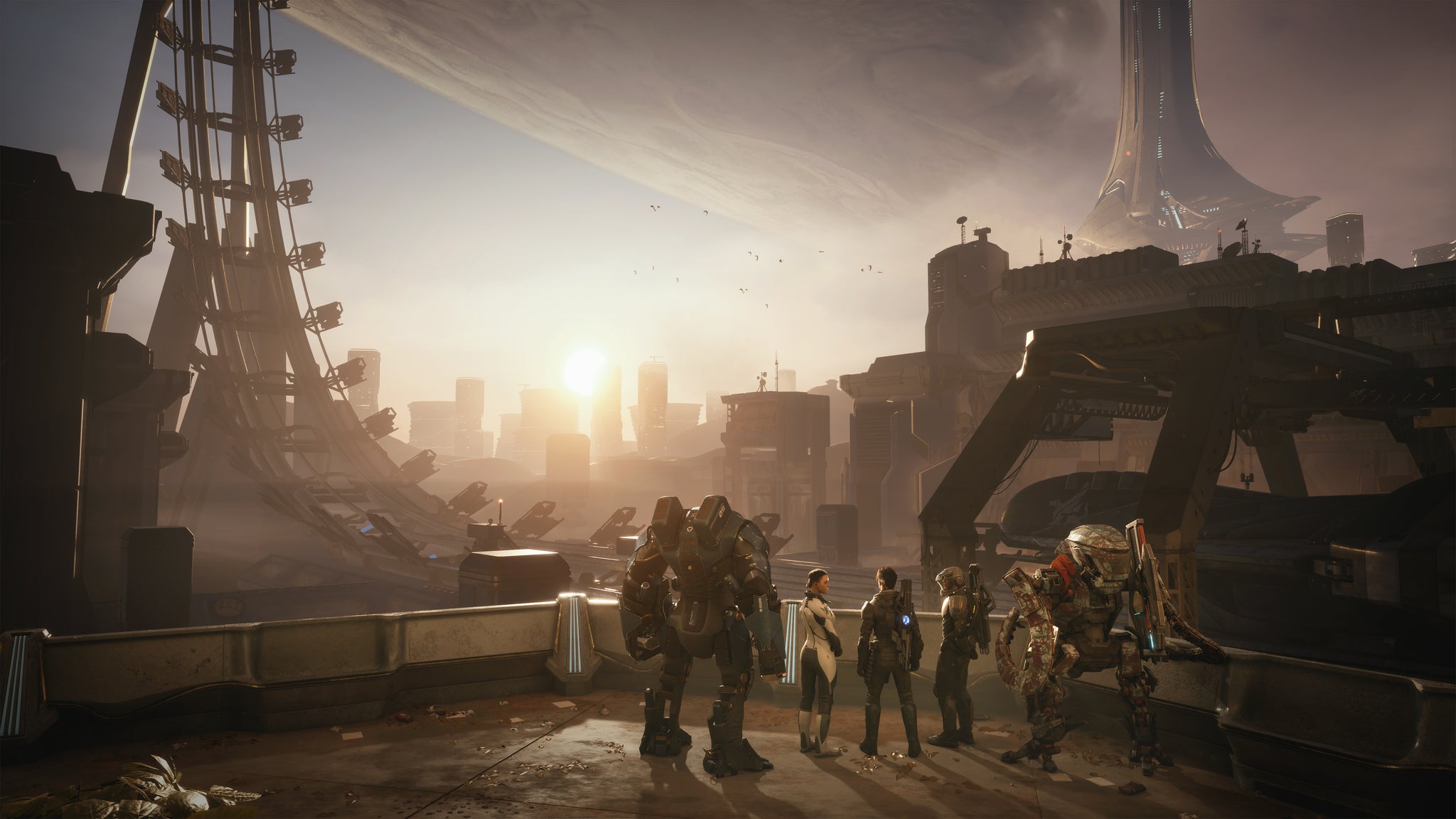
That means the impact of your choices can be taken to much more dramatic extremes. “It’s sort of part of the built-in universe,” explains Karpyshyn. “Society is built around it. Civilisations are built around it … So once you return, that’s a good chance for us to showcase all the things that have changed based on decisions you made before you left. We put the pieces in motion, then you amplify them because obviously many years have passed. So it’s a really good way to show these changes across your companions, characters, how the city changes, and the world itself.”
Between Exodus missions, then, is what Karpyshyn calls a loop of preparation, where players embark on missions to, say, secure alliances with people who’ll help you when you go on them, “or will help keep things on track while you’re gone, building up your dynasty, your followers to sort of keep things in place during these long absences.” As for how this is structured, it sounds like your options start to open out across various branches defined by your choices from initially linear beginnings.
And interestingly too, Archetype is keen not to leave you completely blind when it comes to key decisions, which is where Exodus’ Breakpoint system comes in, showing images, hints, of what the future might hold depending on the decision you make for your dynasty. And if you choose to put more points into Jun’s precognition abilities as you play, it’s possible to improve your ability to prognosticate and predict what’s going to happen. “The more info you have up front,” notes Karpyshyn, “the more you can try to direct what direction you want to go in. Because obviously, nothing ever goes as planned, so you’re constantly trying to steer things back on course in unexpected situations.”
Exodus is nothing if not ambitious. And having now got a sense of how Archetype is looking to achieve those ambitions – how it’s looking to fill in the moment-to-moment gaps between those huge sweeping story moments, without losing that vision of agency and choice – I’m impressed. I wasn’t expecting quite such a bombastic 45 minutes when I first picked up a controller and settled into Exodus, admittedly, but the more I played, the more it made sense. I might not be much of a Mass Effect fan (damn you M35 Mako once more), but Exodus is now firmly on my radar ahead of its arrival next year.