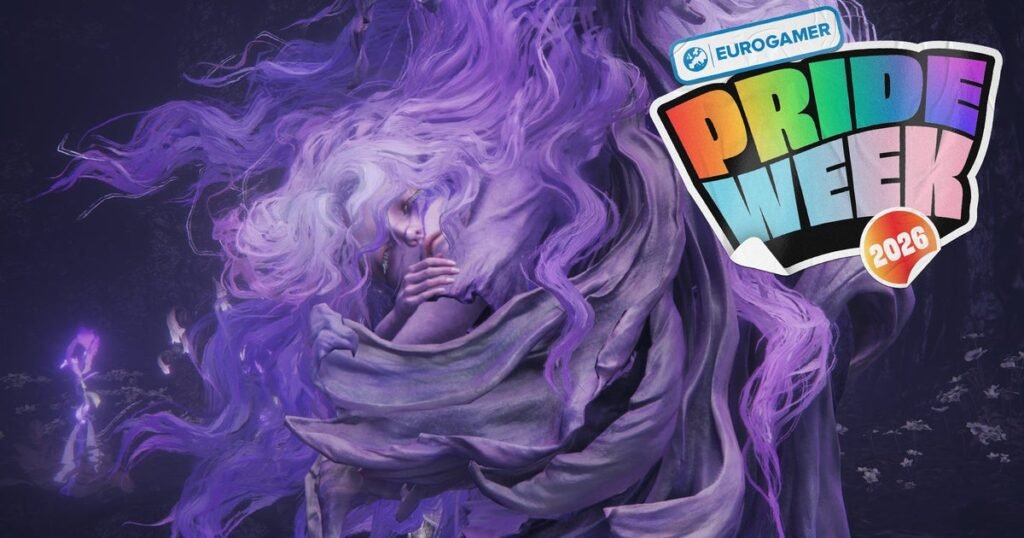
Hello! Eurogamer’s week of features celebrating the intersection of queer culture and gaming continues today as Kelsey Raynor discovers a very different Elden Ring to the one they were expecting. And you can visit our Pride Week hub to catch up on Pride Weeks past.
When Elden Ring comes up in conversation (which it often does), I can talk at length about its boss fights, questlines, and the four-armed witch that is Ranni. What I wasn’t expecting to be talking about – and thinking about – when I first stepped foot in The Lands Between is the surprising queerness of FromSoftware’s acclaimed RPG.
Elden Ring was my first foray into the Soulslike genre, and I initially felt displaced. It was overwhelming; I struggled with bosses, I didn’t know which stats to level up, and I couldn’t quite immerse myself in this painstakingly crafted world. But through sheer determination to see exactly what everyone had been raving about, my eyes were opened to a world that didn’t just feel like it was made for Souls veterans, it felt like it was made for me.
Dark Souls and its kin have often felt like a ‘boys club’ I was dissuaded from joining, but the more I played, the more my perspective changed. Everywhere I looked, there were strong, refreshingly imperfect feminine characters, as well as those who toyed with their own identities and appearances. I saw myself in them, in a sort of messed-up, dark-fantasy way. By the time I’d reached the final boss, I was ready to go again – and here I am, over 500 hours later, both thrilled by the game itself and unexpectedly empowered by the inclusiveness of its world.
Just take a look at Marika, the ruler of The Lands Between, and her consort Radagon. Lore reveals the two to be the same person, trapped within and fighting over the same physical body after the death of Marika’s son prompts her to destroy the titular Elden Ring. The pair’s detachment from one another toward the story’s conclusion is a result of Marika’s grief and her disappointment in the Greater Will – the unseen, omnipotent entity that appears to be responsible for everything in The Lands Between and beyond. But those feelings of grief and the conflict between identities can be read as an allegory for transness too. The clash between Marika, Radagon, and the powers that be ultimately feels like a battle with identity and sense of self, just as much as it is a battle for and against the Greater Will.
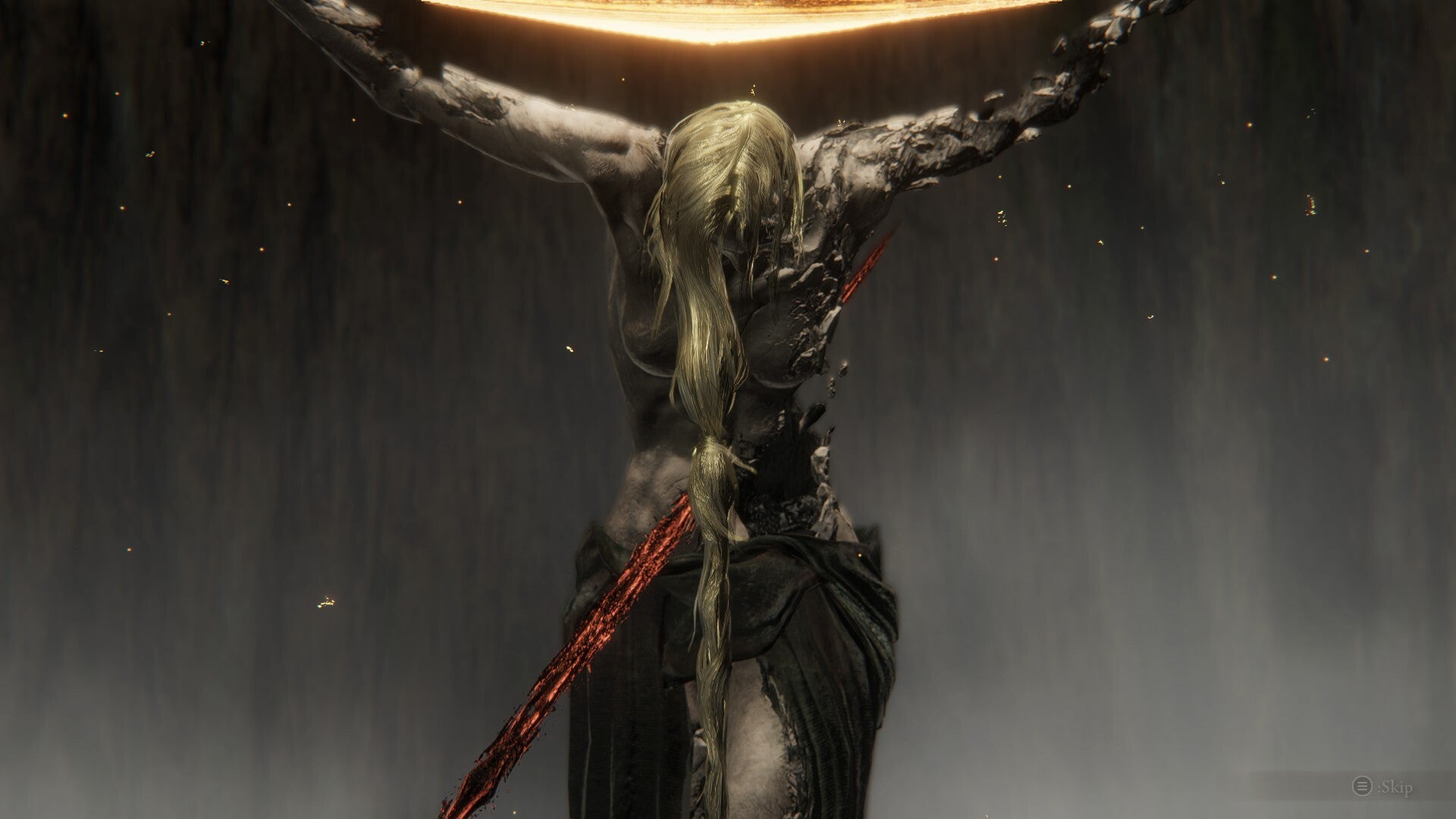
The same can be said for one of Elden Ring’s most fascinating relationships: that of Miquella, son of Marika and Radagon, and his alter-ego, St. Trina. “Some say she is a comely young girl, others are sure he is a boy,” reads the Sword of St. Trina’s description. “The only certainty is that their appearance was as sudden as their disappearance.” Miquella/St. Trina makes for another gender ambiguous character in Elden Ring’s burgeoning pantheon, and as we trace Miquella’s journey across the Land of Shadow, it becomes clear he too is facing his own internal battle, beginning a chain of events that arguably leads to the abandonment of his more maternal, feminine side. Something that St. Trina and other pivotal NPCs explicitly state he shouldn’t do, for it is suggested that he cannot lead others to salvation if he cannot save his other self.
But the queerness of Elden Ring doesn’t end there. Dolores the Sleeping Arrow Puppet – one of evil sorcerer Seluvis’ creations, who wields St. Trina’s Arrows – is a feminine NPC described as the “spirit of a handsome archer who dressed in the style of a man.” Cross-dressing in the fantasy genre isn’t a new idea, of course. Fiction – and history! – is full of people who present themselves differently for a multitude of reasons: safety, to assimilate themselves among the patriarchy, to engage in otherwise taboo relationships at the time, and more. We never learn why Dolores presents herself the way she does, but I do know – as someone who’s battled with my own identity – that all these characters, despite their flaws, have helped me to connect with Elden Ring on a deeper level. And to find community among its gargantuan playerbase.
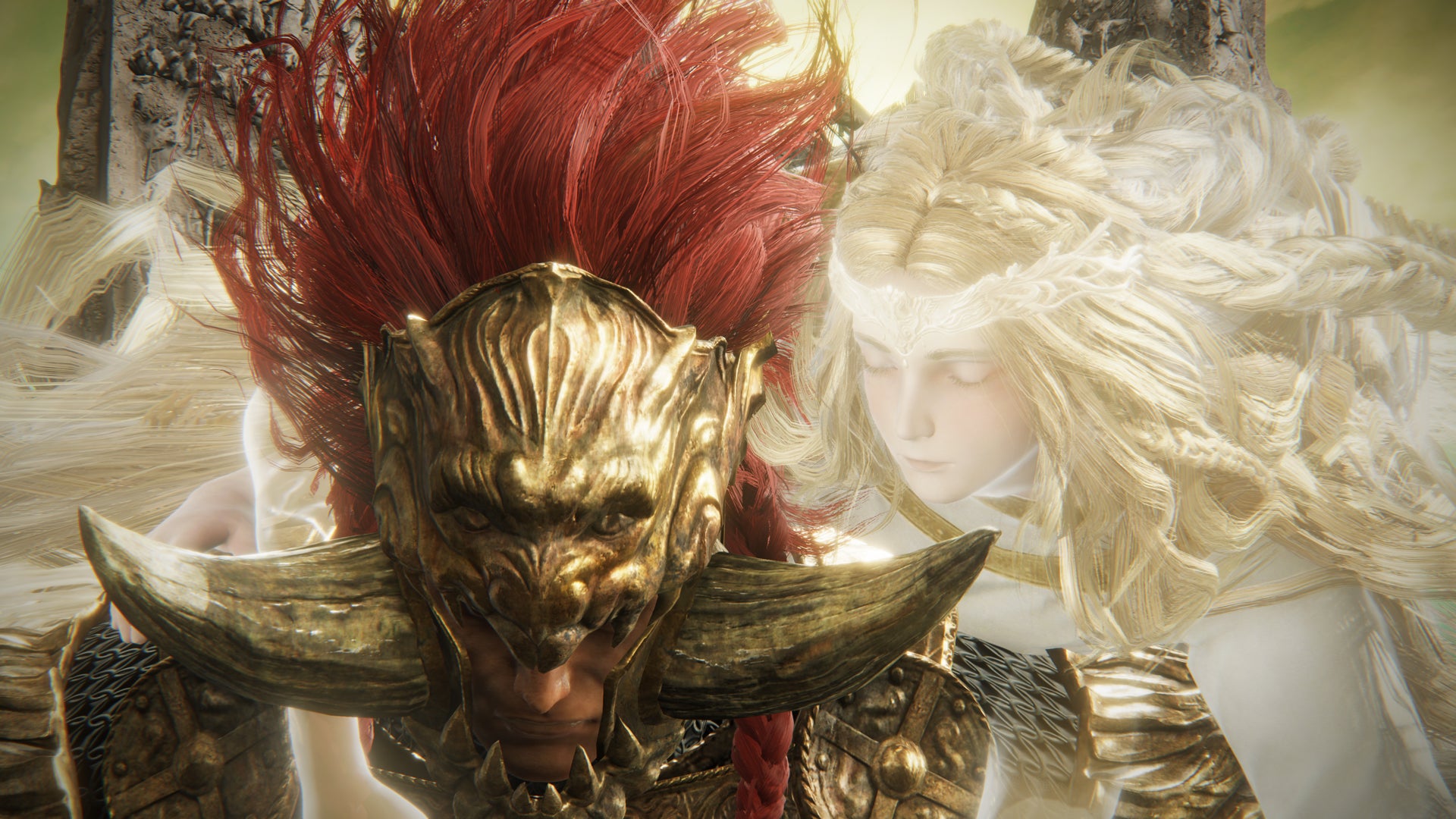
Looking back at FromSoftware’s older games (which I’ve since played), it feels like there’s little space for queerness. Take the character of Anri of Astora in Dark Souls 3, for example, whose gender will always be the opposite of that chosen by the player. If you follow Anri’s quest, you can eventually marry them, but it’s always a heterosexual relationship; there’s no choice here. But Elden Ring is a huge step forward in terms of its representation of varying gender identities and sexualities, and the relationships you form with its NPCs. Compare Dark Souls 3’s approach to Elden Ring’s Ranni the Witch, whose ending – Age of Stars – sees you becoming her consort. You enter this engagement regardless of your gender (determined by your chosen body type). And the same is true if you ascend to Elden Lord, becoming the consort of Marika/Radagon.
Despite the wars, grief, and other general unpleasantness throughout The Lands Between, it remains a world where same-sex relationships – and varying gender identities – are as everyday as any other. Elden Ring’s world is far from perfect, but at least it’s okay to be LGBTQIA+. Sure, ascending to Godhood and finding a consort is more a formality than it is a romantic relationship, but love and romance do exist in The Lands Between. Take the heartbroken Rennala; abandoned by her lover Radagon and left clutching the Amber Egg he gifted her. Or the mourning Tanith, consuming her scaly lover Rykard’s decaying flesh after you slay him. You could argue Thiollier feels true love for St. Trina, too, even if it’s admittedly one-sided, and you could view the dedication of Cleanrot Knight Finlay – who carried a sleeping Malenia all the way back to the Haligtree following the Battle of Aeonia – through a sapphic lens.
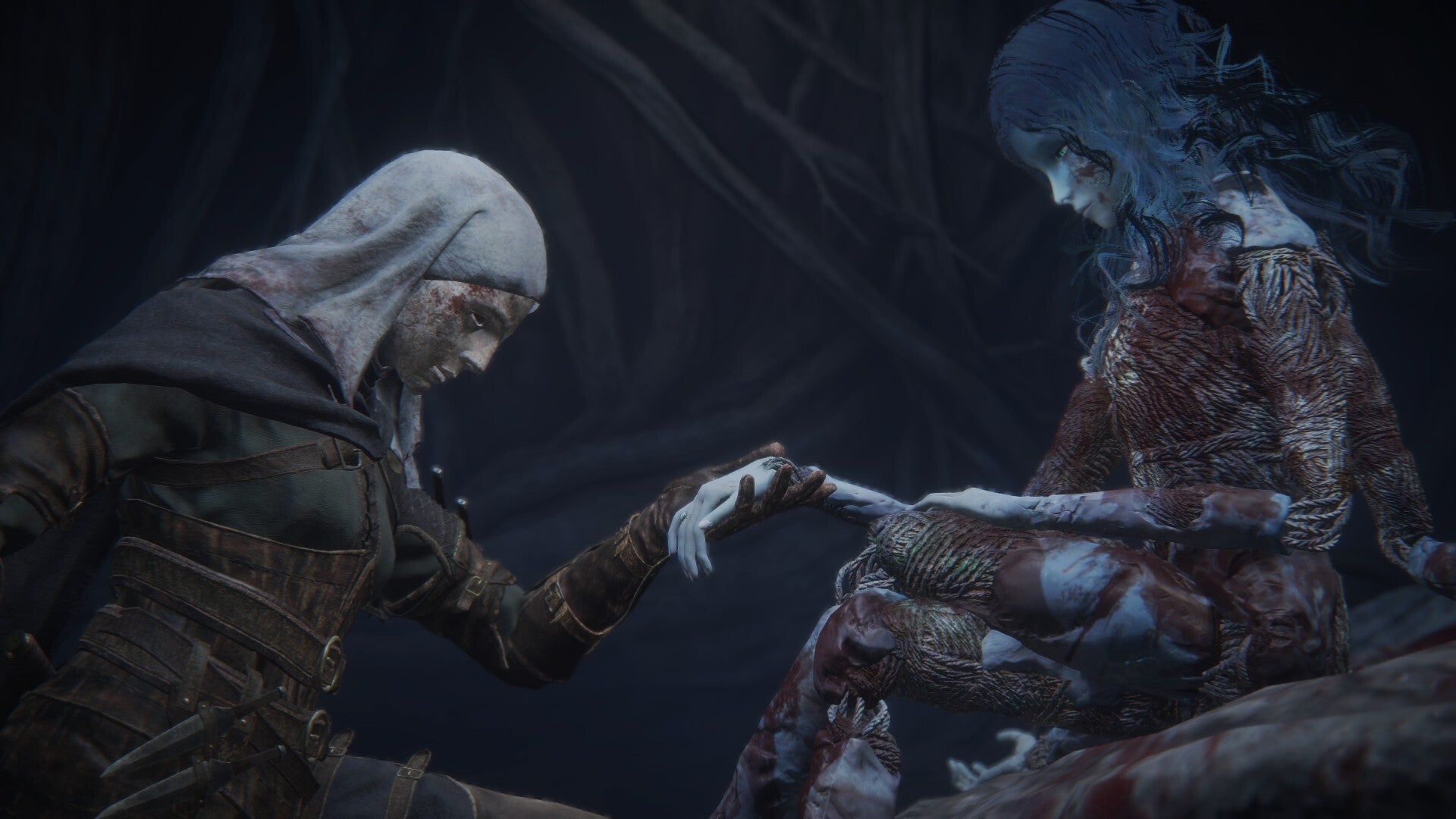
While some relationships in Elden Ring explicitly throw heteronormative values out the window, there’s a lot that’s left up to the interpretation. But even so, it feels like gender ambiguity, gender fluidity, and queer relationships are everywhere. Ultimately, the fact there’s space for players like myself to do queer readings of the game and to experience it in a way that makes our own identities feel seen, important, and valued makes it even more captivating. Love exists in all forms, shapes, and sizes in The Lands Between just as much as chaos and brutality. Elden Ring might be one messed-up place, but you can truly be whoever you want without shame.