We seem to be in a new golden age of trading card games, because we have new ones popping up so often now. Between the many anime games under Bandai – like the recently announced Naruto Card Game and the Magic The Gathering collaborations like Marvel Super Heroes – there’s a card game for every fanbase if they look hard enough. Joining the TCG battle royale for gamers’ attention is a new Cyberpunk experience that piqued interest on Kickstarter called Neuroscape TCG. With Kickstarter fulfillments mostly done, the game is now set to release in stores globally some time later this year. Now, this is not to be confused with the aptly named Cyberpunk TCG in collaboration with CD Projekt Red, as it features very different gameplay – thus giving Cyberpunk fans some choices to bring home to the tabletop.
In Neuroscape, players vie for superiority in a digital underground fight club with simulated head-to-head battlefields. The main goal is to bring your opponent down to zero health, and there are two ways to do that: either deal damage to a player’s mainframe or bioframe. In other words, damaging players via their neural computer or their physical body. This is determined by the characters’ color of the attack number printed on their cards or the symbol on an effect. Basically, baby blue represents targeting the mainframe and red represents targeting the physical body. Like Magic: The Gathering, you choose your attackers who automatically aim to do direct damage, and the defender chooses to block or interrupt in response. Based on the kind of deck a player runs, their cards may focus on one type of attack versus the other. So it takes some deck brewing to prepare for all types of damage if a player wishes. This is somewhat reminiscent of Star Wars: Unlimited in the sense that there are two kinds of warfare to balance throughout a match. Instead of the space and ground battle theaters of that TCG, Neuroscape players have to deal with two kinds of attacks simultaneously. Luckily, these different kinds of attacking characters share the same playing field, so it’s not as complex as its sci-fi counterpart.

Even though the two health bars aren’t typical, the resource management of Neuroscape is very familiar with some twists. Instead of the deck containing resource cards or cards that can turn into resource, players have a separate RAM deck that can be drawn from to help pay for their cards. This is similar to Bandai’s One Piece or Gundam card games, but Neuroscape players have special options regarding the RAM resource and cards you draw. At the draw phase, players have the choice to either ramp up two RAM into their resource pool, skip RAM and draw two cards from the deck, or add one RAM and draw one card. So depending on how the game is going, players can adjust their draws accordingly. This is quite refreshing, since young games tend to have limited options for filtering through one’s deck – especially when their hands aren’t ideal. On top of the separate RAM resource deck and draw choice, RAM cards must be committed to characters that enter the field. This means that RAM cards are no longer available to use because they are technically powering a character in play. In some ways, this is like Pokemon, where players must decide where to commit their energy or resource to. Thankfully, a player can get their RAM back if a character leaves the field via a result like damage or through a force quit, an owner-initiated option that happens at the beginning of the turn. When you force quit a character, the attached RAM is returned to the resource pool and becomes available to use immediately, even though it happens after the refresh step of the phase. When I learned about the resource management here, it all made sense when co-creators Connor Hair and Alex Meader mentioned that they were huge fans of the Pokemon and Magic: The Gathering TCGs. You can see both influences in how the RAM resource is utilized in Neuroscape.
When it comes to deck building, faction synergy is what you typically build towards. There are many factions, but there are six in particular that are featured in the premiere two-player starter kits: Hacker, Cybernetic, Corpo, Dustrunner, Mystic, and Thrasher. Hackers typically focus on mainframe damage, which, as mentioned earlier, is the baby blue attack numbers on the bottom left of character cards or signified by a symbol on certain abilities. They also tend to focus on program cards, which can include single-target spell-like cards and trojans or trap cards. Cybernetics focus on physical damage as represented by the red attack numbers on the bottom left of the card or the corresponding symbol. This faction tends to rely on gear where some cybernetic enhancements have a detrimental side effect called psychosis. Corpo is all about money, so of course they can afford all the RAM. They focus heavily on ramping up your RAM or resources, which helps afford higher-cost cards much faster than other factions. Dustrunner tends to use cards with the keyword tether, which allows two characters to be connected to each other, sharing benefits. They also have options to destroy RAM and elude targeting by bouncing back to hand. Mystics mainly showcase the use of tarot cards – special program cards that have interchangeable effects if certain cards are in play. Also, there are potential powerful effects the more tarot cards are in the recycle bin or discard pile after use. Finally, Thrashers tend to focus on destroying targets and overwhelming opponents with unrelenting attacks. For example, Thrashers can gain Overrun, which allows characters to deal excess damage to a player even when blocked. The more of the same faction cards you play, the better chance you have to activate faction-related passives from your mainframe.
On that note, a player’s mainframe is like their personal class and equipment area. If you want to be a Hacker, pick a mainframe that gives benefits when you have a number of Hacker cards on the field. In addition to the cards on the field arena, a mainframe has three slots for more passive abilities if a player chooses to fill them on their turns. An interesting mechanic in Neuroscape is the ability to play a hidden Trojan or trap program into one of your opponent’s mainframe slots. So not only can you block a slot on a player’s mainframe, you can also set up a hidden card that can devastate your opponent’s cards. The mainframe and slots are a nice additional form of customization that’s not just the “play the strongest character cards of a certain deck” archetype. There’s also a slot in between both players where environment programs can be played. Like stadium cards in the Pokemon TCG, these environment program cards affect both players. Usually these synergize with a particular faction or playstyle, so players can destroy these environments by simply playing another environment on top of it.
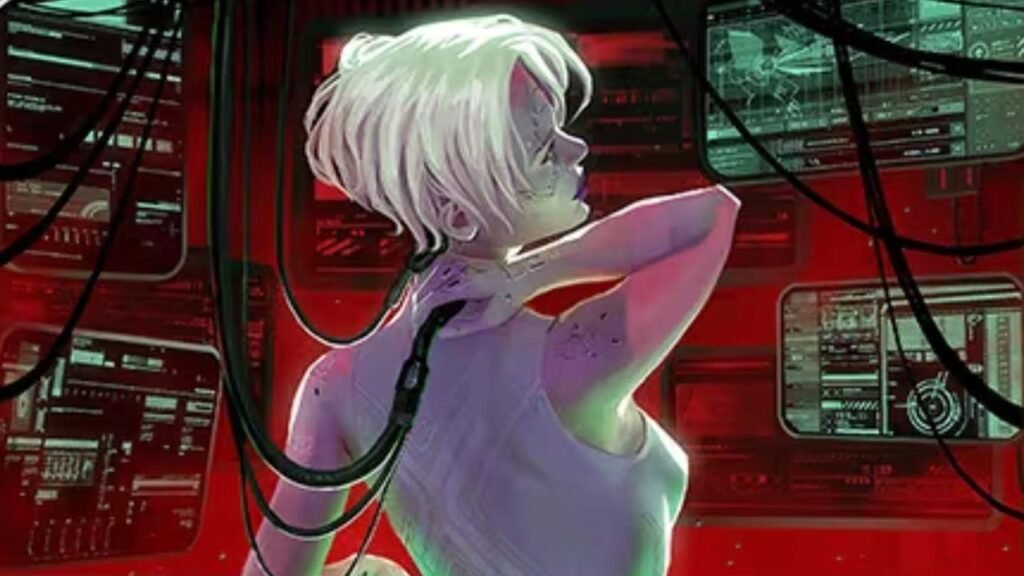
Gameplay aside, one of the main draws of getting into any card game is, of course, the art. Neuroscape features original art from artists around the world who worked on popular series like Magic: The Gathering, Warhammer 40K, Star Wars, Netrunner, and Cyberpunk 2077. It’s pretty cool to see familiar-but-different takes on cyberpunk characters with the eclectic group of artists that the Neuroscape team put together. If you’re fan of just the cyberpunk aesthetic, these cards go above and beyond when compared to the reused art in some TCGs. Its rarity tiers are common, uncommon, rare, quantum rare, and the chase serialized cards. In addition, there are competitive event variants ranging from participation promos all the way to top-3 prize cards. If I learned anything in my time playing TCGs all these years, it’s that prizing is important to drawing interest and keeping players active.
Just to briefly mention the cybernetic elephant in the Night City room, Neuroscape TCG is releasing in close proximity to the Cyberpunk TCG backed by CD Projekt Red. Yes, they are both cyberpunk card games, but both play entirely different. The Cyberpunk TCG is reminiscent of games like Riftbound, where players compete to maintain dominating control rather than mind hacking and bashing each other in the face until one player is zeroed. Nonetheless, both are enjoyable, so it really depends on what players prefer.
Either way, now’s a great time to be a cyberpunk fan. It’s been a while since the Android: Netrunner Fantasy Flight Games days, and with video games like Cyberpunk 2077 making new fans of the genre, these card games are able to not just exist but potentially thrive. For a somewhat unknown card game to attempt to break the mold of the many licensed games out there is gutsy and I respect it. As a fan of card games that typically play similar to Magic: The Gathering, Neuroscape scratches that TCG itch in me. And with the likes of Asmodee partnering with Neoroscape TCG, getting your hands on cards might be easier than other games out there. For more TCGs, check out our latest Disney Lorcana exclusive reveals or our hands-on impressions of the Cyberpunk TCG.
Mike Mamon is a Syndication & Digital Specialist at IGN, devil fruit user, and world-renown JoJo poser. Let’s chat anime or TCGs on Bluesky @xpmnms.bsky.social