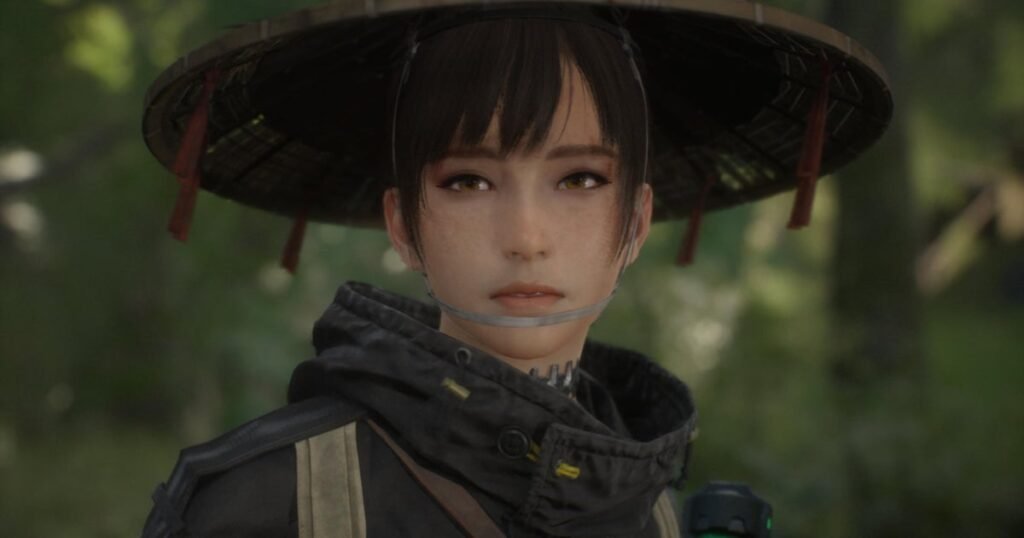
Game Freak borrows liberally from the genre’s biggest hits. And while its messy and muddled, it’s salvaged by exhilarating combat and traversal, and a surprising amount of soul.
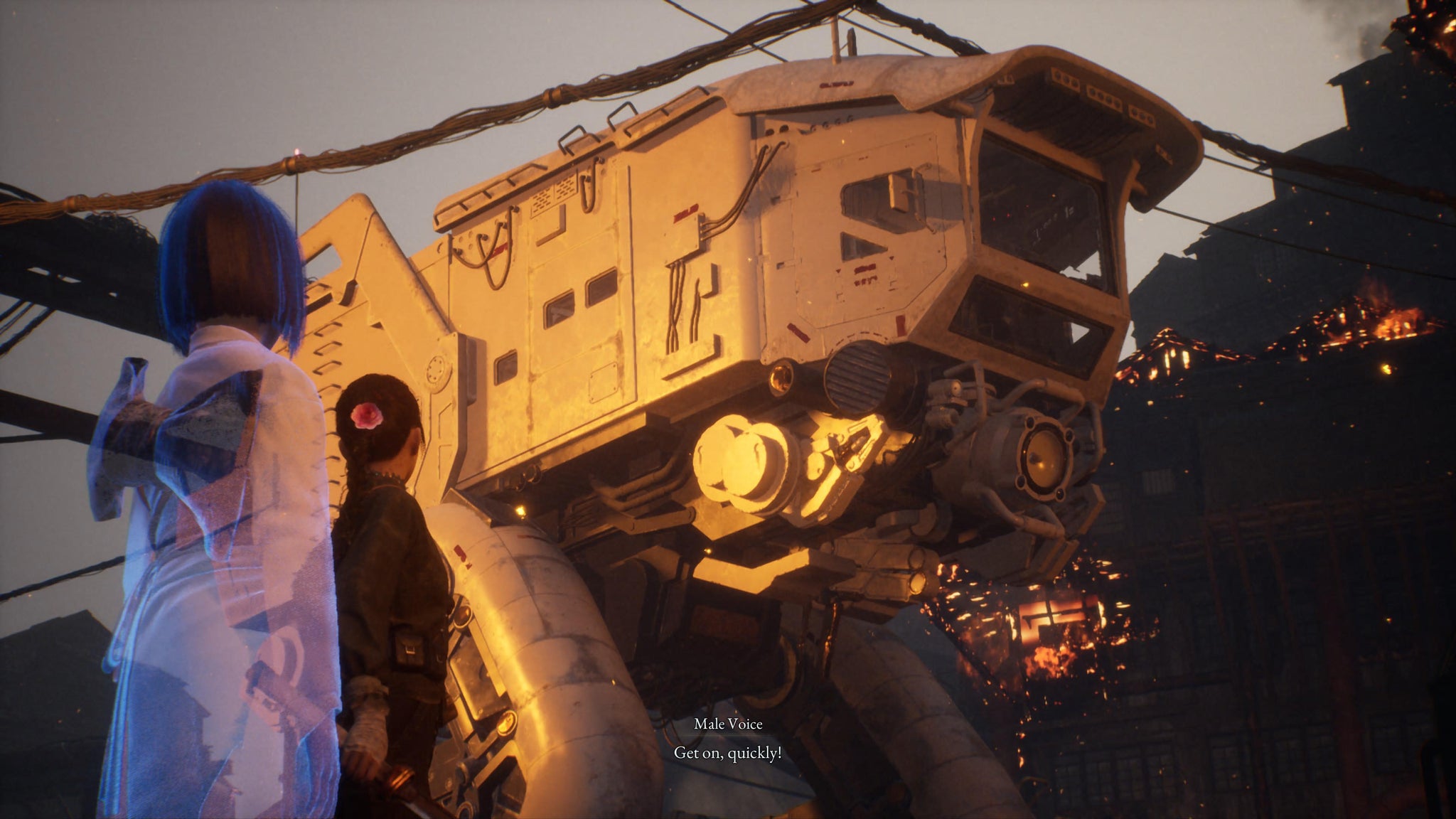
Beast of Reincarnation’s opening moments – its opening hours – are a lot. It’s a game that begins with the forlorn history of a doomed world, that suddenly goes a bit sci-fi with the arrival of an AT-AT-like “walker” stomping across the landscape, then full-on explodes into a reverie of picturesque apocalypses, magic dogs and magic hair powers, cursed behemoths, pulsating forests, a holographic (possibly supernatural) child, an aging mentor called Brad, Souls-like respawns and Sekiro-style katana parrying – all set to a lilting, looping J-pop soundtrack.
Pokémon developer Game Freak’s latest project is a chaotic grab-bag of ideas and influences that, initially at least, struggles to find anything close to its own identity. There’s a touch of Sony’s Horizon series in its pretty post-apocalypse, here a verdant vision of a derelict Japan. There’s some Bayonetta in that magical hair stuff; Sekiro is an obvious touchstone with its parry focused combat, its Soulsian respawn “campsites”, its grapple-imbued traversal, and perfunctory stealth. And there’s even an air of Monster Hunter by way of Wild Hearts and Shadow of the Colossus, as Game Freak builds its combat-driven action RPG around a quest to kill a series of imposing Nushi: majestic behemoths ruling over each semi-open region, a mix of beast and nature intertwined.
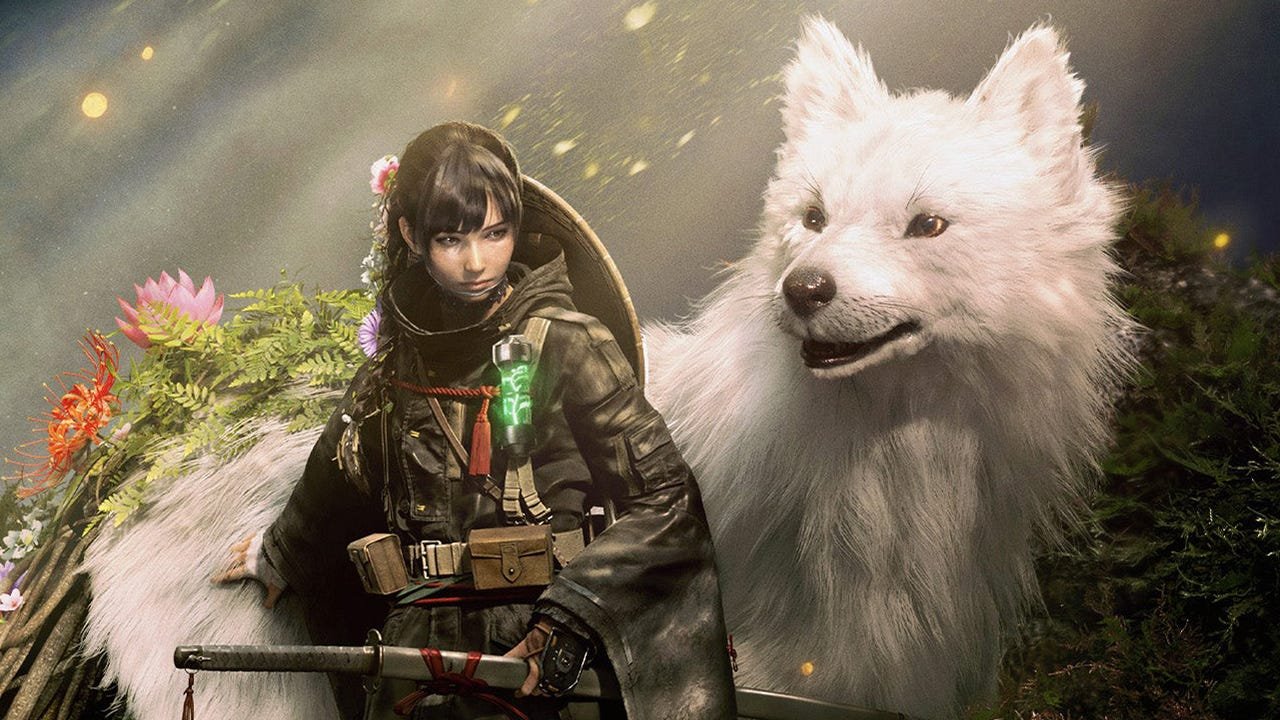
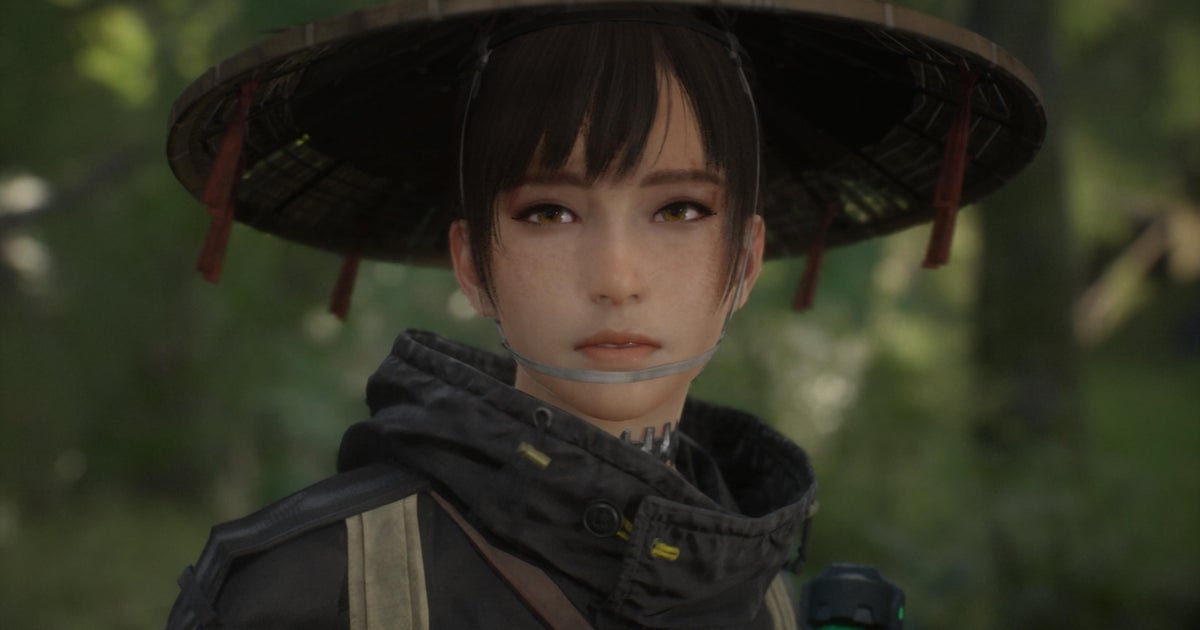
Welcome to a future (the drizzly post-apocalyptic summer of 4026 to be exact) where humanity has finally cast off its pesky emotions, and, in some cases, their frail human bodies too, shoving their souls into robot-like golems. Amid all this, there’s a plague-like blight capable of sending golems into a violent frenzy and of transforming smaller creatures into Malefacts: aggressive floral hybrids complete with spindly vine appendages and leafy blooms. Then there’s the titular Beast of Reincarnation, returning to the world after its 100 year slumber, whispers of a mysterious land called Shambhala, and you, Emma, a hunter with neither heart nor soul.
It’s a muddled narrative doled out in erratically paced fashion, and that approach is reflected elsewhere. Game Freak introduces its gameplay ideas equally chaotically, throwing so much out so fast, with so little explanation, it took me a fair while to wrap my head around it, let alone warm to it all. It practically demands you visit its in-game manual to properly understand the often convoluted interplay of its systems, and it doesn’t help that during its critical opening hours, Game Freak has a habit of telling you something important then, instead of letting you put it into practice, pulling you away for another flashback or ponderous cutscene.
Structurally at least, though, Beast of Reincarnation is easy to explain. And it follows a simple, predictable pattern as it journeys across post-apocalyptic Japan: through abandoned pockets of picturesque rural civilisation where mankind has retreated beneath the earth; through urban tangles of jagged skyscrapers and flooded subways stations lost amid verdant overgrowth; through ancient temples hidden in rugged mountains, and beyond.
Upon arriving in each new region, your immediate goal is to locate its behemoth Nushi so that Emma might slay it and take its power. It’s a core objective charting a linear route across the landscape, guiding you through some light platforming and a handful of combat encounters against lesser foes, occasionally punctuating progress with an arbitrary roadblock that needs to be resolved. Regions are semi-open areas, however (some notably more open than others), meaning there’s usually at least some opportunity to break away and explore. Eventually, though, you’ll reach the Nushi, and the familiar action-adventure rhythms make way for Beast of Reincarnation’s big centrepiece moments; spectacular fights against a towering deer with tree-like antlers, a rampaging, bud-headed bull, and so on.
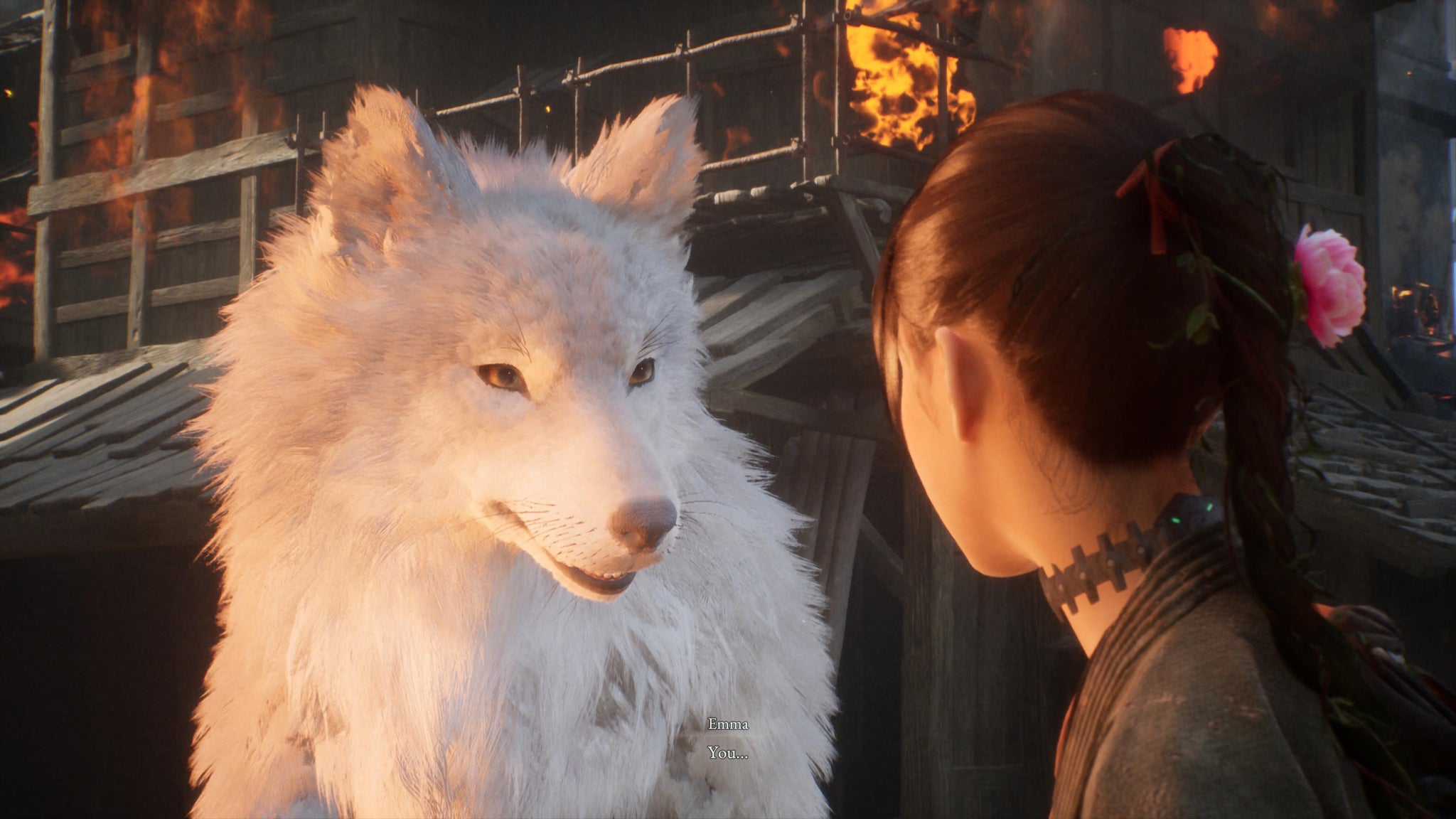
Your initial encounter is a chance to learn each Nushi’s powerful, albeit usually relatively narrow, moveset before it makes its eventual retreat. Then, after a bit more busywork, you’ll meet it again for a trickier, more elaborately staged rematch. Defeating a Nushi means new abilities for Emma and a trip back to your walker – a mobile hub where you can shower off the day’s accumulated gore, plant crops, bond with friends, enhance your weapons and abilities, and pet your giant dog companion Koo – then it’s onto the next region for more.
Two systems are key to all this: combat, obviously, and some enjoyable traversal. The latter is primarily built around those magic hair abilities. Hold the jump button and you’ll shoot skyward on a column of your blighted strands; hold another and you’ll conjure up a winding bridge of hair-vines, useful for crossing abyssal divides. A third button flashes out a ponytail capable of latching onto grapple points, flinging you forward at speed. It’s a small but effective toolkit deployed across levels with a pleasing sense of verticality. And it lends traversal an invigorating sense of fluidity and forward momentum – one that’s engaging enough you’ll probably stop questioning why you can’t ride the bloody massive dog that follows you everywhere.
Instead, lovely fluffy Koo is a fundamental part of your combat arsenal, and Beast of Reincarnation’s battle system is, when it’s not being undone by some troublingly persistent issues, a highpoint. Yes, it’s a little convoluted, and its many seemingly disparate elements take a bit of time to understand. But slowly – if not always elegantly – it settles into its own enjoyably distinctive rhythm. You’ve a couple of (largely ignorable) ranged weapons, for starters, but Emma’s real tool of choice is her katana. And while you’ll spend a lot of time slashing, dodging, and hairing your way around the battlefield, Beast of Reincarnation’s main focus is parrying.
Guard an attack rather than parry it, and your Entanglement meter will deplete until you’re staggered; but parry instead of guarding and you’ll gradually build it up until you’re able to trigger a slow-time ability, expanding your window of attack for a couple of seconds. Parrying also generates the bloom currency required to utilise Koo’s pseudo-turn-based supporting abilities (tactical commands presented as a somewhat overwhelming wall of text I still haven’t quite got used to yet), ranging from toothy chomps to movement-restricting vines. These also usefully restore a bit of Emma’s health when deployed.
Somewhere in all this, you’ll juggle different upgradable elemental weapons, food bonuses, equipable gem boons, auto-use consumables, core ability upgrades, and a steadily growing selection of Bloom Arts, which manifest as unlockable combos capable of doing significant damage. And when it works, when it all comes together, it’s great, lending proceedings a distinctive push-pull rhythm of timing, observation, combo deployment, and gauge management that’s as rewarding as it is exhilarating. Unfortunately though, thanks to an incessant series of accumulative niggles, it’s quite often none of those things.
The camera, for instance, can be a nuisance, especially given the erratic, single-point lock-on system, which doesn’t always play nicely with the massive Nushi and which, during group encounters, has an annoying tendency to switch targets on a whim (you can turn it off, but that just introduces a fresh set of problems). It’s all too easy to land in situations where you’re expected to repel powerful attacks you can’t see coming from offscreen. And it doesn’t help that the mix of murk and excessively flashy particle effects can render enemy wind-ups unreadable, particularly when dealing with smaller foes. And given that combat is balanced so that death is only a couple of hits away if you’re not parrying, frustration is everywhere.
Something feels very off on PS5 too (I’ve been unable to test this on other platforms), with certain critical actions – drinking health potions, activating slow-time, even dodging on occasion – failing to register consistently. I’m all for a challenge, but too often it feels like death in Beast of Reincarnation arrives through no fault of my own. It’s a common enough occurrence in fact that, at times amid the poorly paced tutorials and wonky explanations, I even started to wonder if I might simply be playing it wrong. But even accounting for potential user error, it feels like there’s enough unavoidable aggravation here to be a genuine concern.
And, unfortunately, all this stuff is compounded by other issues. The maps, while pretty, are for the most part dull; devoid of meaningful features, visually indistinct in all but the most superficial of ways, light on enemy variety, and rarely managing much in the way of imaginative moment-by-moment combat encounters or engaging level design. And the desolate emptiness of the world does, I think, start to work again its Soulslike structure: I’ve done this respawn dance enough times to be fine with a runback if there’s something interesting to do along the way, but here the expansive nothingness just feels like a lot of timewasting. And given the rewards you’ll find away from the main path are largely inessential, there’s limited incentive to explore.
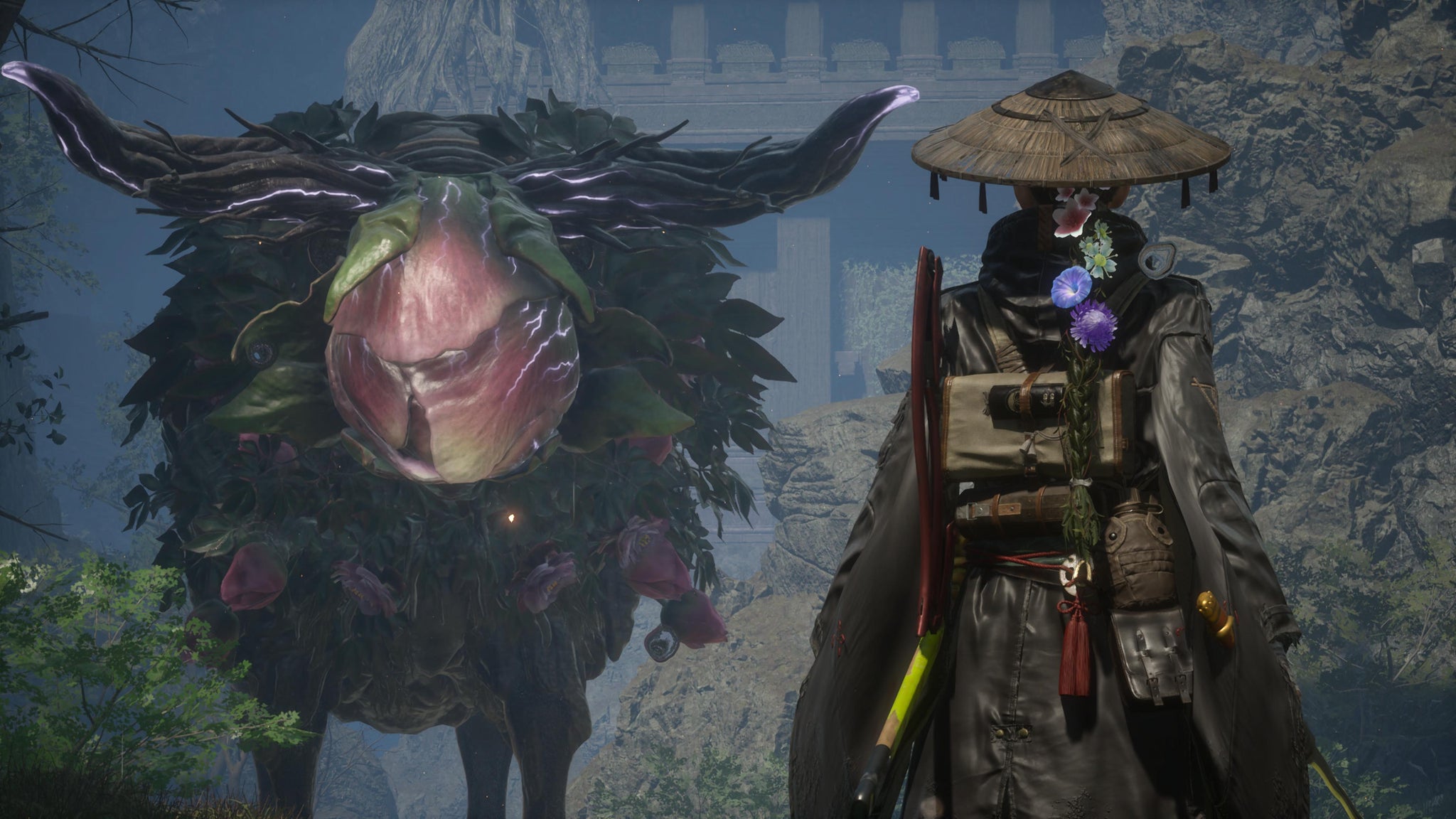
Admittedly, the simple pleasures of traversal do go some way toward offsetting the tedium, and as ever with this sort of thing, there’s a kind of low grade got-to-collect-it-all kleptomaniac thrill for completionists. But even here, things come a little undone by the ease in which you can get caught on the world geometry, or slam into an arbitrary invisible wall, or – as polygons melt into mush and textures turn into smears – feel so dangerously close to falling out of bounds.
If it wasn’t already obvious, I have some very conflicting feelings about Beast of Reincarnation. There are moments it’s glorious; when you’re parrying majestic behemoths in an exhilarating dance of meticulously timed sword ripostes and searing slo-mo flower blooms, or hair-twirling with acrobatic abandon across striking landscapes of beautiful desolation. But there are just as many moments it feels aggravating, unfinished, and, worse, dull.
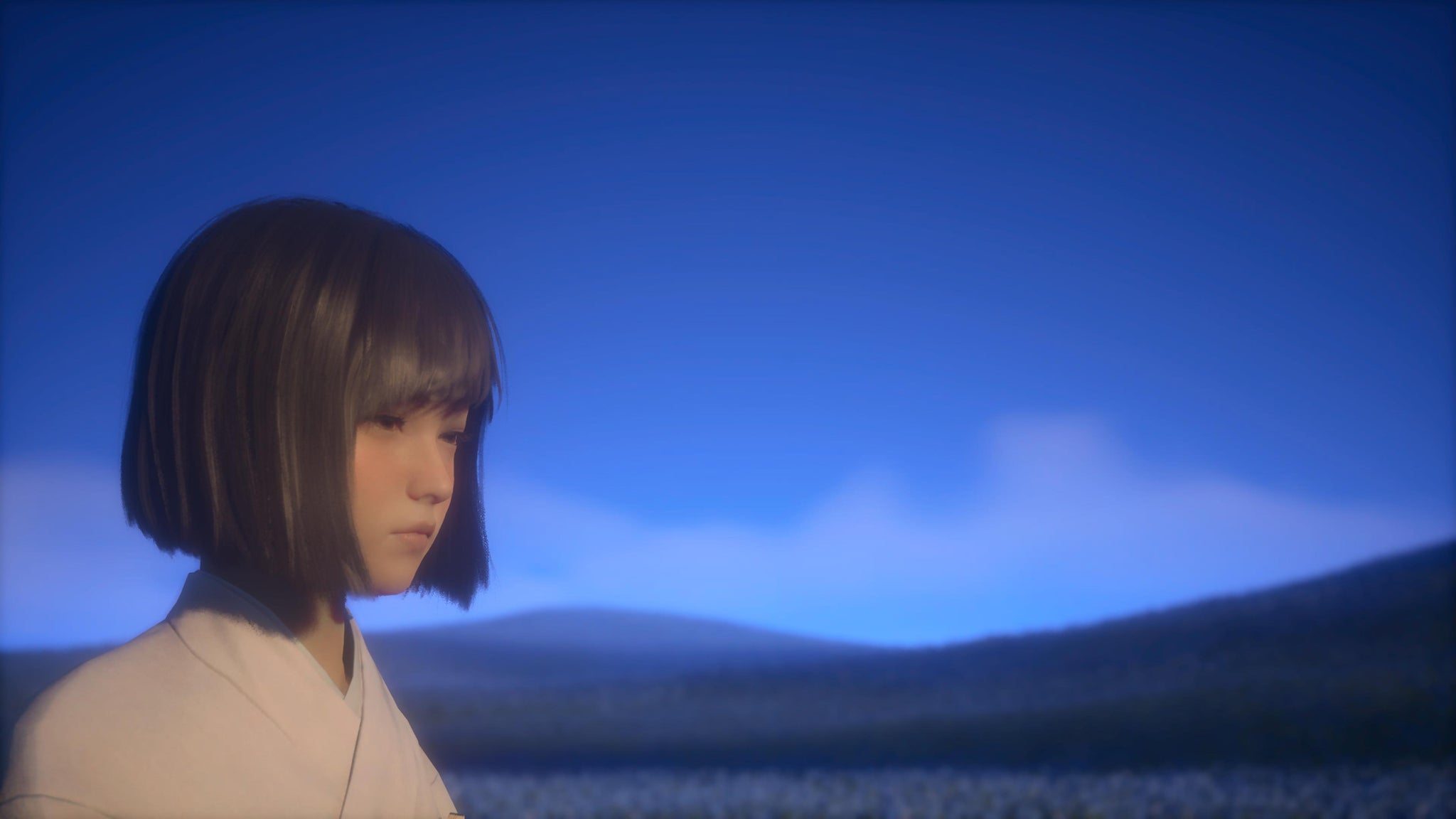
Yet even so, I’ve found myself growing unexpectedly fond of its broken world and equally broken crew, moved by the affectingly melancholy ambience that permeates it all. Game Freak’s action RPG might be messy, but there’s something deeply authentic about it too. Out of its disparate grab-bag of familiar bits, Beast of Reincarnation slowly finds itself. And the tale it tells, of self-discovery and community and belonging, is an unexpectedly tender one. To make me care amid so much irritation is no easy trick, but, as flawed as it is, Beast of Reincarnation’s genuinely sweet spirit and an earnest heart shine through.
A copy of Beast of Reincarnation was provided for this review by Fictions.