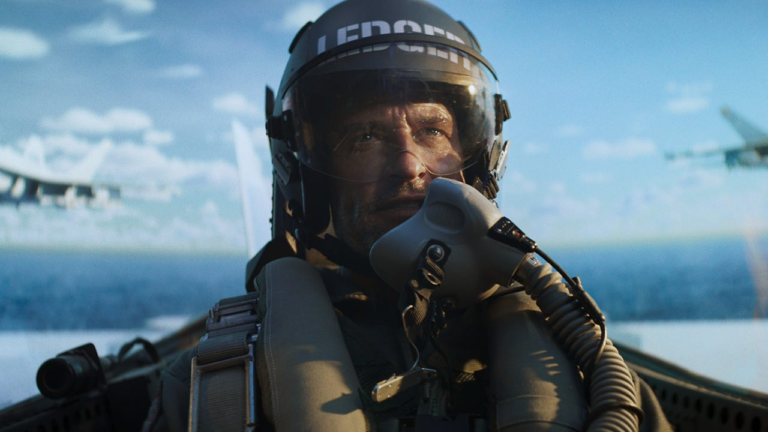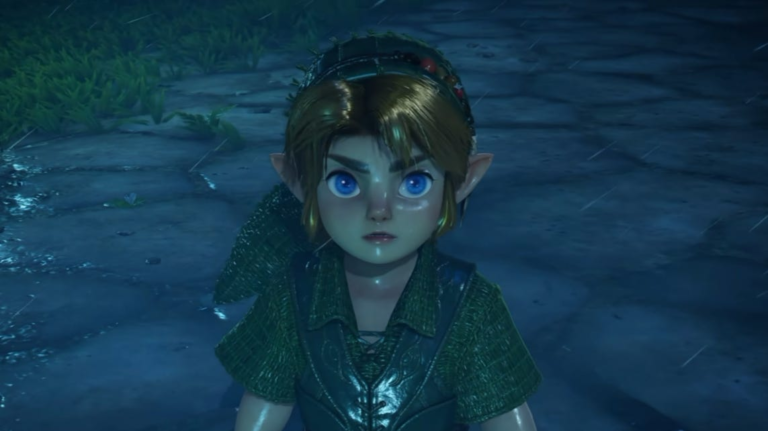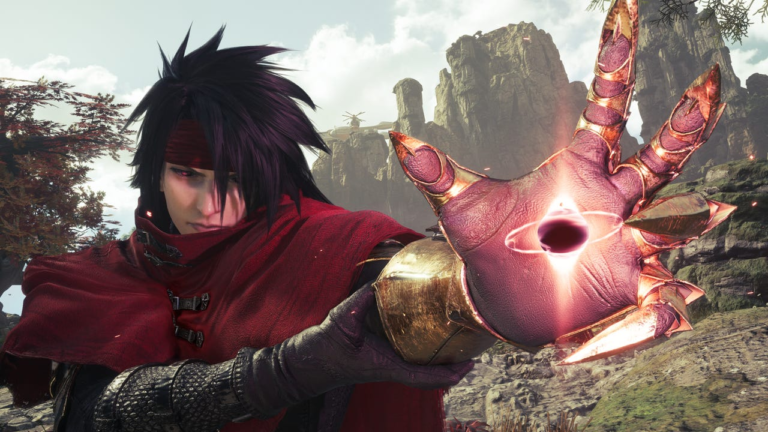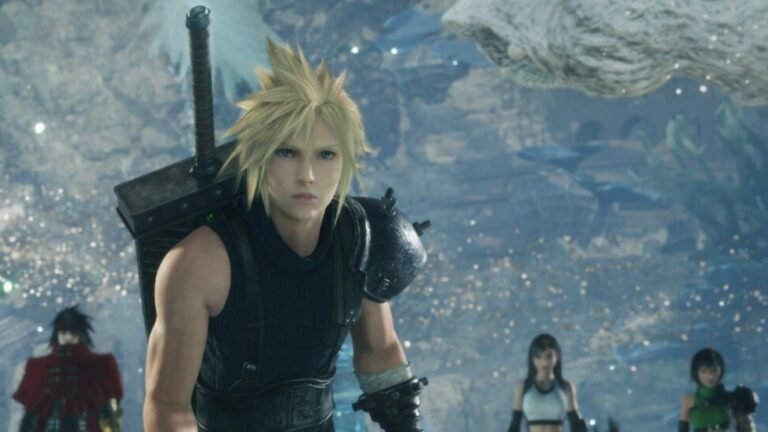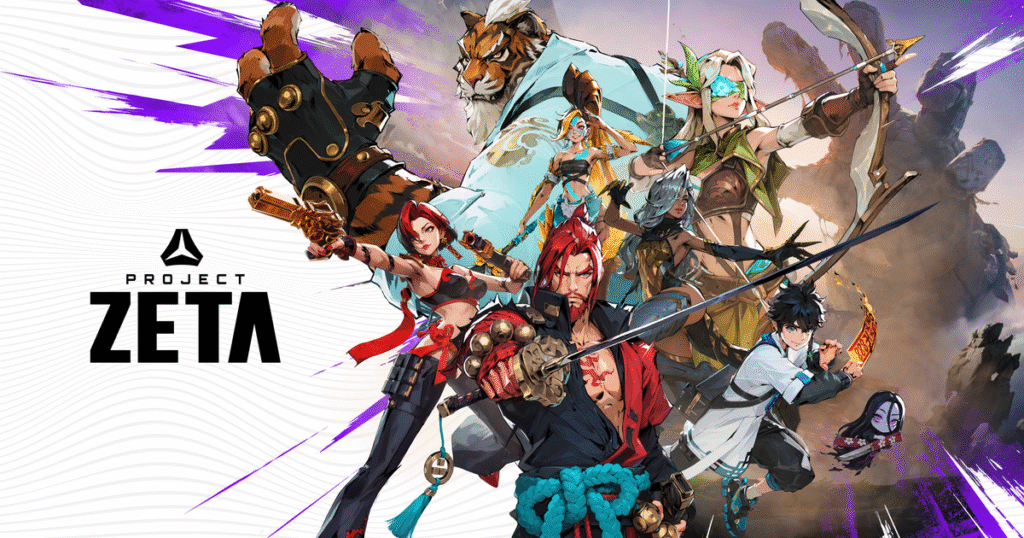
There’s nothing quite like a good MOBA: the reliance on teamwork, the intricacy of a good build, the ability to pick a character and master them. I’ve lost many nights of my life to the genre and I regret few of them.
At the same time, they can be among the most frustrating games to play. Long stretches of downtime can be horrendous, losses can be massive time sinks that break the heart and mind. But Project Zeta, a new MOBA from developer Nirvanana and publisher Krafton is attempting to do things differently.
For starters, Project Zeta isn’t set in a traditional MOBA arena. Rather than individual lanes, four teams of four players are placed in a single maze of walls and NPC enemies, somewhat reminiscent of the jungles in League of Legends or Dota 2. Teams prowl the area, taking down key enemies for either experience points or invaluable prisms they need to secure in order to win.
Prisms only spawn from certain larger boss enemies, resulting in a MOBA that incentivises action and PvP battles as teams fight to secure the spoils for themselves, rather than slower-paced battles of attrition. In practice, these act like teamfights for major map objectives in other MOBAs like Baron Nashor in League of Legends, but introduced almost immediately. In the game demo I saw, hardly 30 seconds passed within each 12-minute match without some form of team-versus-team clash.
This is intentional, Nirvanana CEO Namseok Kim tells me during a conversation at Gamescom. Kim is a passionate MOBA fan, and his team’s goal with Project Zeta is to rethink some of the traditional genre elements that may not appeal to a newer audience. Gone are the 20-minute laning phases of a sad top laner, out is the need to farm minions while the action happens elsewhere on the map. Project Zeta has been designed so that passive play is heavily disincentivised in favour of enjoyable fights.


“I think entertainment for the modern audience is approaching short-form. Everyone wants immediate gratification, immediate fun,” Kim explains. “MOBAs for ten-plus years have not changed in their format. I love the fun of MOBAs, the thrill they give you, and I want my daughter to feel the same. This is a generational thing, the fun of MOBAs. It should be passed down from generation to generation, but it feels like there was some stagnation there. So I wanted to drill through that.”
To that end, Project Zeta steady increases in intensity as matches proceed, pushing through separate phases each lasting just a few minutes each. The starting phase is relatively calm, with only one or two key PvE bosses on the map. But as these phases progress, more and more bosses are introduced, resulting in tense rushes to secure key objectives. And after that, acquired prisms must be cashed in at a single central location – yet another funnel point for fights.
One thing that struck me watching Project Zeta is how much of its design is in service of encouraging action. It almost seems allergic to calm, with Kim comparing the feel of Project Zeta to a hairpin turn in Formula 1.


When two teams enter battle, the winning squad revives their fallen allies the moment they land the final blow, allowing players to quickly rush off to another violent brawl elsewhere. Likewise, once you wipe out an opposing team, all your skill cooldowns are reset immediately. During the demo’s most chaotic moments, team-wipes are chained together in quick succession: killing off one team allows for quick recuperation, so other teams rushing in to snatch an easy prism from weakened players are unexpectedly met with a fully refreshed squad ready to defend themselves. This, I’m told, is an intentional effort to remove the frustration from third-partying – where a tense fight between two parties is descended upon by a third party – a frustrating strategy Navanana is very much familiar with given its prior work.
“The game we made before Project Zeta was a battle royale MOBA […] But with battle royales, the ultimate goal is to survive, so the longer the game was in service, the more passive it became,” Kim told me. “That’s why in Zeta we did away with the battle royale moveset and went for something new.”
Based on what I’ve seen, Project Zeta seems like an interesting experiment in a genre that could always use some tweaks and twists. For the past decade, the biggest success stories in the MOBA space have remained largely the same. Attempts to create something different – like Smite, for example – have secured their own fierce audience but haven’t managed to push the genre forwards. A MOBA today is much the same as one you played a while ago.
For Kim, inspiration to discover how MOBAs can evolve comes from elsewhere in the video game industry, to other genres which have seen seismic changes within recent memory. “What I saw in the shooter realm is there were all sorts of innovations, like with Valorant and PUBG,”he tells me. “There was always something new happening in the genre, but that isn’t happening in MOBAs. Maybe there’s something that someone needs to do, needs to explore […] That’s why we wanted to keep the multi-team structure and compress the MOBA experience, to find out how it would work. Someone has to do it.”
This preview is based on a preview at Gamescom in Cologne, Germany. Krafton provided flights and accommodation.