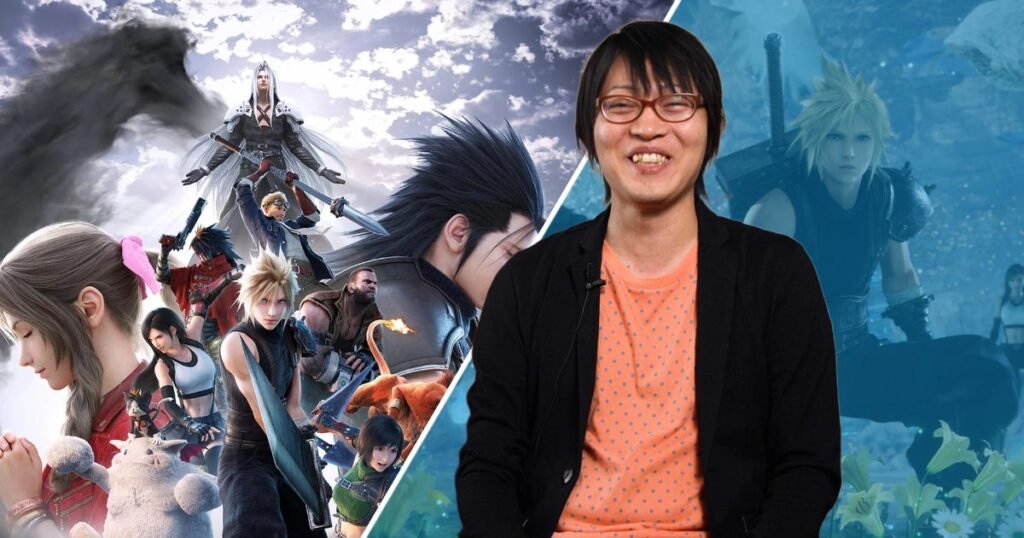
I think my favourite thing about the Final Fantasy 7 Remake trilogy so far is the specific ways in which the developers at Square Enix inject nostalgia. The games launched to date – Remake and Rebirth – manage to nod warmly towards aspects of the original RPG without it ever feeling trite. You can see it in so many aspects of the way the games are curated: the way certain musical sequences are teased as motifs, and then brought in, full-throated, for certain boss fights; the redesigns of (in)famous monsters, and how certain major enemies are deployed in slightly remixed ways for maximum effect; the reinterpretation and reimagination of dialogue to better fit the bigger, more complex world of ‘the Planet’ in 2020’s version of the world compared to 1997’s.
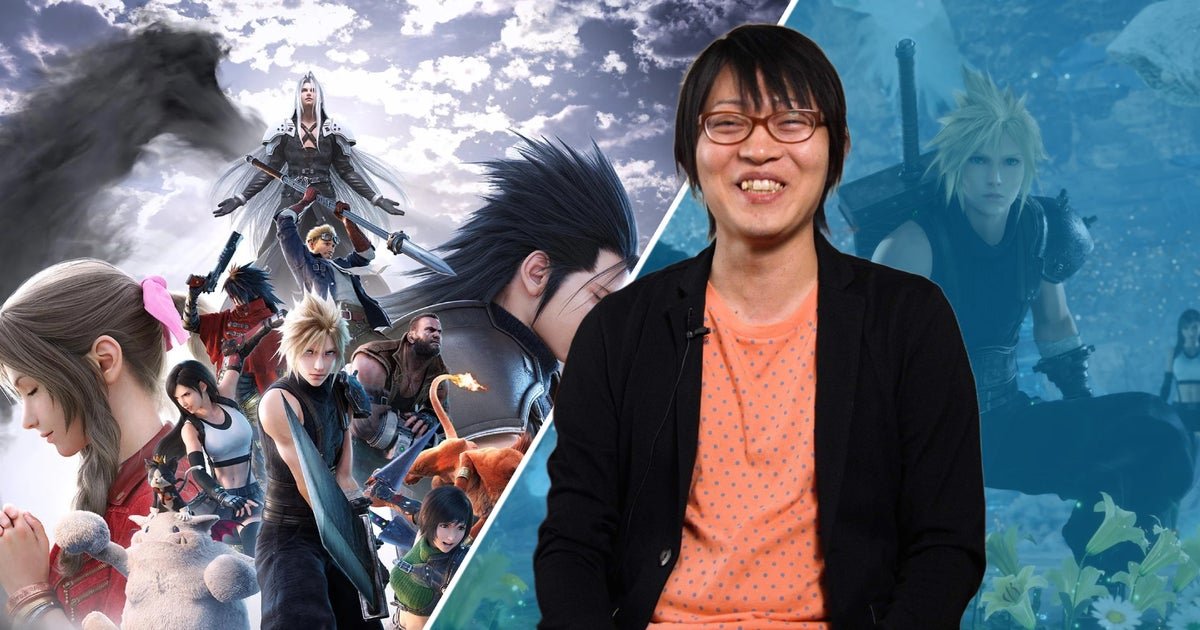
The staff, in many cases, grew up playing the original game on the PS1. Led by game director and programmer Naoki Hamaguchi, those staff at Square Enix Creative Studio I are in good hands: our own Alex Donaldson once spoke at length about why this humble, unassuming programmer was the ideal choice to lead the charge on Square Enix’s most ambitious project ever. After this summer’s reveal of the third part of the trilogy, Final Fantasy 7 Revelation, I had the chance to catch up with Hamaguchi once again to talk about the passion and the pressure fuelling the blockbuster climax to a story that began all the way back at E3 2015.
I started in the most obvious place: that reveal trailer. In the game’s debut (embedded above), I think you can see a team basking in its own confidence – the direction of the cinematics is bombastic and vivacious, the sizzle reel of combat mechanics is tantalising, and the glimpses we see of an open world show a team dedicated to learning from its past missteps. Even the way the genetically modified ex-Turk and definitely-not-a-vampire, Vincent Valentine, drops down from the Highwind somehow manages to be stylish whilst also exhibiting a great deal of character – a far cry from some of the more static, less dynamic offerings in 2020’s Remake.
“Even in the cutscenes that we briefly showed during the Summer Games Fest reveal – you know, where we see the party flying in and dropping from the Highwind – you see that Vincent is the only one wearing his parachute differently,” acknowledges Hamaguchi, laughing. “His belt is crossed and he’s not wearing it like a backpack, unlike all the other party members. That’s not something I actually directed myself; I often receive a lot of like proposals from the team members, saying things like ‘oh, if it’s Vincent, he’d probably wear his parachute like this.”
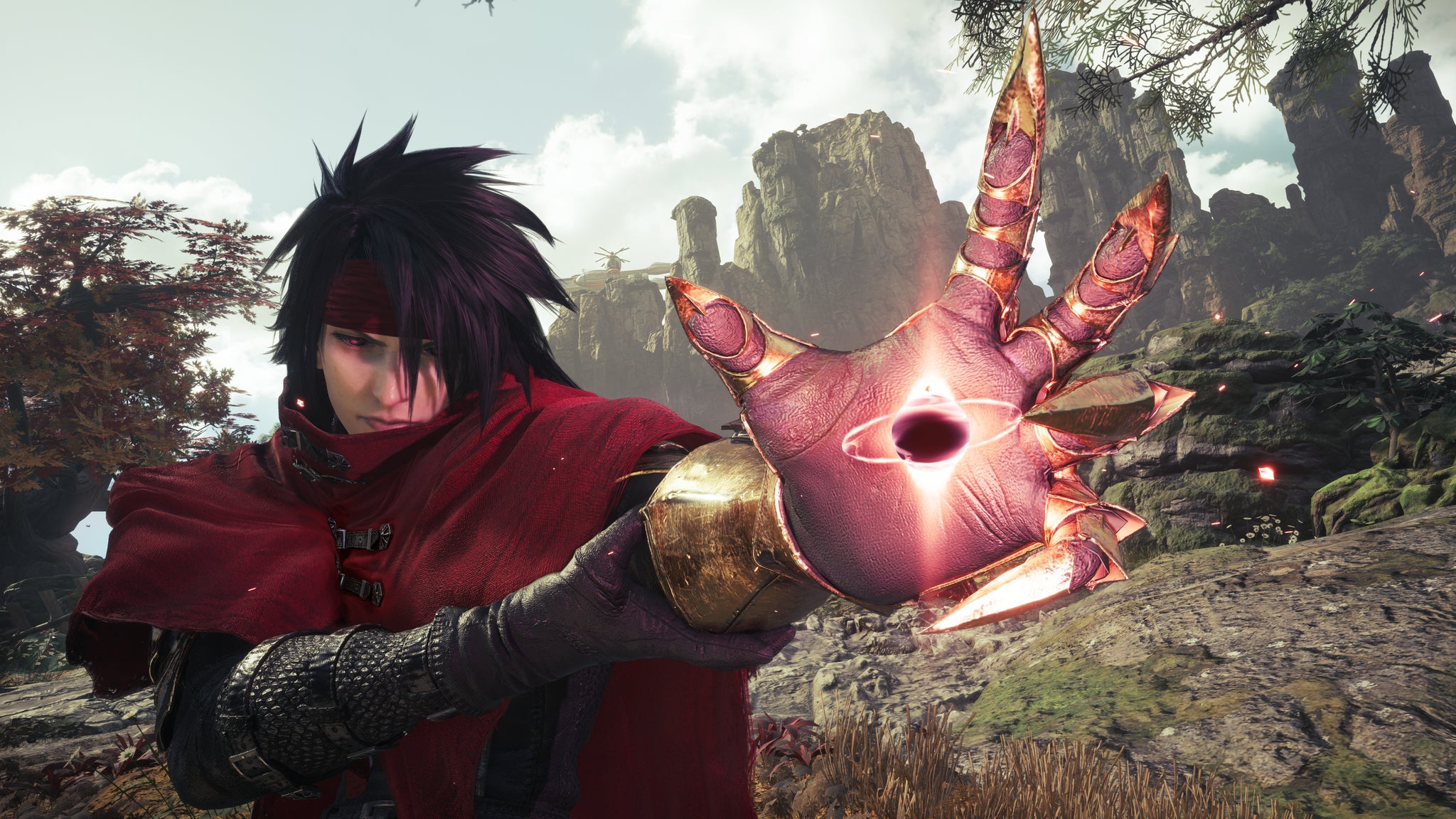
This particular detail is one I’ve seen held up online as fans have been dissecting the trailer looking for secrets. There’s probably nothing deeper here than the stoic, none-too-Goth Vincent choosing to drop like a tombstone out of a ship, but it’s so well-executed, and so well-conceived, that it’s already become iconic in its own right. It speaks to a team of older and younger developers, working in harmony and drawing on wider-universe Final Fantasy 7 knowledge in order to make Revelation that bit more authentic.
“There are other examples of this, of the team suggesting things that end up feeling just right,” continues Hamaguchi. “A good example is Red XIII riding the chocobo in Rebirth – that kind-of became a meme-y moment where a lot of fans appreciated how humorous it looked. That was an idea from our dev team. It’s important to them as creators that they honour the characters, that they understand who they are. They grew up playing this game. Having a cycle of people who can be faithful to these characters results in a production environment where we do get to see these characters really come to life – with humour, [emotionally], or otherwise.”
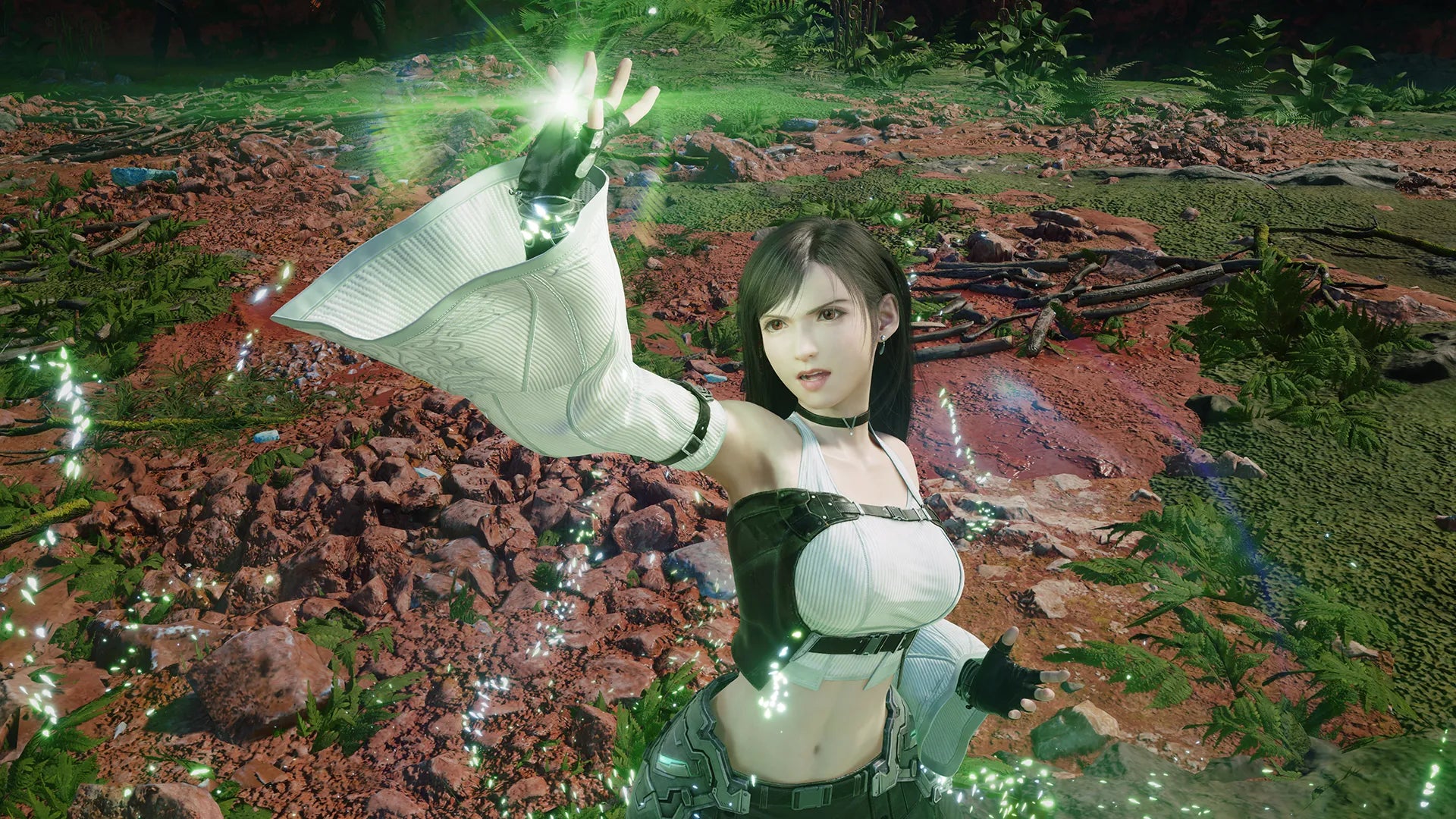
But for all the elements of the game that stay the same – the characters, the setting, the broader strokes of the story – there are those elements that change. One of the more surprising iterations to Revelation is the deepening of the role-playing game element. Remake was pretty basic when it came to character customisation and progression: you could learn new skills from Materia, new abilities from your weapons, and that was about it. Rebirth added ‘synergies’ to the mix, as well as a more character-centric progression system that was a bit like a simplified version of FFX’s sphere grid.
Now, in Revelation, we get ‘FITS’ (or, to crowbar the acronym in, “Function Integrated Tactical Suitwear”. Yes, really). Each character has four unique outfits that allows them to access ‘jobs’ from classic Final Fantasy games; so far we’ve only seen Cloud as a Warrior and Tifa as a Dark Mage, but I’m really hoping we get some FF stalwarts like Dark Knight or Dragoon in the mix. If Rebirth took a minimalist version of FFX’s sphere grid, this doing the same to FFX-2’s ‘dress sphere’ system. But why add this new level of depth? Turns out, it’s because Hamaguchi thought Rebirth’s combat was “perfect” and didn’t want it to get “stale” for Revelation.
“I am pretty confident to say that in Final Fantasy 7 Rebirth, the hybrid combat system reached a perfected state, so to speak,” he smiles. “But with that being said, if we were to just continue to adopt the same exact hybrid combat system from Rebirth into Revelation, a lot of people are probably going to feel that it’s a bit stale [laugther]. It’s not offering anything new or refreshing, so we did want to add something new.”
Hamaguchi goes on to tell me he had a lot of discussions with combat director Teruki Endo about this system, even from the earliest stages of development. The pair felt that because certain characters had certain roles (Cloud is close-quarters with his Buster Sword, Barret fights at range and tanks damage, Aerith is usually on the backline as support), players became confined. “I guess you become guided to select certain characters in certain situations,” Hamaguchi shrugs. “[The system] didn’t truly offer that freedom of choice when it comes to the character choice. So we were thinking, what could we do to address that?” Thus, the FITS system was born, allowing you to choose the job of your choice, make the party of your choice, and have complete agency over the team you want to field.
“I am pretty confident to say that in Final Fantasy 7 Rebirth, the hybrid combat system reached a perfected state.”
Hamaguchi is committed to player freedom and player choice. You can see that even in the difference between Rebirth and Remake; where the latter is a tight funnel, shepherding you from one chapter to the next whilst giving you precious little room to breathe, Rebirth is practically the opposite. It revels in its spaciousness, and it’s brimming with mini-games – to the degree that some players suggest that this actually damages the pace of the final product. With Revelation, Hamaguchi is committed to learning from experience, and treading a line somewhere between the two. And the best way to do that, he thinks, is by giving the player as much choice as possible.
“There are a lot of open world games out in the world right now, and [the idea of ‘open world fatigue’] is a very important concept to me,” he says when asked about some of the feedback to Rebirth. “It depends on personal preference and different perceptions, but for me personally, I know I’ve had the experience where I’ve been thrown out into an open world game and not known where to go, not known where to begin, and not known what to do. But at the same time, the concept of being thrown into this wondrous world where anything goes is amazing.
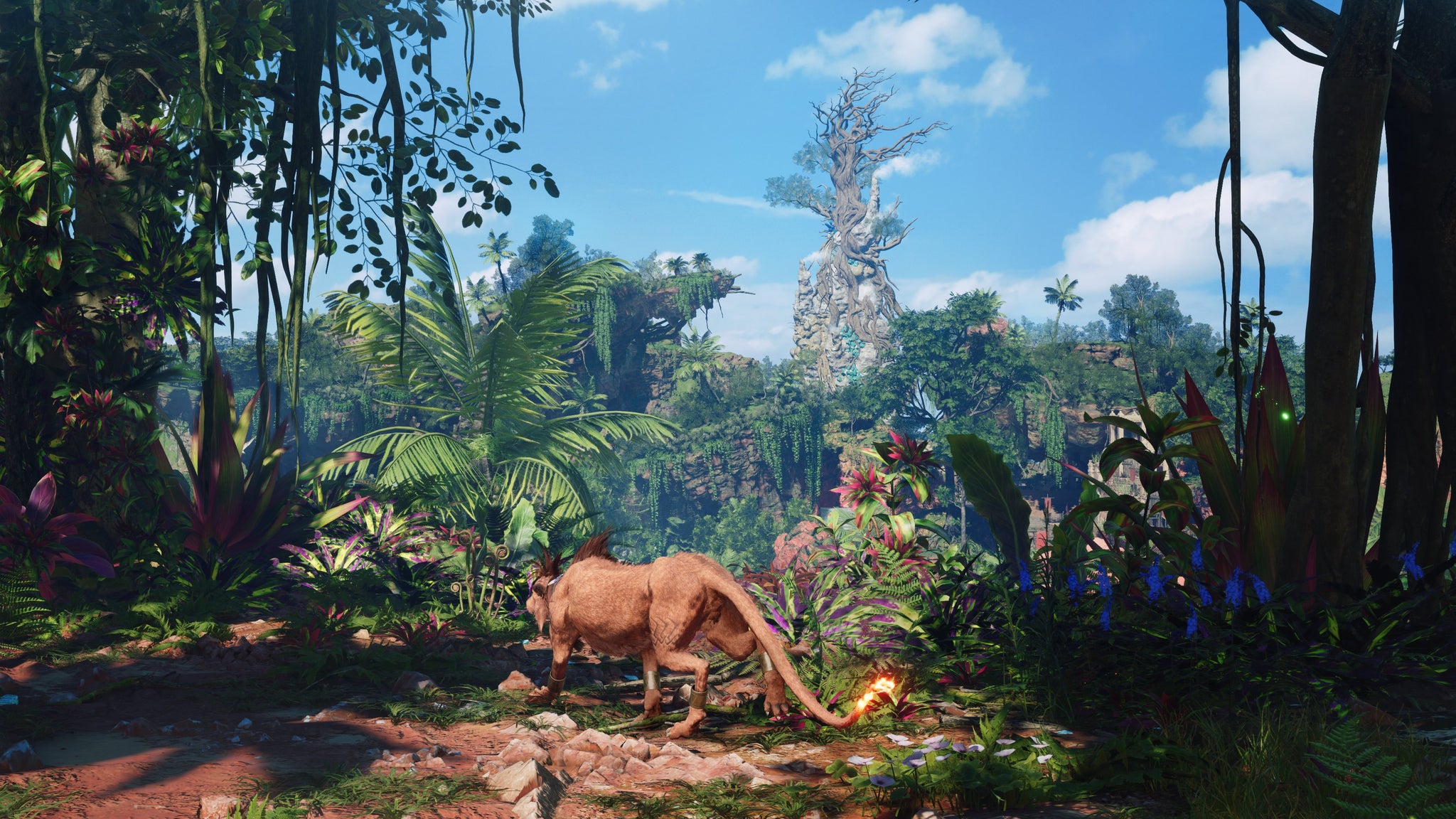
“But for me personally, as a creator, I think it’s very important to offer proper guidance for the players in open world games. It’s important for players to know what to do, and know where to go. In Final Fantasy VII Rebirth, we made sure to make it easy for the players to understand how much content there is, and how difficult that content is. That design philosophy is applied to Revelation: players have all the guidance that they need. This is something that both myself and the development team were very careful about when we designed the game.”
To that end, the Highwind airship allows for total open-world freedom in Revelation, letting you leap from the deck and parachute, seamlessly, into any location on the map. It’s a smart system; not only does it let Vincent have his emo moment en route to your next objective, but the descent hides loading screens – and allows your party to navigate the continent without worrying about walls, barriers, oceans, cliffs, and so on.
Fast-travel is split into two phases: jumping from the Highwind and opening the parachute is the first sequence, and choosing where to land is the second. During the first phase, you can see visual markers on the ground that indicate major objectives, mini-games, and so on. Once you’re closer to the ground, those visual cues disappear.
“After you open the parachute, you kind of have to rely on your memory to ensure that you’re actually dropping into the place where you want to go,” says Hamaguchi. “That’s another example of the guidance we’re giving players, without directing them too much. The world is even bigger than it was in Rebirth, so it is more important than ever for us to ensure there’s enough guidance here, so people have no issues enjoying what this game has to offer.”
Final Fantasy 7: Revelation is a product of nostalgia and experience, crafted by a cross-generational team that represents something I’ve long associated with Final Fantasy at large: creative iteration. Somehow, this trilogy has become a microcosm of the wider series – a distilled example of a concept being born, improved, and perfected before your very eyes. In Revelation, Hamaguchi is piloting the Remake series to, I hope, a crescendo that Final Fantasy devotees rarely get to see: something that will tangibly, properly end.