Control Resonant is a more action-RPG oriented follow-up to Control, but in leaving the Oldest House it also leaves behind some of what gave the original its magic.
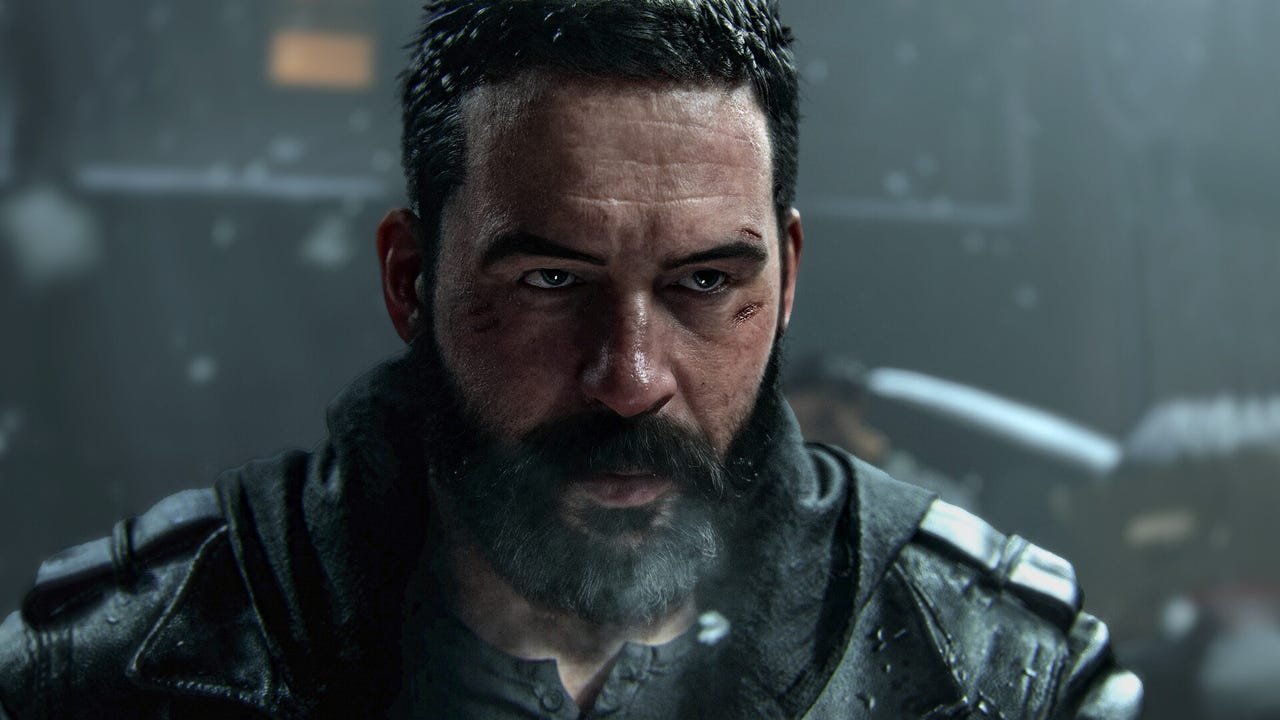
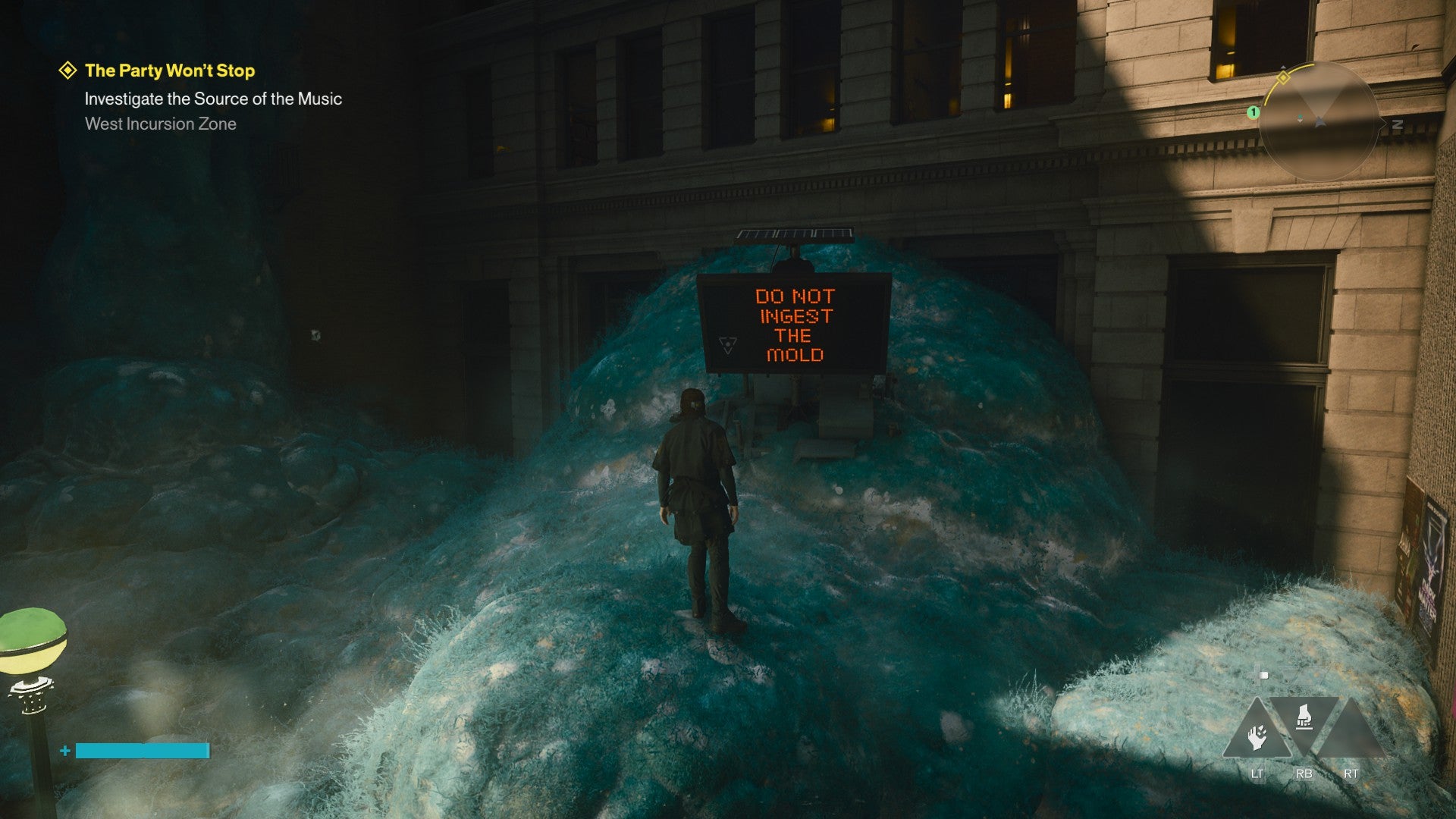
The first time I ate mold was like something out of a Victorian morality play. It was in boarding school, when fuzzy blue-grey discs would sometimes appear on the bottom of a quiche, or after I saw one of the kitchen ladies use a cleaning rag to cover a tray of cauliflower cheese. We were told it was a good source of protein, and because I complained, I had to collect rubbish for a weekend in my school uniform. Outside the realm of edible mushrooms and respectable fungi and polite society, the idea of eating mold is kinda gross. But here I am, in Control Resonant, faced with the Temptation of Saint Mycology, while my handler screams in my ear for me to put the mold down. I will not. I’m Dylan Faden, and this is Jackass.
Dylan, who became an indentured lab rat at age ten, never got to watch Jackass, because up until five minutes ago he was in a coma, and before that, he was possessed by a malevolent entity called the Hiss. His AWOL sister Jesse, the Director of the Federal Bureau of Control, oversaw a seven-year lockdown to contain the Hiss in the Oldest House after the events of the first game; in the present, the Hiss escapes into Manhattan and everything hits the proverbial fan. Dylan must help the Bureau deal with a new threat as the city is cut off from the outside world, while also searching for Jesse, who may not even be on the same dimensional plane.
I loved Control. I have fond memories of exploring New York and learning how bad the city smells after a spring rain. I love over-the-top paratextual worldbuilding and the X-Files and goofy nods to new weird literary themes. The best part of Control was how well it mythologised a vast and indifferent bureaucracy, thanks largely to the SCP Foundation, a collaborative online fiction project that Remedy drew on for inspiration, and how that arcane mythology imprinted so perfectly on a whole administration of dyed-in-the-wool civil servants and 1960s-era pneumatic tubes. Hell hath no petty like a disgruntled worker filing HR complaints while a hivemind takes over the building, and together, all of the game’s documents and recordings and found items told a banger piece of speculative fiction that vibrated on the same dysfunctional frequency as the House. The tonal contrast of bland mundanity and eldritch freakshow isn’t a new combo, but it works really well for a reason, and it was a huge part of what gave Control the juice.
Remedy has since described each Control game as a reflection of each respective Faden protagonist. Unfortunately this makes Control the tighter and more narratively cohesive sibling, while Control Resonant is kind of all over the place. Big sister was a game that understood the genres it drew from, and most importantly, knew what it wasn’t (the combat systems weren’t very good then, and they’re still not great now, but let’s be real – no one is playing Remedy games for the combat). Little brother, though, feels pulled in different directions, and follows a more emotional path as it gets deeper into family dynamics, few of which are particularly striking, and, with a couple of exceptions, don’t add much to the story that 1) you can’t infer yourself and 2) wouldn’t be better off left in the periphery of the player’s imagination.
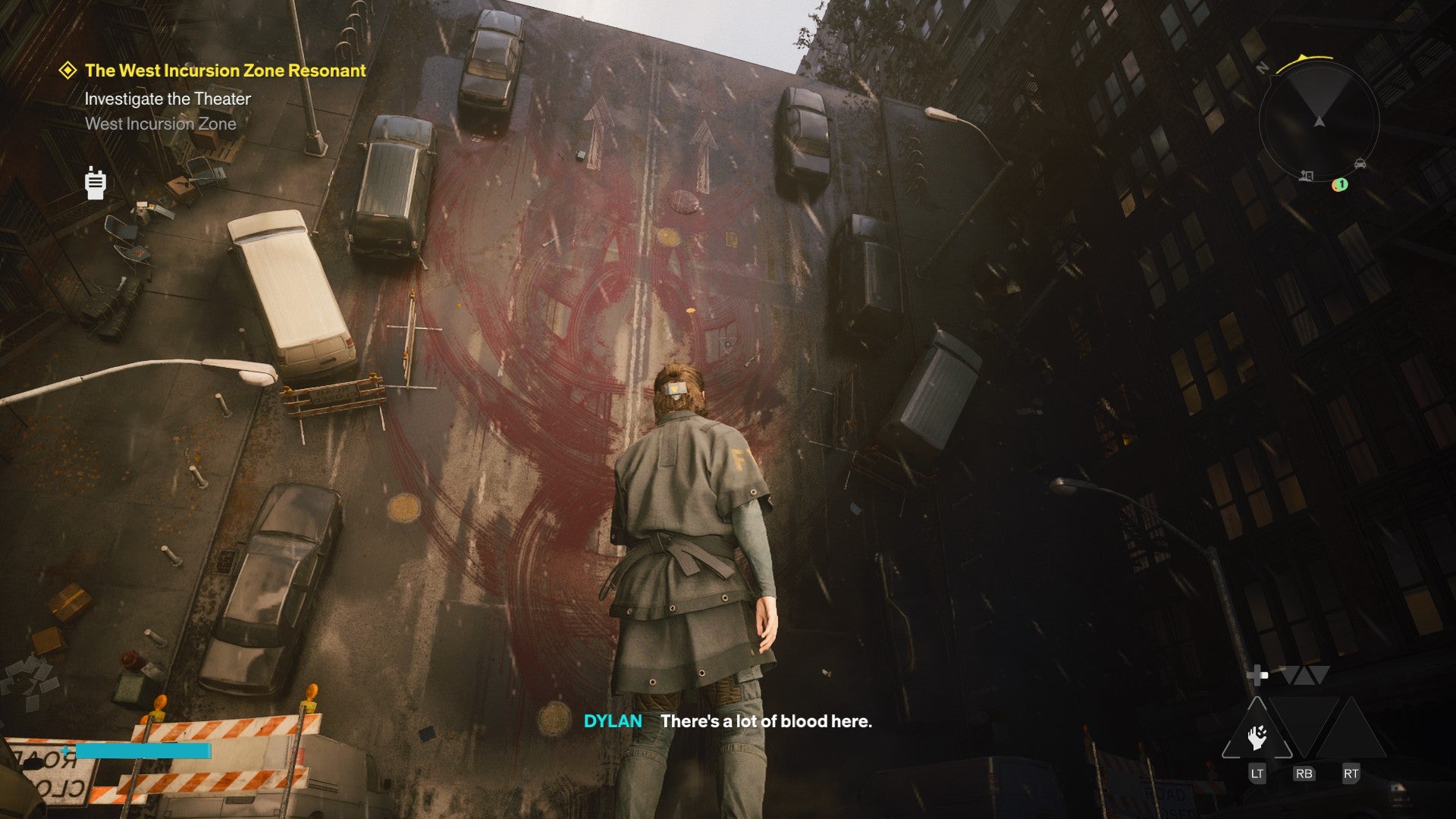
Control Resonant is by necessity a different creature from Control. For starters, it’s much more of a triple-A-flavoured action RPG, with a big wide map of tiny little markers for everything from persons of interest and repeating world events. There’s a discernible loss of focus now that we’re outside the Oldest House, whose shifting architecture was a core part of how Control cultivated and maintained such an effective atmosphere. The Oldest House was a moody, ancient Brutalist cocoon full of secrets – you couldn’t trust the walls around you, which was a neat setting for getting sucked into the bowels of a government agency. Dylan is a maladapted sadboy experiencing the real world for the first time as an adult, and to this end, a big overwhelming city makes sense to tell this type of story. Manhattan fragmented and literally turned upside-down because of reality-changing interdimensional physics – there is at least one Inception joke in the game – feels appropriate for a guy who just came out of a coma, but it also means all that smartly-styled weirdness gets diluted into Marvel-style blockbuster flatness. There’s just about no suspense left when you can climb onto a rooftop, look out, and see all the areas brewing with Hiss or Mold.
Accordingly, the open-ended world (Remedy is keen to remind us this is, technically, not an open world) lends itself much more to an FBC team-building group-effort situation – Dylan’s handler, agent Zoe de Vera, plays the straight man buffer between Dylan and the bureau and tries to make peace with her own role in an organisation that made his life hell. World events involve supporting FBC rangers in the field (defend the cargo, protect the worker, and so on) and after a certain point Dylan unlocks a chore board for garden-variety escort missions and fetch quests. He meets different factions within the bureau (shoutout to the mold people and Langston) as he tries to prove that he isn’t a homicidal meat puppet anymore. There’s the usual triple-A dance between big save-the-world story beats and minor side stories where all the best writing is hidden, but at times, like when Zoe radios Dylan to do nothingburger tasks after a big urgent plot reveal, the pacing suffers. The cumulative effect is a kind of narrative sprawl, an inversion of the purpose that shaped Jesse’s journey in Control. I should know something about how turgid and dull main questlines are: I play Final Fantasy 14.
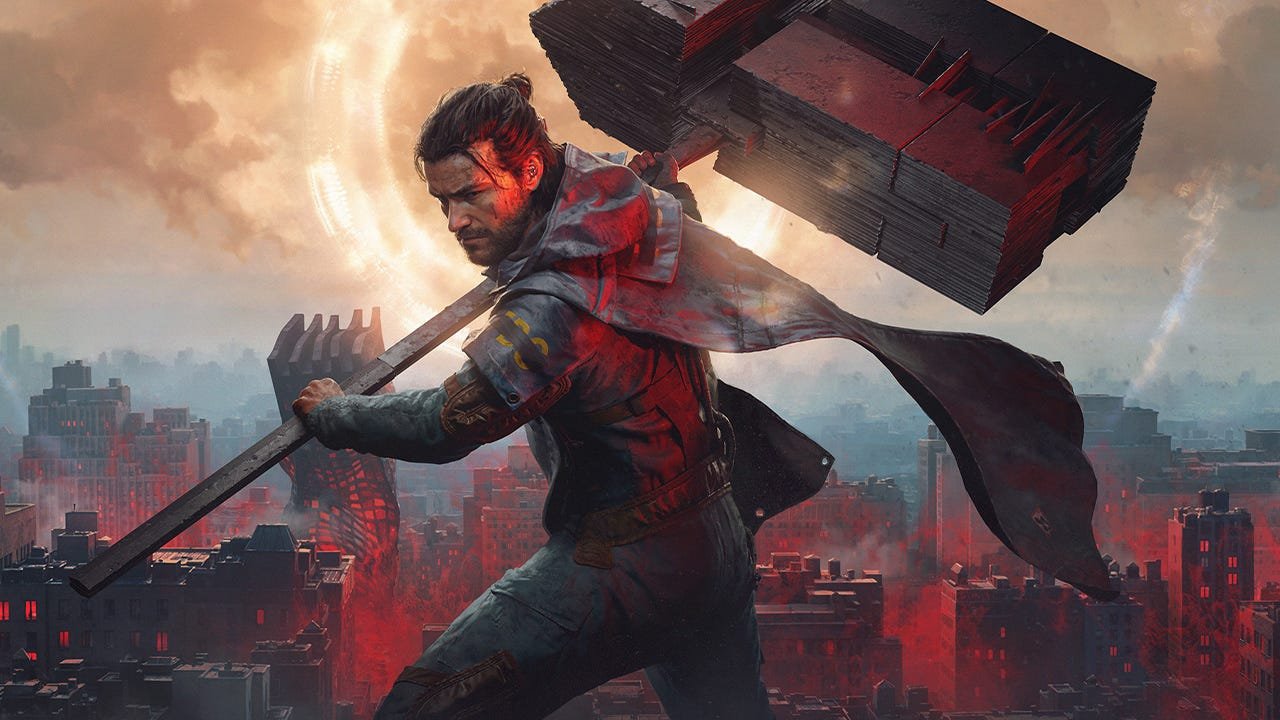
Combat-wise, Dylan is a melee guy. His main abilities are straightforward button-spammers with a sprinkling of tactical support skills; new combat abilities are learned by defeating bosses called Resonants. His weapon is the Aberrant, essentially a paranatural metal bar that can morph into whatever the moment needs (it also houses a familiar friend from the first game). In line with Remedy’s action-RPG aspirations, they’ve refined skill trees to hew closer to familiar class conventions, so players can choose a high-crit build or focus on crowd control and AOE attacks. I use Glaive as my primary ability – it gives the Aberrant a big swing with a knockback – and start golfing my way through mobs. It does not feel as meaty as I would like it to, and this is certainly not Dynasty Warriors, but I eventually find joy in a secondary fire punch skill that is exceptionally powerful against Mold. Inquiring minds will want to know if Control’s combat has improved, and the unfortunate answer is not really.
Traversal abilities are learned from Faults, which are sort of interdimensional “thin” places where Dylan senses Jesse. Faults offer interactive storytime and explore the Fadens’ link as siblings united by trauma, which in turn involves a lot of repetitive leaping and dashing paired with childhood dysfunction. Most of this is Mike Flanagan-level melodramatic, and I am not a fan of what Mike Flanagan has done to horror and the way it intersects so limply with therapy and trauma.
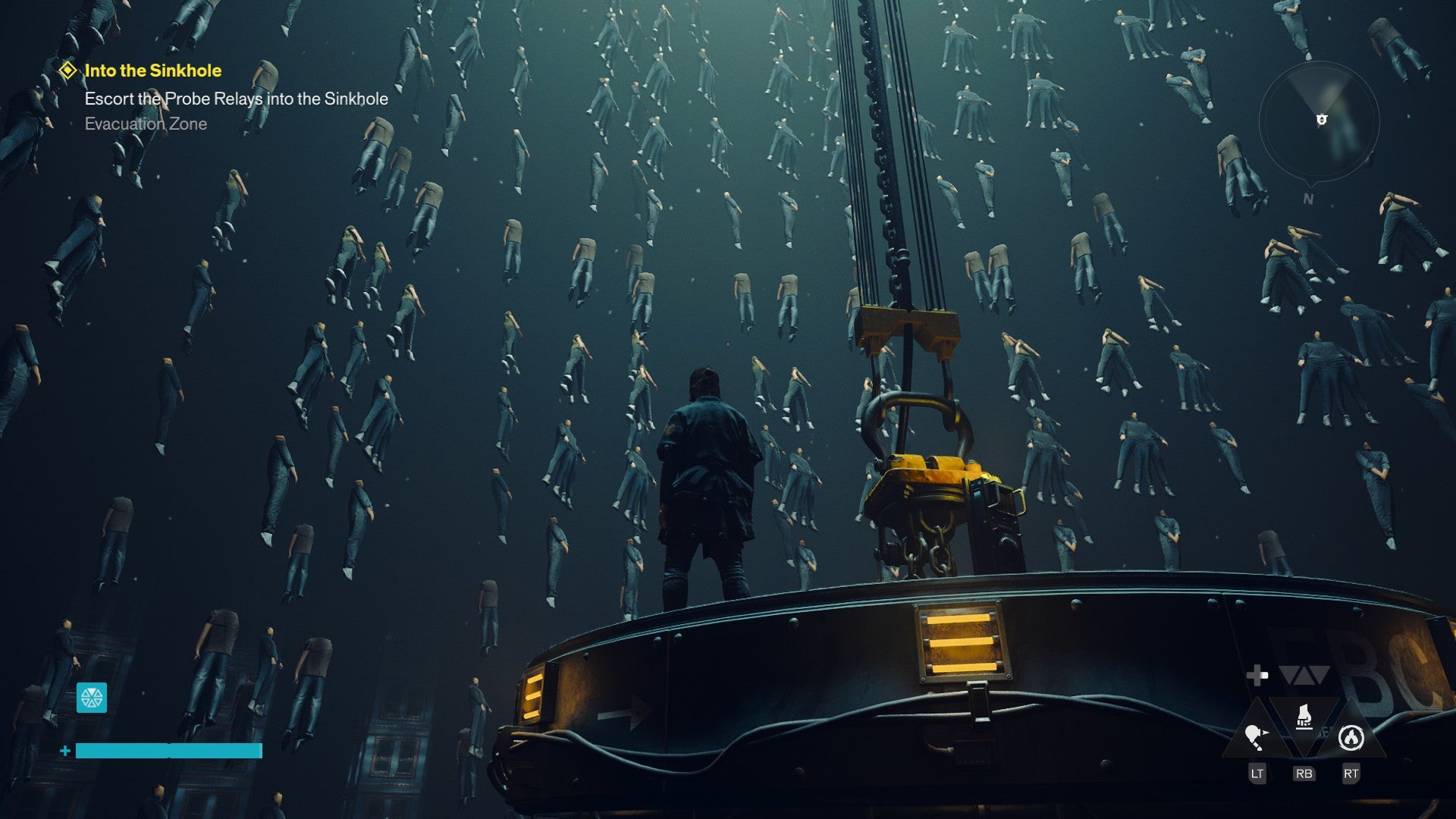
Because this is Remedy, the game hammers home its hyper-meta themes of refraction and recursion at every possible opportunity, so I am, to an extent, prepared to get lost and do things over and over again. But when the gravity mechanics kick in and Dylan has to move between planes on a timer, navigating becomes trickier and puzzles become a little more involved, and when you throw in a mess of dynamic markers and deliberately disorienting gameplay, some of which demand falling from a great height on a precise trajectory, hitting a nice flow can get frustrating (there were also a couple times when my Inception shenanigans got me stuck in a chasm behind a wall).
Is messing with gravity cool? Did you like Gravity Rush? Yes, walking up walls is always cool, but a lot of the “Dylan swooping around New York” stuff plays out like Spider-Man helping literal puppies and saving civilians. Frankly, I could do routine superheroing in a better action game – this is not why I want to play a Control game.
As a result, Control Resonant doesn’t truly hit its stride until Dylan is beneath the Oldest House in the Underpass. Here, my second-favorite story arc unfolds through reports and recordings – an understated cosmic horror workplace drama podcast, set against a backdrop of monolithic office columns and minimalist Zdzisław Beksiński landscape vibes (there is also an Interstellar-inspired questline in the adjacent area, which feels like one too many Nolans for a single meal). Some of Resonant’s best writing and voice performances live down here, and it snaps me back into the game.
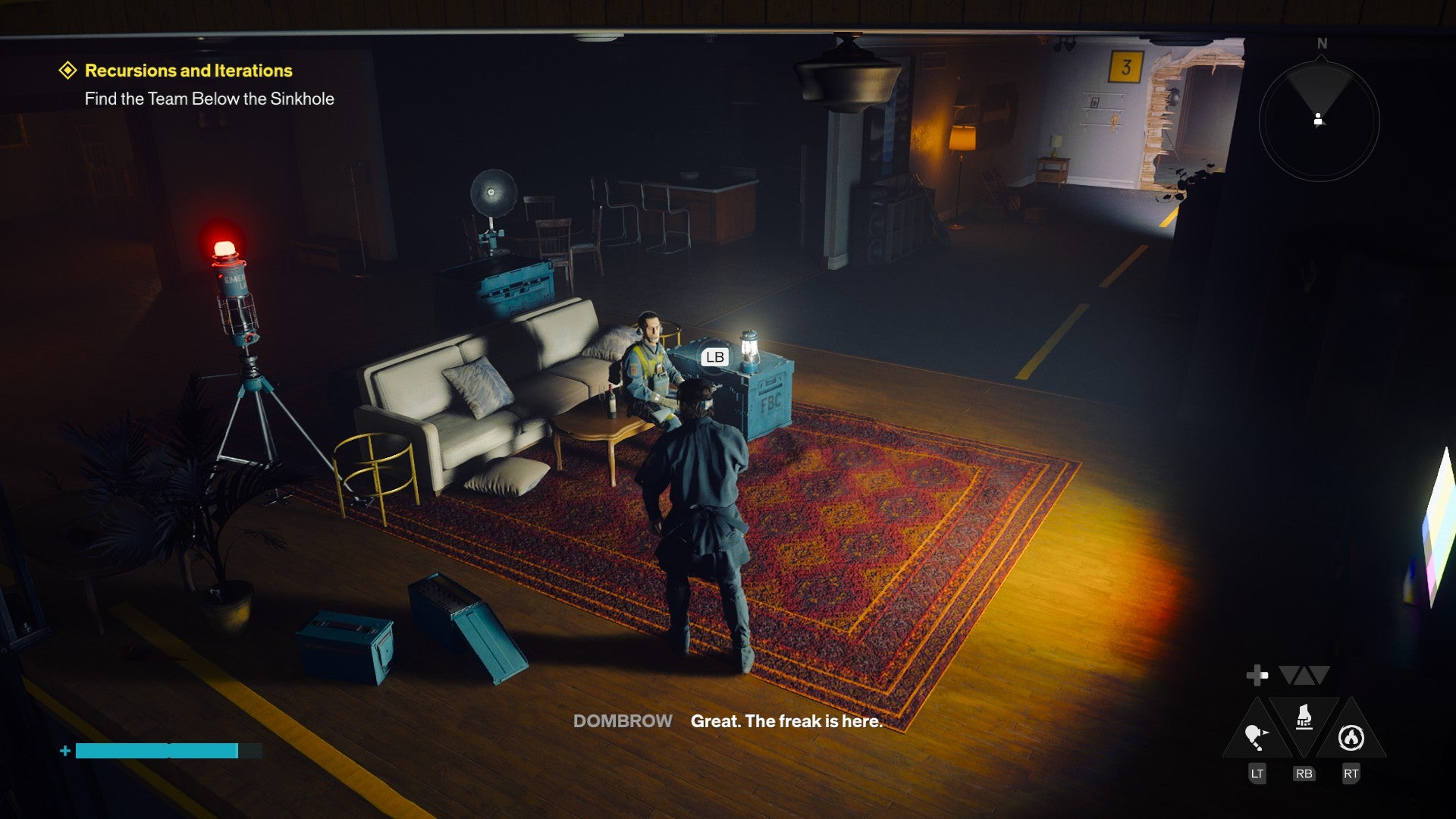
Further in, there’s a massively unexpected appearance of a whole other genre that will delight a lot of people (I was bewildered and appreciative), and I love it when the game goes hard into the special interest subjects and shows me intense pockets of drama happening in a forgotten corner of the subway. Dylan’s thing is drawing, and there’s an art-therapy-esque feature where he’ll see something that reminds him of a memory that he can recreate with found objects and sketch; assembling these makeshift tableaus is silly and charming but I didn’t take it seriously until the game wanted me to make a dragon out of rubbish and subway cones and I couldn’t find the last piece. I want to finish that dragon, and it will haunt me until I do.
Remedy projects are visually and technically lovely to behold, and this one is no different. The game looks good, period. I love the FBC uniform design here, with the paper bag-like headwear that feels like a page from the Venture Bros henchman universe. I will eat up every second of Matthew Porretta’s screentime as Casper Darling, and I love a good bit of stylised shadow puppetry. These are all load-bearing parts of the Control universe. But there’s only so much you can do to spice up a repeated landscape of city blocks and same-y military blockades without losing aesthetic potency. Naturally there are big moments of spectacle – visual spectacle is likewise a pillar of the Control experience – but after a certain point it feels like Resonant leans a bit too much on quirky weirdness (weird dogs! floating vending machines! warring aliens!) in New York, as a stand-in for narrative quality and substance. Not much comes close to the “oh shit, cool” moments or impeccable vibes that made Control special.
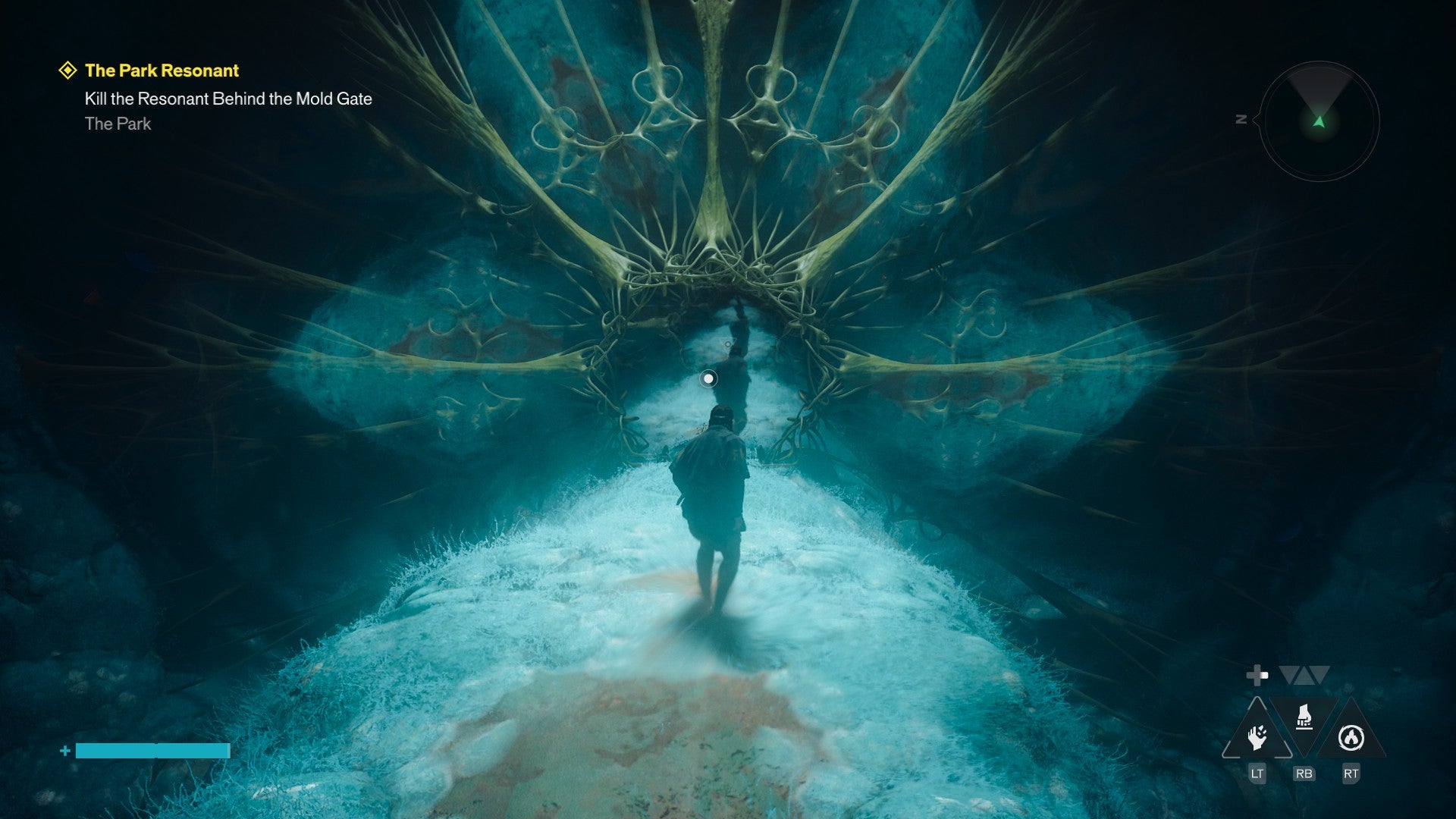
I don’t think anyone expects perfect coherence from an SCP-inspired setting, and honestly I don’t think it matters that the game isn’t entirely clear about its ending, either. But there’s something missing. Perhaps it’s the sense that the game tried to incorporate too much, and spread itself too wide. The contrast between Control’s maximalist approach to paratextual storytelling and its minimalist design felt sharp and savvy. Resonant, though, feels like it’s trying to have too many fingers in too many pies.
I realise that Remedy rebukes the idea of Control Resonant being an open-world game, and it’s not quite as freewheeling and permissive as that, but Resonant feels like it’s chasing the hallmarks of a live-service game while trying, only partly successfully, to echo the very deliberate structure and style of the genre storytelling that worked so well in the first game. You cannot make a good game whose whole cryptic conceit hinges on smart unconventional worldbuilding, and also shoehorn in the most deadening part of MMOs – world events, the equivalent of daily chores – without bringing the whole narrative party down. It’s not a question of giving us something we haven’t seen before. It’s a question of being able to sustain that distinct, uncanny weirdness that brought Control to life. And to expand on that core magic, without muddying what made it special in the first place.
A copy of Control Resonant was provided for this review by Remedy Entertainment.