Hello! Eurogamer’s latest week of features celebrating the intersection of queer culture and gaming concludes today as Caelyn Ellis looks to a future where mainstream games might tell different kinds of lesbian stories. And if you’ve enjoyed this, our seventh Pride Week, there’s plenty more to discover from previous years on our Pride Week hub.
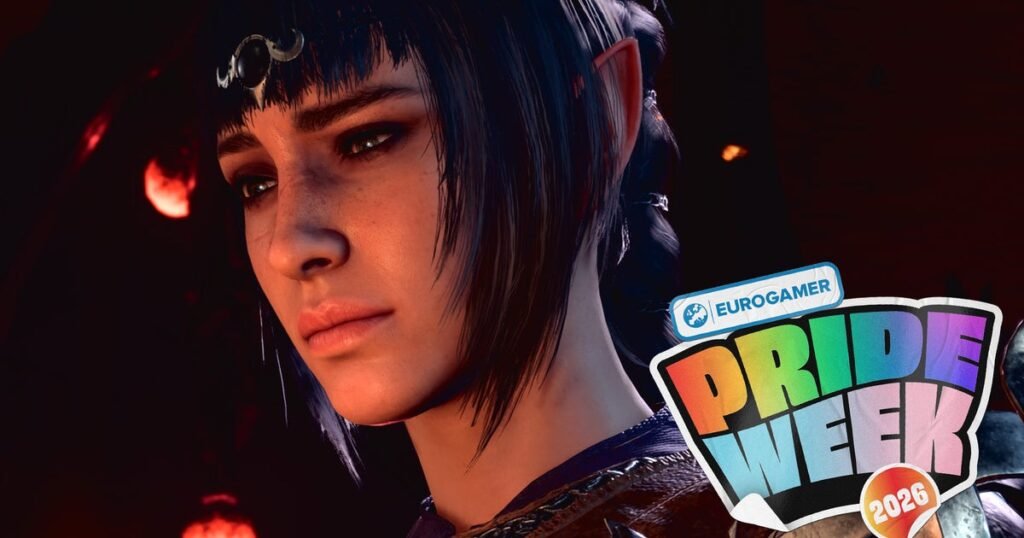
My dear EG readers, I have a confession to make. I am a Shadowheart romancer. Not exclusively; I’ve played Baldur’s Gate 3 enough to see a bunch of the romances, and more still while watching my partner play. But Shadowheart is my canon romance choice, for want of a better word. And for this, I have been mocked, by both my friends and the internet as a whole.
Shadowheart, you see, is seen as the basic choice. She’s the most conventionally attractive and feminine woman amongst a cast that leans towards dominatrices and muscle mummies, and that makes her the popular romance option for straight men. The virtual dating equivalent of having a default soldier MaleShep in Mass Effect.
Here’s the thing though, I’m not a straight man, I’m a butch dyke, and I’m not here to defend my choice, I’m here to explain why I didn’t have a choice at all. And to explain how the lesbian gaze is still vastly underserved in a medium full of sexy women.
.jpg?width=2048&height=2048&fit=bounds&quality=85&format=jpg&auto=webp)
Don’t get me wrong, I love Shadowheart. She’s a fantastic character with a compelling character arc, and a real cutie too. However, I ended up romancing her almost by default. Here’s how it went. I’m a lesbian, so all the male characters are out. Minthara was never an option, because I was playing a good character way before it was possible to recruit her after saving the Grove. Even if she was, she’s way too much of a domme. I’m not saying I have a problem with that, rather if that dynamic exists, Minthara and I, we’re incompatible by virtue of being on the same side. “And they were both tops” and all that. (Yes, I know dom/sub and top/bottom aren’t synonymous, I’m just riffing on a meme, leave me alone.) Lae’zel is out for the same reason. Not quite as explicitly as Minthara, but she’s definitely leaning the same way.
That leaves Karlach. I adore Karlach. I have done since the first moment I laid my eyes upon her. She’s big, and worried about being perceived as a monster. She’s naturally intimidating, but really a big softy. She’s gregarious and cares deeply about her friends. She likes leather and really big weapons. These are all reasons I like the character, but they’re also the reasons that romancing her just feels weird – I see too much of myself in her.
Who’s left? Shadowheart.
Now, I don’t have a problem with the lack of characters that appeal to me romantically, this isn’t a complaint. Not every game is going to cater to everyone equally. I’ve played other RPGs where I’ve been really torn about who to romance. What bothers me is the way video games have the same issue that society as a whole does – the assumption that lesbian sexuality is the same as straight male sexuality.
The attitude is pervasive. Lesbians are perceived as women trying to be men, especially if they lean towards masculine presentation. Their sexuality is similarly mapped onto heternormative dynamics. People don’t understand why a lesbian would be attracted to a butch who looks and acts in ways that society deems male-coded, but not be attracted to a cis man. Even the word lesbian itself is fraught with debates and misunderstandings. Is it exclusively for women who are only attracted to women, or are bi and pan women included? How do trans femmes and trans mascs fit in? What about nonbinary folks? Does a lesbian stop being a lesbian if her partner transitions and she doesn’t break up with him? This isn’t the place to take a deep dive on decades of lesbian debate, but I err on the side of using the term as inclusively as possible.
.png?width=2048&height=2048&fit=bounds&quality=85&format=jpg&auto=webp)
It becomes even more fraught as a transgender woman (transgender or transsexual? Is there a difference? Does it matter? Who really cares?). I’ve been out for 13 years now, and it’s only relatively recently that I’ve become truly comfortable in my womanhood.
I mentioned earlier that I’m butch and yes, that means I mostly wear clothes made for men, minimal makeup, and I take being called handsome as a compliment. You might be thinking that I’ve gone to an awful lot of effort (which includes years of wrestling with the NHS in order to access hormone therapy, laser removal of my facial hair, and an increasingly hostile government) to arrive back at the same place. For a long time, I tried to be more stereotypically feminine. It didn’t feel right, but neither did being a man. I had to get rid of a lot of internalised assumptions about what it meant to be a woman.
It started with my mum – a cisgender, heterosexual, feminine woman who also taught me everything I know about DIY. As I started to learn about butch lesbian culture beyond the stereotypes I’d picked up, I realised the values my mum instilled in me as a child, my expectations about romance, about how to treat others, how to carry myself, they were all aligned with the butch ethos. Most importantly, I got off the internet and started spending more time with other dykes in real life. And I realised that not only did I feel safe and comfortable, I felt welcome in a way I rarely had before, and all those debates online didn’t matter one bit.
.png?width=2048&height=2048&fit=bounds&quality=85&format=jpg&auto=webp)
Taking that long route to figuring out my own womanhood has made me truly understand that being a lesbian isn’t just being Man-Lite. The conversations around Shadowheart brought an acute awareness that just the option to romance women while playing as a woman doesn’t mean a game is actively catering to lesbians. There are games created by and for lesbians, but like most made with marginalised folk of any stripe in mind, they tend towards the very smallest end of the indie scale – solo developers or small teams – and are rarely apparent in more mainstream games.
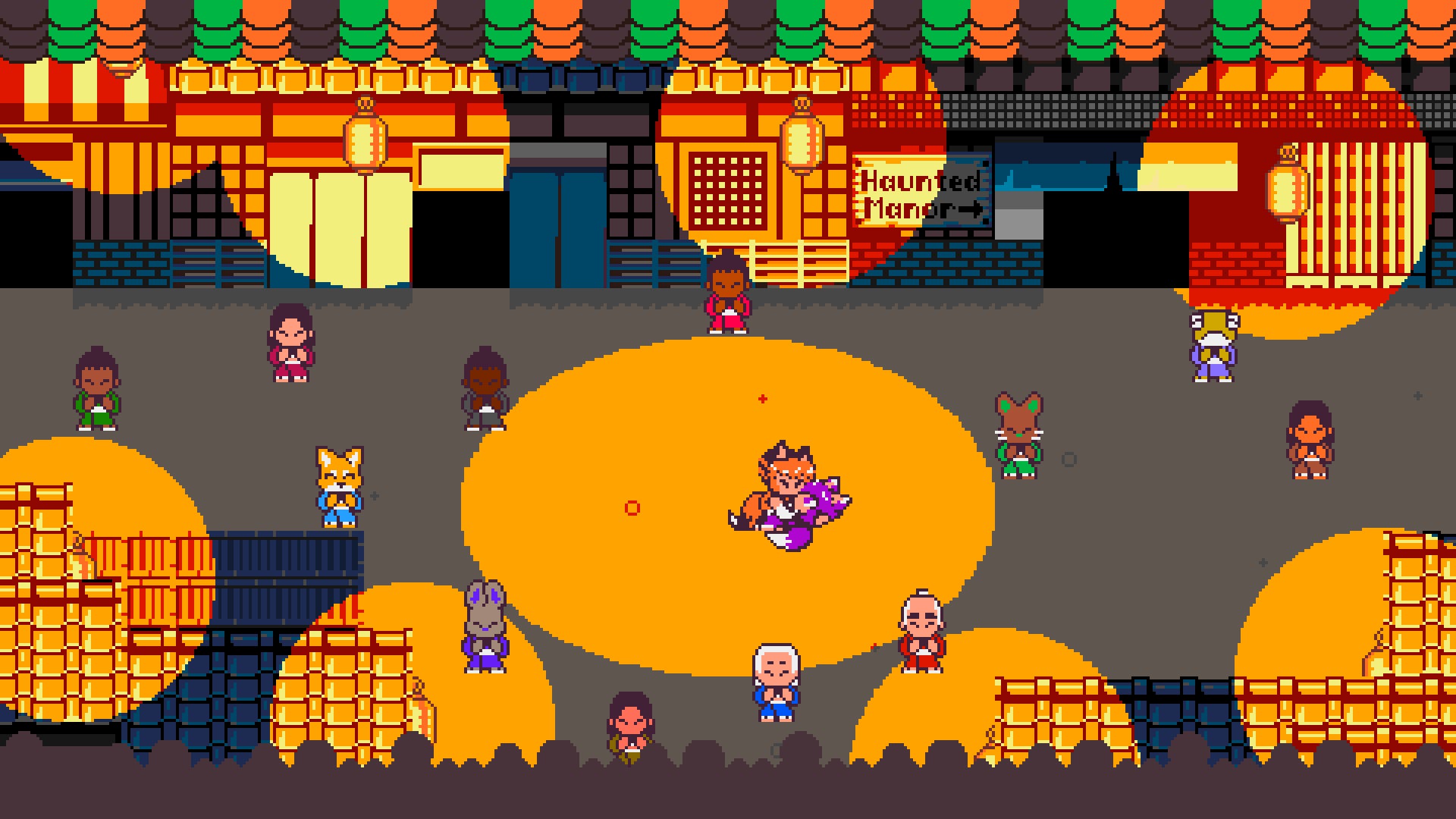
I love Kitsune Tails and Super Lesbian Animal RPG, but when will I get to play a GTA-like as a stone butch with a string of exes she’s still friends with and a carbineer full of stolen car keys? Even when mainstream games do support lesbian romances for the player character, or have lesbian NPC romances, they’re designed for general consumption, not with our specific lesbian gaze and culture in mind. There’s a reason why Bioware’s first foray into queer romance in Mass Effect featured a conventionally attractive female-coded alien and no equivalent for gay men.
That’s not to say these mainstream stories can’t be worthwhile, or enjoyable for lesbians. Isobel and Aylin’s arc in Baldur’s Gate 3 is an absolute delight, and may or may not have resulted in my partner and I crying and hugging on the sofa. A beautiful, unambiguously sapphic romance, it has beats which speak to lesbian struggles without relying on homophobia or misogyny, and isn’t destined to end in tragedy (unless you choose to be a horrible bastard). I’ve previously written about The Outer Worlds’ Parvati focussing on her asexuality, but her lesbianism is just as important and well-realised. And it would be remiss of me to omit Cyberpunk 2077‘s Judy, who is my favourite video game romance by a long shot.
It’s just that this isn’t an endpoint, it’s merely another stage on a journey that doesn’t reach its destination until lesbians can speak and be spoken to by games from the humblest Itch.io offerings to the tripliest of triple-A blockbusters.